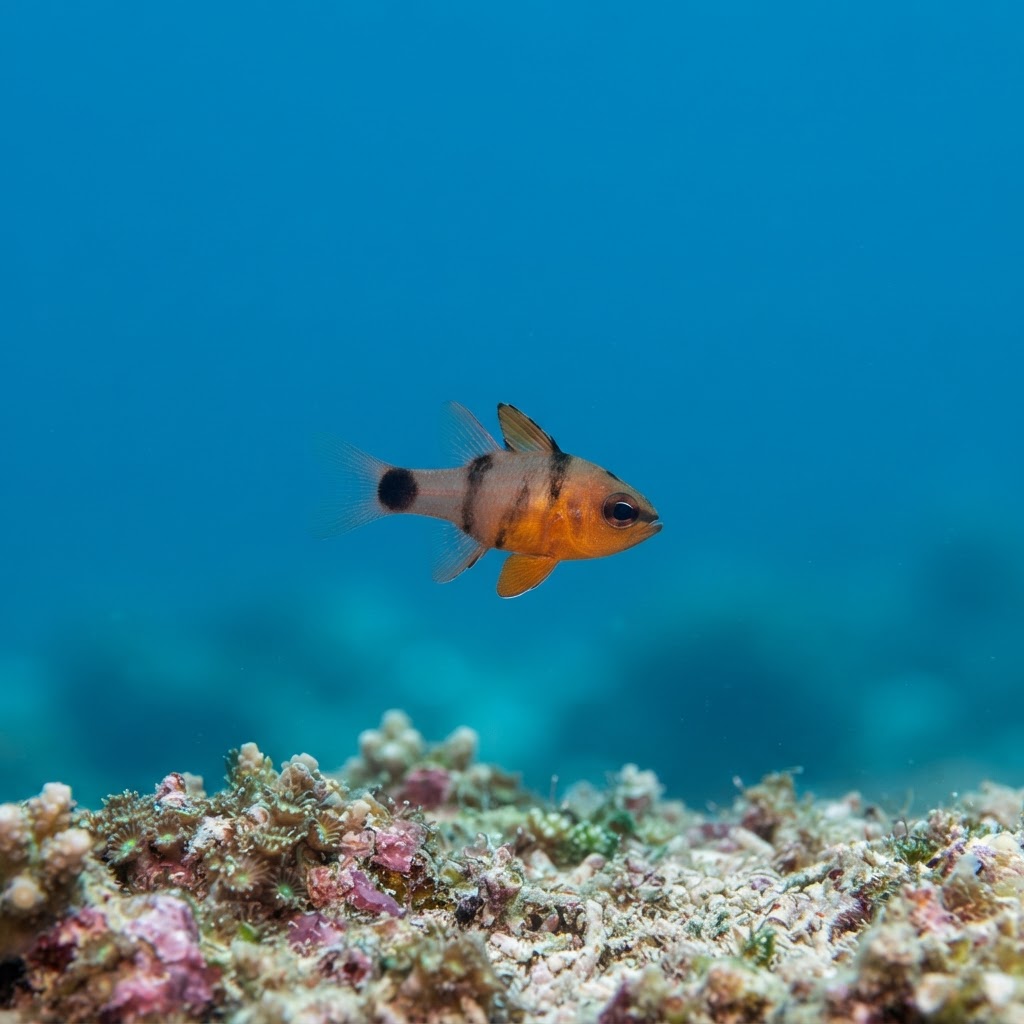
Apogon townsendi
Small red reef fish with a dark saddle mark, most commonly logged on Bonaire's Leeward Coast and around Sint Eustatius year-round.
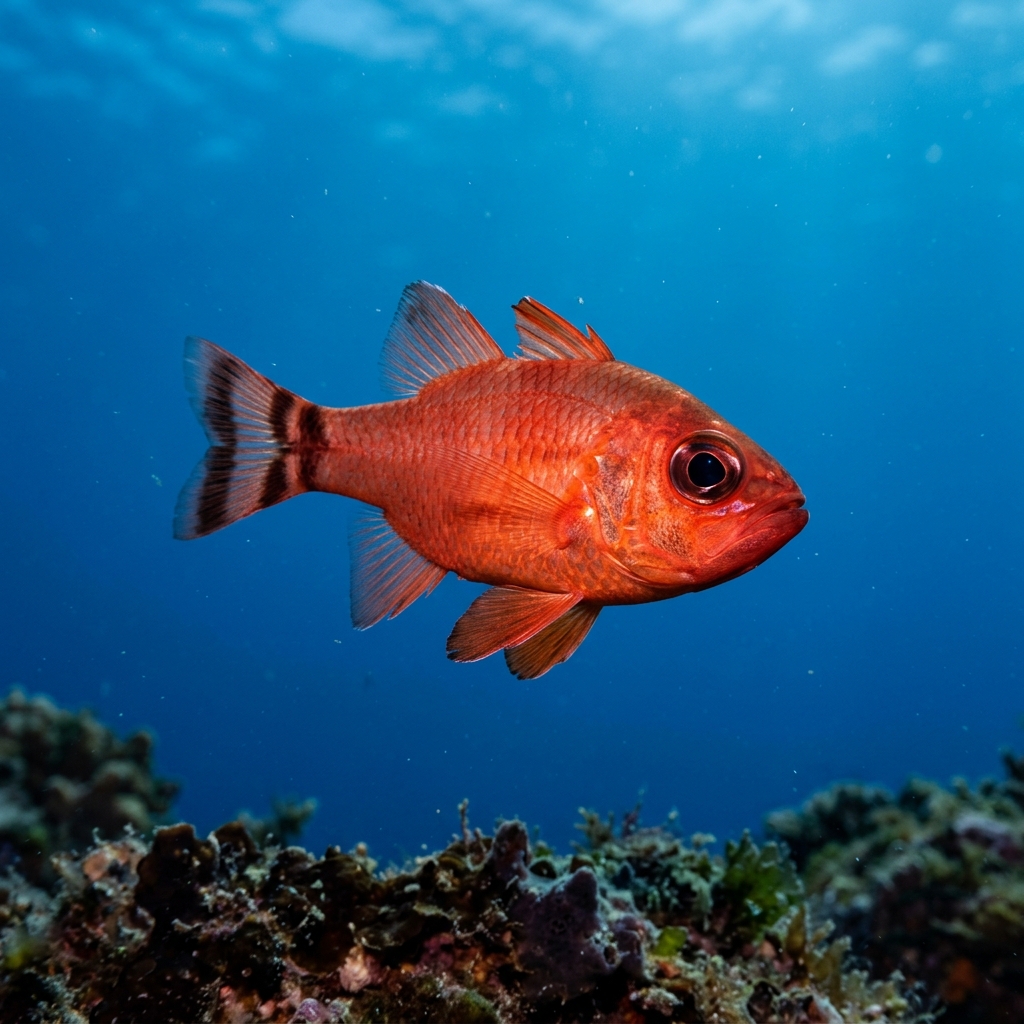
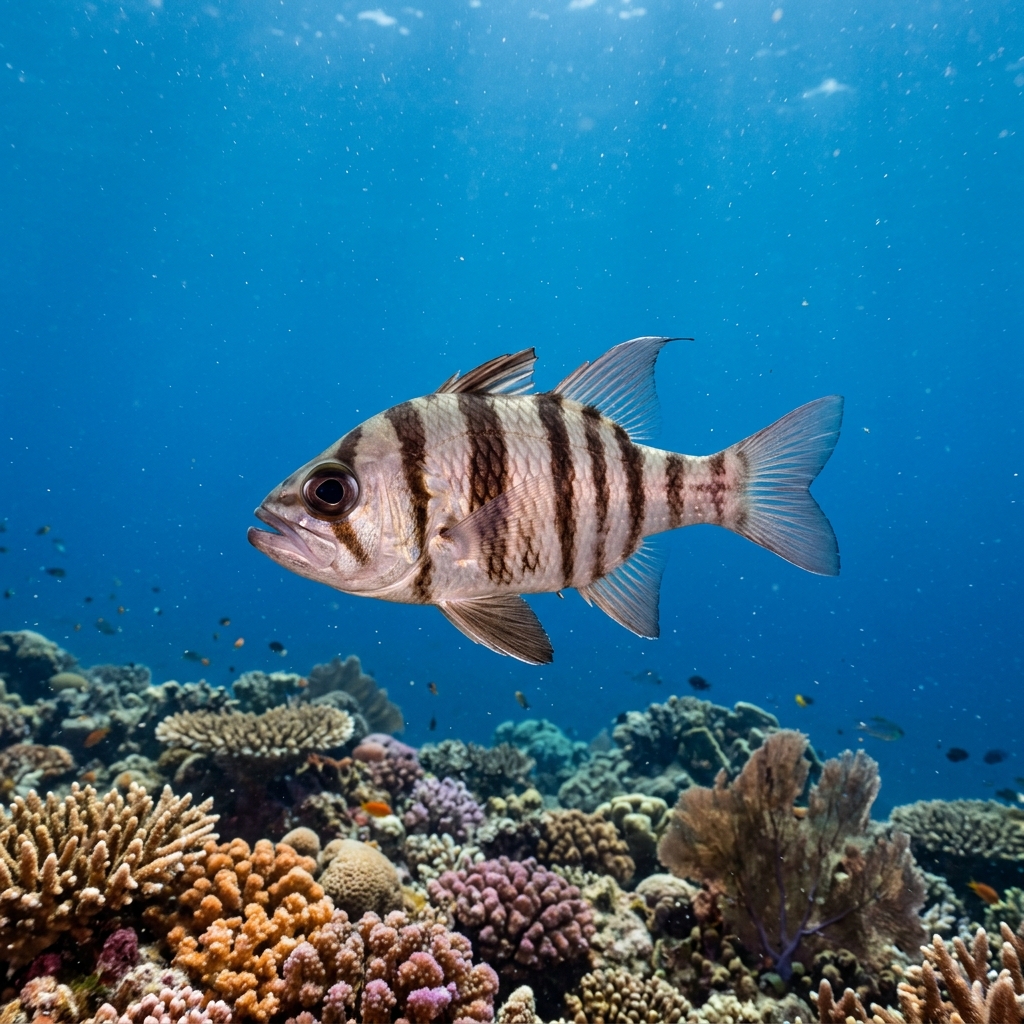
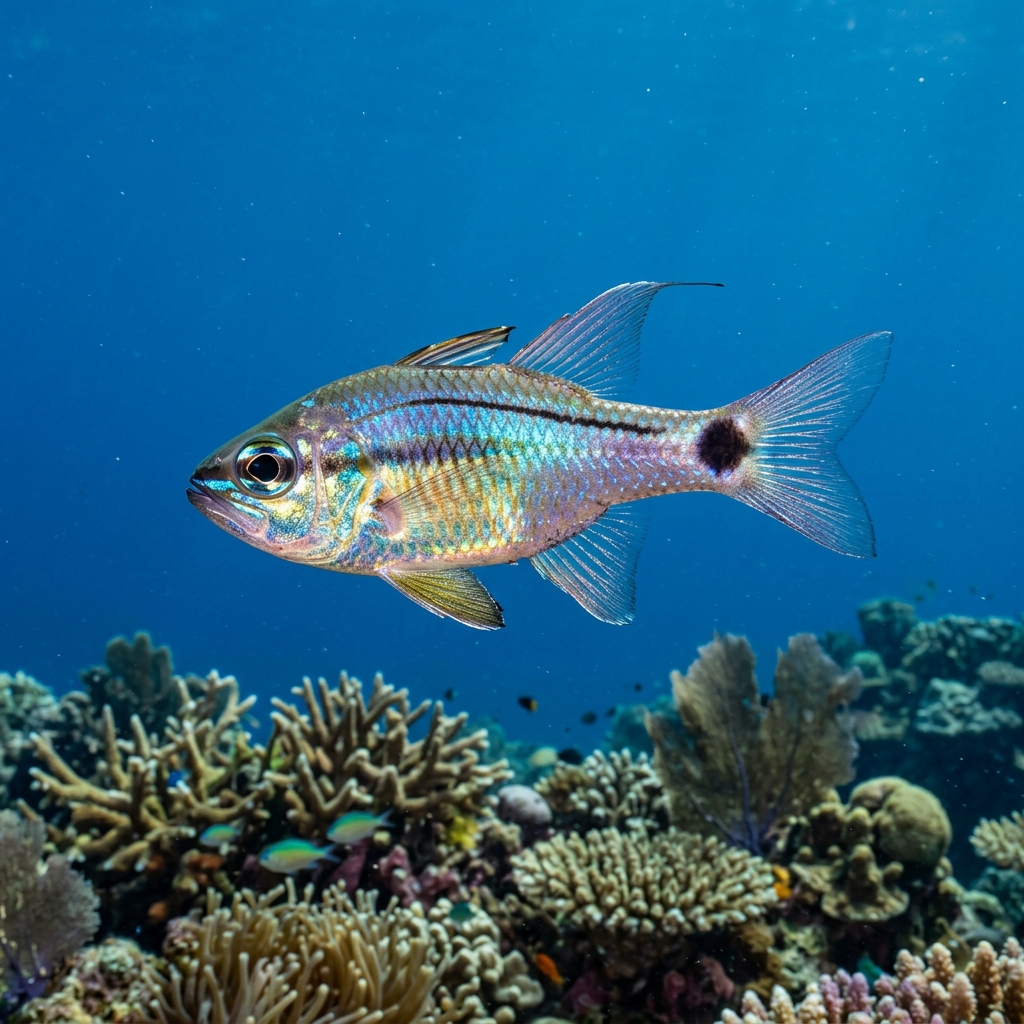
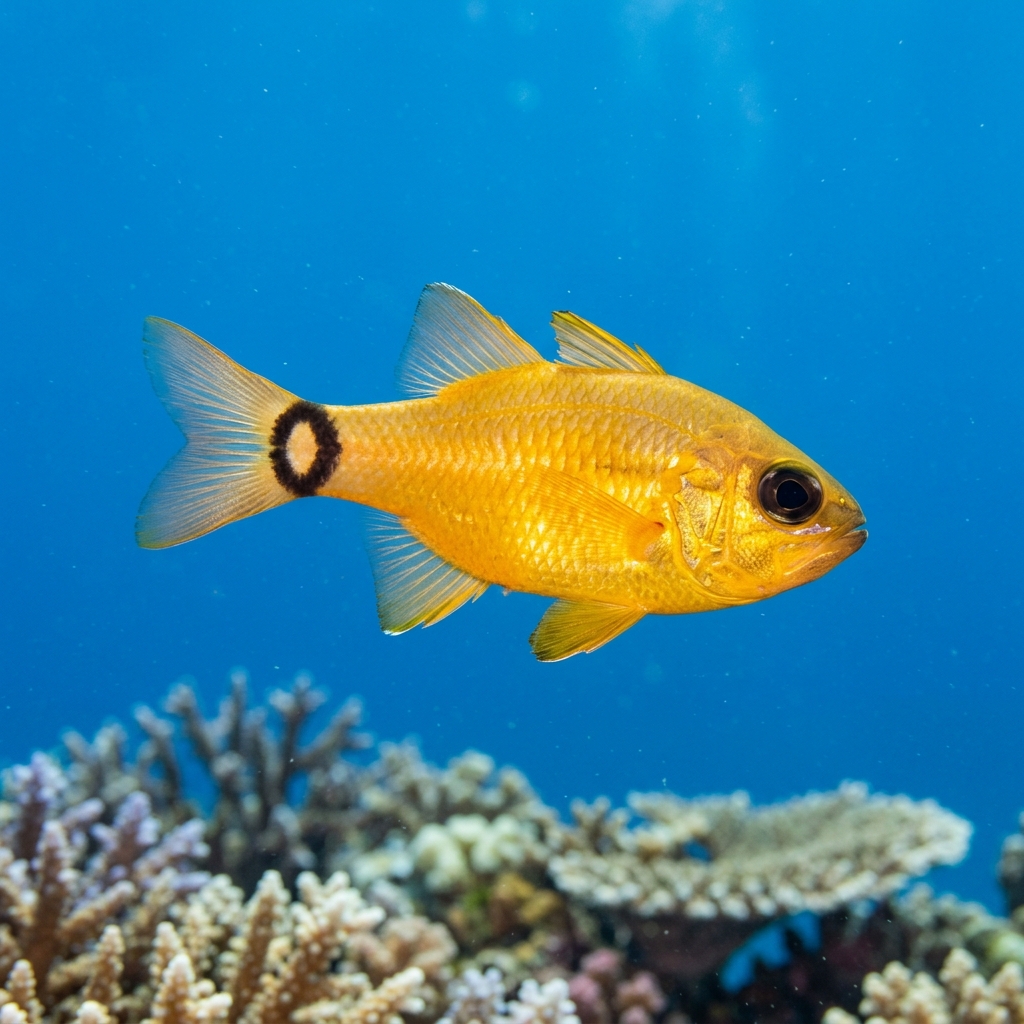
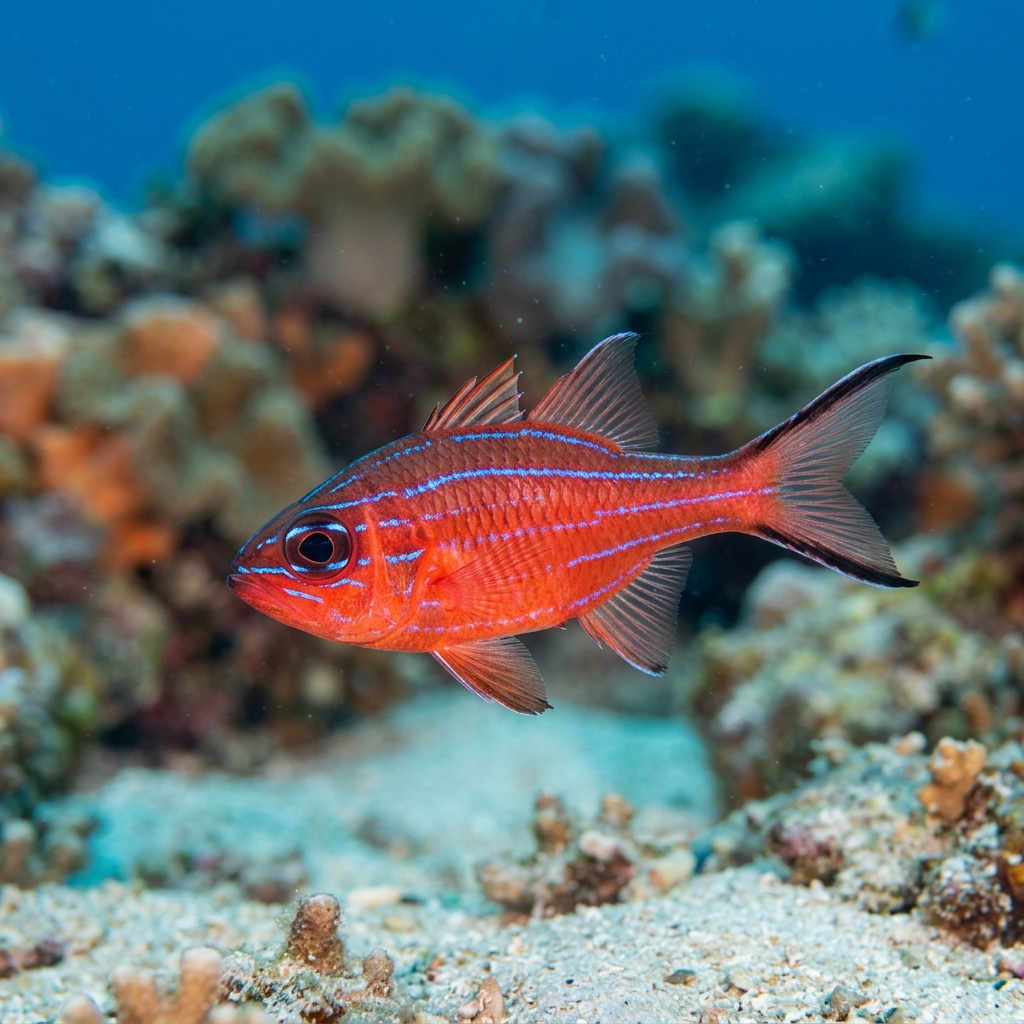
A small, deep-bodied fish around 4 cm, glassy reddish-orange overall with large dark eyes typical of cardinalfish. The clearest marker is the dark, saddle-like band that wraps across the body just behind the middle, giving it its common name. It usually holds still or hovers head-down near a ledge rather than swimming openly across the reef.
Look for it tucked under ledges, in crevices, or hovering motionless just inside the shadow of a coral head, often in small loose groups rather than alone. It tends to sit still during the day and becomes more active after dark, which is typical for cardinalfish, and it rarely bolts when a diver approaches slowly. Divers usually spot it while scanning overhangs and reef holes rather than in open water.
Like other cardinalfish, males of this genus are mouthbrooders, carrying fertilised eggs in their mouth until the young are ready to fend for themselves.
No clear seasonal pattern shows up in sightings, and with a comfortable water-temperature niche of roughly 25 to 28 C year-round in the Caribbean, it's a fish you can look for on any dive trip to the region.
Reef neighbours a diver could mistake it for. Use the identification notes above to tell them apart.
Most reliably logged in the British Virgin Islands, especially around Tortola and the Southern Islands, and a strong presence on Sint Eustatius. Bonaire's Leeward Coast and Saba's Tent Reef also turn up regular sightings, making the Dutch and British Caribbean the reliable range for this species.
Mapping where Belted Cardinalfish is logged…
The British Virgin Islands, particularly Tortola and the Southern Islands, and Sint Eustatius are the most reliable spots, with Bonaire's Leeward Coast and Saba's Tent Reef also worth checking.
There's no strong seasonal pattern in sightings, and warm Caribbean reef temperatures mean they're present year-round, so any time of year works.
Look for a small reddish-orange fish about 4 cm long with big dark eyes and a distinct dark band crossing the body behind the midpoint, usually hovering near a ledge or crevice.
They stay small, topping out around 4 cm, which is typical for cardinalfish species on Caribbean reefs.
No, they pose no threat to divers and simply retreat into reef crevices if approached too closely.
Males carry the fertilised eggs in their mouth until the young hatch and are ready to leave, a behaviour called mouthbrooding shared across the cardinalfish family.
Site and sighting data is aggregated from diver logs, iNaturalist and GBIF. For taxonomy and conservation status:
Iridescent Cardinalfish
1,781 sites