Neoglyphidodon nigroris
A yellow-and-black damselfish common on reefs from Sulawesi to Raja Ampat, comfortable year-round in warm 25-29C water.
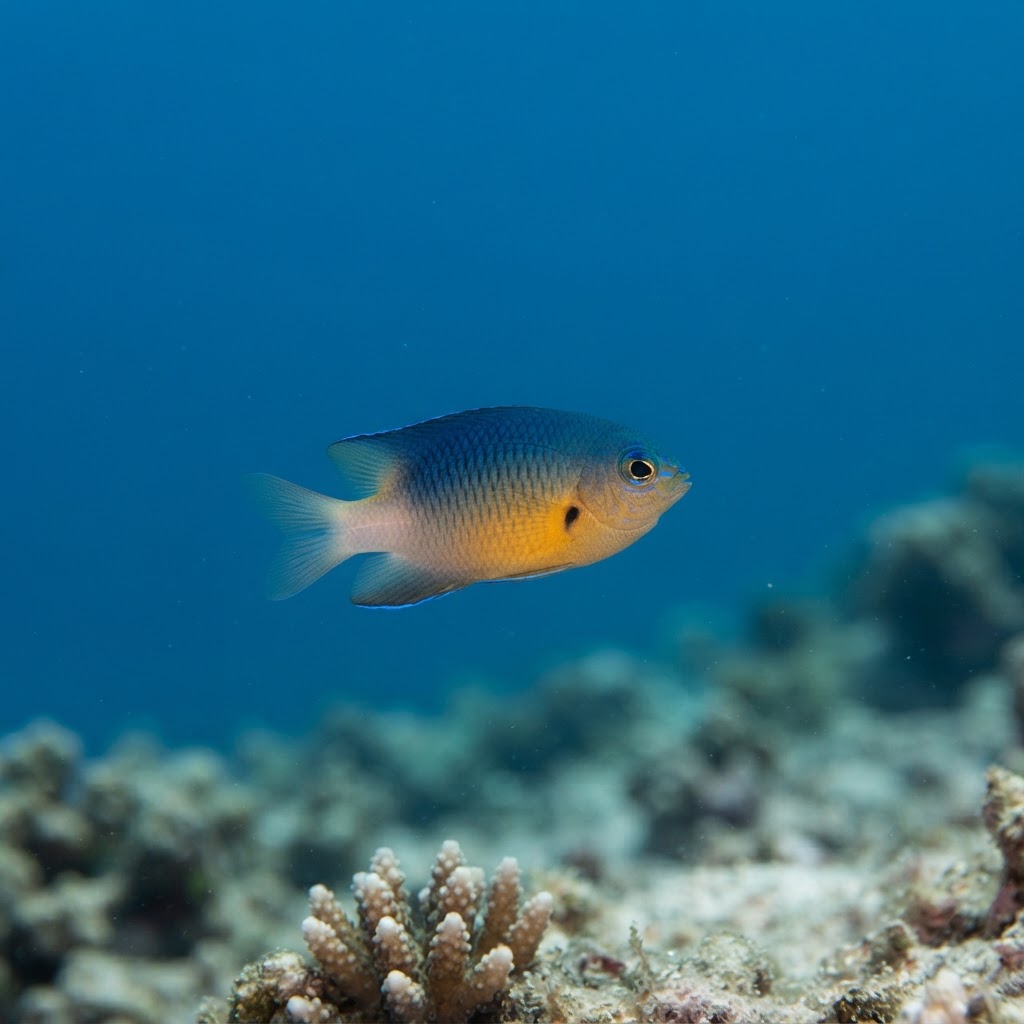
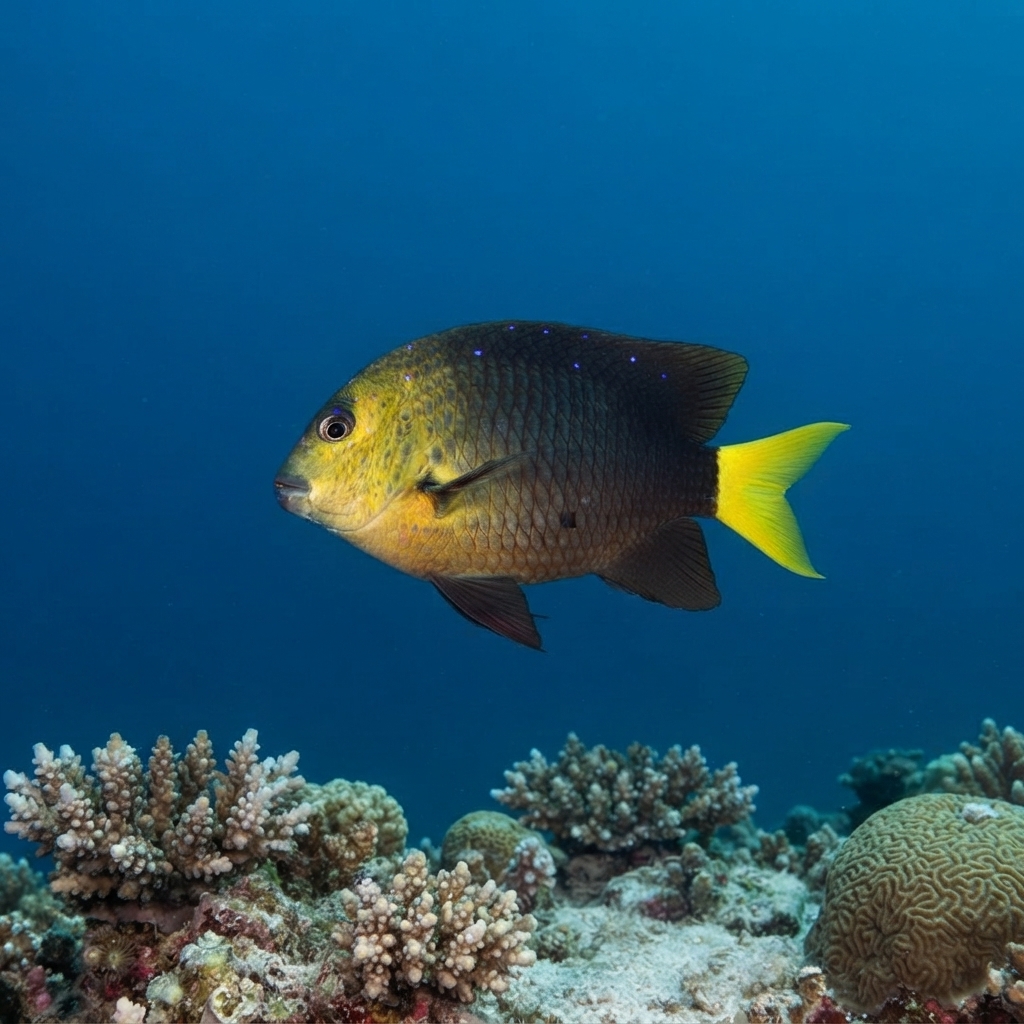
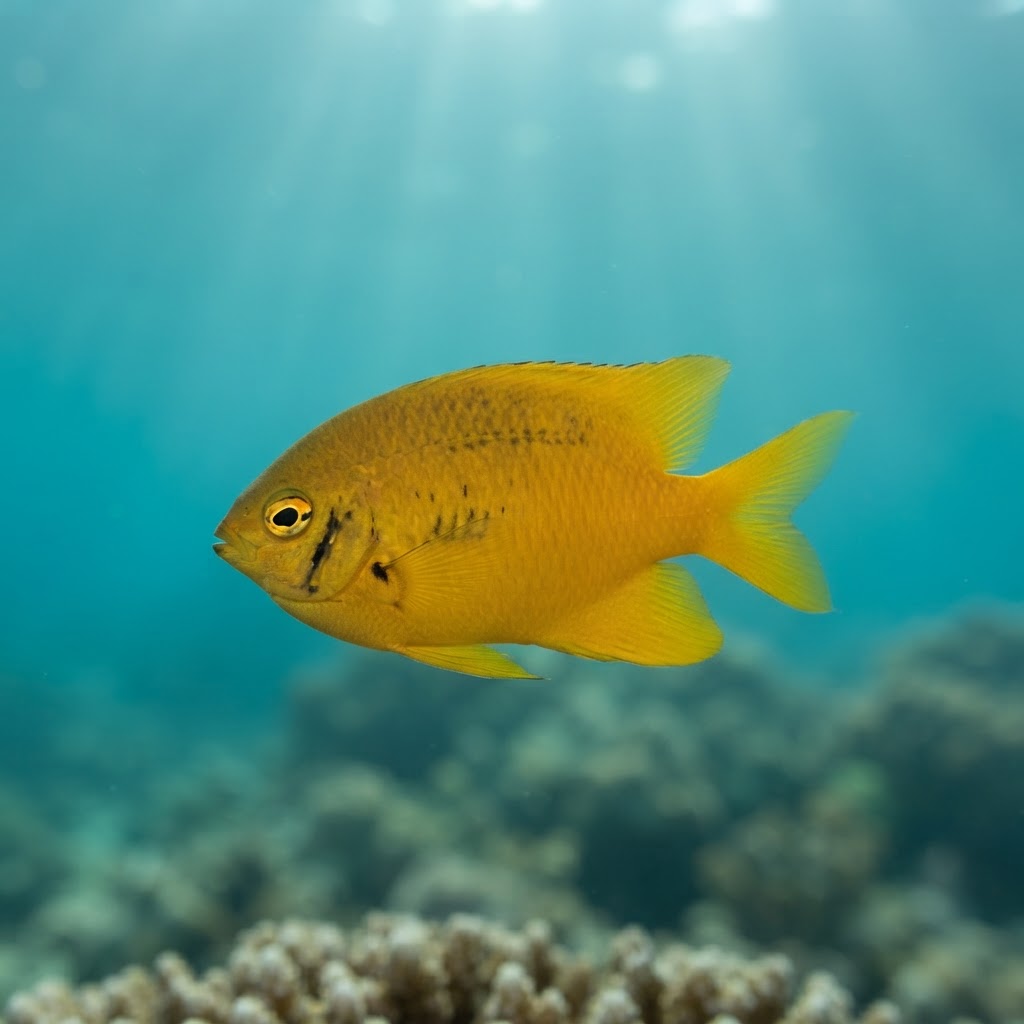
Small, deep-bodied damselfish around 9 cm, with a bright yellow to golden-yellow front half of the body that fades into a dark brown or blackish rear half and tail, giving it a distinct two-tone look. The body is compressed and oval, typical of the damselfish family, and it holds a steady position over the reef rather than darting far. Juveniles are usually a cleaner, more uniform yellow before the darker rear shading develops with age.
Usually seen hovering low over coral rubble or reef structure, picking at small invertebrates and holding a loose territory rather than schooling in open water. It tends to stay close to shelter and will dip into the reef if a diver approaches too fast, but generally keeps working the same patch of reef without much fuss. Most sightings are on shallow to mid-depth reef flats and slopes, well within normal recreational diving depths.
Like most damselfish, it will actively defend a small patch of reef against other fish, so watching one for a minute often reveals a running border dispute with a neighbour rather than a fish simply drifting past.
No clear seasonal pattern shows up in sightings, and with a comfortable range of 25.2 to 29.3C this is a year-round reef fish across its Indo-Pacific range rather than a seasonal target.
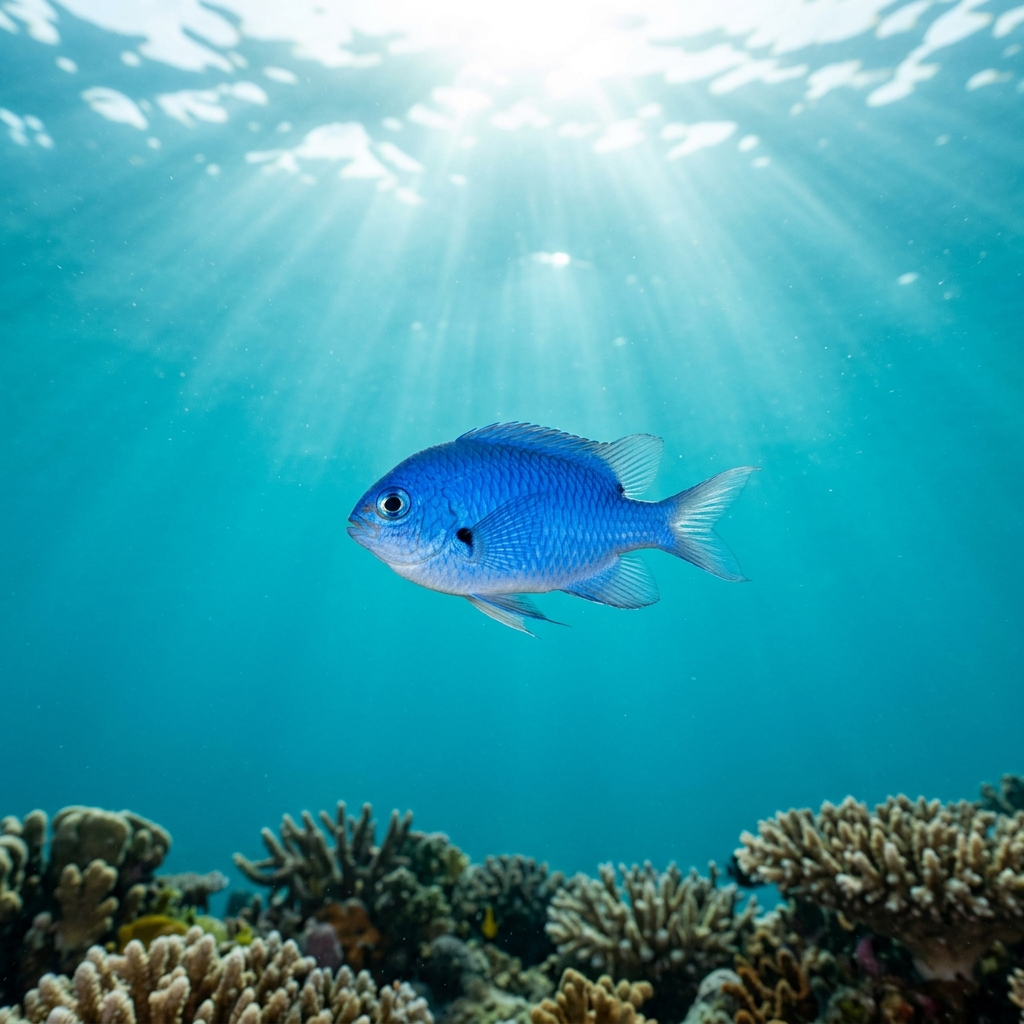
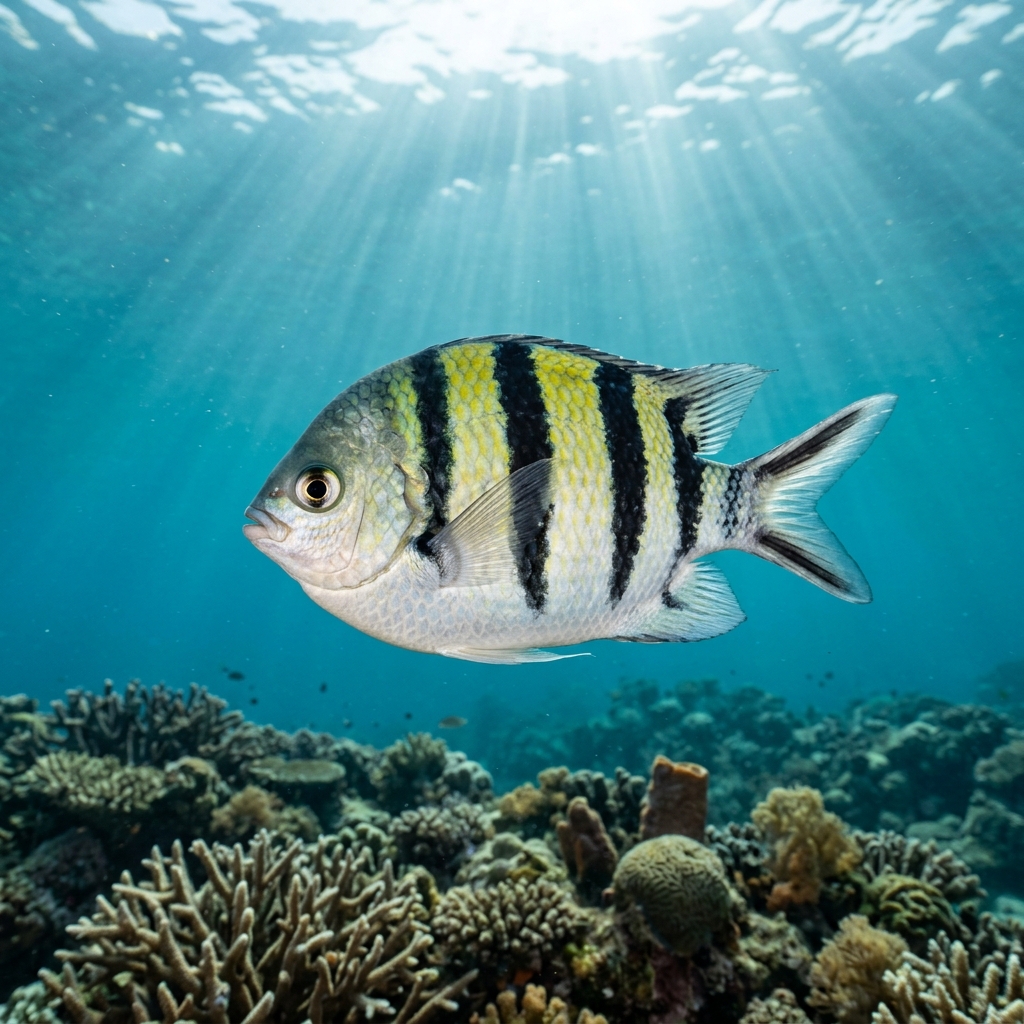
Reef neighbours a diver could mistake it for. Use the identification notes above to tell them apart.
Most reliably logged across Indonesia, especially Sulawesi and Raja Ampat, and a strong presence in the Philippine Visayas and Sabah in Malaysia. It also turns up regularly on reefs in Okinawa and the Ryukyu Islands in Japan, Queensland in Australia, and around Efate in Vanuatu.
Mapping where Behn's Damselfish is logged…
It's most commonly logged in Indonesia, particularly Sulawesi and Raja Ampat, and is also a regular sighting in the Philippine Visayas, Sabah in Malaysia, and Okinawa in Japan.
There's no strong seasonal pattern in sightings, and it sits comfortably in 25 to 29C water year-round, so any month on a tropical Indo-Pacific reef trip works.
Look for a small, oval damselfish with a bright yellow front half and a darker brown to blackish rear half and tail, usually hovering close to reef structure rather than schooling in the open.
They stay small, topping out around 9 cm, which is typical for reef damselfish and part of why they're easy to overlook against busier reef scenery.
No, they pose no threat to divers and will simply retreat into the reef structure if you get too close.
Site and sighting data is aggregated from diver logs, iNaturalist and GBIF. For taxonomy and conservation status:
Dascyllus
3,697 sites