Stegastes leucostictus
Spot beaugregory on shallow reefs from the Bay Islands to the BVI, most active in warm 26-28C water year-round.
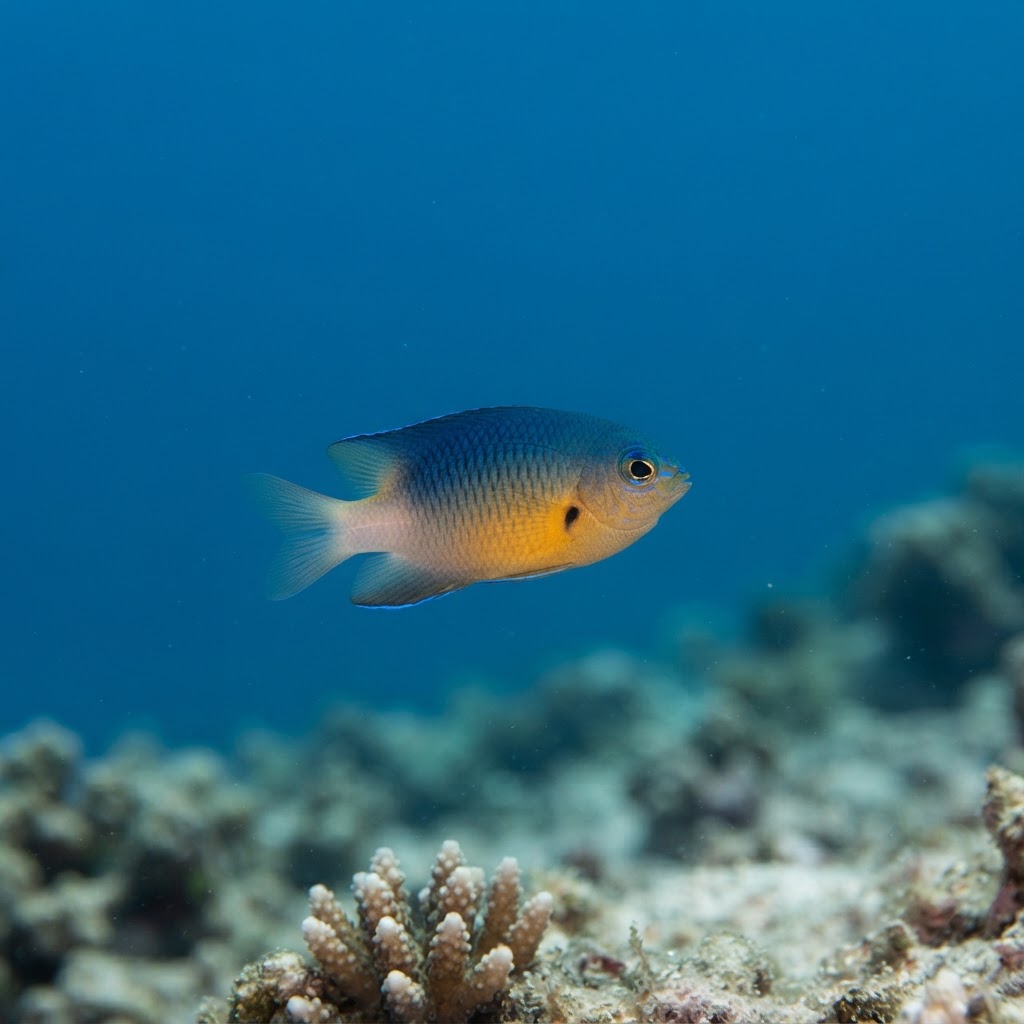
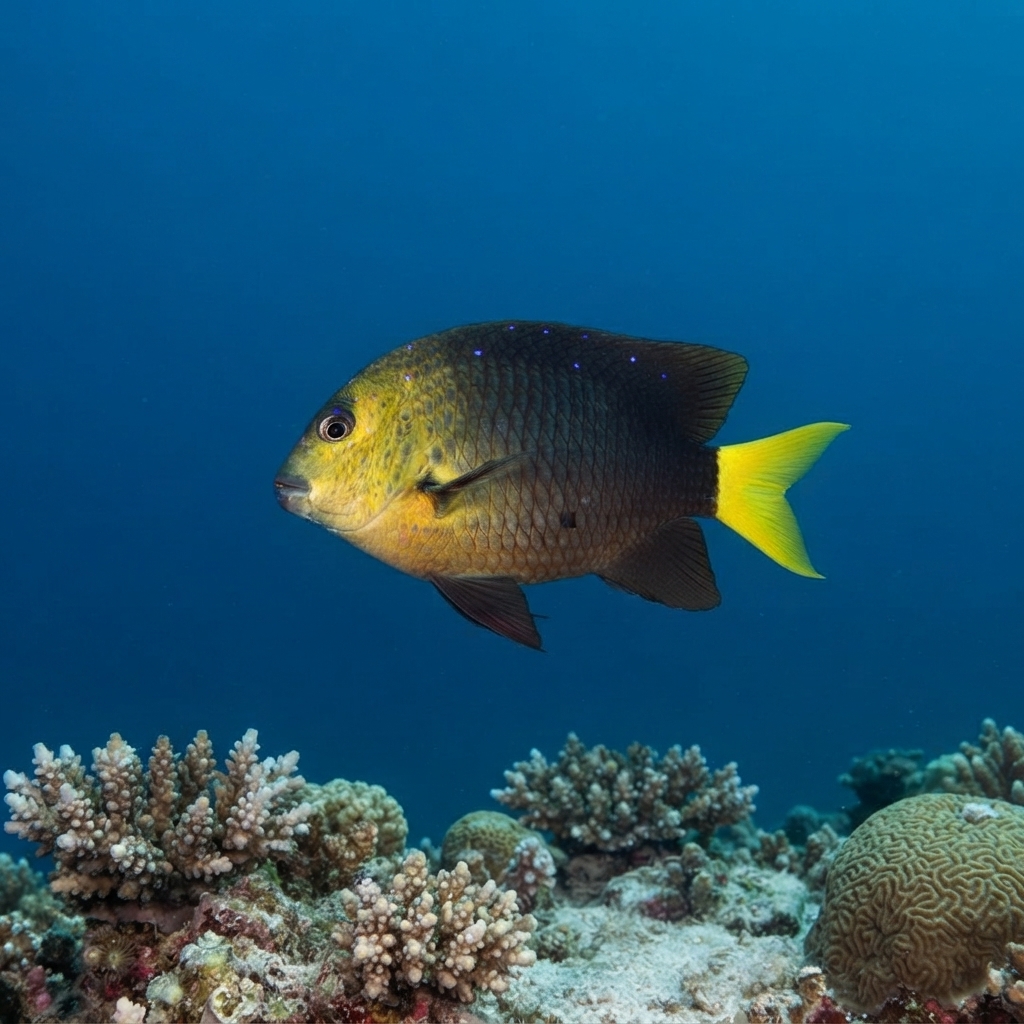
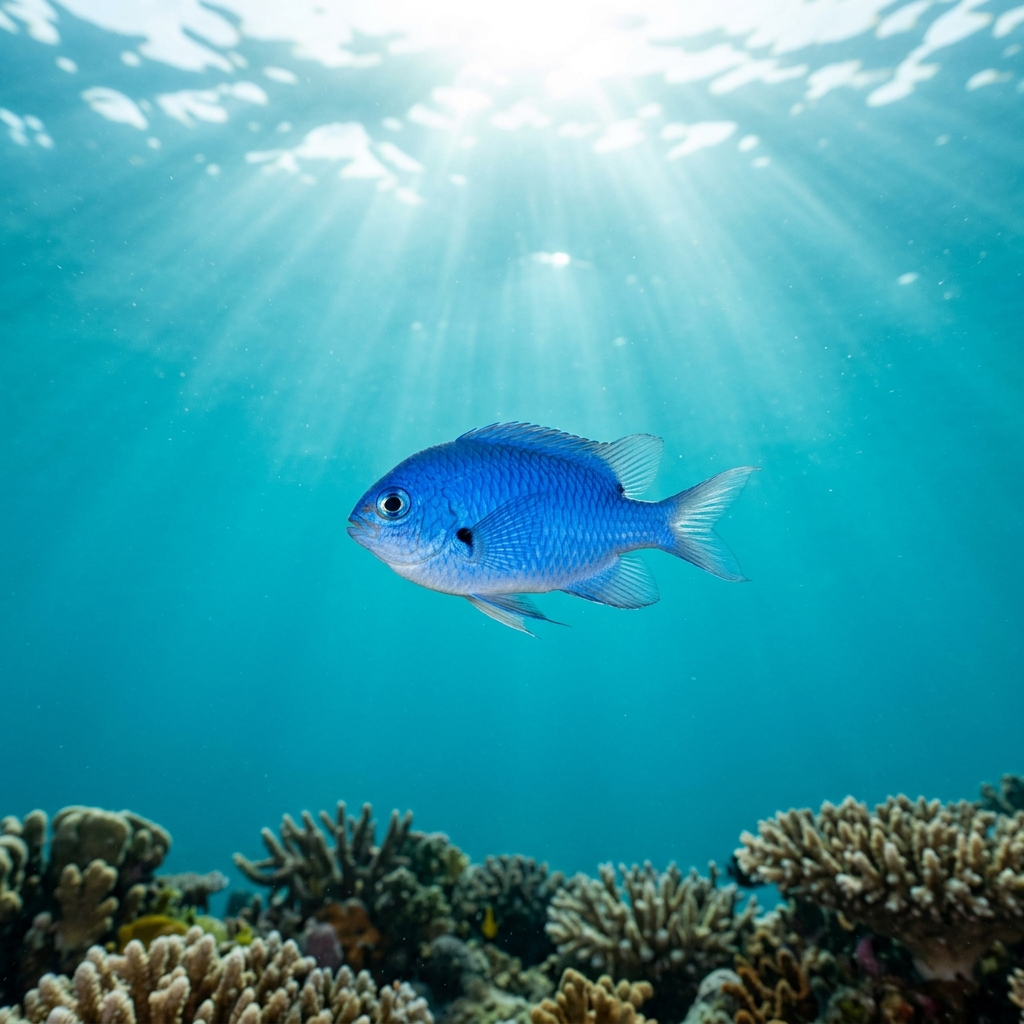
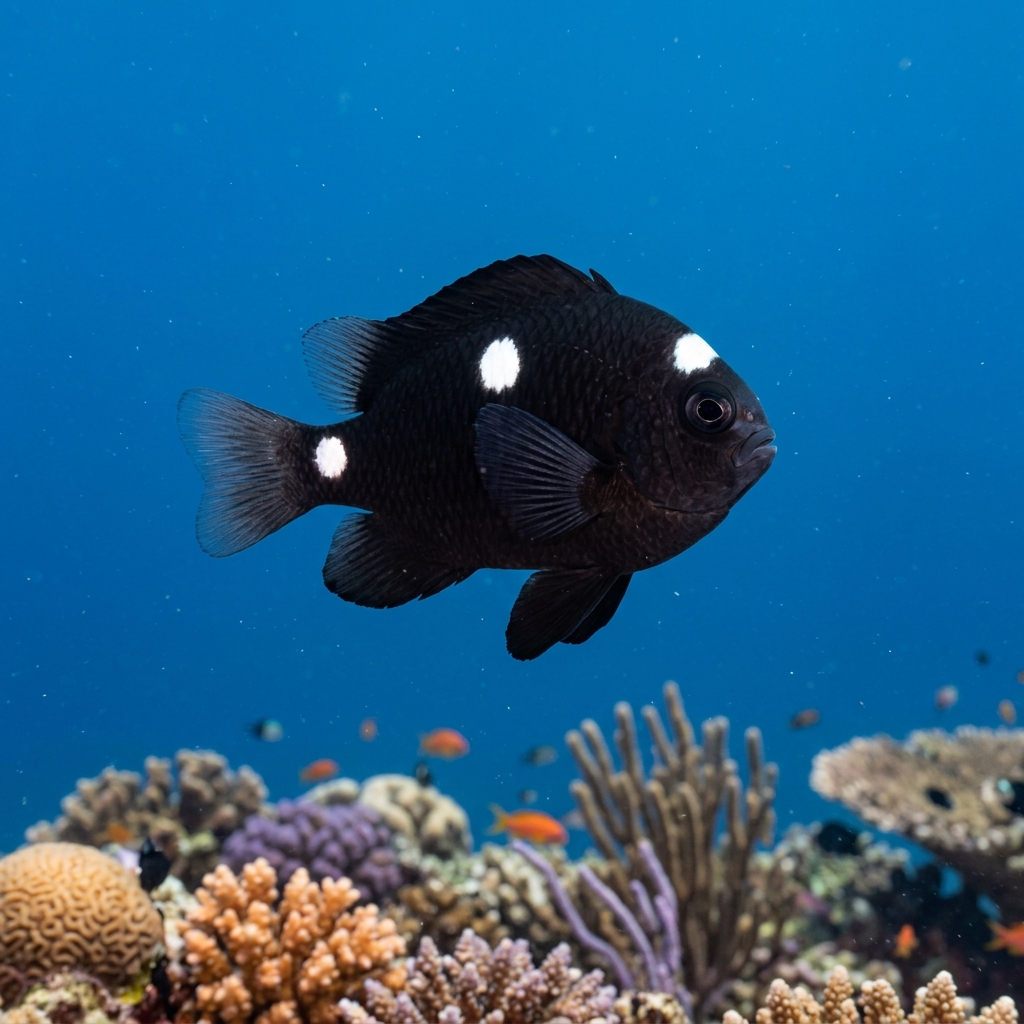
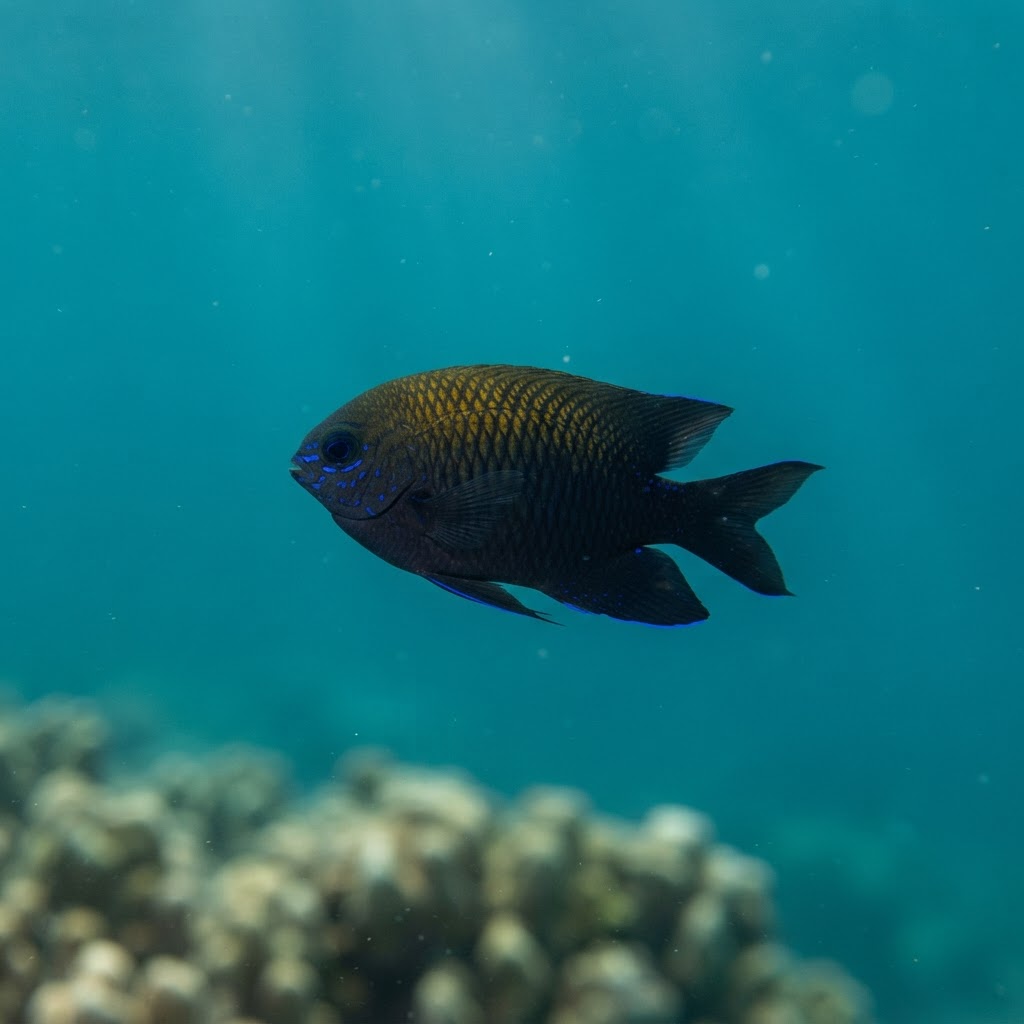
A small, oval-bodied damselfish reaching about 7cm, usually dusky grey-brown to blue-grey with faint pale speckling along the upper body. Look for a dark spot at the base of the pectoral fin and a yellowish tinge on the lower body and tail that fades with age. Juveniles are far more eye-catching, with a bright blue-speckled body and a vivid yellow tail that make them easy to pick out against dark rubble.
Expect to find it holding a small patch of reef or rubble in shallow water, rarely below 10 metres, where it darts out to snap at passing plankton and quickly retreats. It is territorial for its size and will often flare or dart toward divers who linger too close to its patch, though it poses no threat. Most sightings come from casual reef and rubble areas rather than deep structure, making it a common background fish on shallow dives and snorkels.
Like other damselfish, it fiercely guards a patch of algae or eggs on the reef and will nip at fish many times its own size that stray too close, a disproportionate defence for such a small body.
No strong seasonal pattern shows up in sightings, and with water sitting between 26.2 and 28.2C on the reefs where it lives, it is present and active all year round.
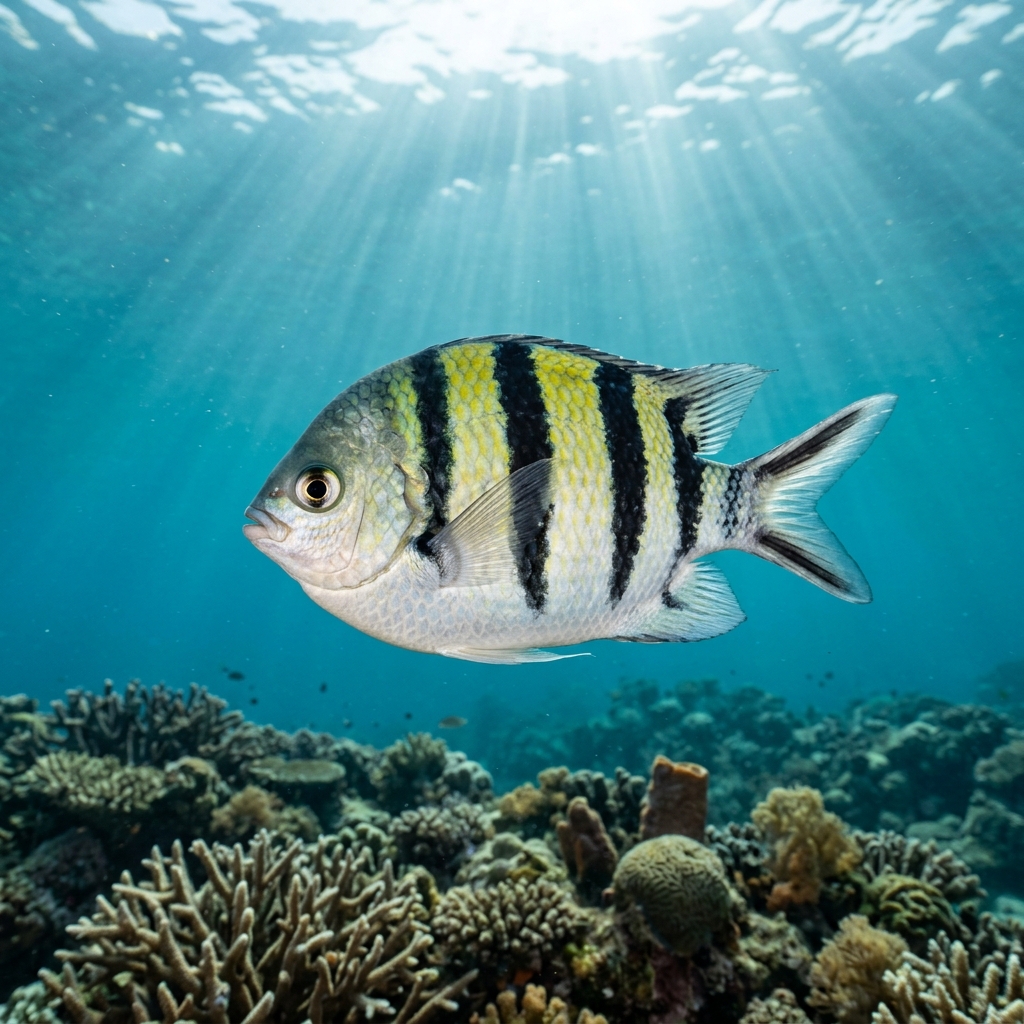
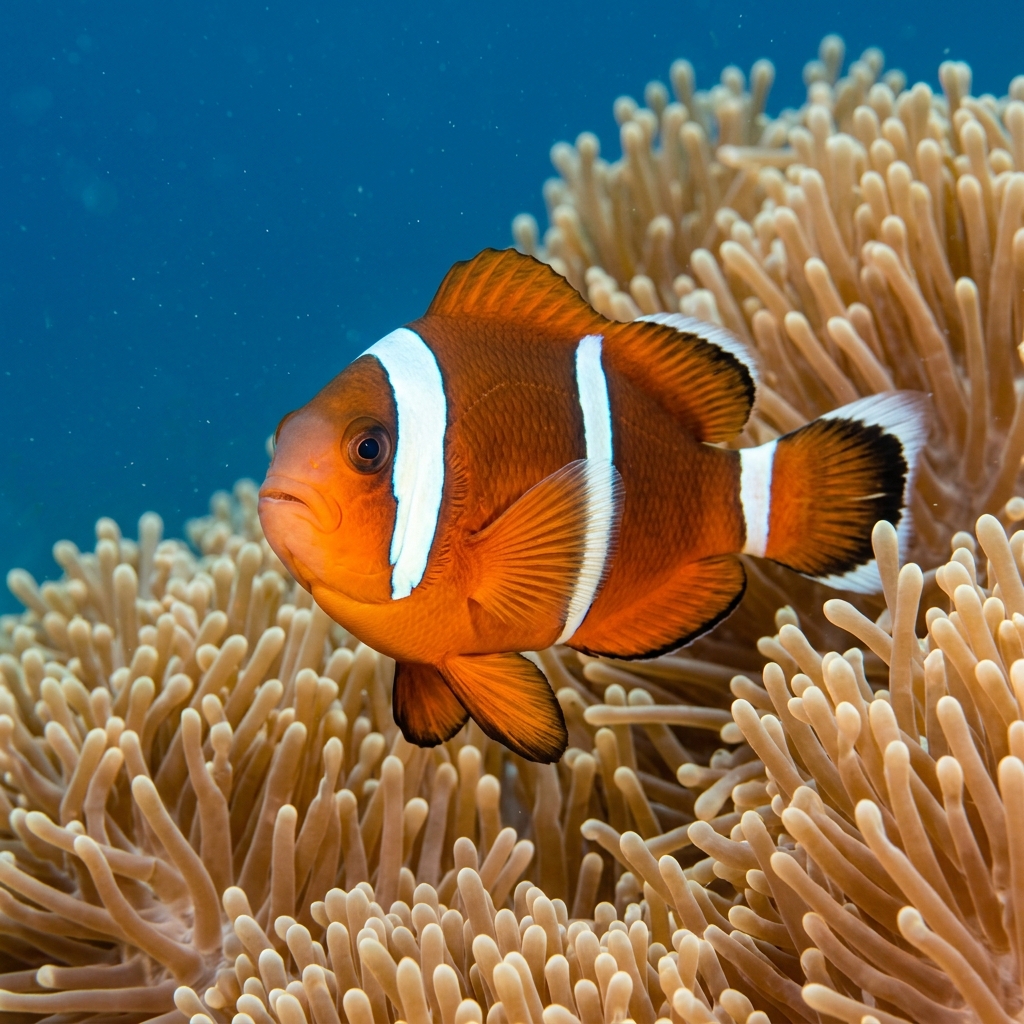
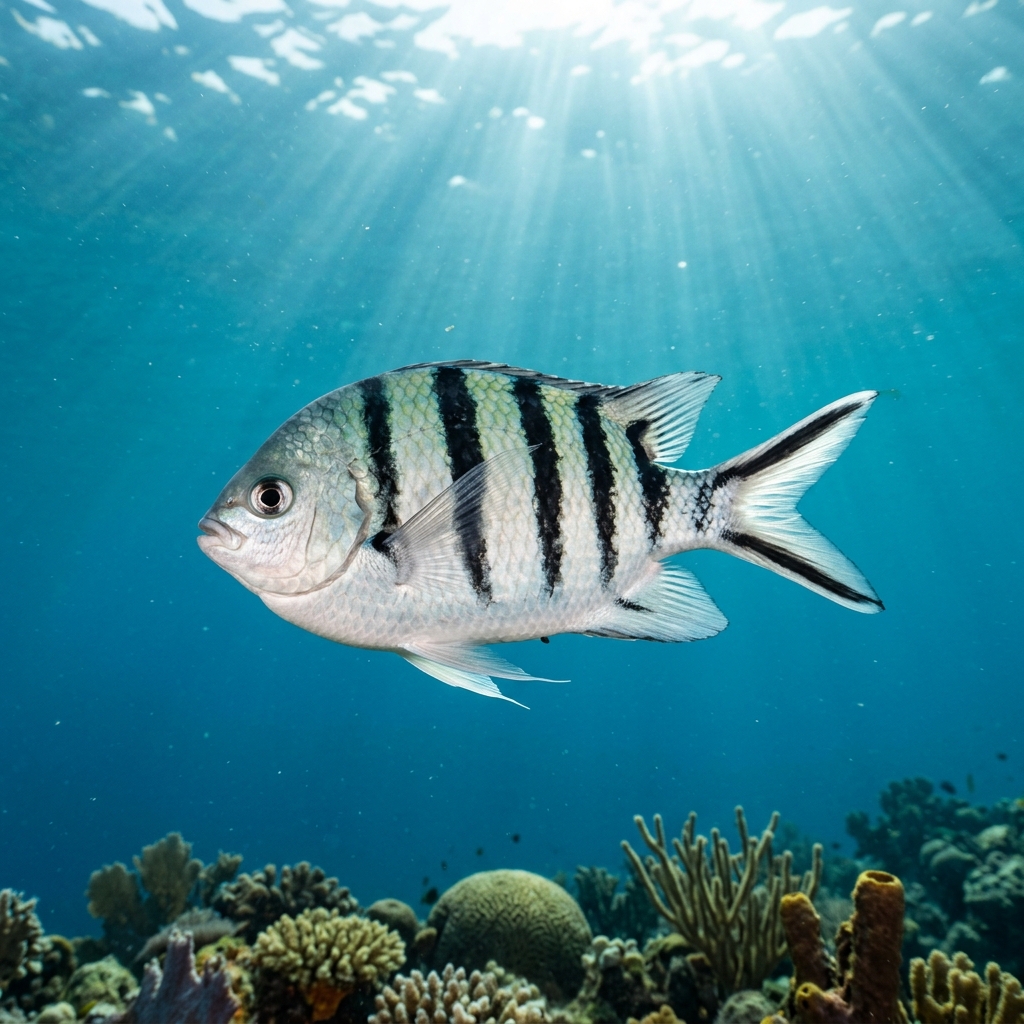
Reef neighbours a diver could mistake it for. Use the identification notes above to tell them apart.
Most reliably logged in Honduras, especially around the Bay Islands, and a strong presence across Tortola and the Southern Islands in the British Virgin Islands. Also a regular find on reefs in Mexico's Yucatán Peninsula, the US Virgin Islands (Saint John and Saint Croix), the Dominican Republic, Colombia's San Andrés and Providencia, Belize, and Guadeloupe.
Mapping where Beaugregory is logged…
Best chances are in Honduras's Bay Islands and around Tortola in the British Virgin Islands, with solid numbers also logged in Mexico's Yucatán Peninsula, the US Virgin Islands, the Dominican Republic, Colombia's San Andrés and Providencia, Belize, and Guadeloupe.
Any time of year works. Sightings show no clear seasonal spike, and the shallow reefs it favours stay a comfortable 26 to 28C year-round.
Look for a small, roughly 7cm oval damselfish in dusky grey-blue with faint pale speckling and a dark mark at the base of the pectoral fin. Juveniles stand out more, showing bright blue speckles and a yellow tail against reef rubble.
They stay small, typically around 7cm as adults, which is standard for damselfish that hold territory on shallow reef patches rather than roam open water.
No. They are harmless to people, though they can be surprisingly bold and will dart at divers who hover too close to their patch of reef.
Despite being only a few centimetres long, they aggressively defend a small territory of algae or eggs, chasing off fish far larger than themselves rather than fleeing.
Site and sighting data is aggregated from diver logs, iNaturalist and GBIF. For taxonomy and conservation status:
Dascyllus
3,697 sites