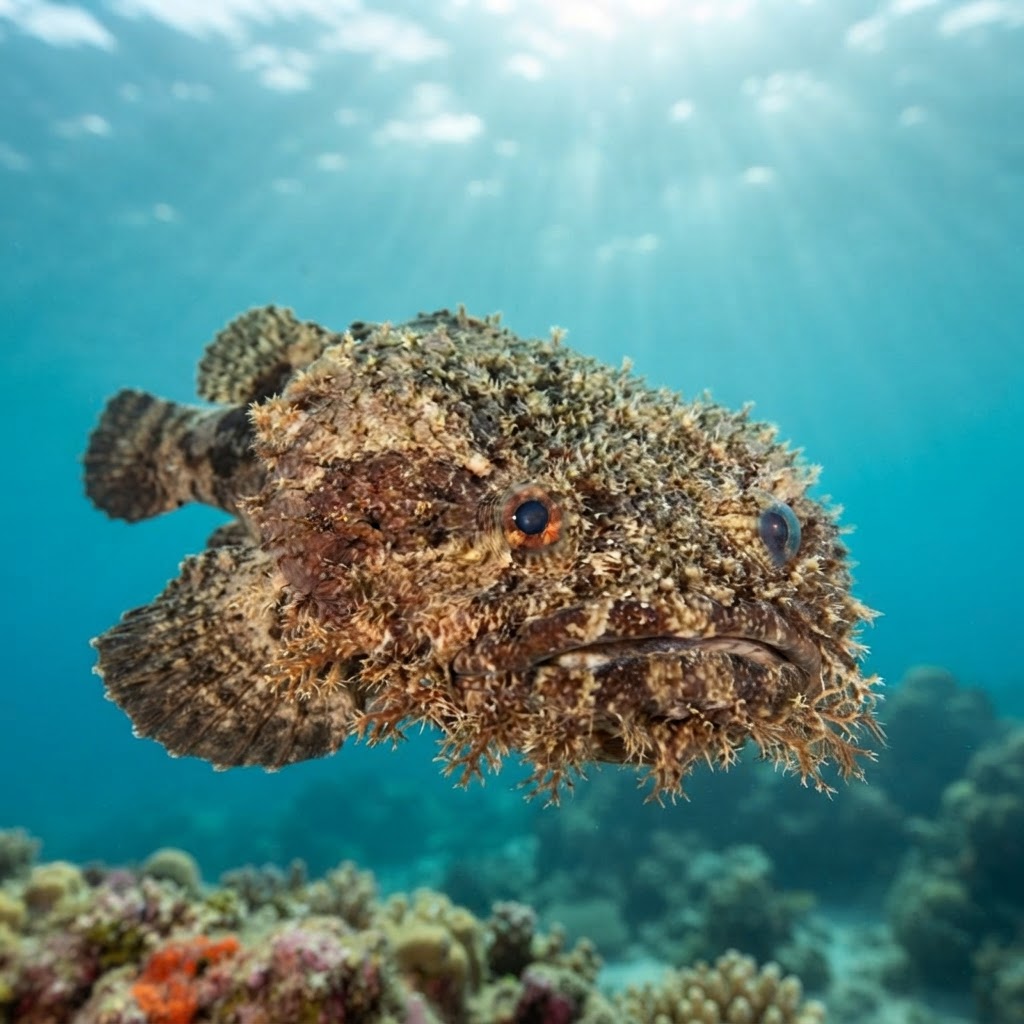
Sanopus barbatus
Endemic to the Bay Islands of Honduras, this whiskered reef dweller sits still on rubble in 25-31°C water year-round. Uncommon but worth the search.
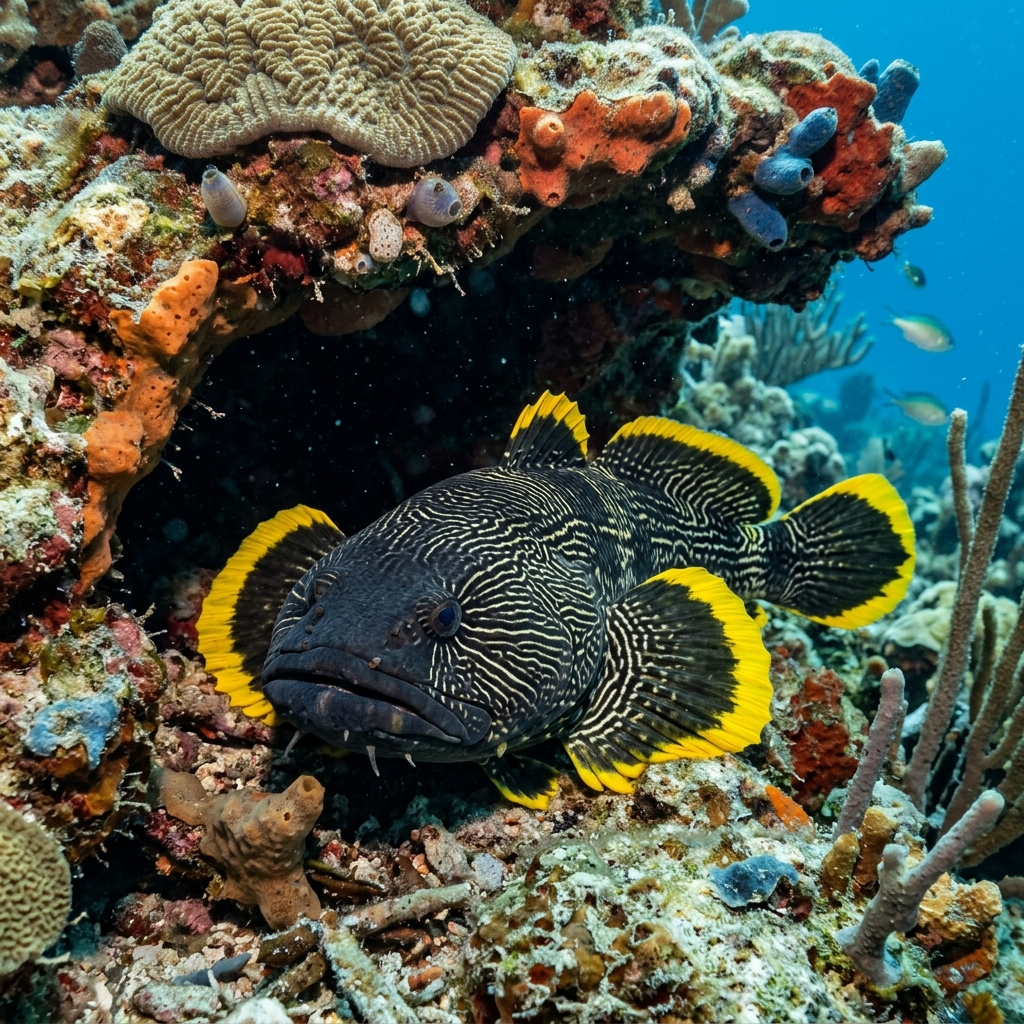
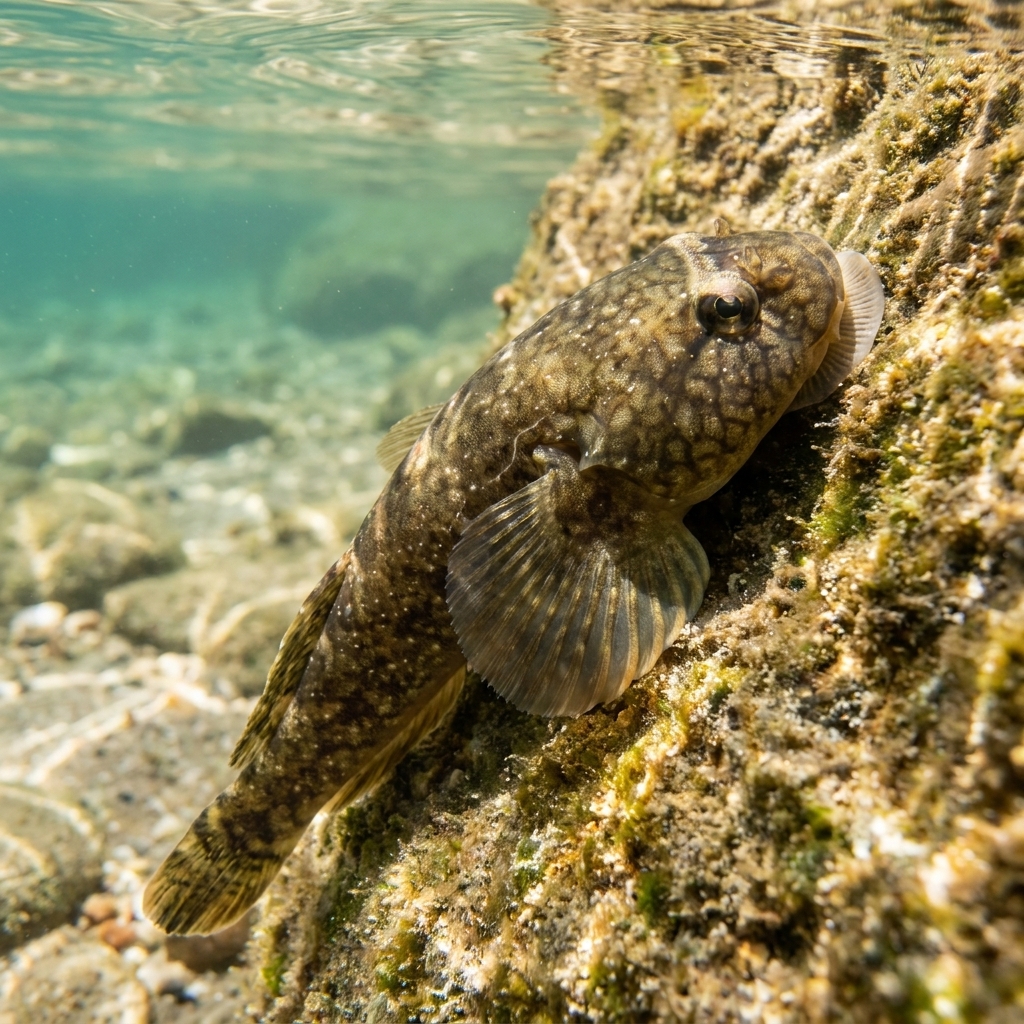
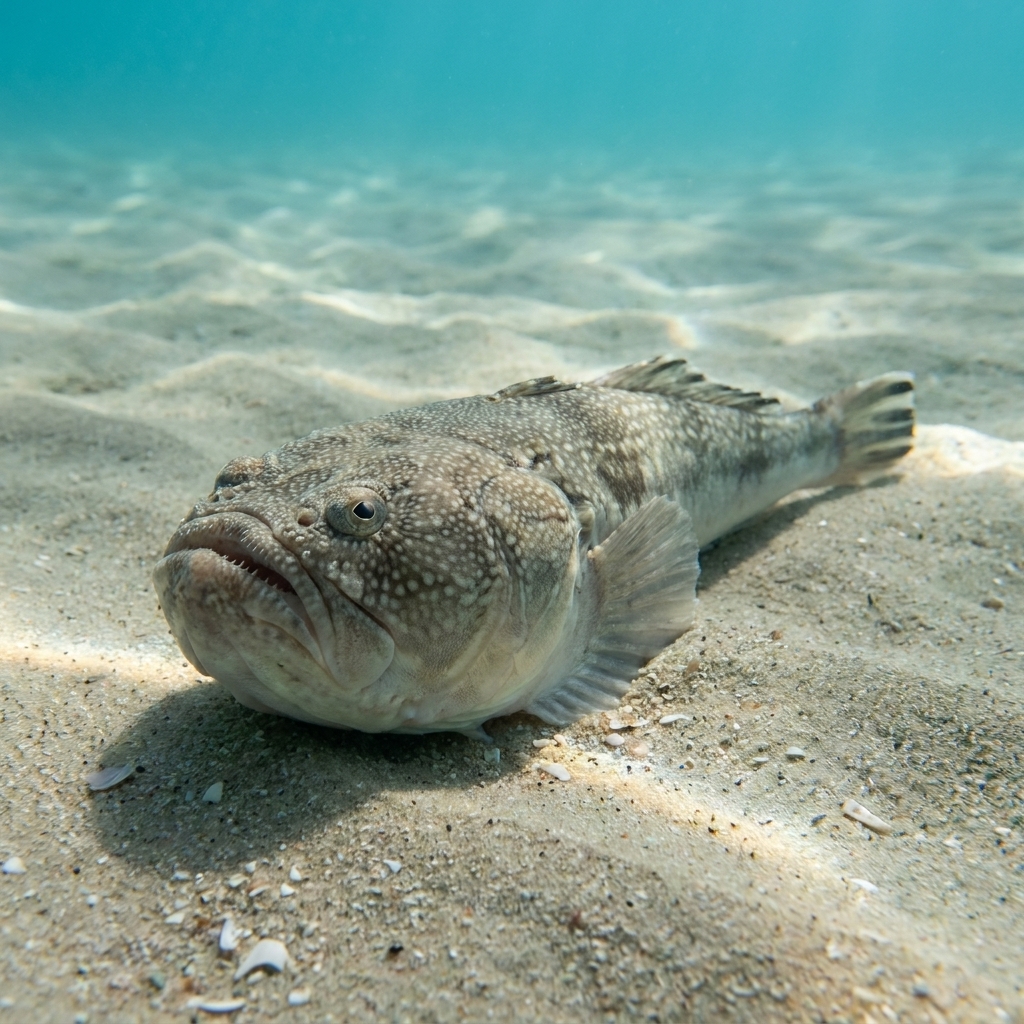
A squat, broad-headed fish around 29 cm long, mottled in brown and cream tones that blend into rubble and sand. The giveaway is the fringe of fleshy whisker-like barbels along its jaw and gill covers, which gives it that bearded look. It tends to sit motionless on the bottom rather than swim in open water, so divers often spot it by its shape and stillness rather than colour.
Look for it parked on sand, rubble, or under ledges rather than out cruising the reef, often tucked into a shaded gap during the day. It is not shy so much as sedentary, relying on staying still and blending in rather than fleeing when a diver approaches. Slow down and scan low reef margins and rubble patches, since it rarely draws attention by moving.
Toadfish in this family can produce low grunting or croaking sounds using their swim bladder, a trait shared across the barbeled Sanopus toadfish group and part of why divers sometimes hear reef noise before spotting the fish making it.
No clear seasonal pattern shows up in sightings, and with water sitting between 25.1 and 31.1°C year-round in its Bay Islands range, there is no cold season pushing it into hiding. Plan around good visibility and calm conditions rather than a particular month.
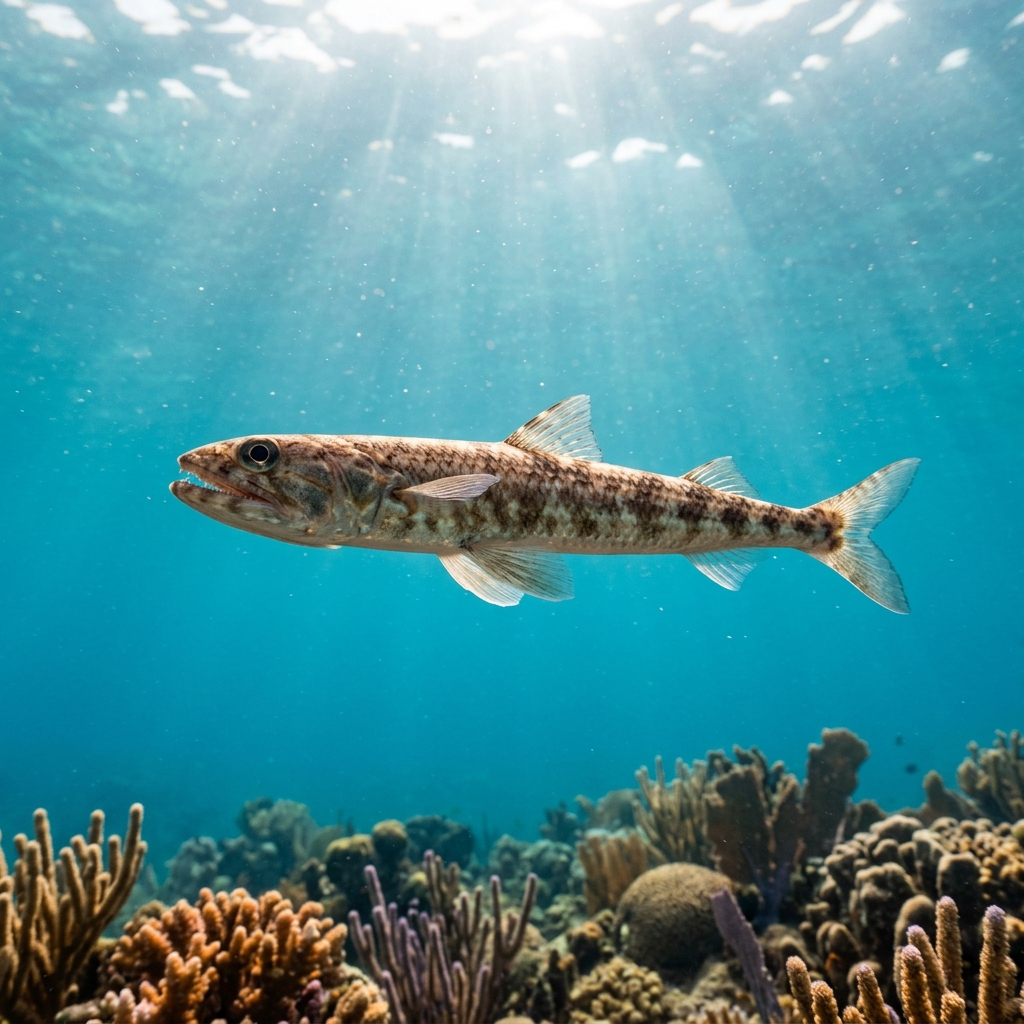
Reef neighbours a diver could mistake it for. Use the identification notes above to tell them apart.
This one is essentially a Bay Islands, Honduras speciality, logged far more consistently there than anywhere else, with Roatan and the surrounding sites forming the core of nearly every sighting. A single record from the Caribbean coast of Panama shows it turns up outside Honduras too, but treat that as a rare exception rather than a reliable second destination.
Mapping where Bearded Toadfish is logged…
Its stronghold is the Bay Islands of Honduras, particularly around Roatan, where it is logged far more often than anywhere else. A single sighting from Panama's Caribbean coast suggests a wider range, but Honduras is the reliable destination.
There is no detected season, sightings are spread through the year, matching the warm 25 to 31°C water it lives in year-round in the Bay Islands. Any month with decent visibility works.
Look for a stocky, mottled brown fish about 29 cm long sitting still on sand or rubble, with fleshy barbel fringes around its jaw and gills. It rarely swims off when approached, which helps confirm the ID.
They reach around 29 cm in length, a solid handspan-plus of stocky, bottom-hugging fish rather than anything long or slender.
Yes, like other toadfish they can produce grunting or croaking noises using their swim bladder. Divers sometimes hear this low sound near rubble patches before spotting the fish itself.
Site and sighting data is aggregated from diver logs, iNaturalist and GBIF. For taxonomy and conservation status:
Soldierfish
3,612 sites