Tubulophilinopsis reticulata
A rare headshield slug logged in Luzon, Philippines, in warm 23-29C water, year-round with no fixed season.
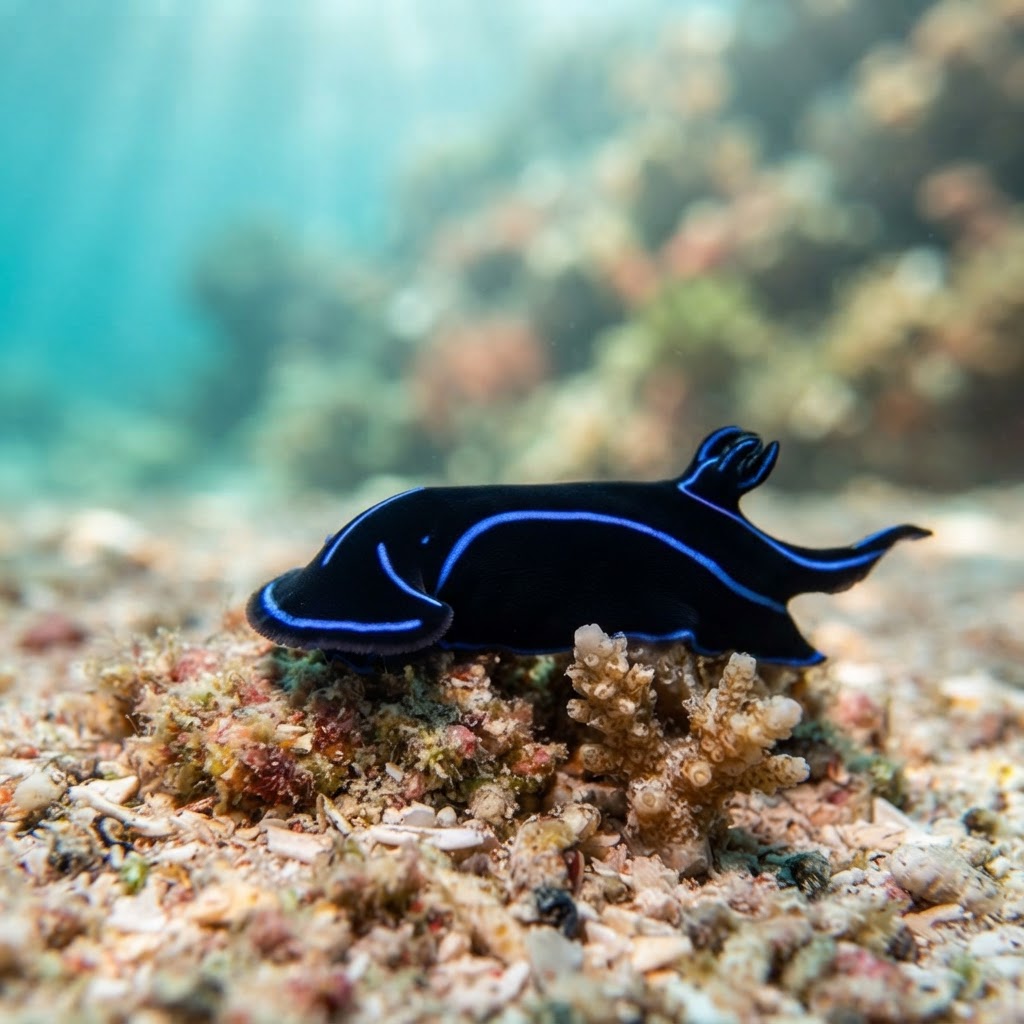
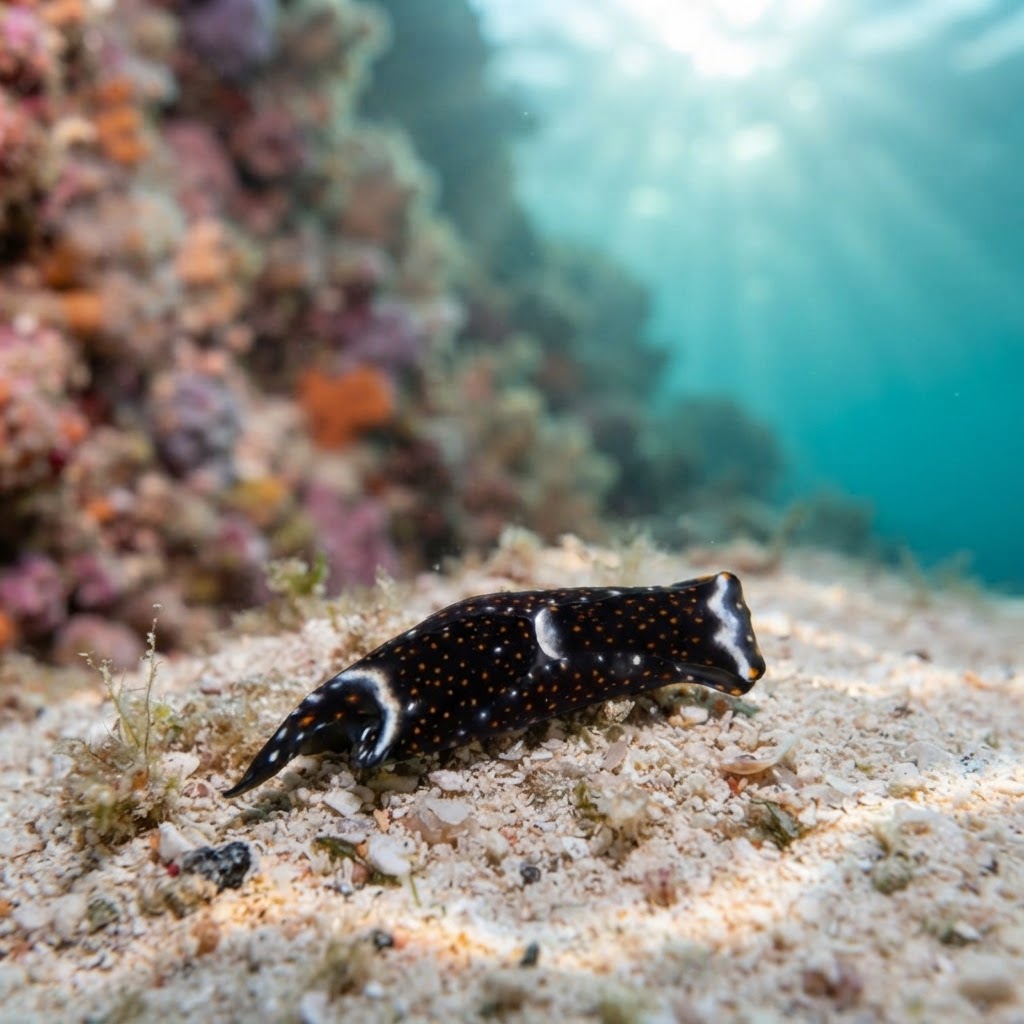
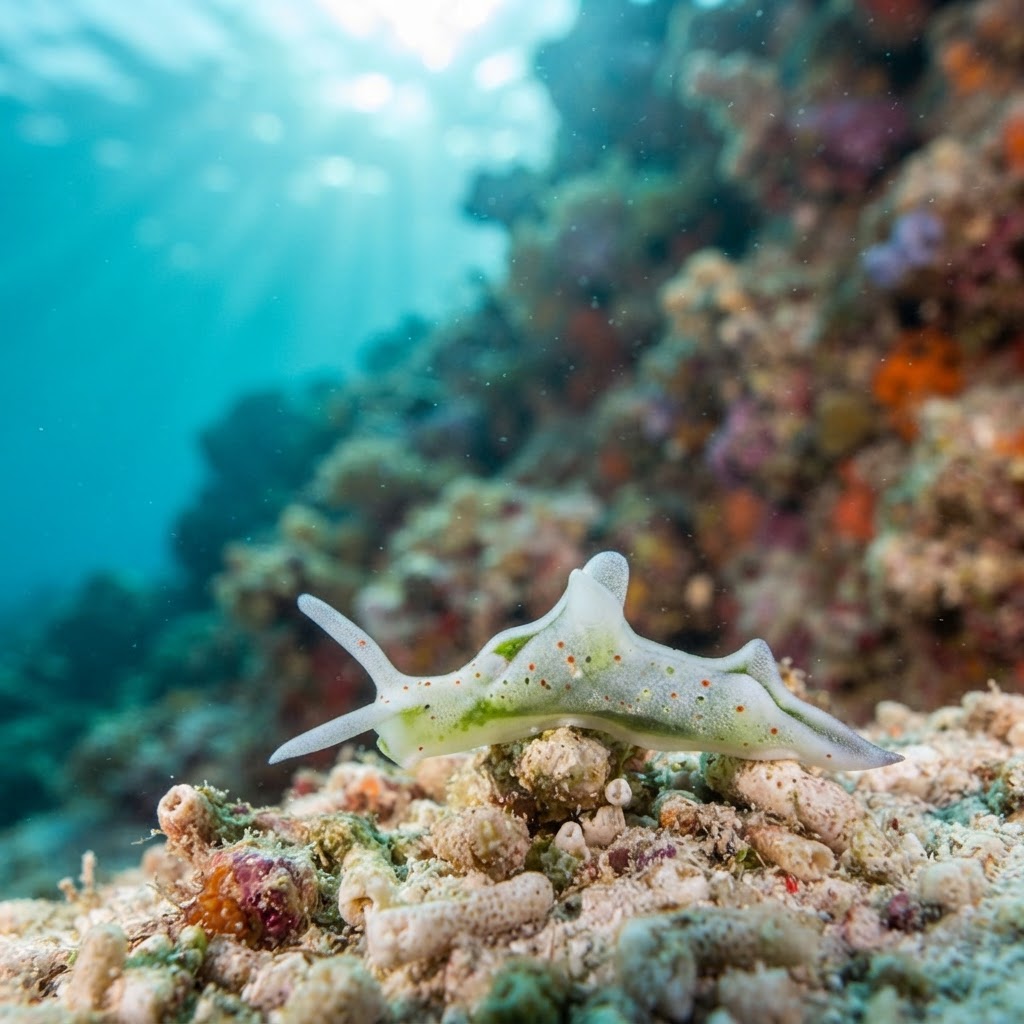
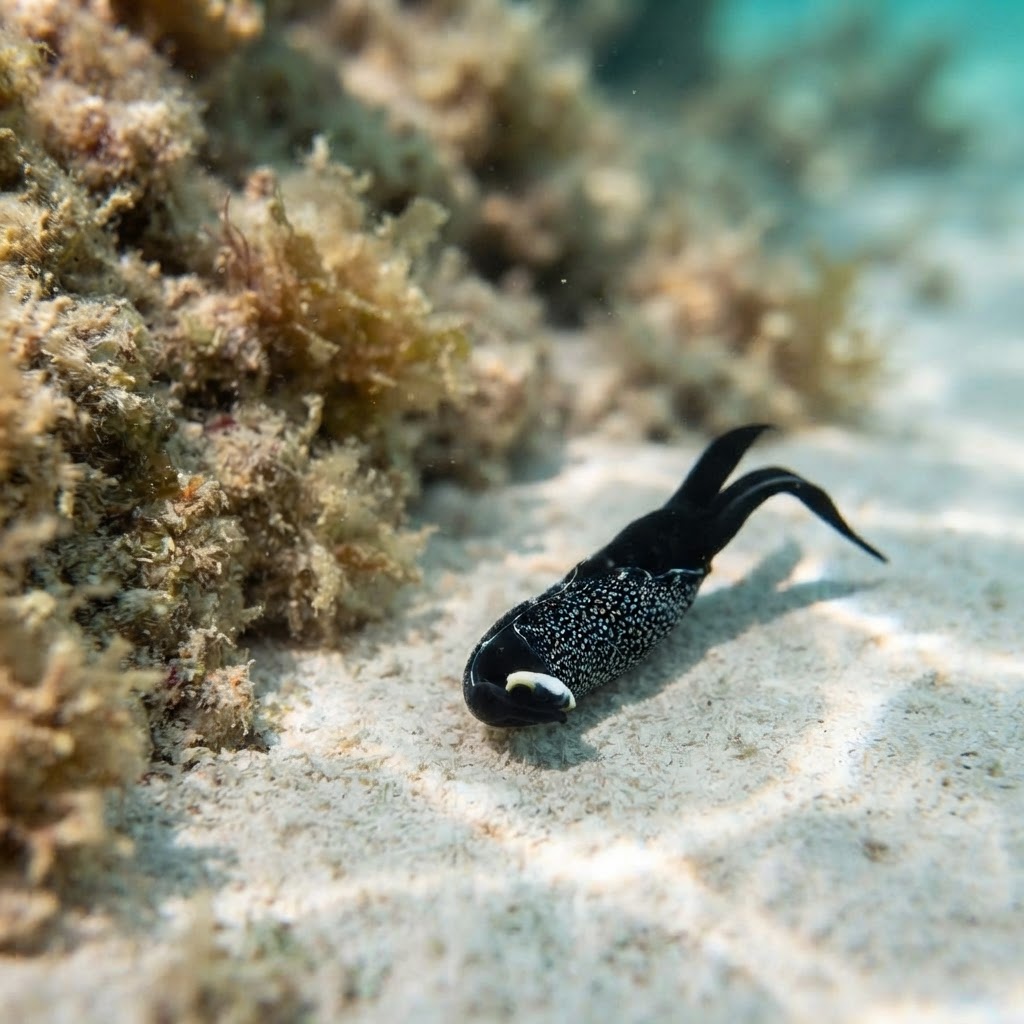
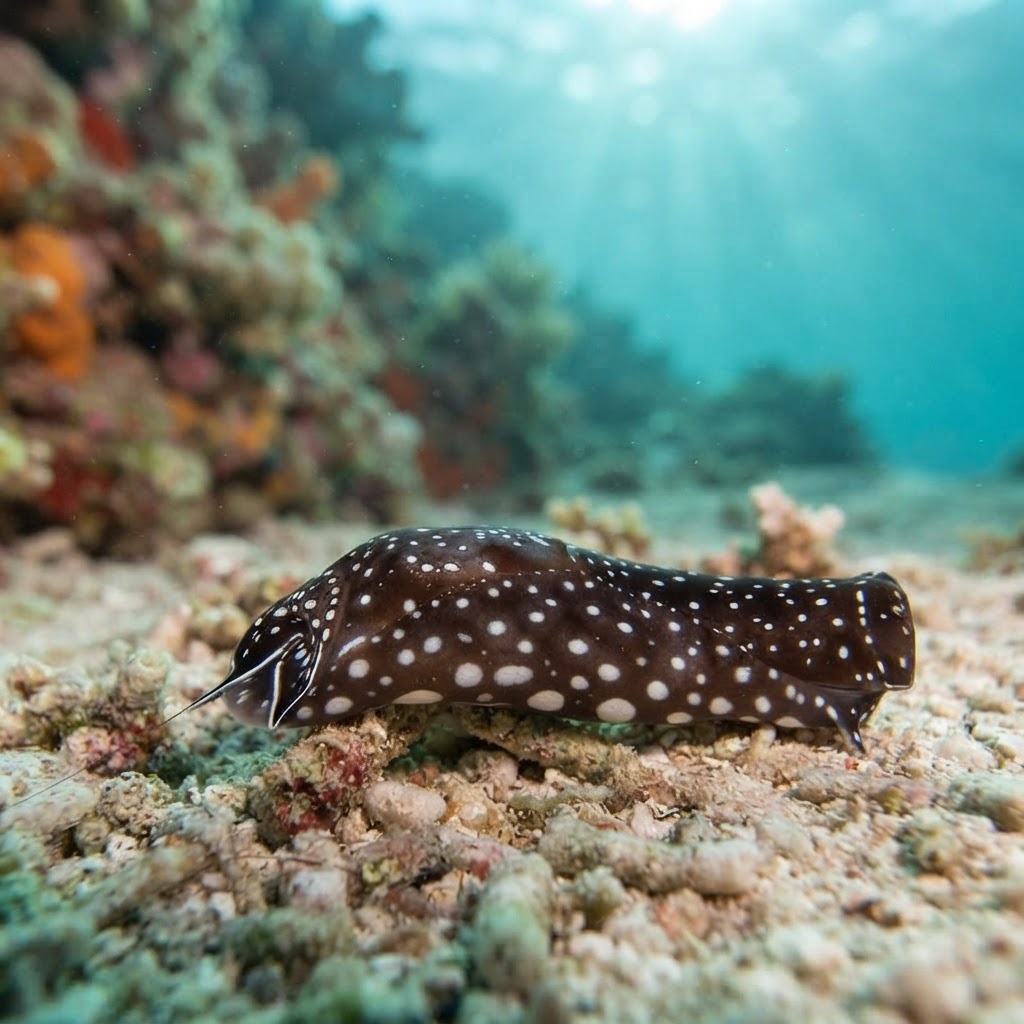
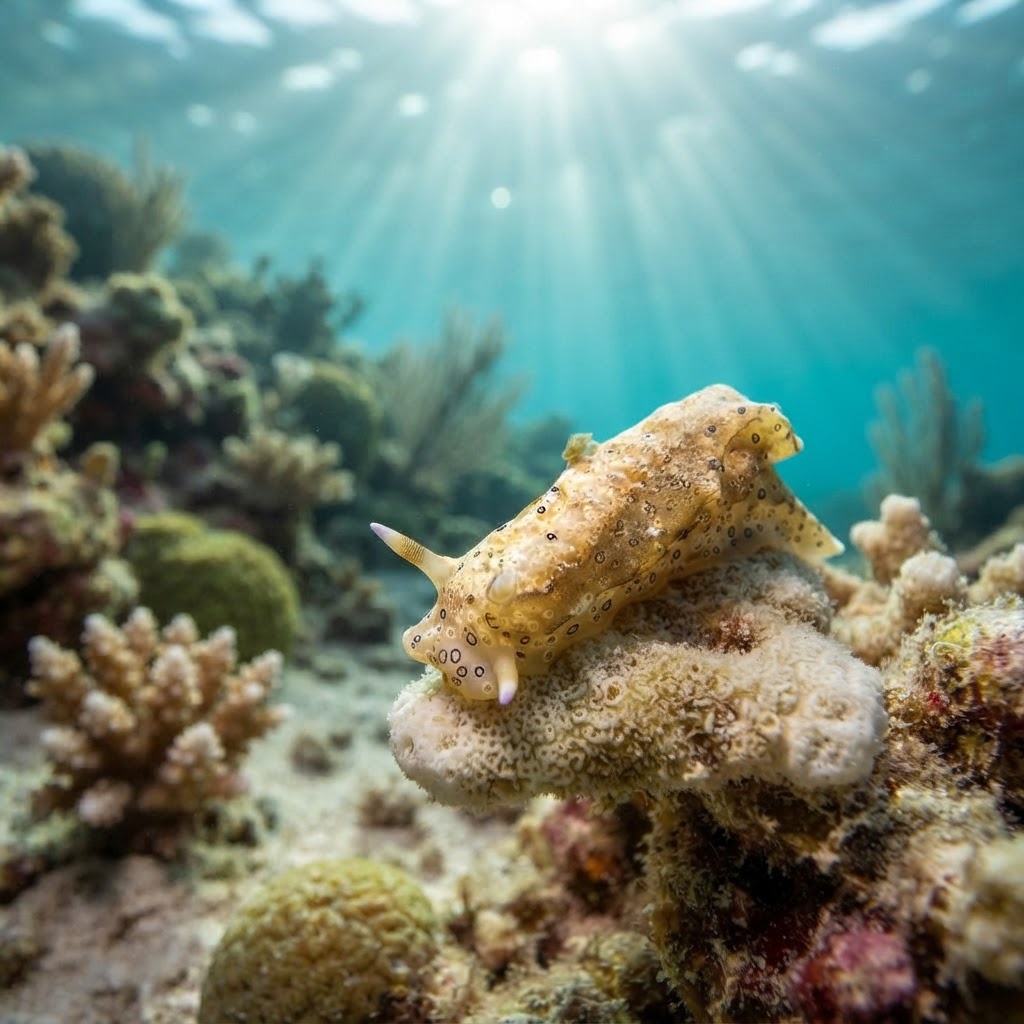
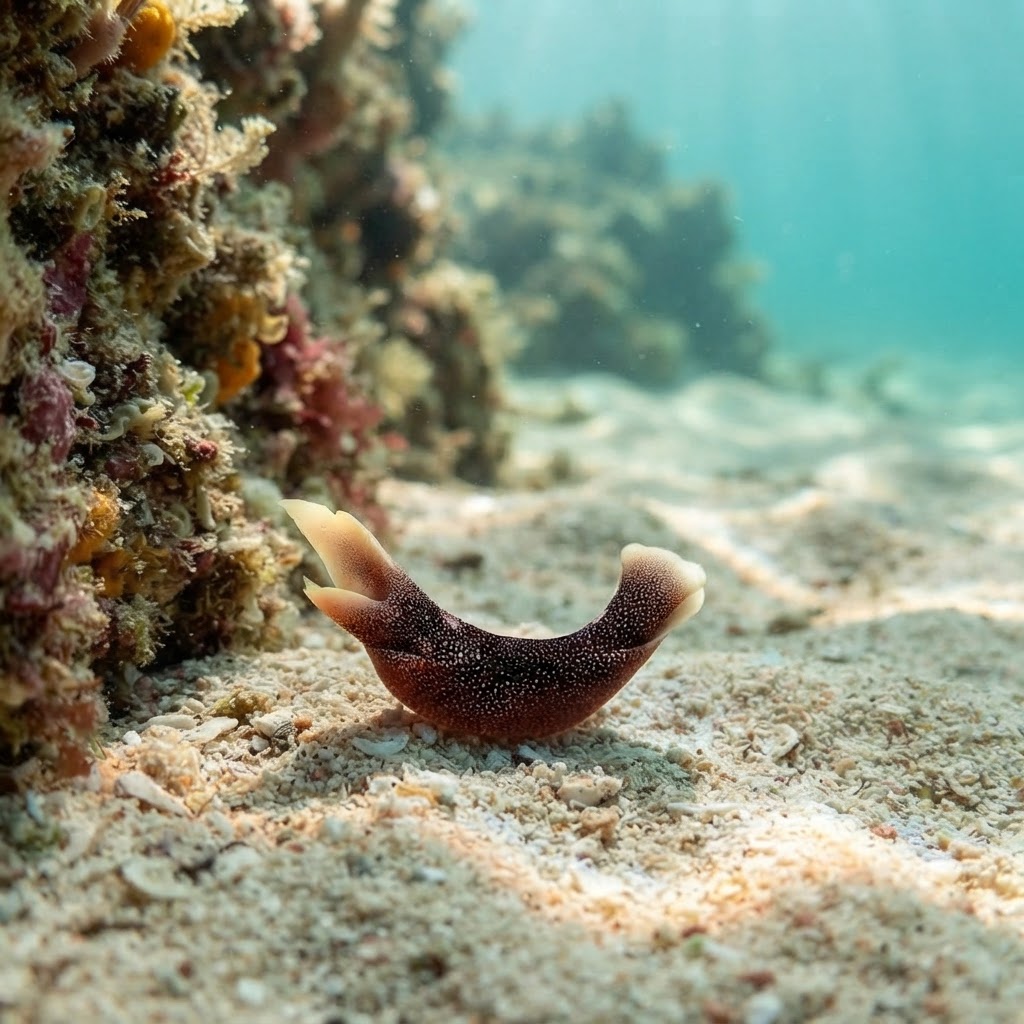
Recognisable by the fine reticulated (net-like) brown and cream patterning across its headshield-slug body, similar to a batik textile print. The body is soft, elongate and slug-like with a rounded, shield-shaped head end typical of aglajids, and it moves low over sand or silt rather than climbing reef structure. There is no confirmed size range in current data, so judge scale against the substrate rather than expecting a specific length.
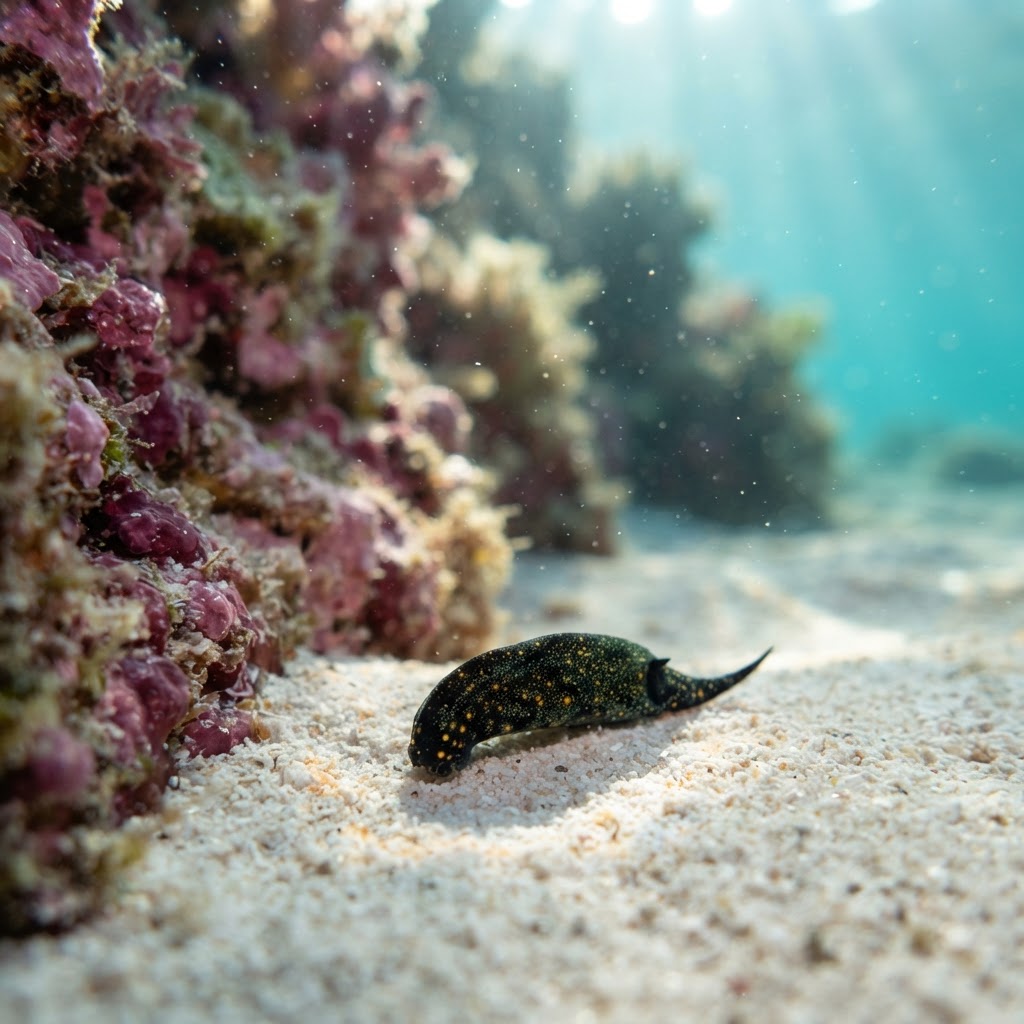
Divers find this one cruising slowly over sand and silty bottoms, the classic hunting posture for aglajid slugs as they search for buried prey. It shows no reaction to divers beyond its usual unhurried pace, so a slow fin kick and a close look at the substrate is the best way to spot one.
Like other aglajids, it is a specialist hunter that tracks and swallows other small slugs and worms whole rather than grazing algae, so finding one is really a sign of a productive muck site.
No clear seasonal pattern shows up in the sighting data, and its observed temperature range of 23.1 to 29.2C covers Luzon's reefs year-round, so there is no obvious best month over another.
Reef neighbours a diver could mistake it for. Use the identification notes above to tell them apart.
Currently a Philippines speciality, with its only logged sighting coming from Luzon. If you are set on finding one, Luzon's muck and sand dive sites are the place to start looking, though sightings anywhere remain uncommon.
Mapping where Batik Sea Slug is logged…
The only confirmed sightings come from Luzon in the Philippines, making it a muck-diving speciality rather than a species you'll find on typical reef dives elsewhere.
There's no detected season in current sighting data. It tolerates a wide warm-water range of 23.1 to 29.2C, consistent with being present on Luzon's reefs year-round.
Look for a soft-bodied slug with a rounded headshield and a fine, net-like brown and cream pattern resembling batik cloth. It moves slowly across sand or silt rather than climbing reef structure.
There's no confirmed size data for this species yet, so it's best identified by its distinctive reticulated pattern rather than by scale.
As an aglajid, it likely hunts other small slugs and worms on sand and silt, swallowing prey whole in the manner typical of its family rather than grazing on algae or coral.
Site and sighting data is aggregated from diver logs, iNaturalist and GBIF. For taxonomy and conservation status:
Chelidonura amoena
Elysia Timida
573 sites