Plectorhinchus plagiodesmus
Spot this grunt on reefs off KwaZulu-Natal and Pemba, in water from 21.7 to 27.7 C, year-round and reliably uncommon.
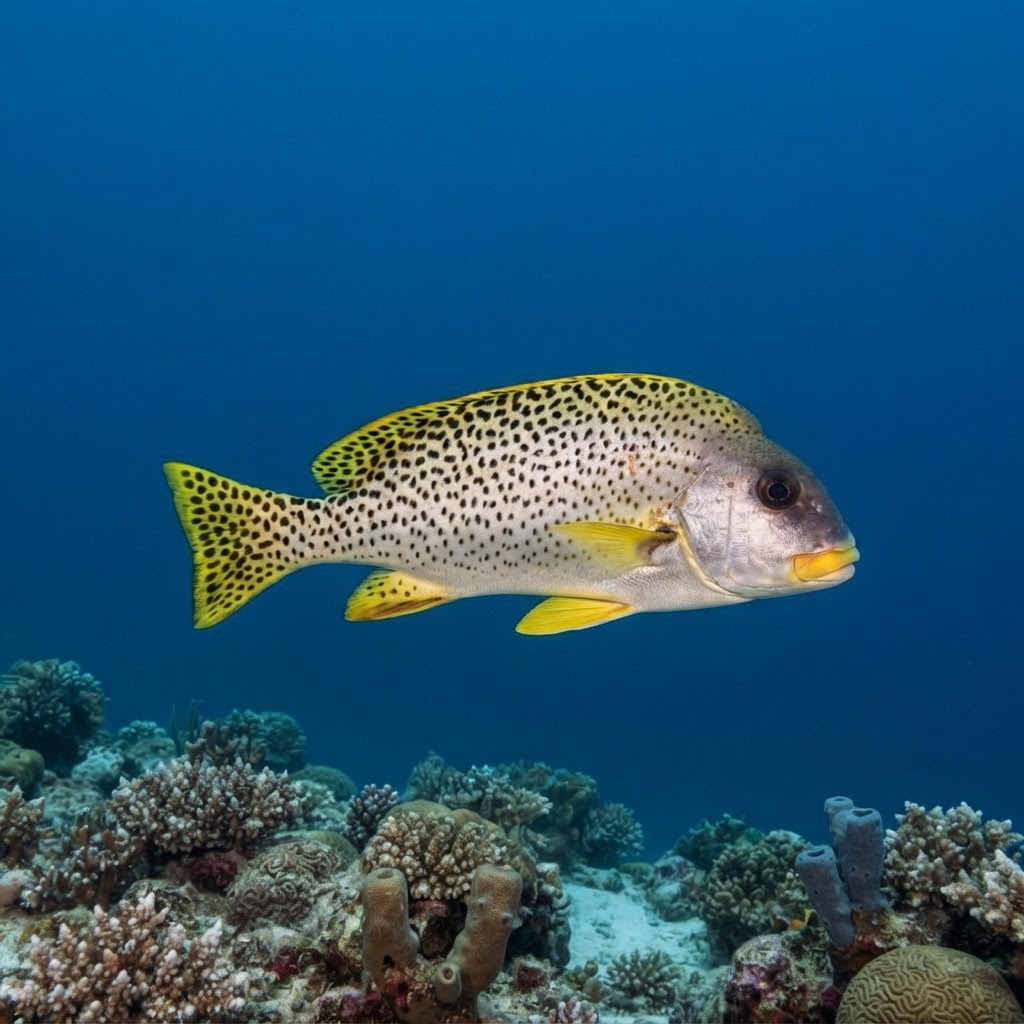
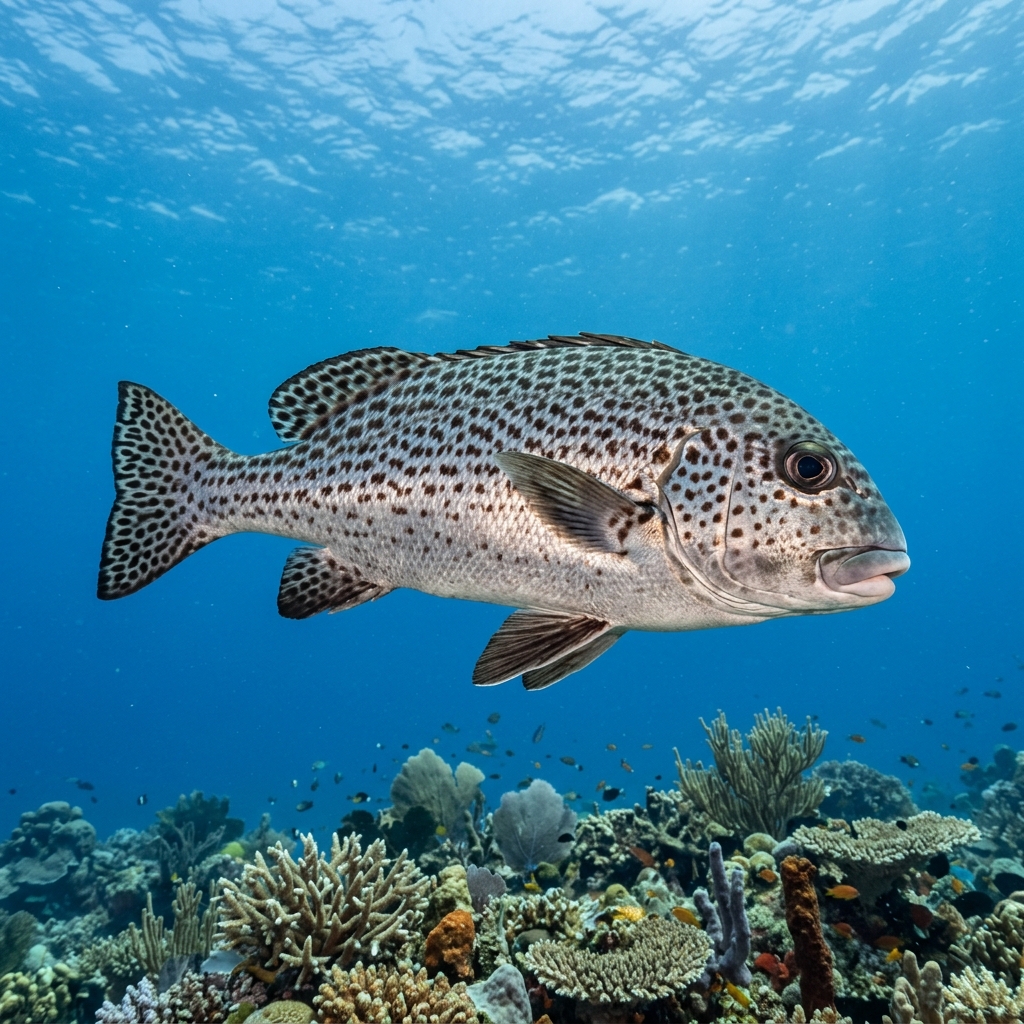
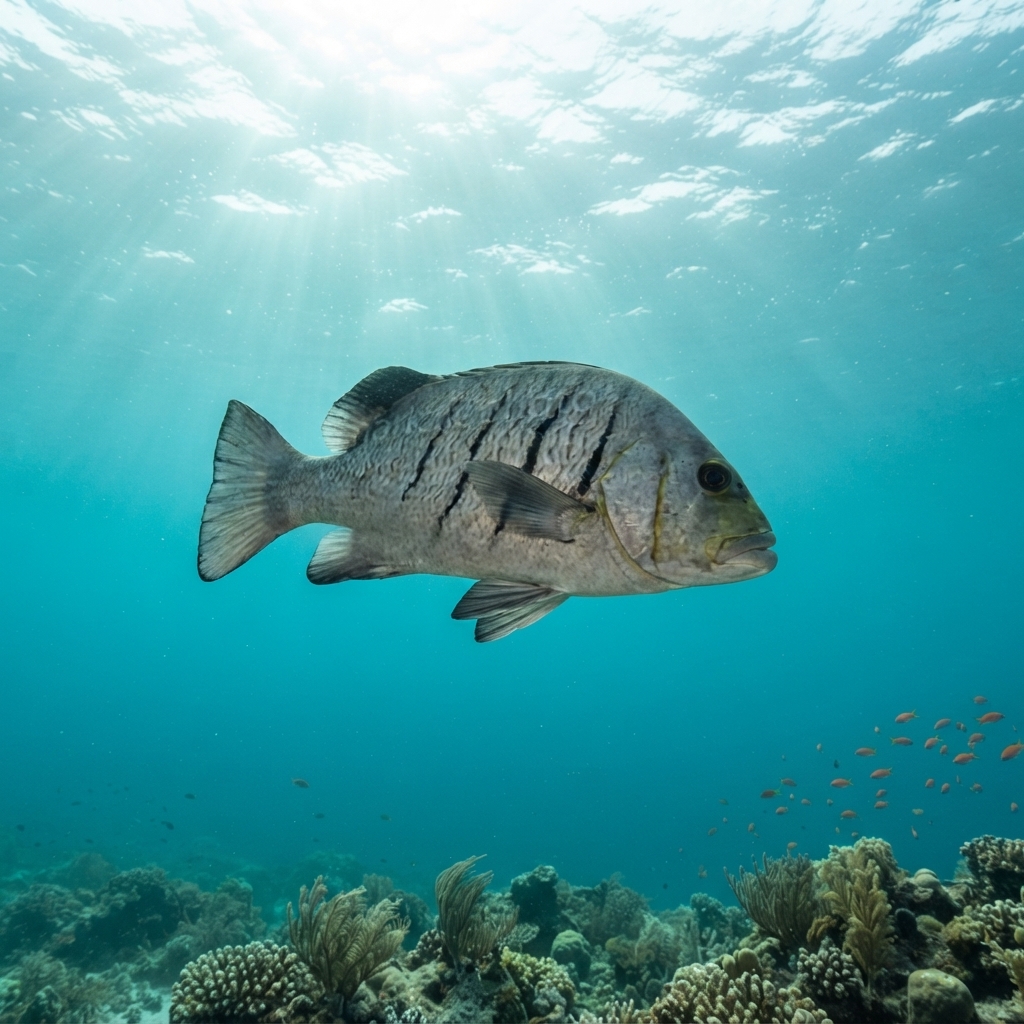
Grows to around 63 cm, with a deep, laterally flattened body typical of sweetlips and thick, fleshy lips that give the family its name. Look for dark diagonal or oblique bars running across a pale grey to brownish body, breaking up its outline against the reef. It tends to hover close to structure rather than swim in open water, which helps separate it visually from more free-swimming grunts.
Usually found holding position near reef structure, ledges, or overhangs rather than out over open sand, often solo or loosely associated with other bottom-hugging reef fish. It tends to sit fairly still or move slowly when divers approach, making it easy to overlook if you're not scanning ledges and crevices carefully. Sightings logged as uncommon suggest it's not a fish you'll stumble on every dive, so patient, close-in reef scanning pays off.
Its scattered diagonal barring works as disruptive camouflage against dappled reef light, which is likely why it's easy to swim past even on sites where it's present.
Sightings don't show a clear seasonal pattern, so treat this as a year-round species on the reefs where it occurs. Its recorded temperature range of 21.7 to 27.7 C spans most of the diving season in KwaZulu-Natal and Pemba, which likely explains the lack of a strong month-to-month signal.
Reef neighbours a diver could mistake it for. Use the identification notes above to tell them apart.
Most reliably logged along KwaZulu-Natal in South Africa, where the bulk of sightings come from, with a smaller but consistent presence around Pemba in Mozambique. Divers working reef systems in these two regions have the best odds of a sighting, though it's logged as uncommon even at its strongest sites.
Mapping where Barred Rubberlip is logged…
KwaZulu-Natal in South Africa is by far the most consistent region for sightings, with Pemba in Mozambique offering a smaller but real chance. Outside these two areas it's not well documented in diver logs.
There's no strong seasonal pattern in the sightings data, so it's considered a year-round fish on the reefs where it lives. It's been recorded in water from 21.7 to 27.7 C, a range that covers most of the diving calendar in KwaZulu-Natal and Pemba.
Look for a deep-bodied grunt up to 63 cm with dark diagonal bars across a pale grey-brown body and noticeably fleshy lips. It's usually seen holding near reef ledges rather than swimming in the open, which helps narrow it down from other sweetlips.
They reach around 63 cm in length, putting them in the mid-to-large size range for grunts and sweetlips on the reef.
No, they're not considered dangerous to divers and pose no known threat during normal reef diving.
Site and sighting data is aggregated from diver logs, iNaturalist and GBIF. For taxonomy and conservation status:
Bluestriped Grunt
1,907 sites