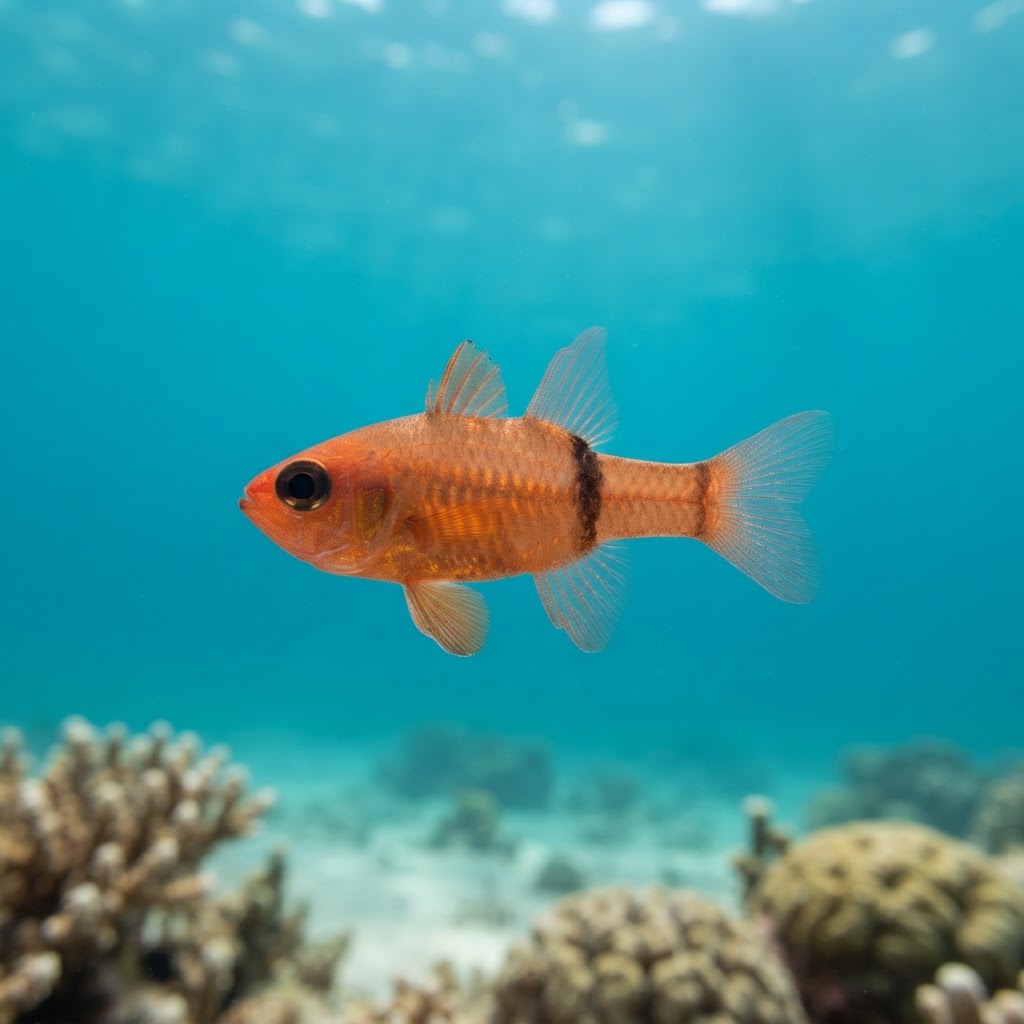
Apogon binotatus
Spot barred cardinalfish tucked in Florida and BVI reef crevices, comfortable in 25-28C water, year-round and always uncommon.
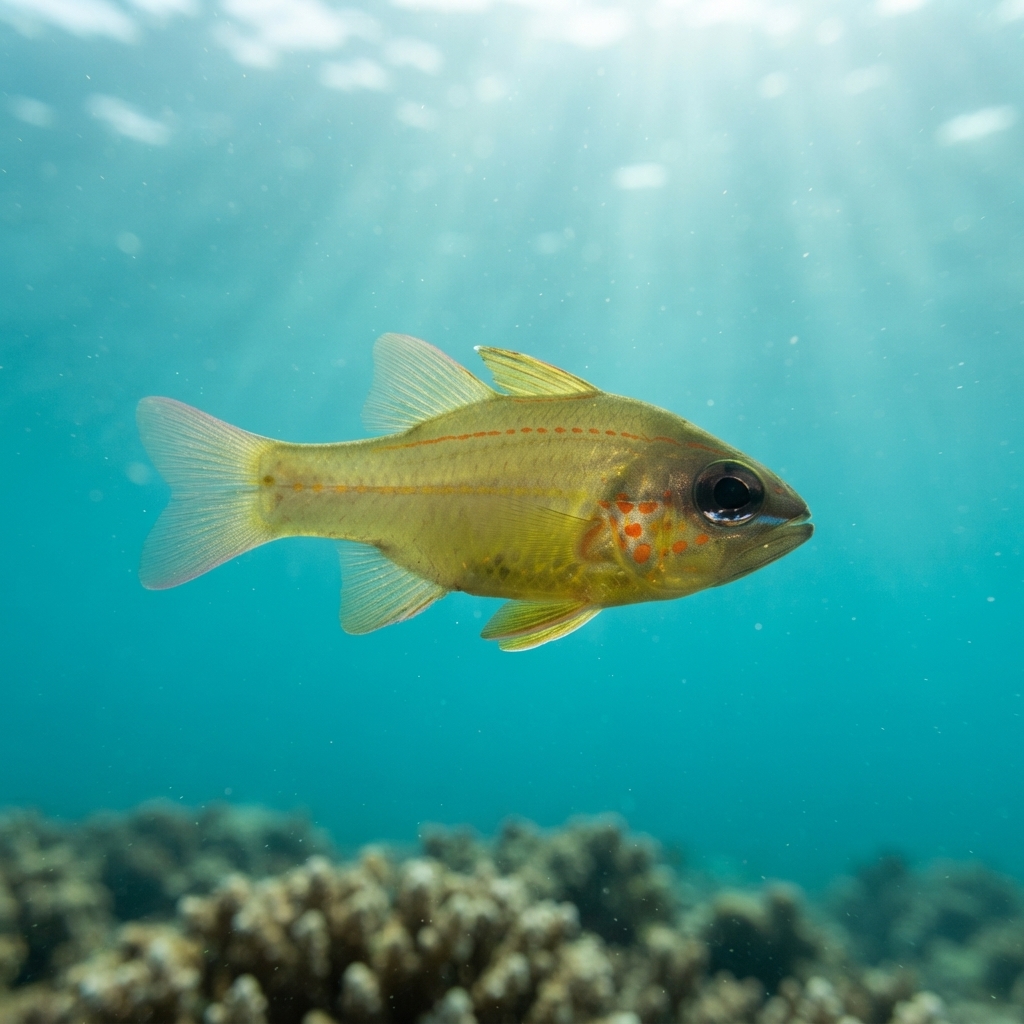
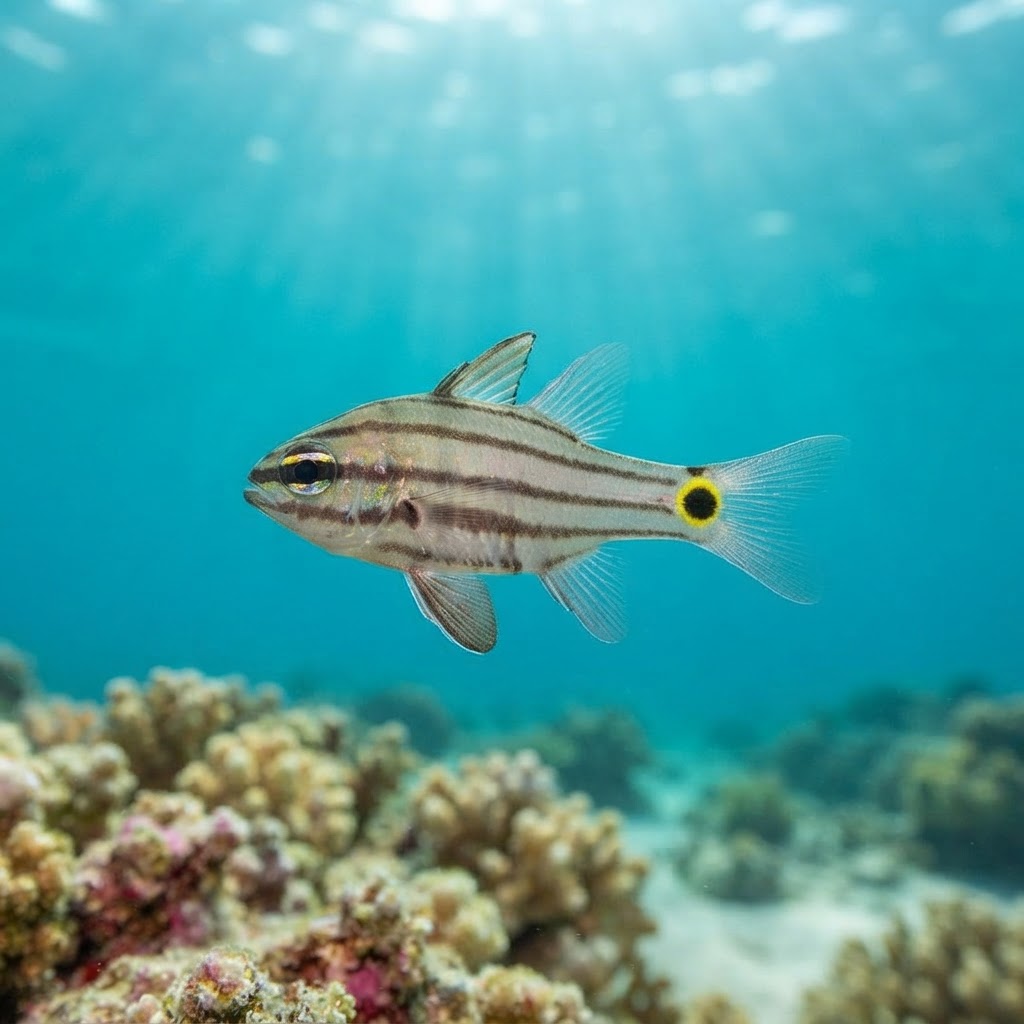
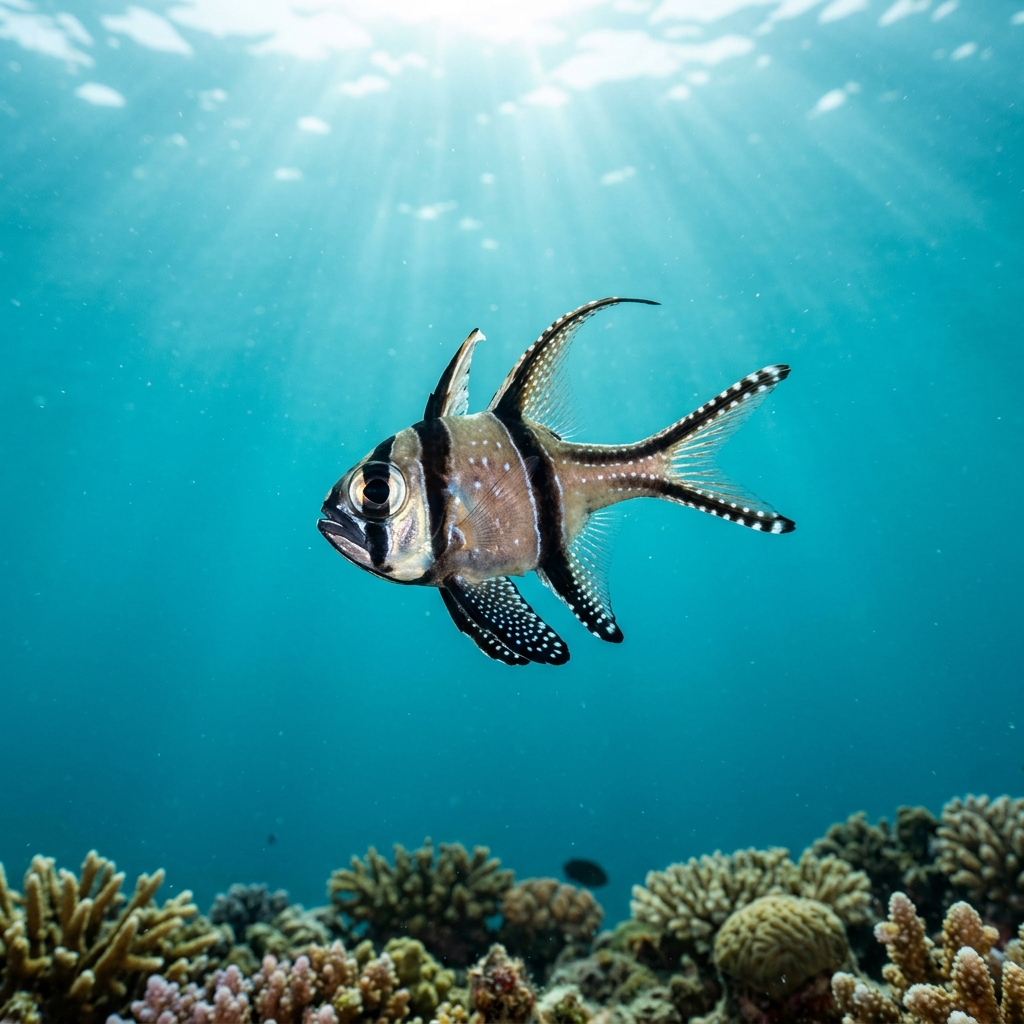
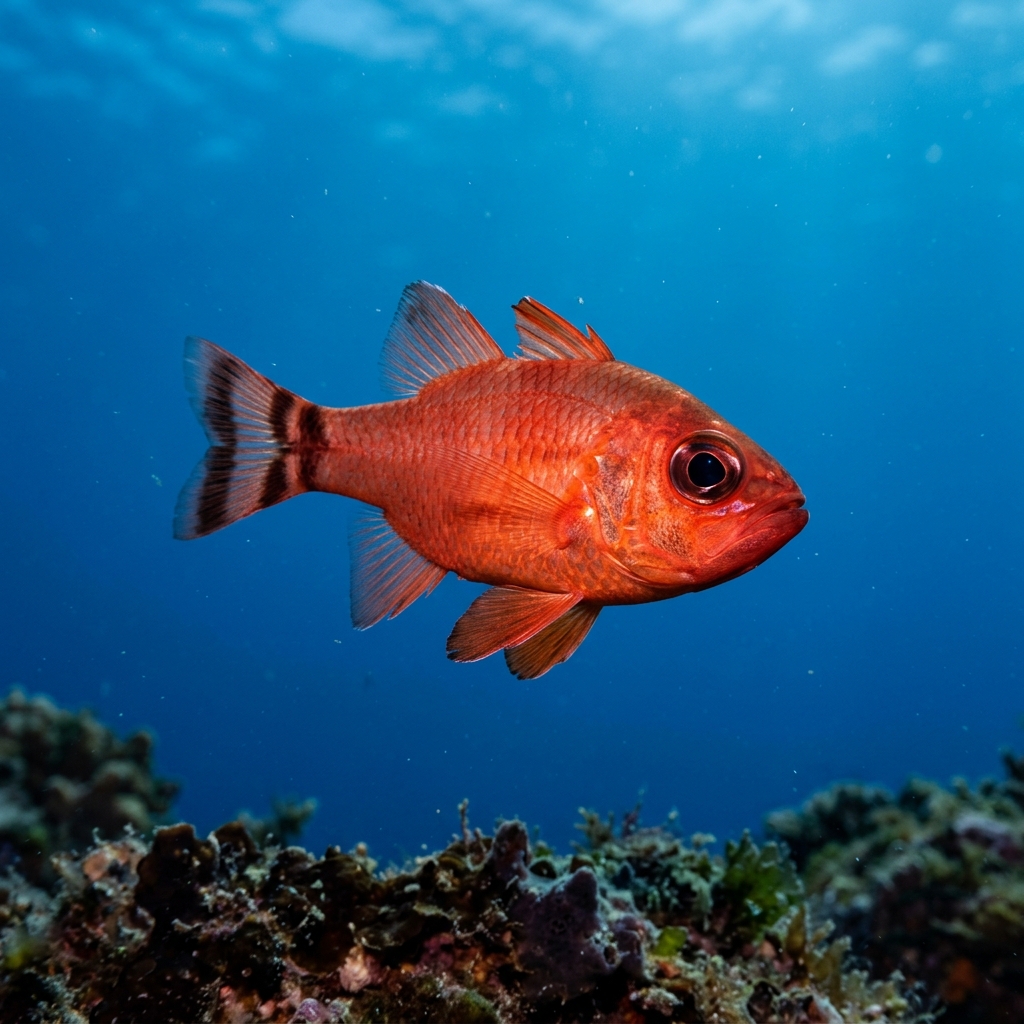
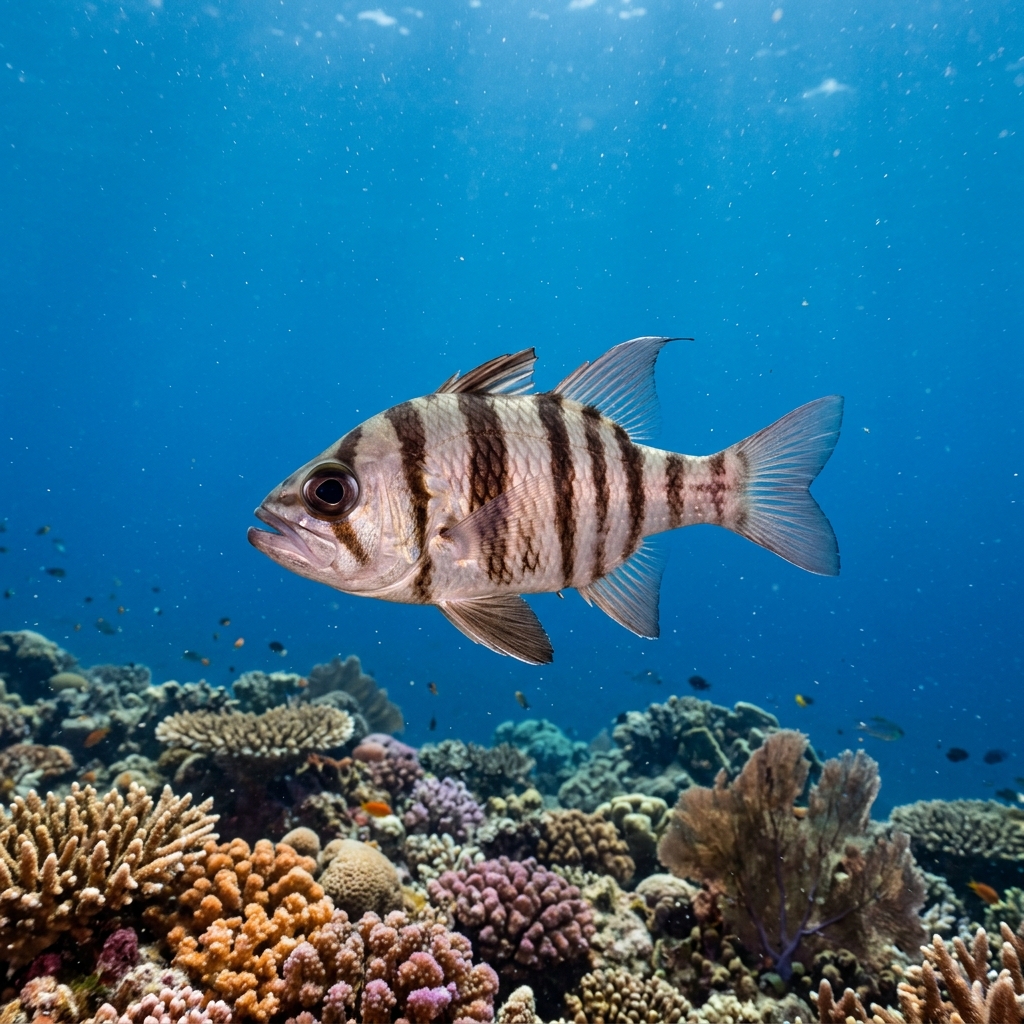
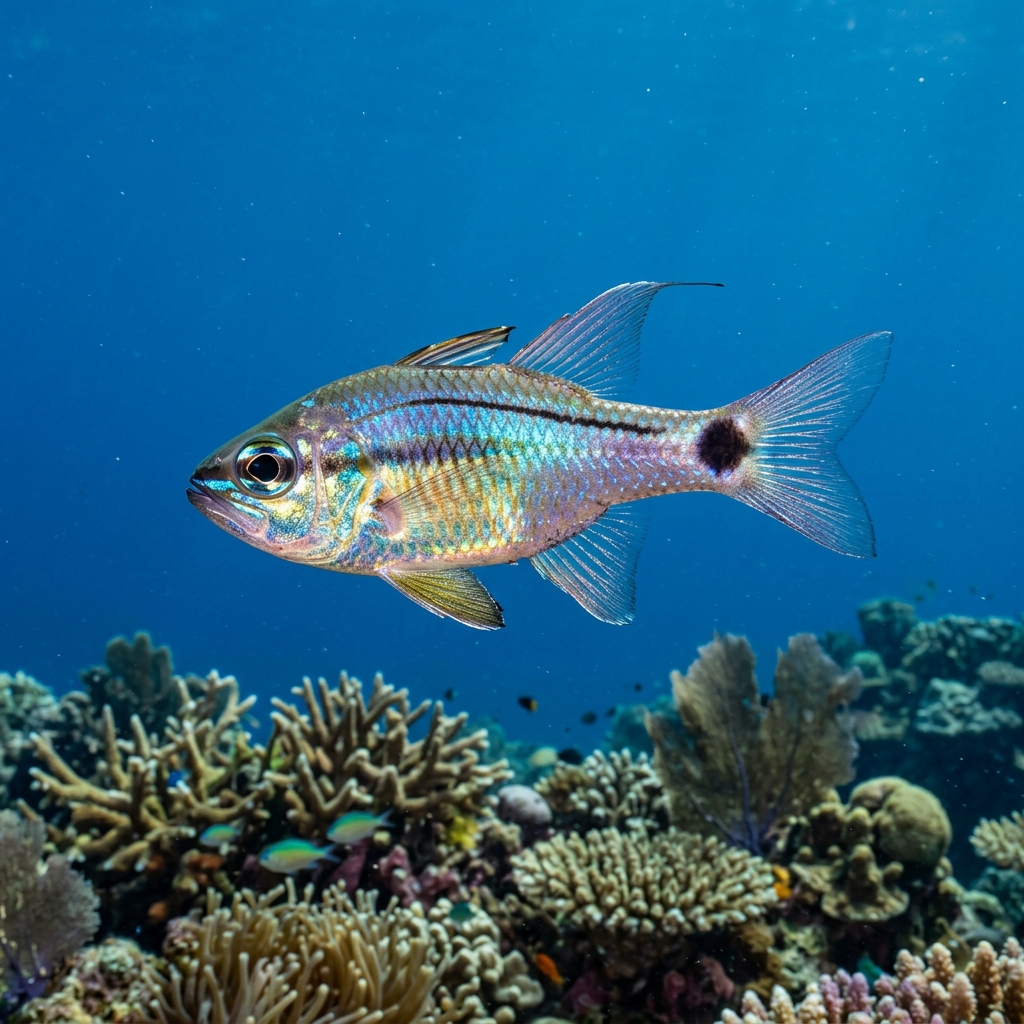
A small, deep-bodied fish around 9 cm, reddish-brown with large reflective eyes typical of cardinalfish. Look for a dark bar or blotch near the base of the tail and a second faint bar through the eye, the pair of marks that give the species its name. It tends to hang almost motionless, angled head-down or sideways under ledges rather than swimming in the open.
Divers usually find it wedged into crevices, under coral ledges, or tucked against wreck structure by day, sitting still rather than schooling in open water. It is a low-key, easy-to-pass-over fish that rarely reacts to a diver's presence beyond retreating slightly deeper into its hole. Like most cardinalfish it becomes more active after dark, when it moves out to feed.
Cardinalfish including this species are mouthbrooders: males carry the fertilised eggs in their mouths until the young hatch, so a male you spot with a distended jaw may be guarding a brood rather than feeding.
No clear season shows in the sighting data, and its comfort range of 25.3 to 28.0C matches Caribbean and Florida reef temperatures year-round, so any month is fair game.
Reef neighbours a diver could mistake it for. Use the identification notes above to tell them apart.
Most reliably logged on reefs in Florida, with a strong secondary population around Tortola and the Southern Islands in the British Virgin Islands. Smaller numbers turn up along Bonaire's Leeward Coast, so Caribbean and western Atlantic reef and wreck sites generally are the places to look.
Mapping where Barred Cardinalfish is logged…
Florida reefs turn up the most sightings, with Tortola and the Southern Islands in the British Virgin Islands a close second. Bonaire's Leeward Coast also holds a smaller but steady population.
There's no strong seasonal pattern in the sighting data, and the species sits comfortably in 25.3 to 28.0C water, so it is present on Caribbean and Florida reefs throughout the year.
Look for a small reddish-brown fish about 9 cm long, tucked into a crevice or under a ledge rather than out swimming. The giveaway is a dark bar near the tail base plus a second mark through the eye.
They top out around 9 cm, making them one of the smaller reef fish a diver will spot, and they are usually seen alone or in loose pairs in a hole rather than in open water.
Yes, like other cardinalfish, males brood fertilised eggs in their mouths until the young hatch. A male seen with a swollen jaw is likely guarding a clutch rather than feeding.
Site and sighting data is aggregated from diver logs, iNaturalist and GBIF. For taxonomy and conservation status:
Iridescent Cardinalfish
1,781 sites