Neoglyphidodon thoracotaeniatus
A small reef damselfish most reliably spotted in Raja Ampat and the Visayas, in warm water around 27 to 29 C, year-round.
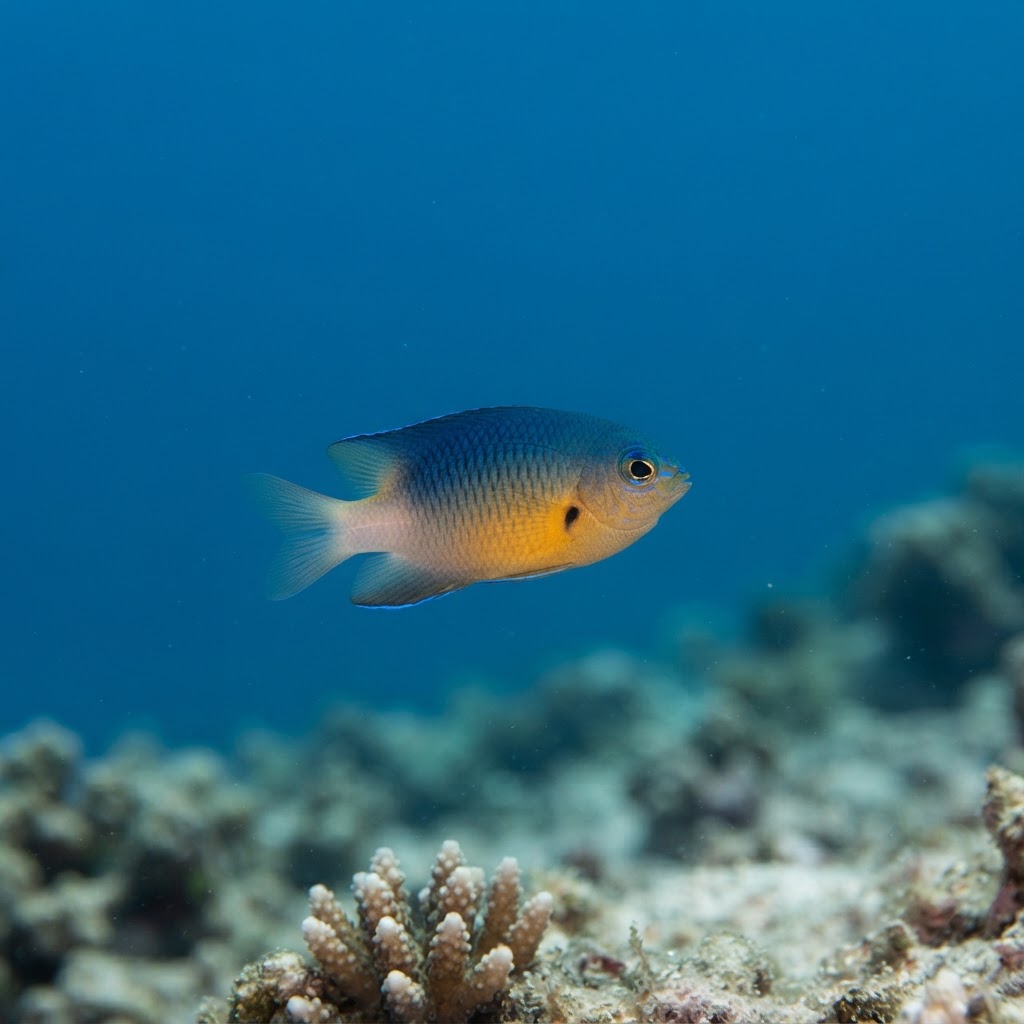
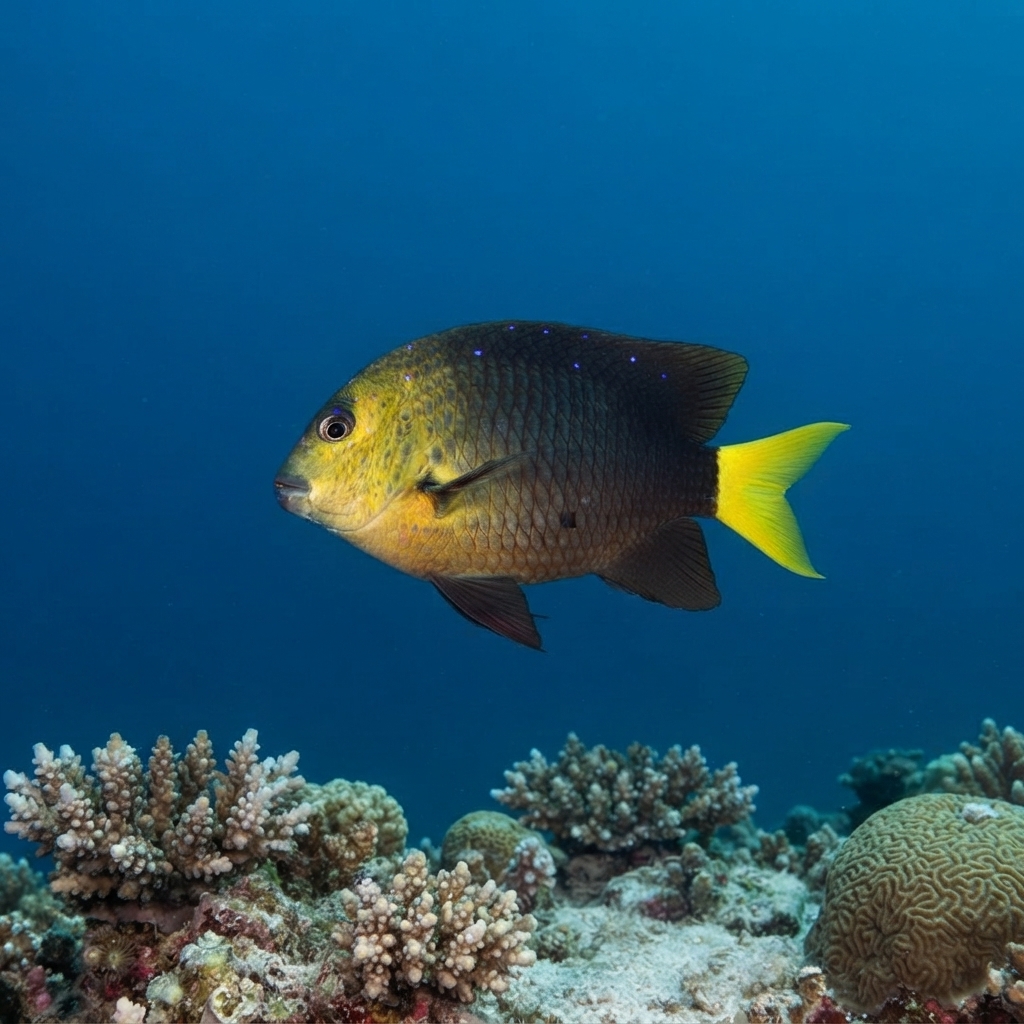
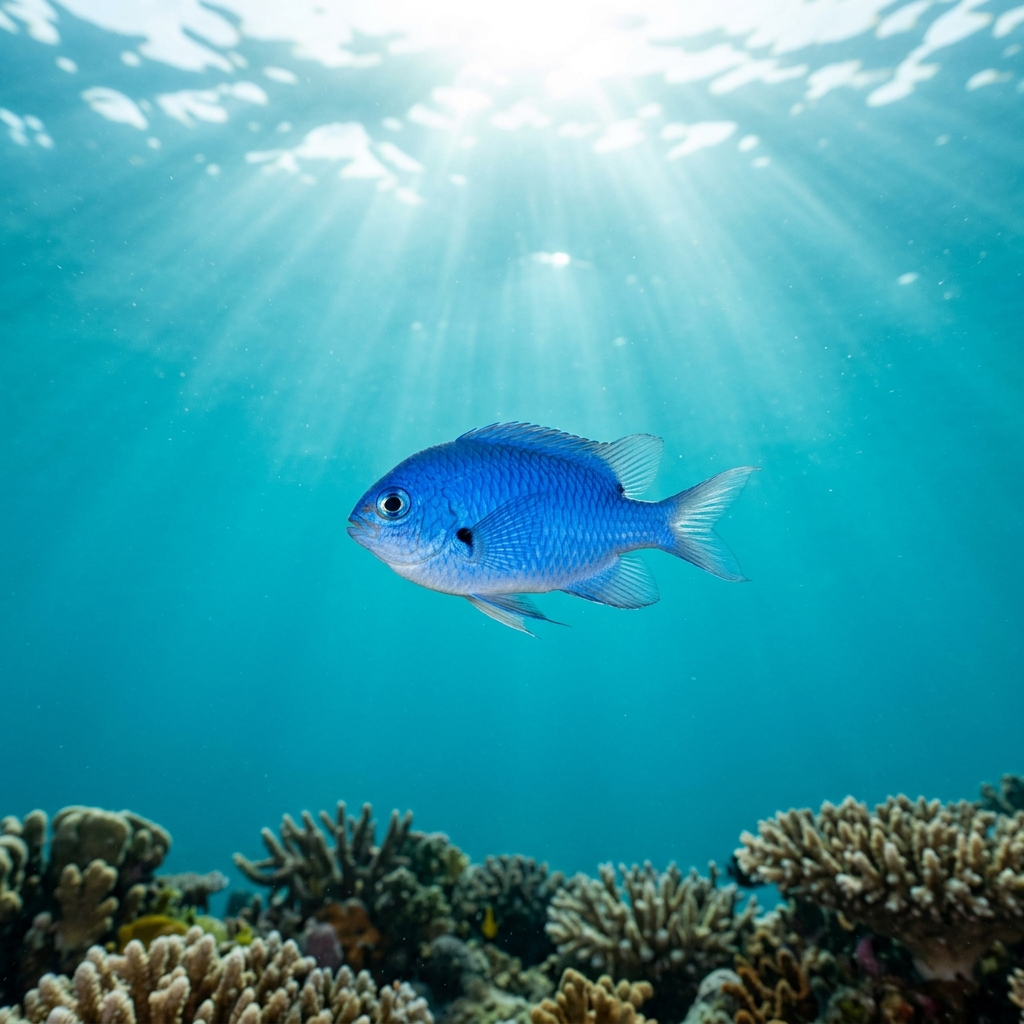
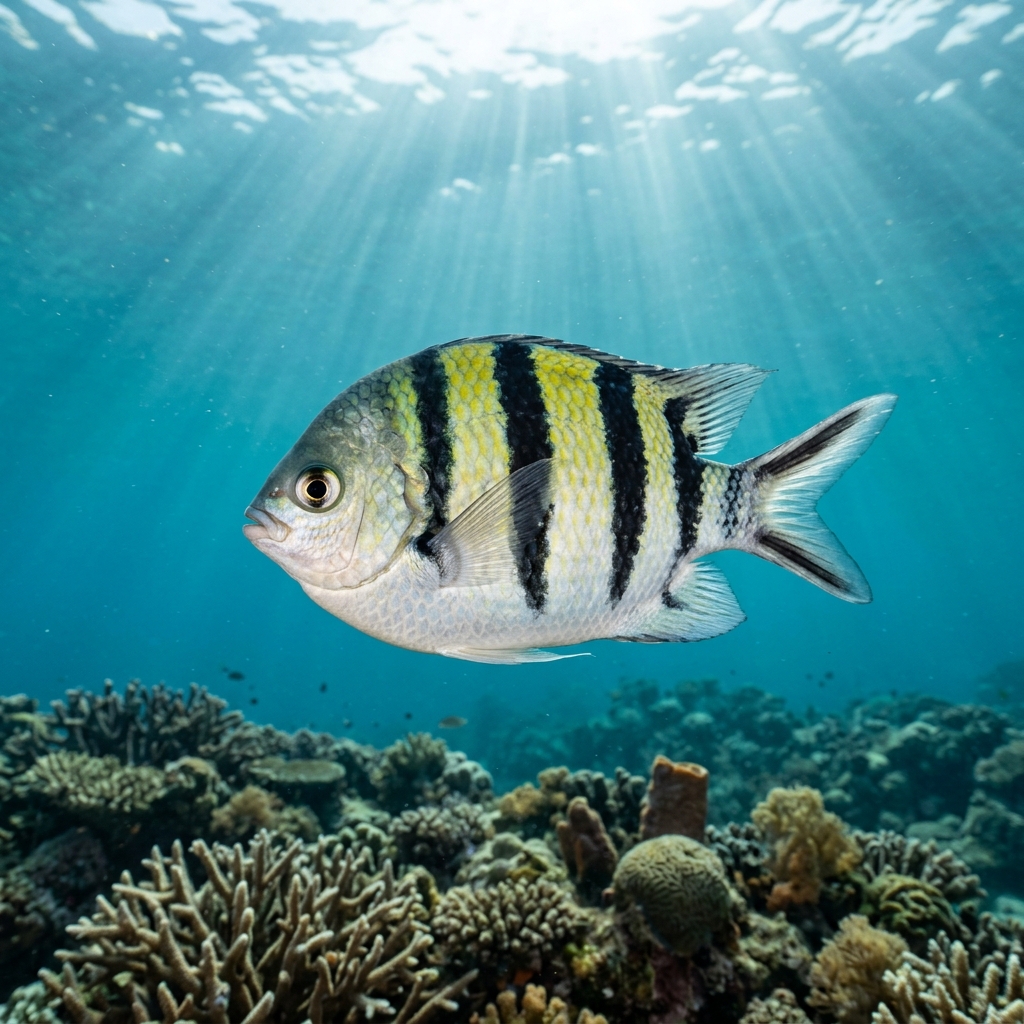
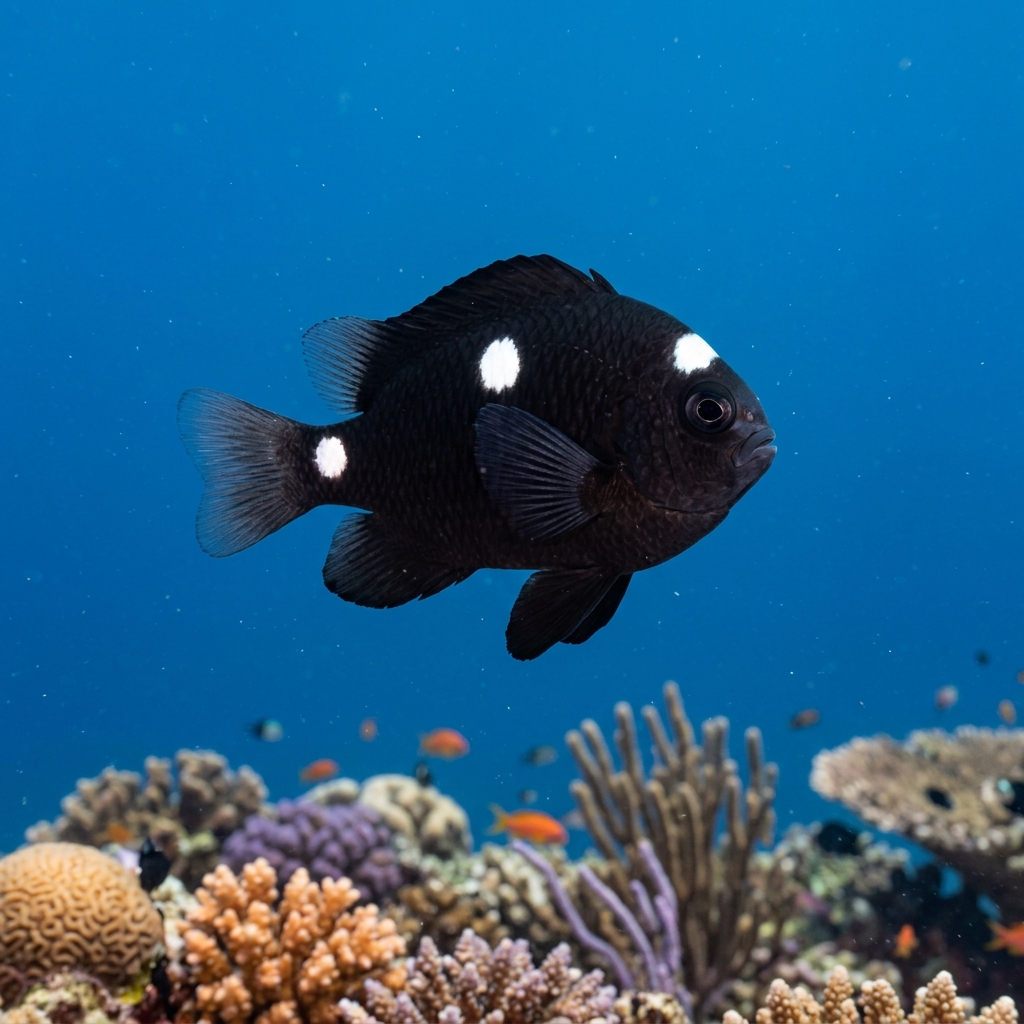
A compact damselfish reaching about 10 cm, with a dark brown to blackish body broken by a distinct pale bar just behind the head, which gives it its name. The body is deep and oval, typical of the damselfish shape, and it tends to hold station close to a coral head or rubble patch rather than roam. Look for that single light band across the nape as the key mark, since the rest of the body is otherwise plain and dark.
Expect to find it holding a fairly tight territory around a coral outcrop or patch of rubble, darting out to feed and returning to the same spot rather than cruising the reef. It is not a bold fish for the camera, usually keeping a bit of distance and slipping back into cover if you approach too fast. Most sightings come from typical reef depths during normal daylight dives rather than anything nocturnal or unusual.
Like most damselfish, it likely guards a small patch of reef against other fish looking to feed there, a common behaviour in the family that helps keep an eye on it if you spot one hovering with intent near a coral head.
No clear seasonal pattern shows in the sightings, and with a comfortable range of 27.1 to 29.0 C, it sits on tropical reefs year-round, so any time you are diving Raja Ampat or the Visayas is fair game.
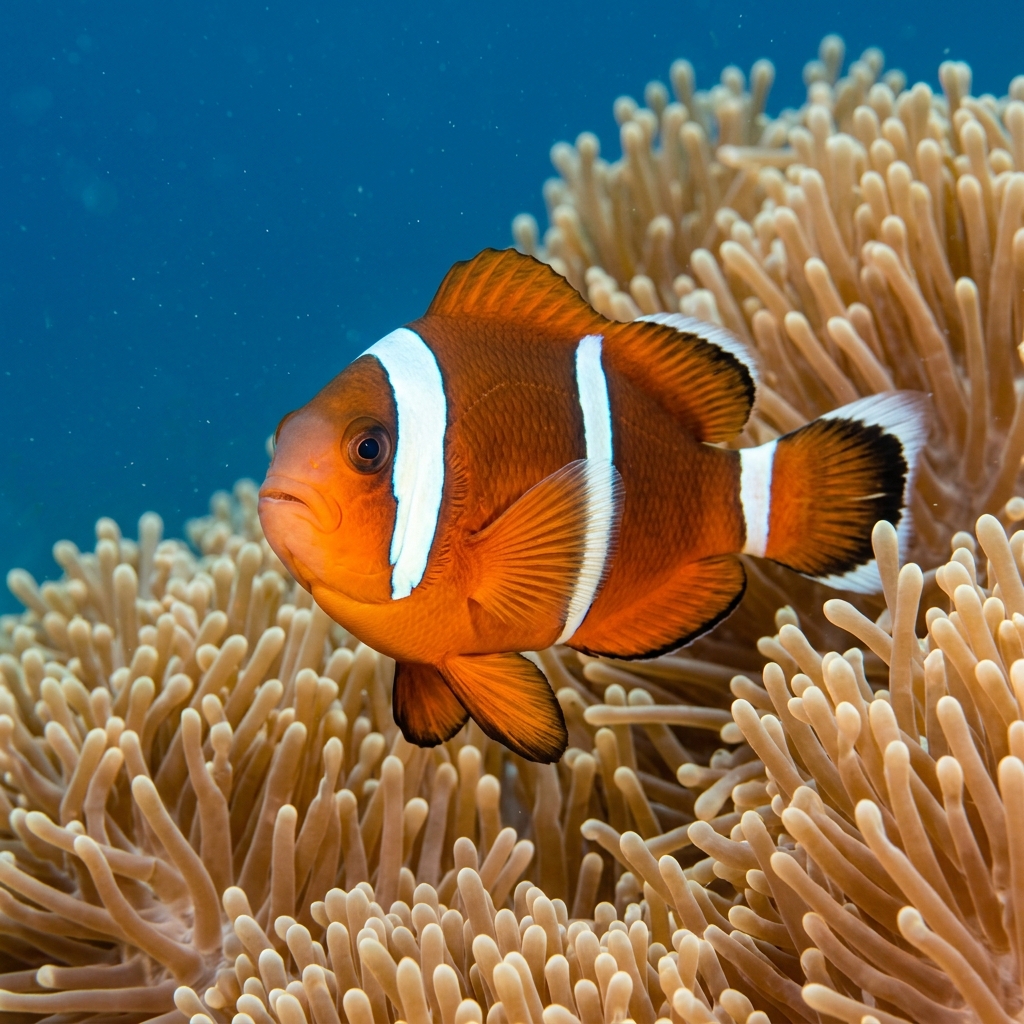
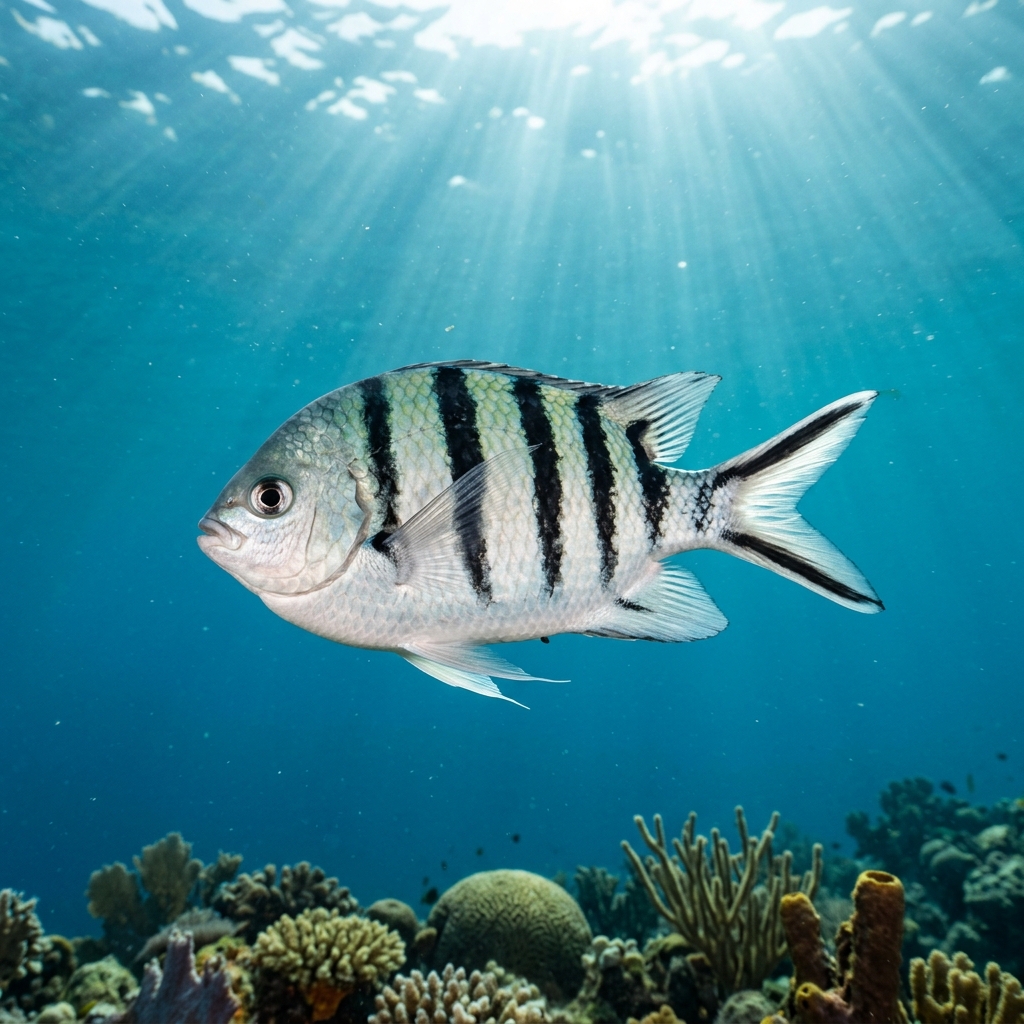
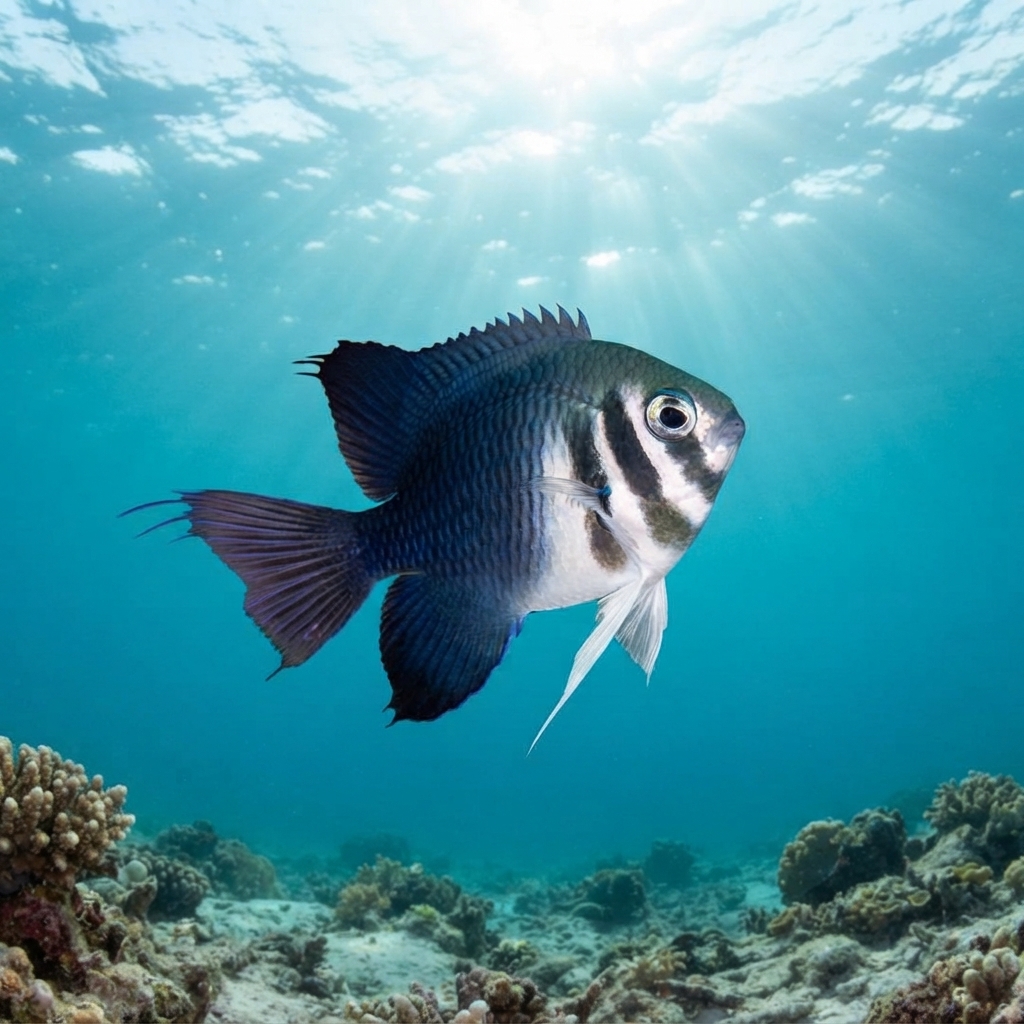
Reef neighbours a diver could mistake it for. Use the identification notes above to tell them apart.
Most reliably logged in Indonesia, especially across Raja Ampat, with further sightings in Sulawesi, Maluku and Nusa Tenggara. Outside Indonesia, the Philippines is the other strong option, particularly the Visayas region, where it turns up on a good number of reefs.
Mapping where Barhead Damsel is logged…
Raja Ampat in Indonesia is the strongest region for sightings, with further records across Sulawesi, Maluku and Nusa Tenggara. The Visayas in the Philippines is the other reliable spot outside Indonesia.
There is no strong seasonal pattern in the sightings, and the water temperature it favours (27.1 to 29.0 C) holds steady on Indo-Pacific reefs year-round, so it can be seen on any diving trip to Raja Ampat or the Visayas.
Look for a small, dark damselfish around 10 cm with a pale bar crossing just behind the head. It usually sits close to a coral head or rubble patch rather than swimming openly across the reef.
They reach roughly 10 cm, a typical size for a reef damselfish, so they are easy to overlook against busier coral structure.
No, they pose no danger to divers. They may dart at intruders near their territory but this is defensive posturing, not a real threat.
It is logged as uncommon at most sites where it appears, though a handful of sites in Raja Ampat and the Visayas report it as common, so persistence pays off.
Site and sighting data is aggregated from diver logs, iNaturalist and GBIF. For taxonomy and conservation status:
Dascyllus
3,697 sites