Sphoeroides spengleri
Small, dark-spotted puffer logged year-round on reefs from Florida to Curacao and Bonaire, most reliably in the Caribbean.
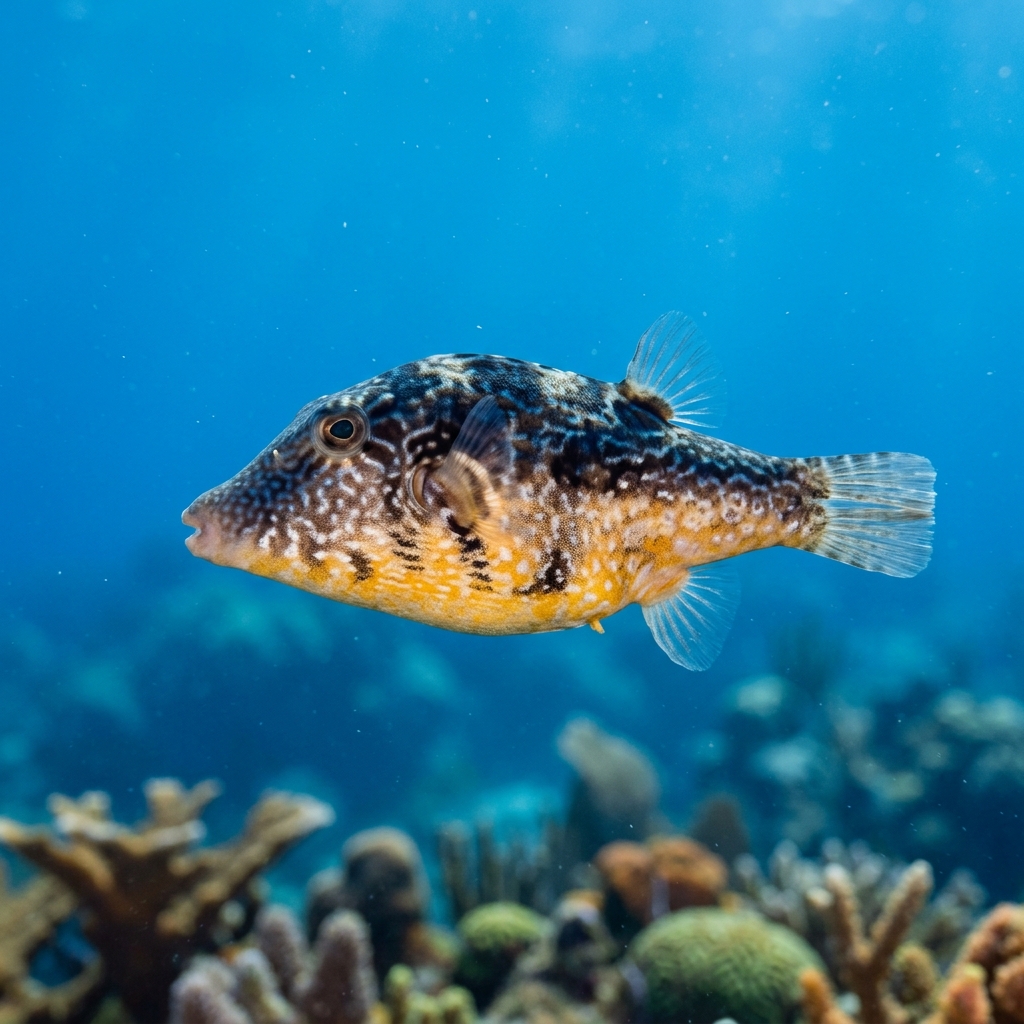
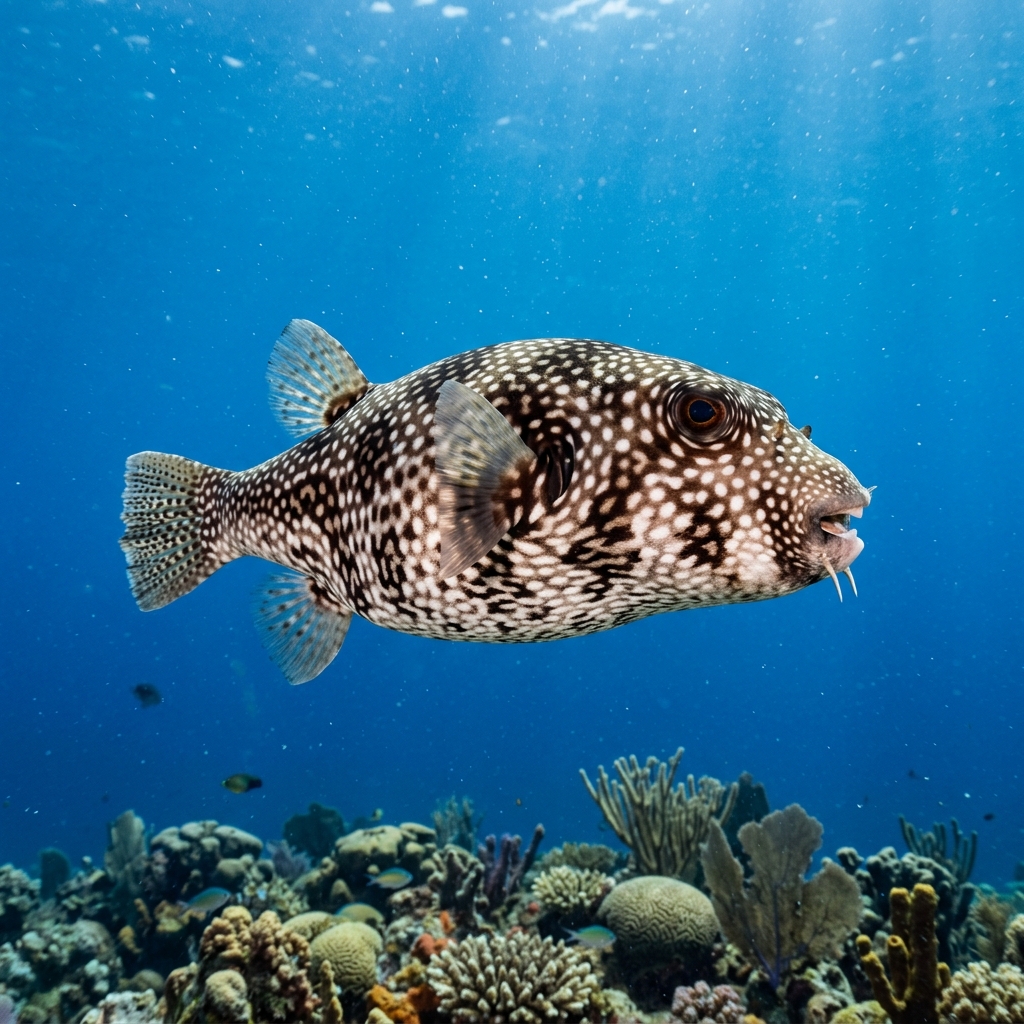
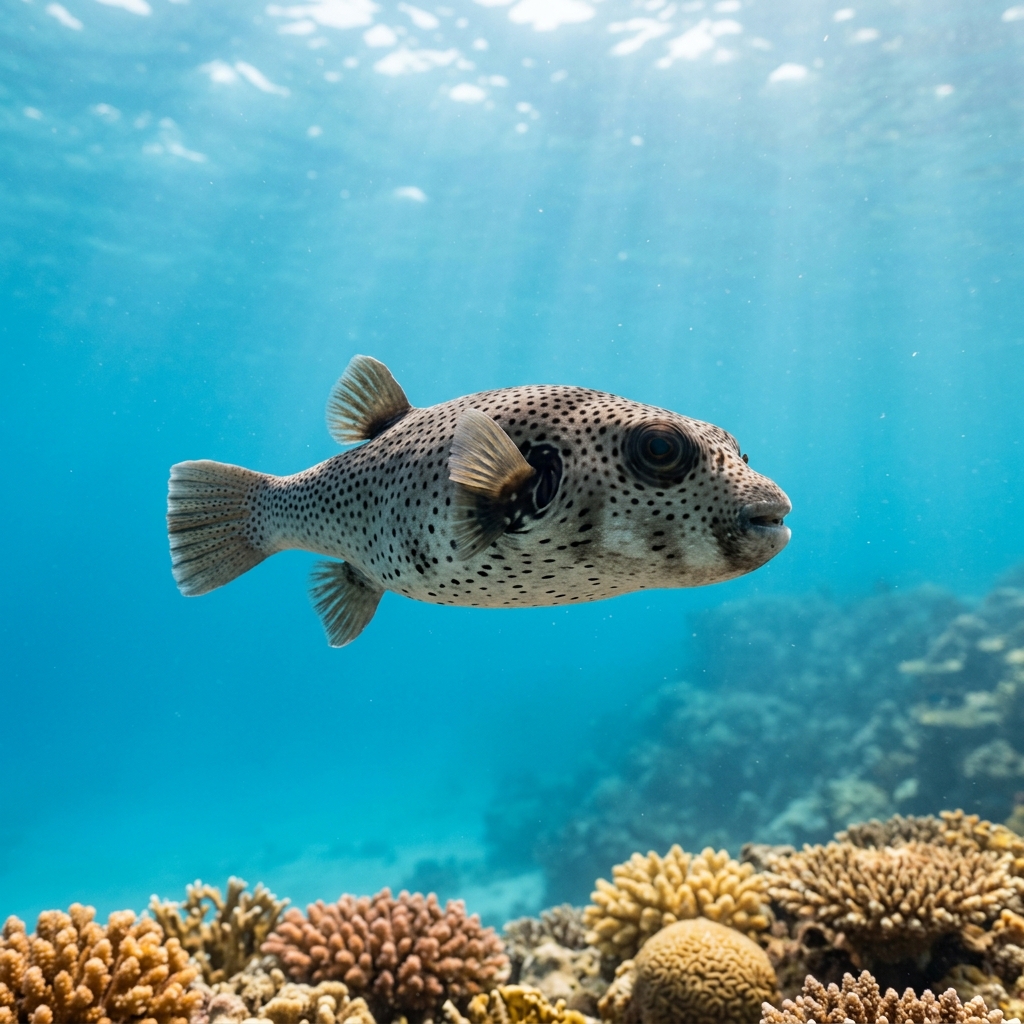
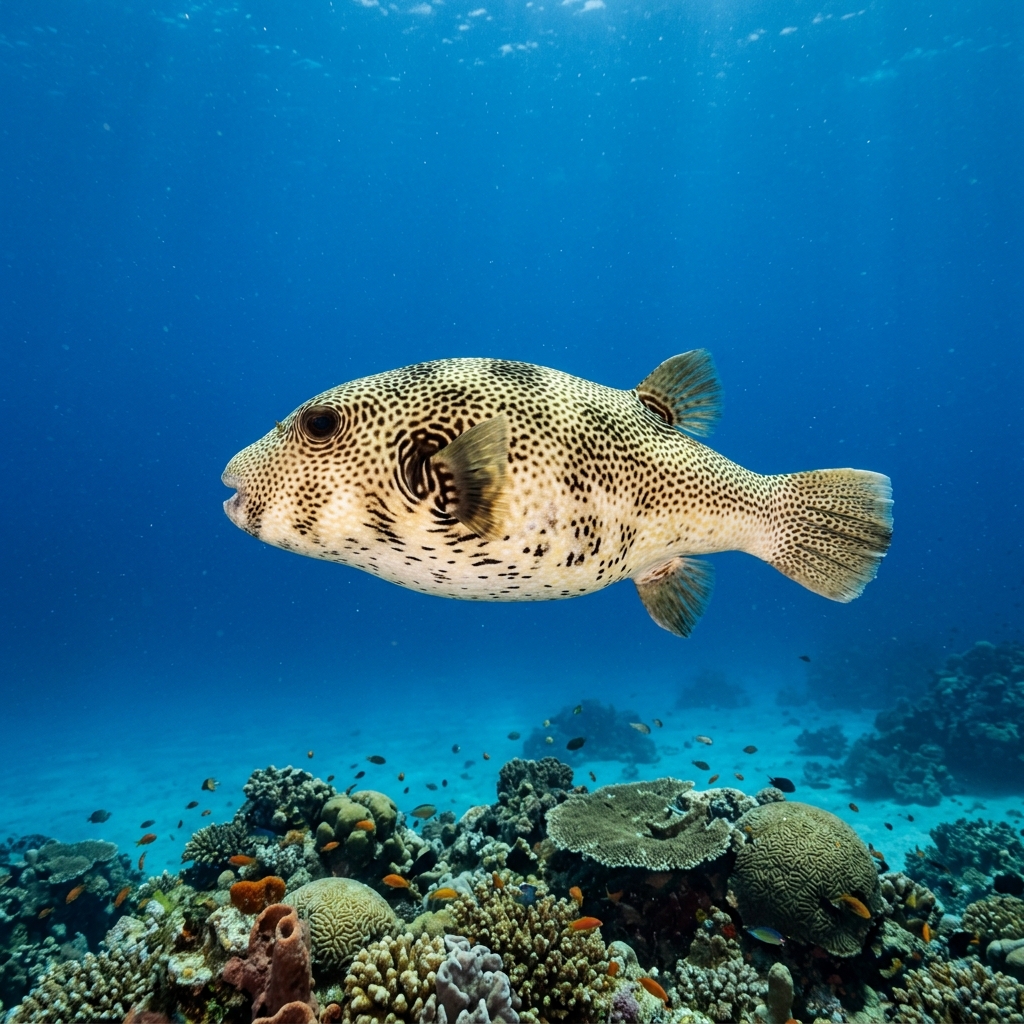
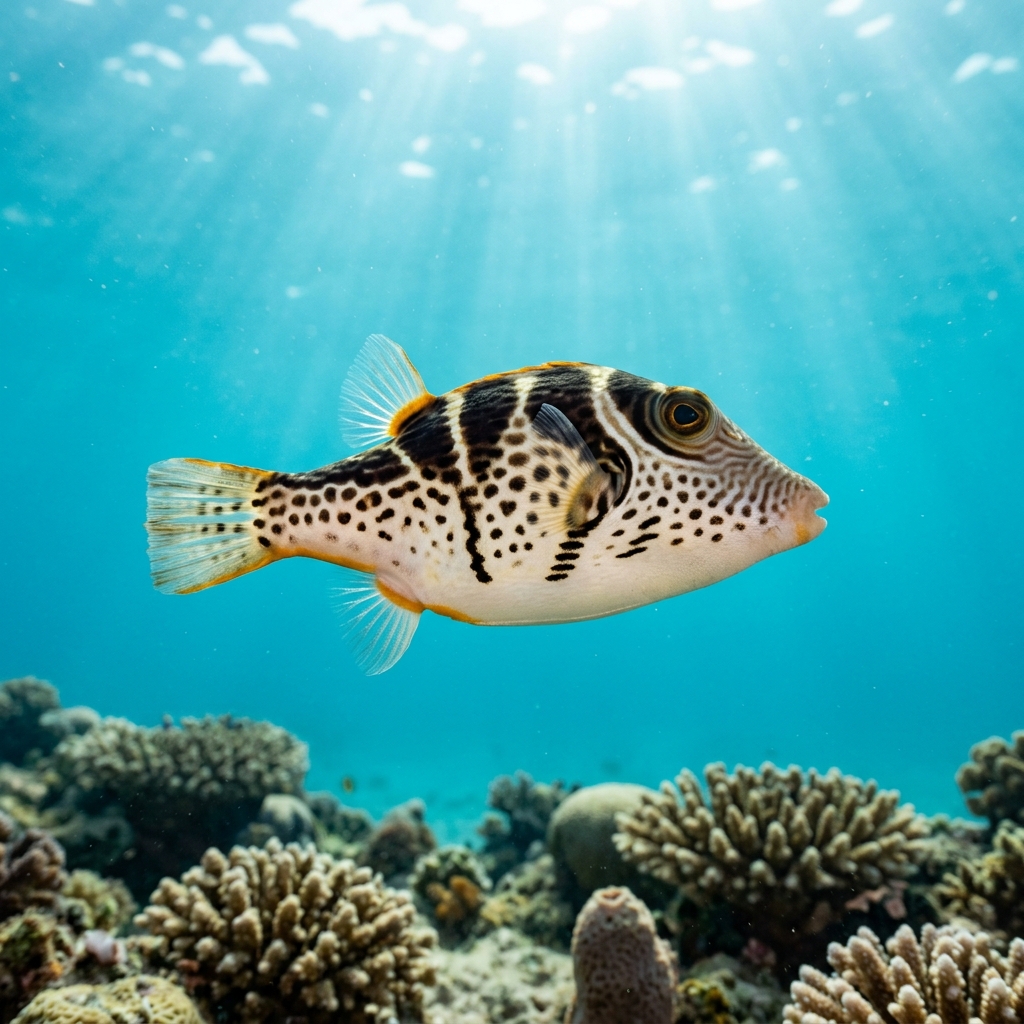
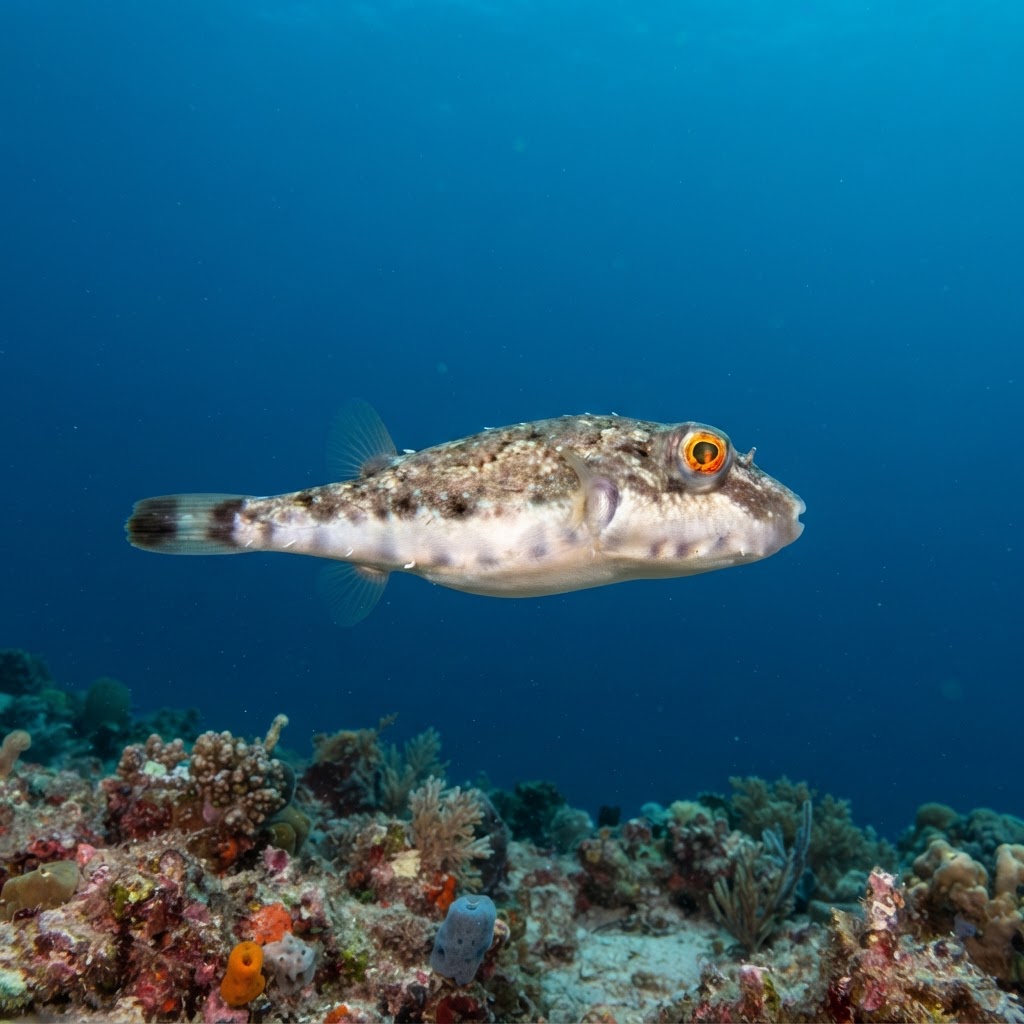
A small, blunt-nosed puffer around 21 cm, with a grey to olive-brown body covered in fine dark spots and a pale belly. The tail base carries a dark bar or band, which is the easiest field mark and the source of its name. It usually sits still or hovers just off the sand or reef rubble rather than swimming in open water, so you often spot it before it spots you.
Look for it hovering low over sand patches, seagrass edges, and rubble at the base of the reef, often nearly motionless and relying on its mottled colouring to blend in. It tends to hold its ground rather than bolt when divers approach, drifting off at an unhurried pace if pressed. Most sightings come from the shallower to mid reef zone rather than open water.
Like other pufferfish, it can inflate its body with water when threatened, a defence that makes it awkward for most predators to swallow.
No strong seasonal pattern shows up in sightings, and it sits comfortably in 22.5 to 28 C water, so it is a year-round find on Caribbean and Florida reefs.
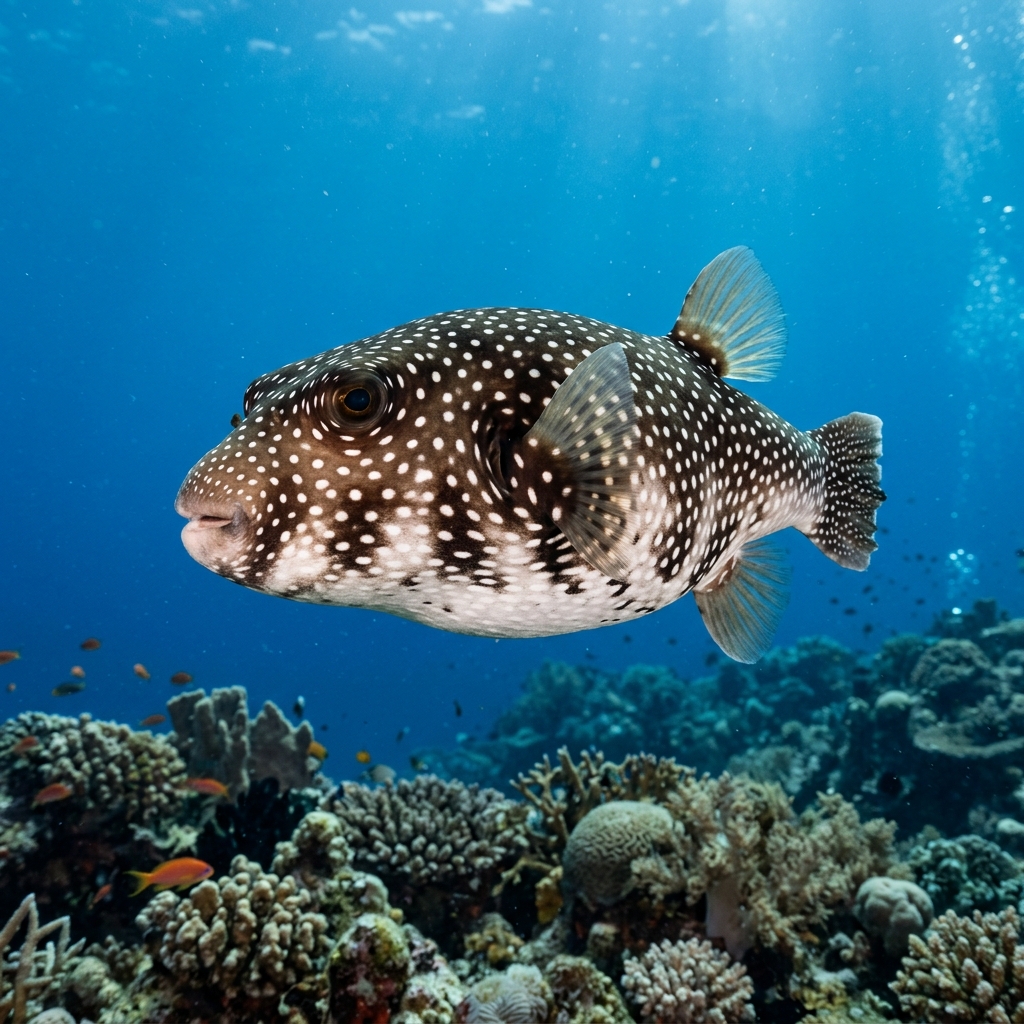
Reef neighbours a diver could mistake it for. Use the identification notes above to tell them apart.
Most consistently logged in Florida in the United States, along Colombia's Caribbean coast, and around Sint Maarten and Saint Martin. Also a reliable find in Carriacou in Grenada, Carlisle Bay in Barbados, and around Aruba's Arashi and Boca Catalina sites, with further sightings in Tobago and the Dominican Republic.
Mapping where Bandtail Puffer is logged…
Florida is the strongest single region, with further sightings across Colombia's Caribbean coast, Sint Maarten, Saint Martin, Grenada's Carriacou, Barbados, Aruba, and Tobago.
There is no clear season in the sighting data, and it tolerates warm reef water year-round, so any month on a Caribbean or Florida dive is a fair bet.
Look for a small, blunt-headed puffer with a grey-brown spotted body and a dark band across the base of the tail. It is usually seen hovering low near sand or rubble rather than out in open water.
They typically reach around 21 cm in length, making them a small to medium-sized reef puffer.
No, they pose no threat to divers and will simply move off slowly if approached too closely.
Site and sighting data is aggregated from diver logs, iNaturalist and GBIF. For taxonomy and conservation status:
Valentini Pufferfish
2,830 sites