Panulirus marginatus
Uncommon but unmistakable on Hawaii's reef nights, with banded antennae and a spiny reddish shell showing up in warm 22-28C water year-round.
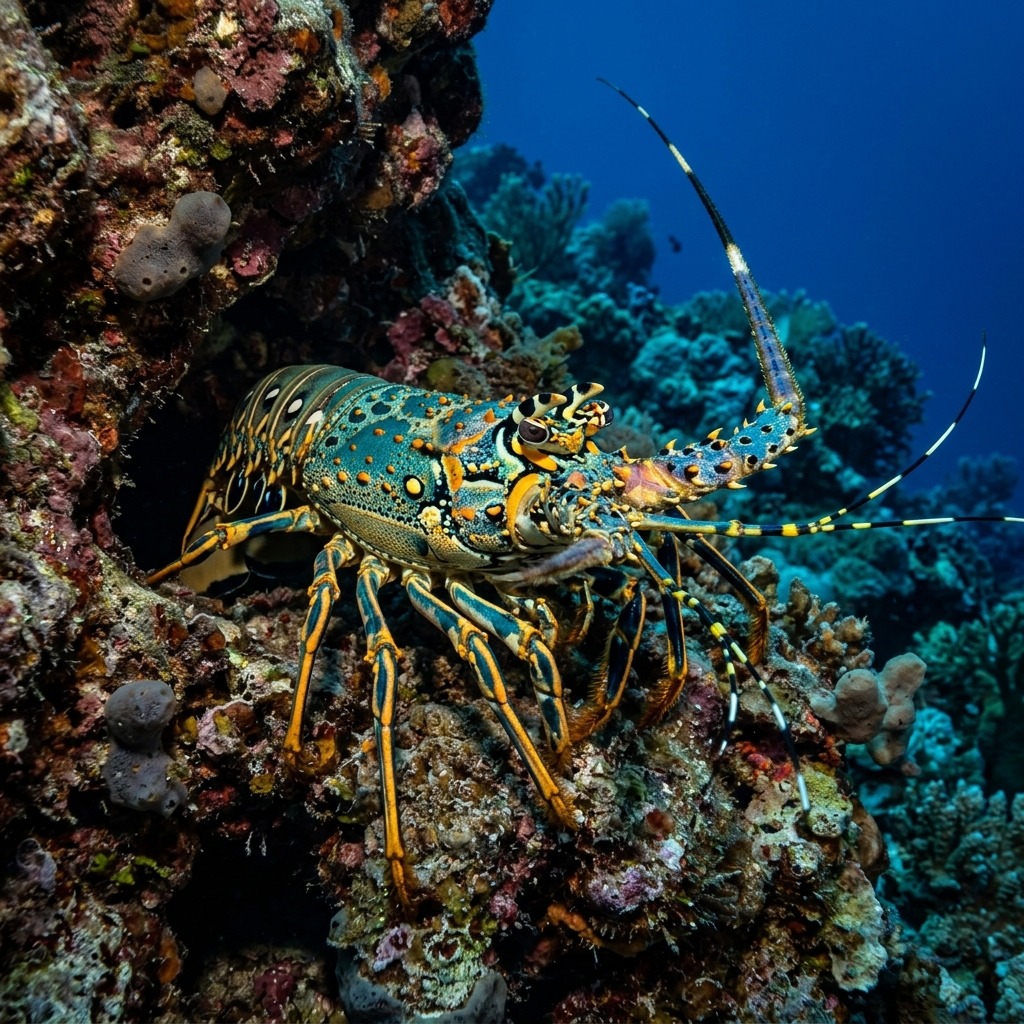
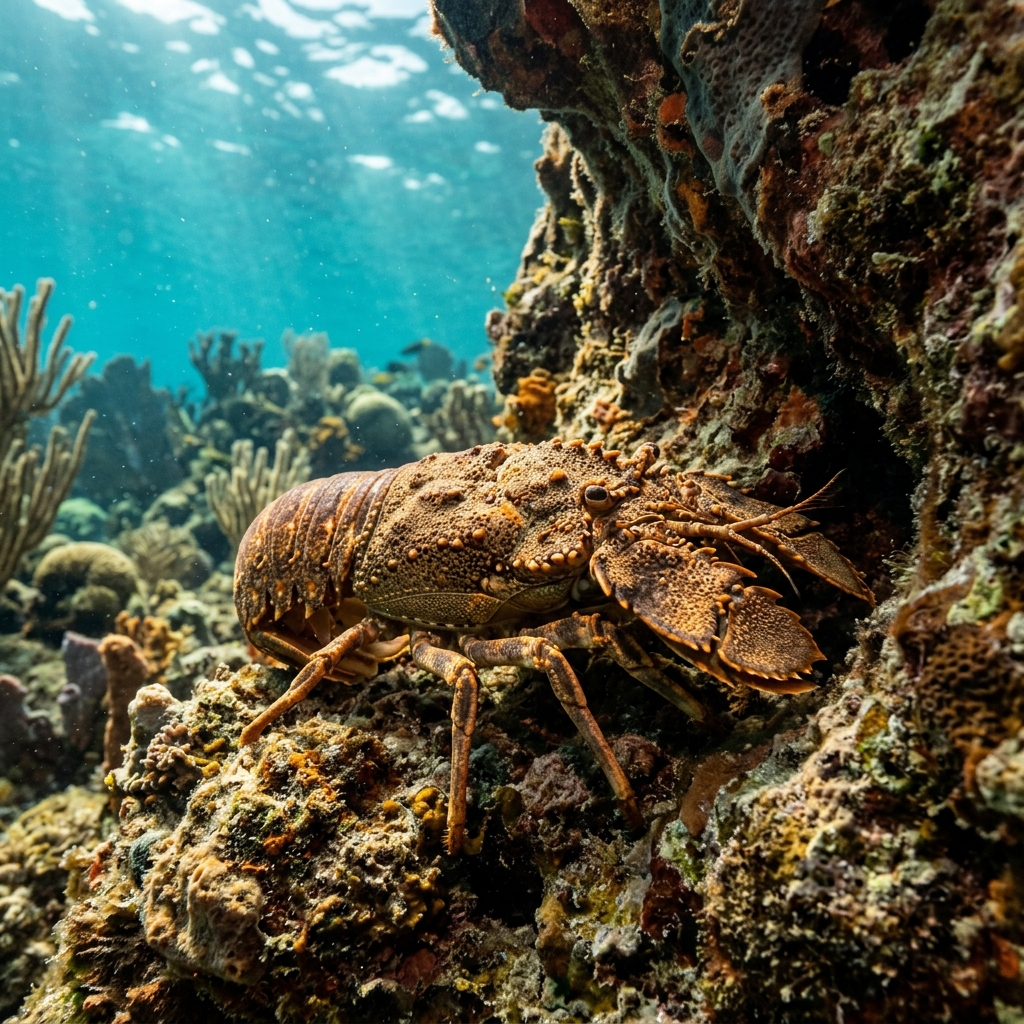
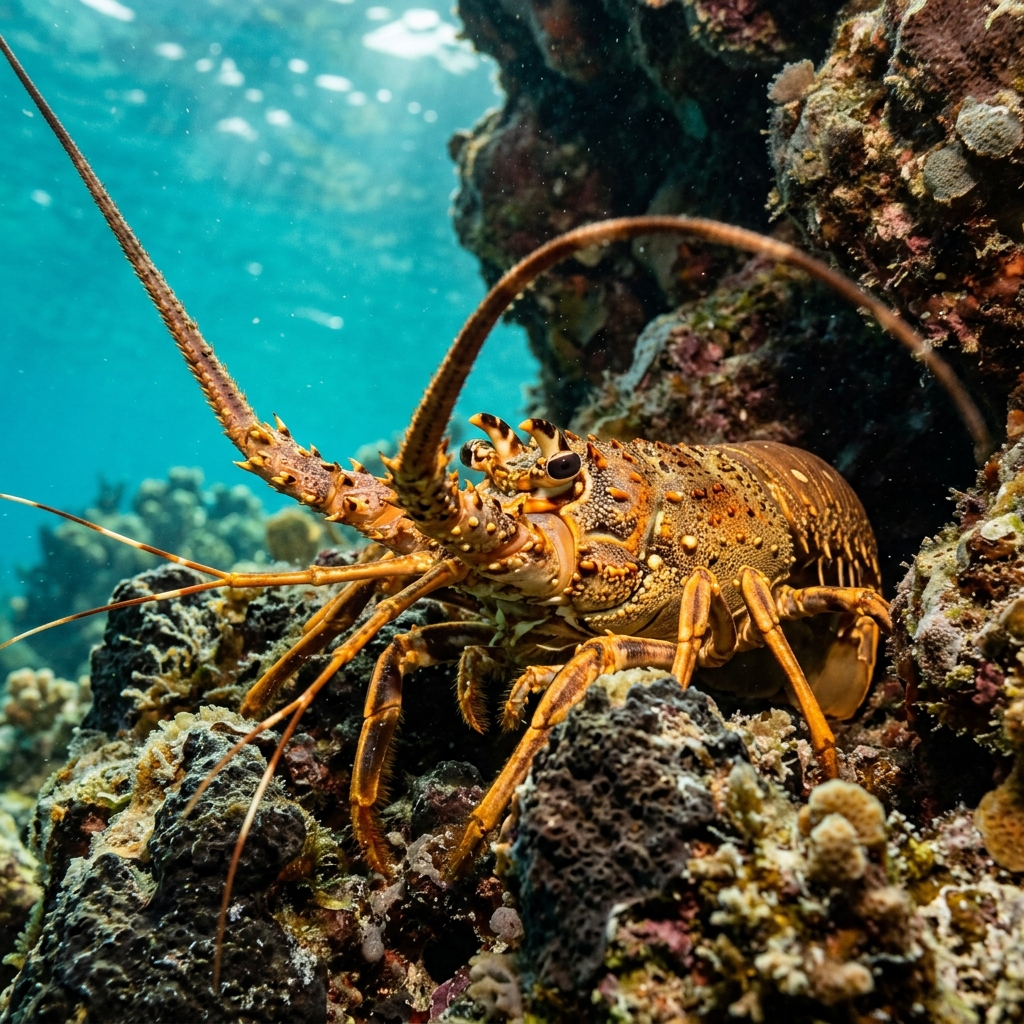
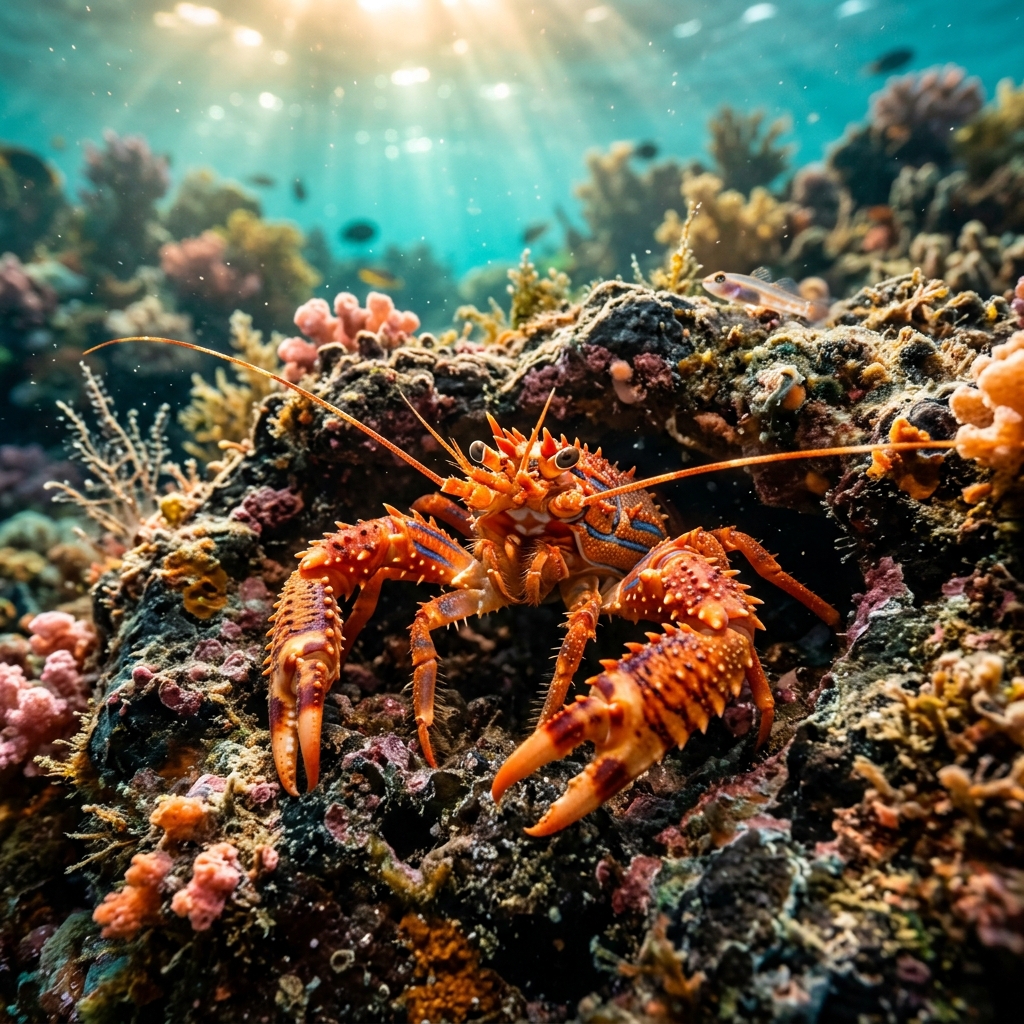
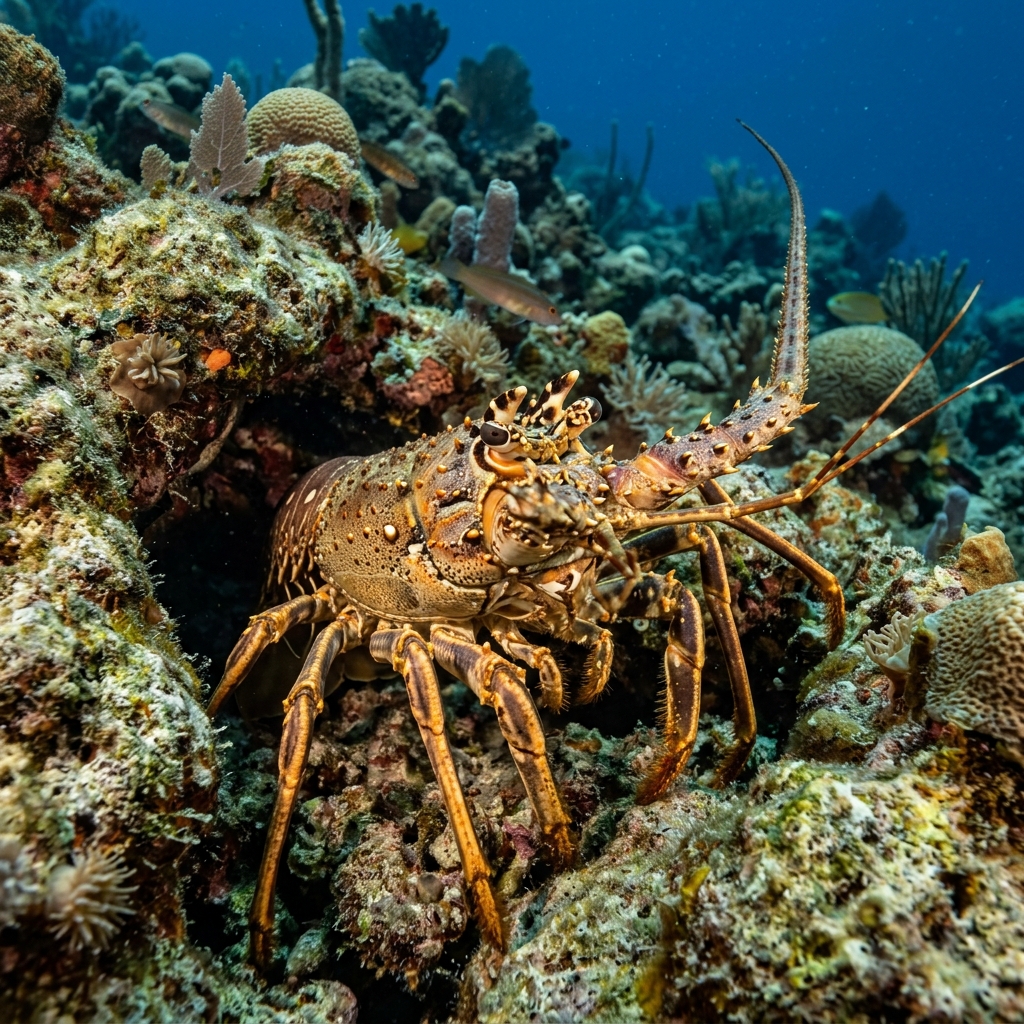
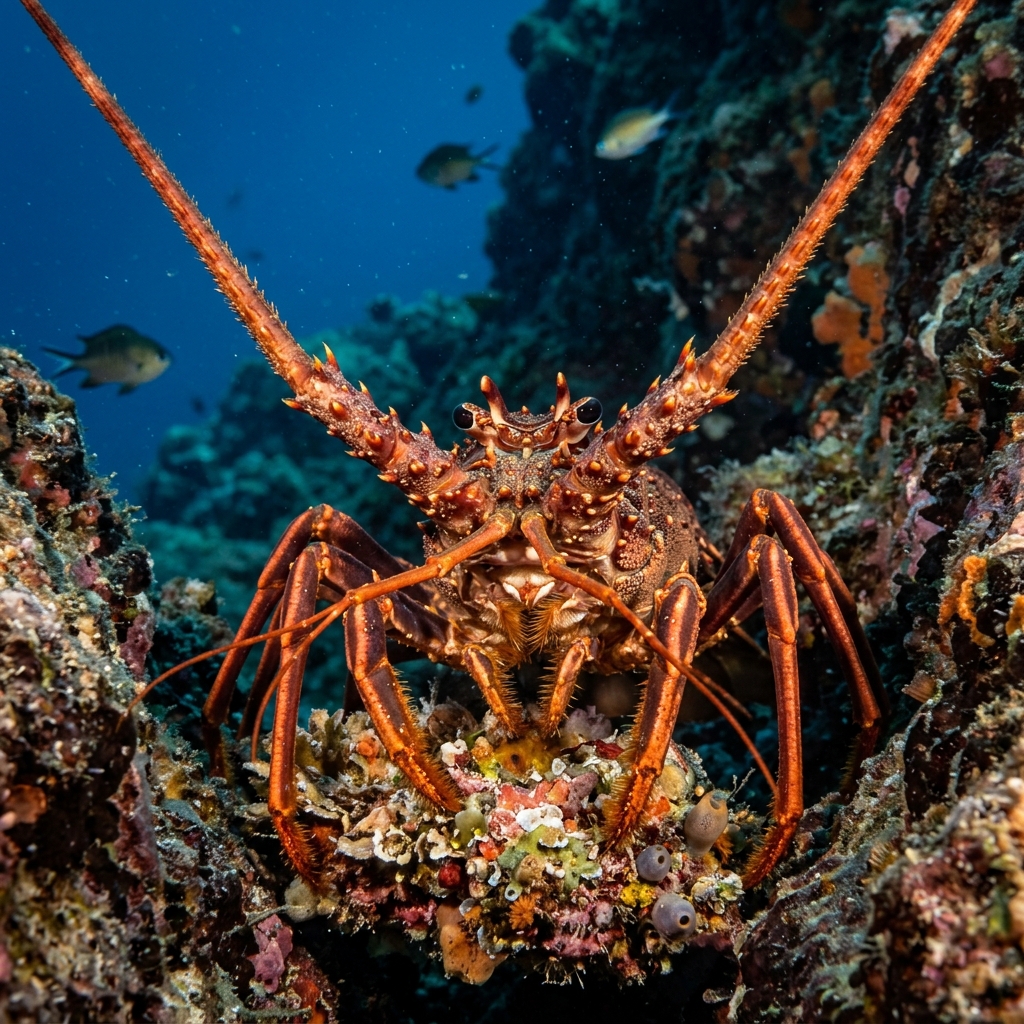
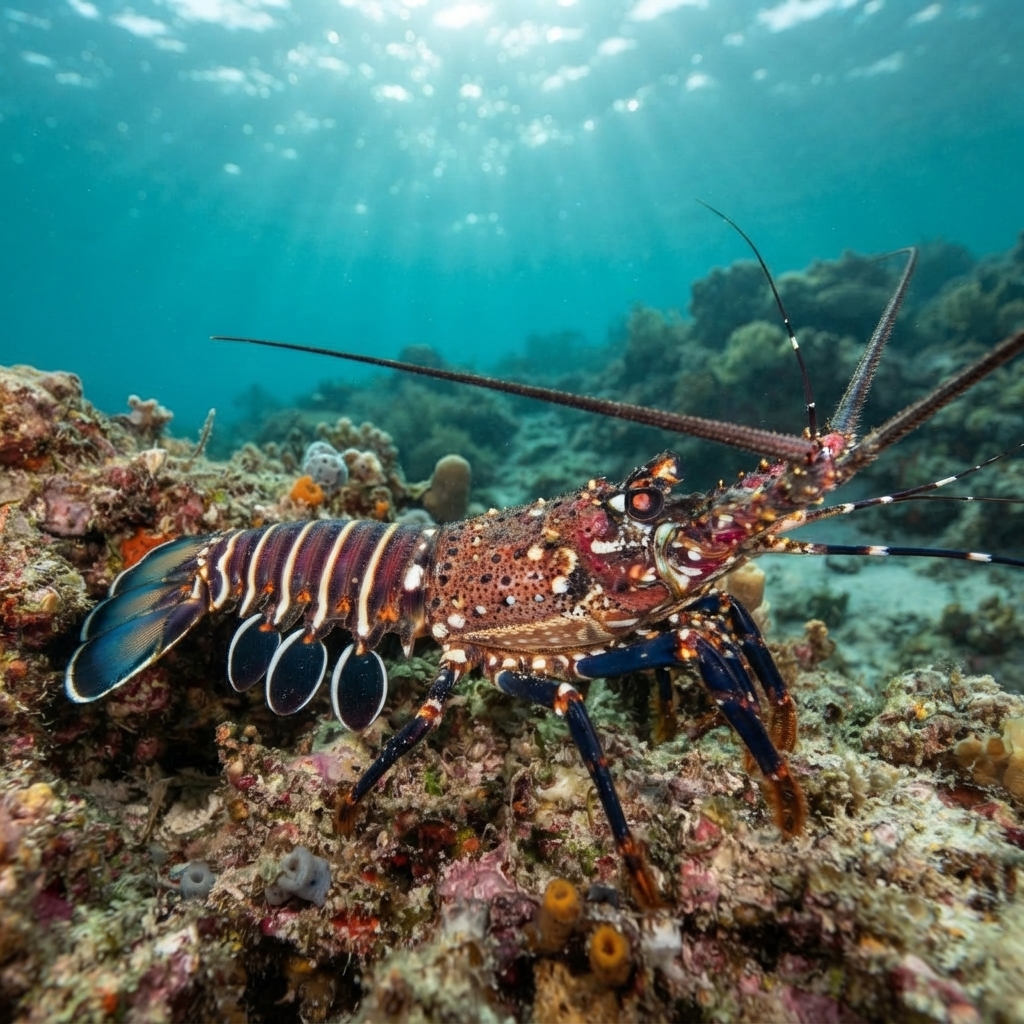
Look for a reddish-brown to orange shell covered in short spines, with the long antennae marked in bold alternating bands, which is the easiest tell against other spiny lobsters. It sits low with legs tucked under a ledge or crevice, showing mostly its spiky carapace and banded feelers rather than a full body profile. Size in the water reads as a solid handful, comparable to other reef-dwelling spiny lobsters rather than the larger open-water spiny lobsters divers see in the Caribbean.
Expect to find it wedged into a crevice or under a ledge during the day, antennae often the first thing you notice poking out before the rest of it. It is a shy, retreating animal rather than a bold one, backing further into cover if a torch or diver gets too close, and night dives generally offer a better chance of seeing it out and moving across the reef.
Like other spiny lobsters it has no large claws for defence, relying instead on those long banded antennae to detect threats early and back into tight rock crevices before a predator, or a diver, gets close.
No clear seasonal pattern shows up in the sighting data, and with a comfortable range of 22.4 to 28.4C year-round in Hawaiian waters, it is realistically a spot-it-anytime find rather than a seasonal one.
Reef neighbours a diver could mistake it for. Use the identification notes above to tell them apart.
This one is essentially a Hawaii speciality among logged dive sites, with sightings concentrated in Hawaii, United States, and nowhere else showing up strongly in the data so far. Check ledges, overhangs and dark crevices on Hawaiian reef sites, where it turns up as an uncommon to rare find rather than a guaranteed spot.
Mapping where Banded Spiny Lobster is logged…
It is most reliably logged on reef sites in Hawaii, United States, currently the only region with a real diver record for this species. Look under ledges and in crevices on Hawaiian reefs, where it shows up as an uncommon sighting.
There is no detected seasonal pattern in the sighting data, and it tolerates a wide 22.4 to 28.4C range, so it is realistically visible on Hawaiian reefs throughout the year.
Check the antennae first: they carry bold alternating bands that set this species apart from plainer-antennaed spiny lobsters. Pair that with a reddish-brown, spine-covered shell tucked into a reef crevice.
No. It has no venom or aggressive behaviour toward divers, and its only real defence is retreating deeper into a crevice when approached.
No, like other spiny lobsters it lacks the large crushing claws seen on true lobsters, relying instead on spines, a hard shell and long sensory antennae to avoid predators.
Site and sighting data is aggregated from diver logs, iNaturalist and GBIF. For taxonomy and conservation status:
Caribbean Spiny Lobster
2,209 sites