Zapteryx exasperata
Sandy-bottom ray sighted across Baja California's dive sites, most at home in 18 to 28.5 C water year-round.
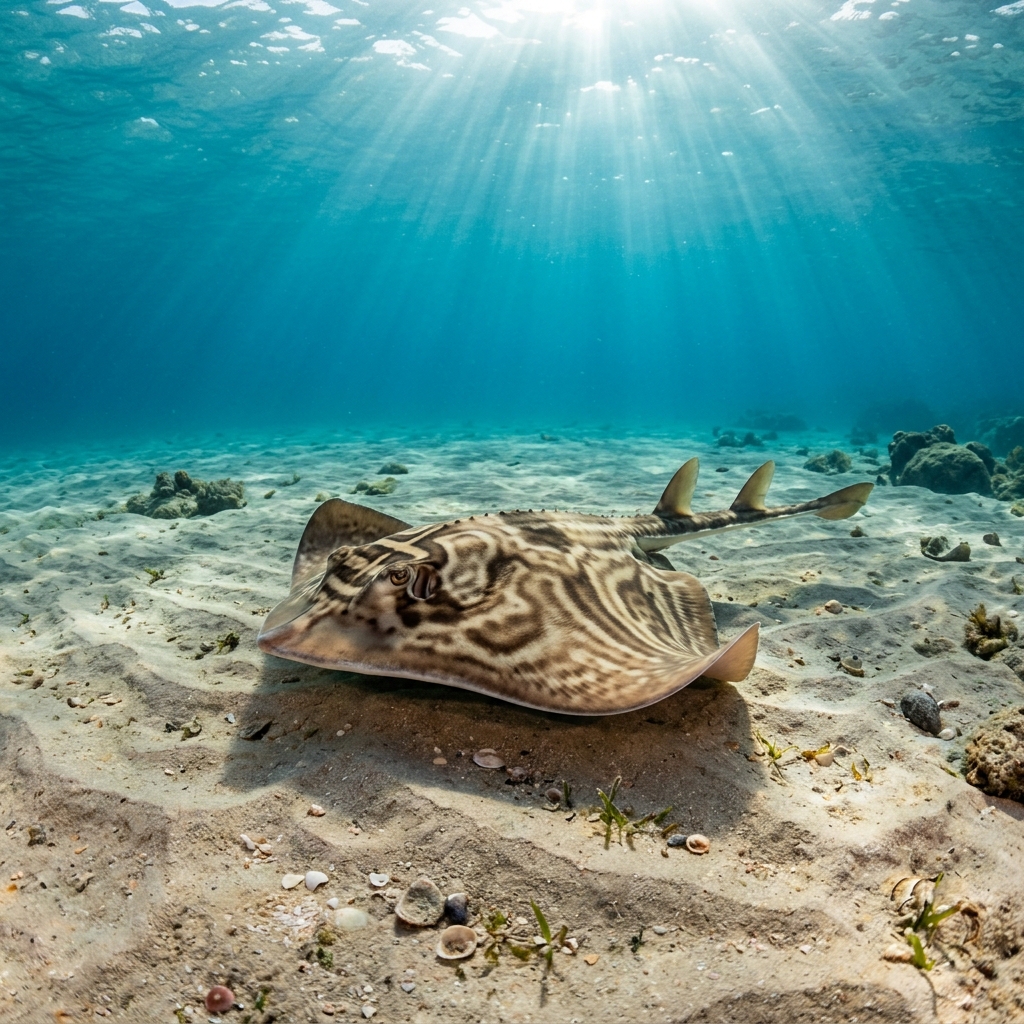
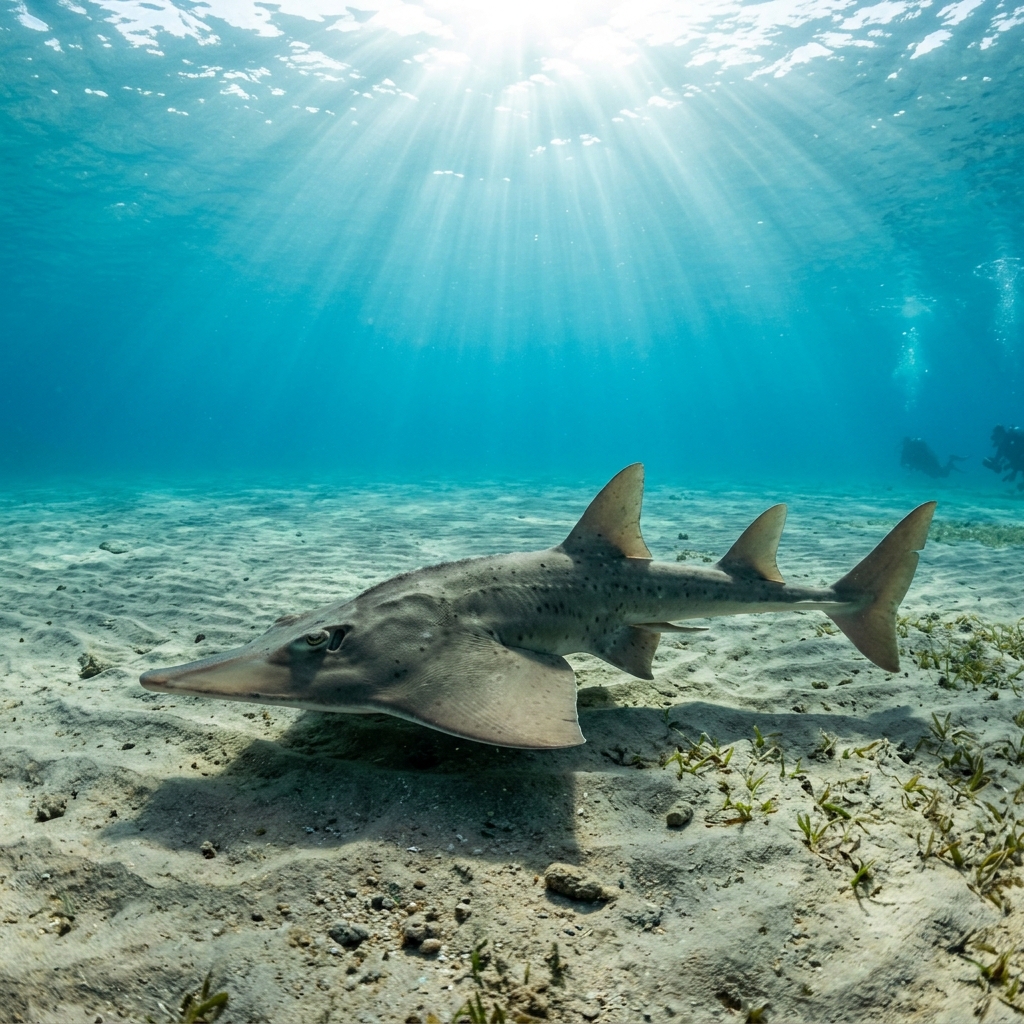
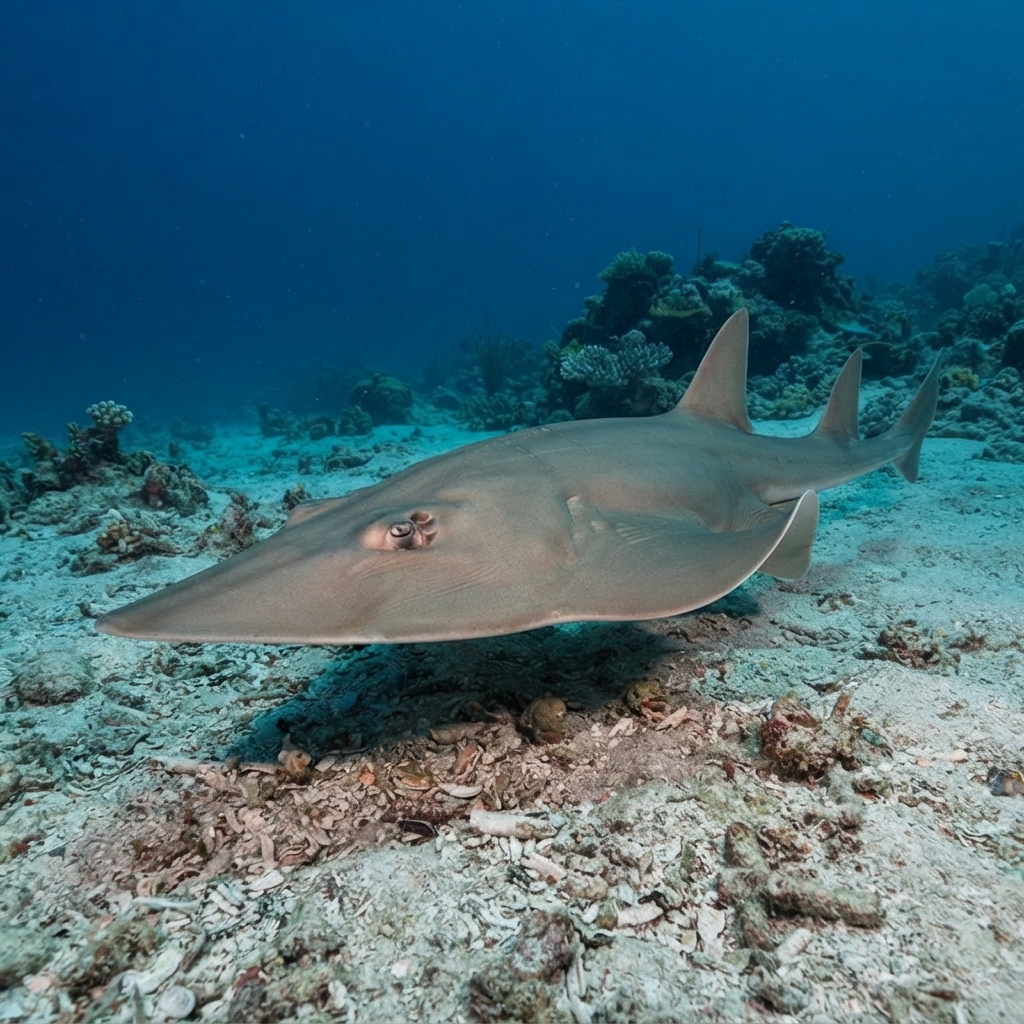
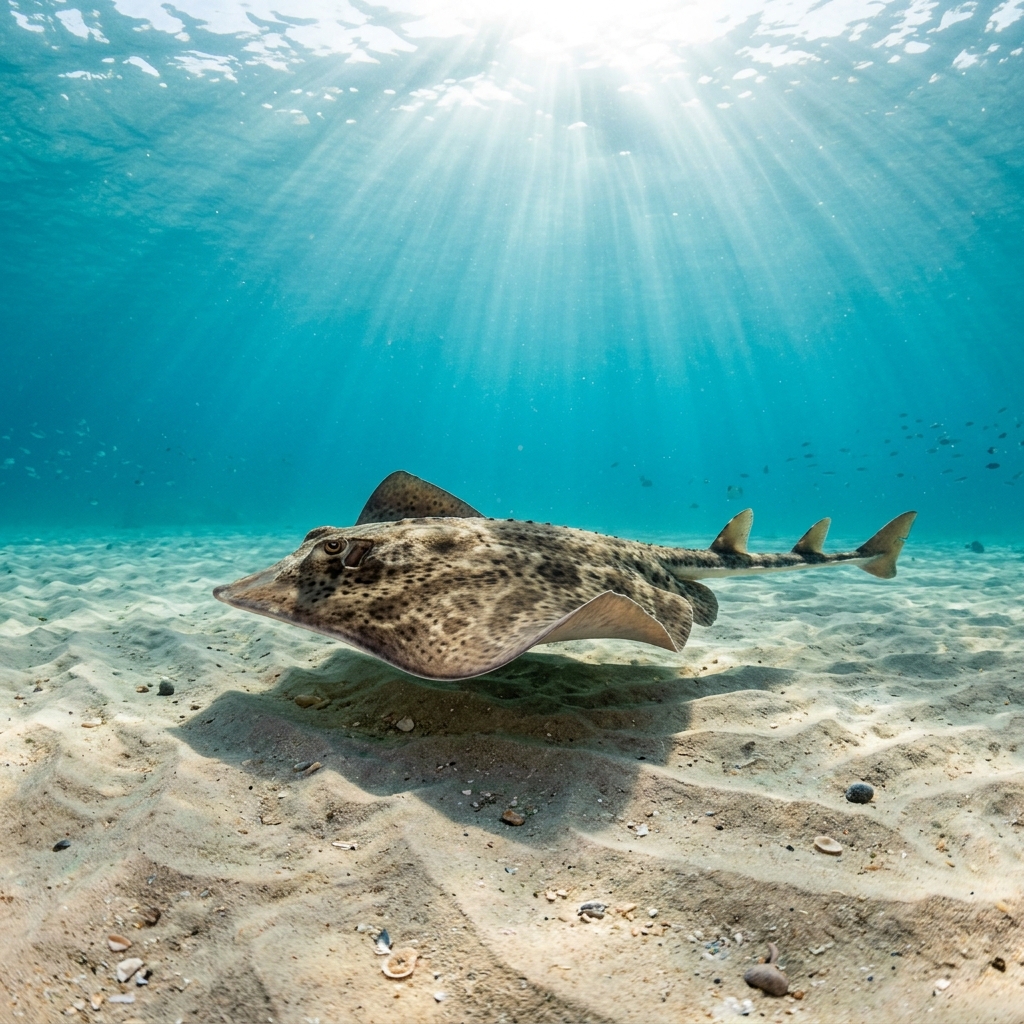
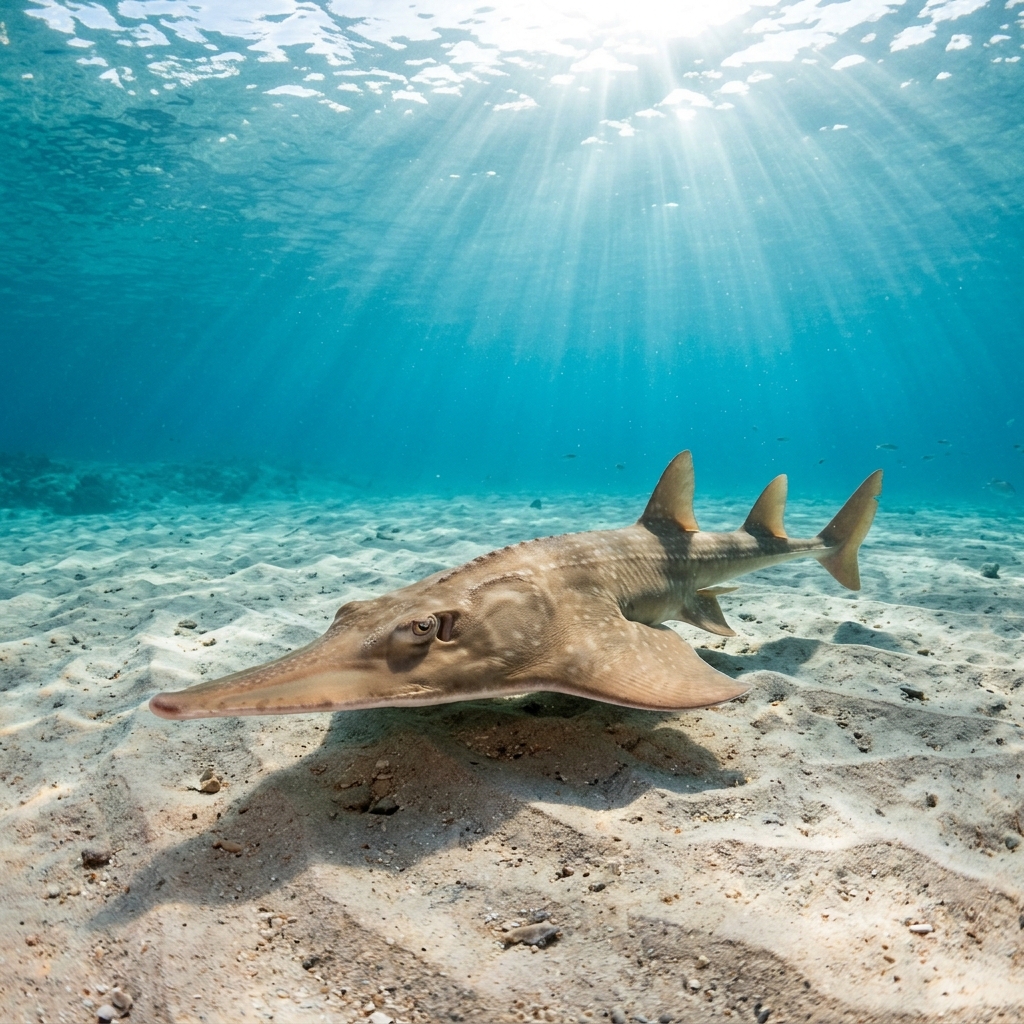
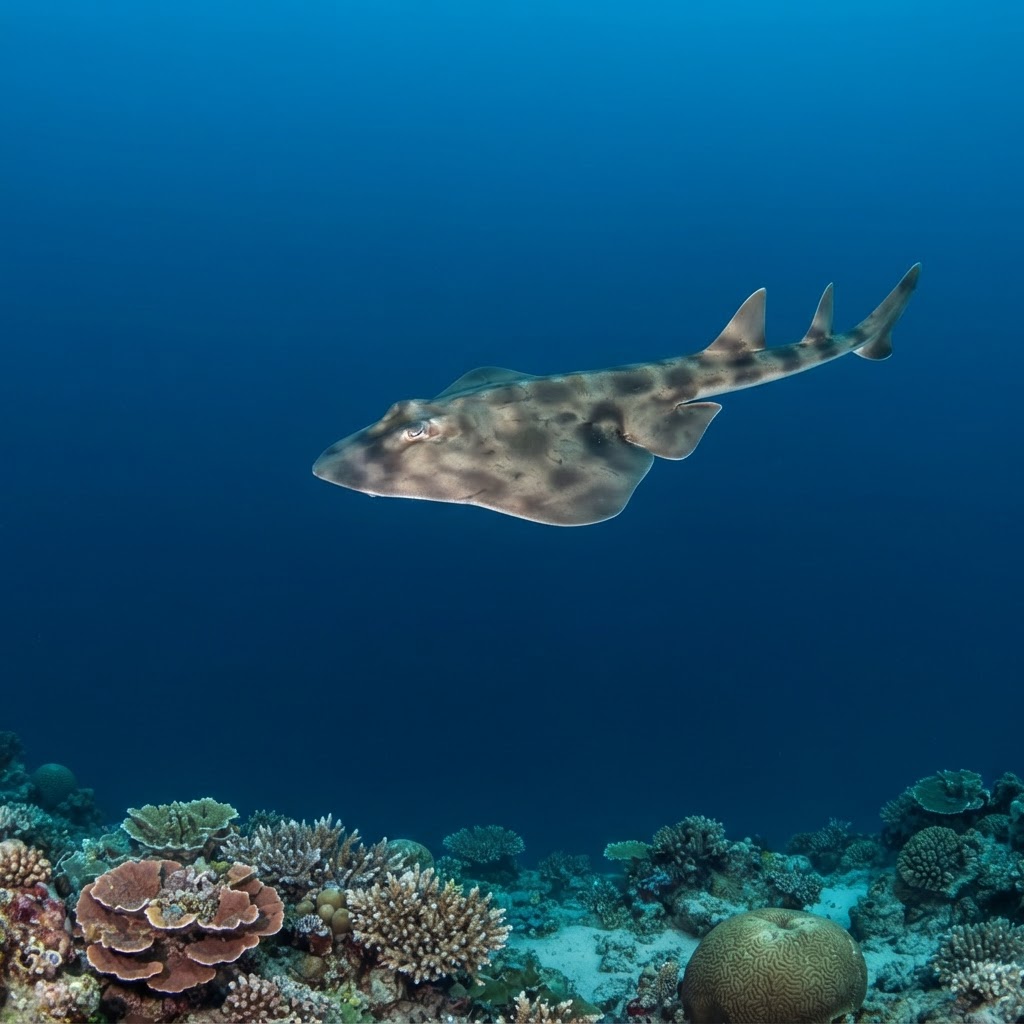
A flattened, guitar-shaped body around 58 cm long, tan to grey with dark crossbands or blotches running down the back and tail. The wide triangular disc tapers into a shark-like tail, and it usually lies still on sand or rubble where the banding breaks up its outline. Look for the pointed snout and the eyes set on top of the head, a giveaway that it is watching you from just under the surface layer of sediment.
Spends most daylight hours motionless on sand or in the lee of rocky reef, often half-buried, waiting for prey to wander close rather than actively hunting in the open. Divers usually find it by scanning open sand patches near reef structure rather than swimming past it, since it holds still and relies on its banded pattern to stay unnoticed. It tends to tolerate a slow, careful approach before easing off with a few pushes of its tail if crowded.
It hunts mostly at night, ambushing crustaceans and molluscs buried in sand, which is why daytime divers usually find it resting rather than feeding.
No clear seasonal pattern shows up in the data, so treat this as a year-round species. Its comfort range of 18.1 to 28.5 C covers most of the diving season in Baja California and Southern California, so timing your trip around water temperature matters less than picking the right sandy habitat.
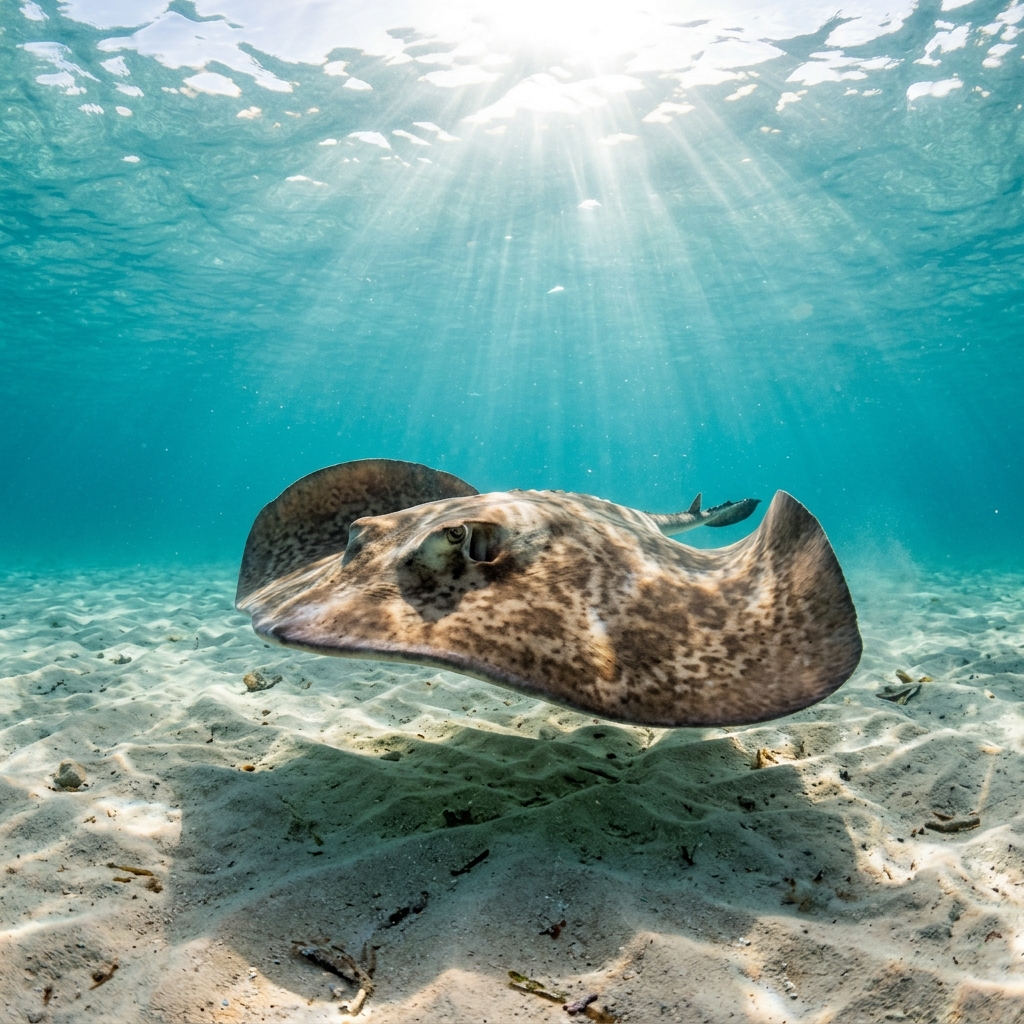
Reef neighbours a diver could mistake it for. Use the identification notes above to tell them apart.
Most reliably logged around Baja California, Mexico, which accounts for the large majority of recorded sites, with a smaller but steady scatter of sightings off California, United States. Divers doing sandy patches and reef edges in these two regions have the best odds, though it turns up as an uncommon rather than everyday find almost everywhere it is logged.
Mapping where Banded Guitarfish is logged…
Baja California, Mexico is the strongest region for sightings, with additional records from California, United States. Look for sandy patches near reef structure rather than the open reef itself.
There is no strong season in the data, so it is considered a year-round sighting. It is recorded across a wide temperature range from 18.1 to 28.5 C, which covers most of the diving calendar in Baja California and California.
Look for a flat, guitar-shaped body around half a metre long with dark crossbands over a tan or grey base, lying still on sand. The pointed snout and top-set eyes help separate it from smoother, unbanded shovelnose rays.
They typically reach around 58 cm in length, making them a small to mid-sized member of the ray group divers encounter on sandy bottoms.
No, they pose no danger to divers. They rest quietly on the bottom and will simply move off with a few tail beats if approached too closely.
Site and sighting data is aggregated from diver logs, iNaturalist and GBIF. For taxonomy and conservation status:
Halavi Guitarfish
412 sites