Mithraculus cinctimanus
Spot this small striped-claw crab tucked in anemones and coral off Martinique, Grand Cayman and the Bay Islands, year-round in warm Caribbean water.
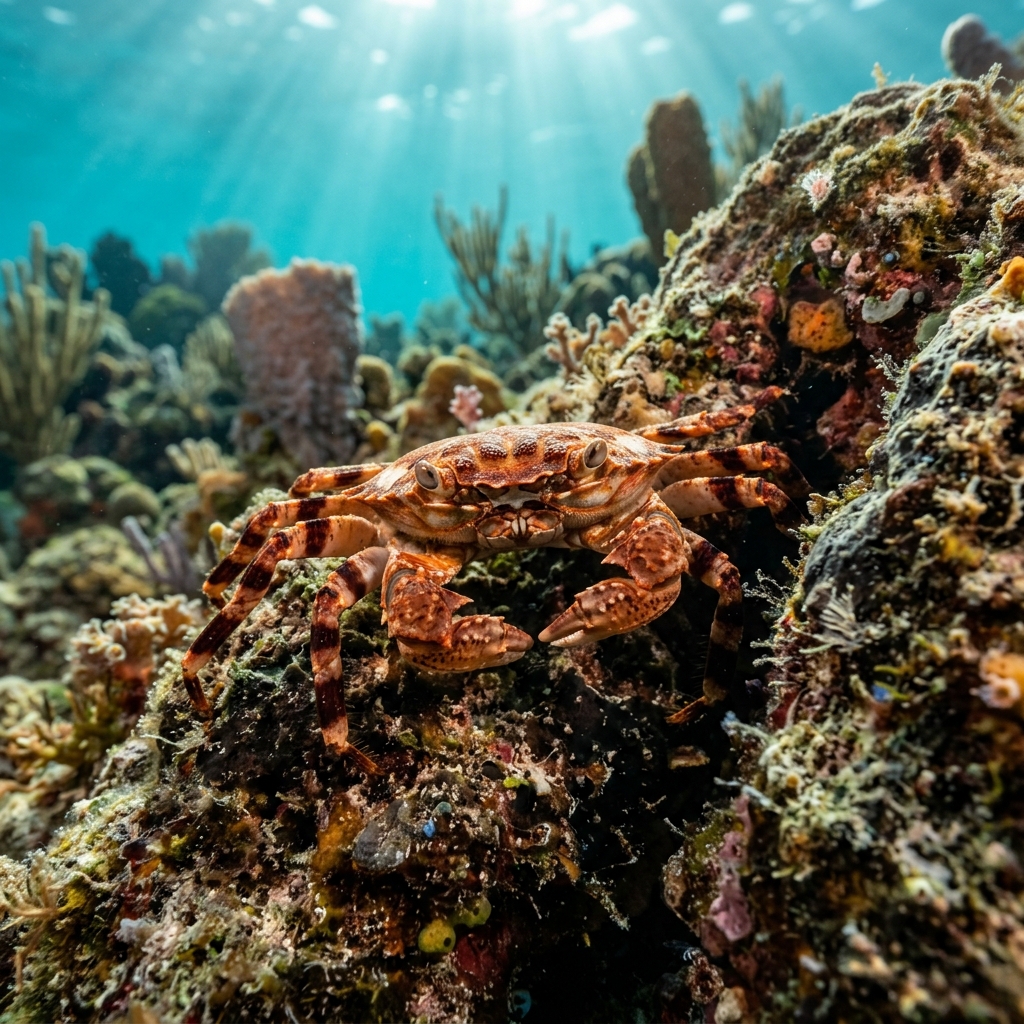
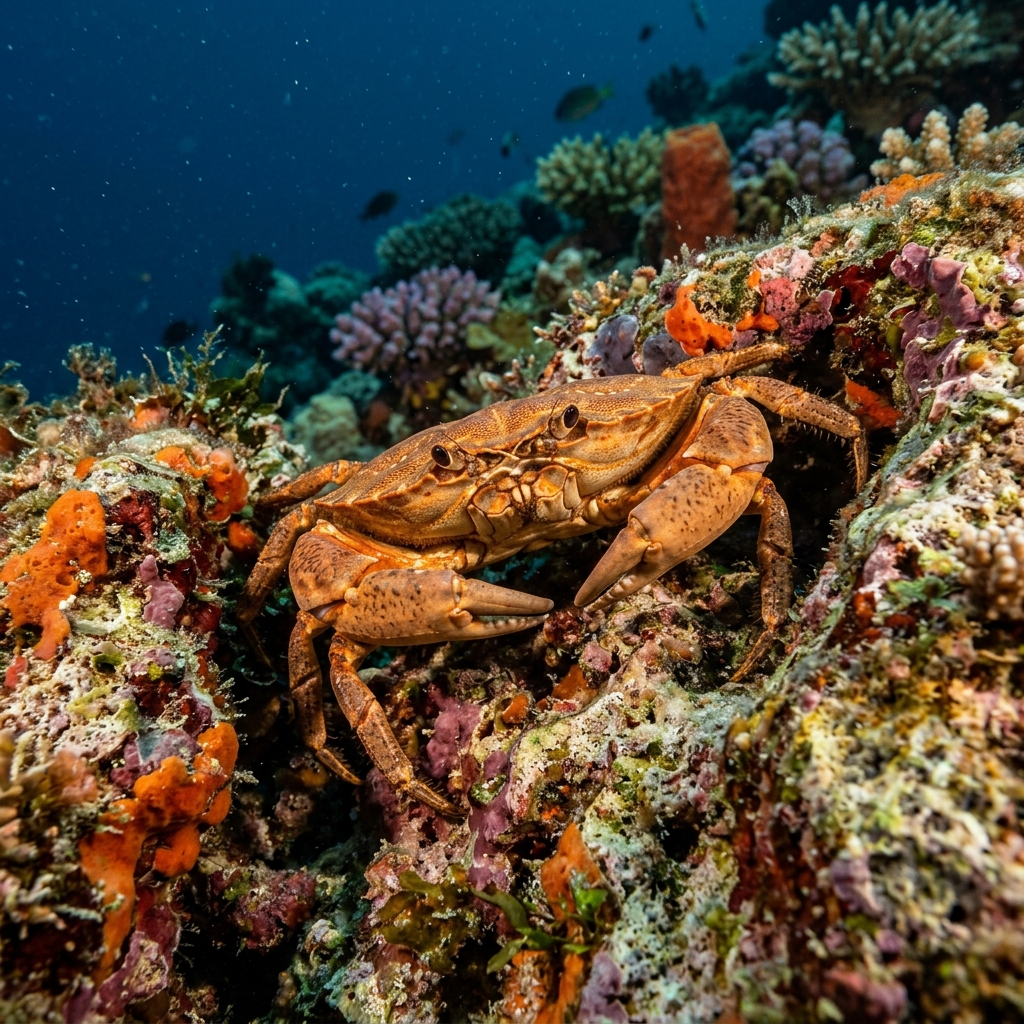
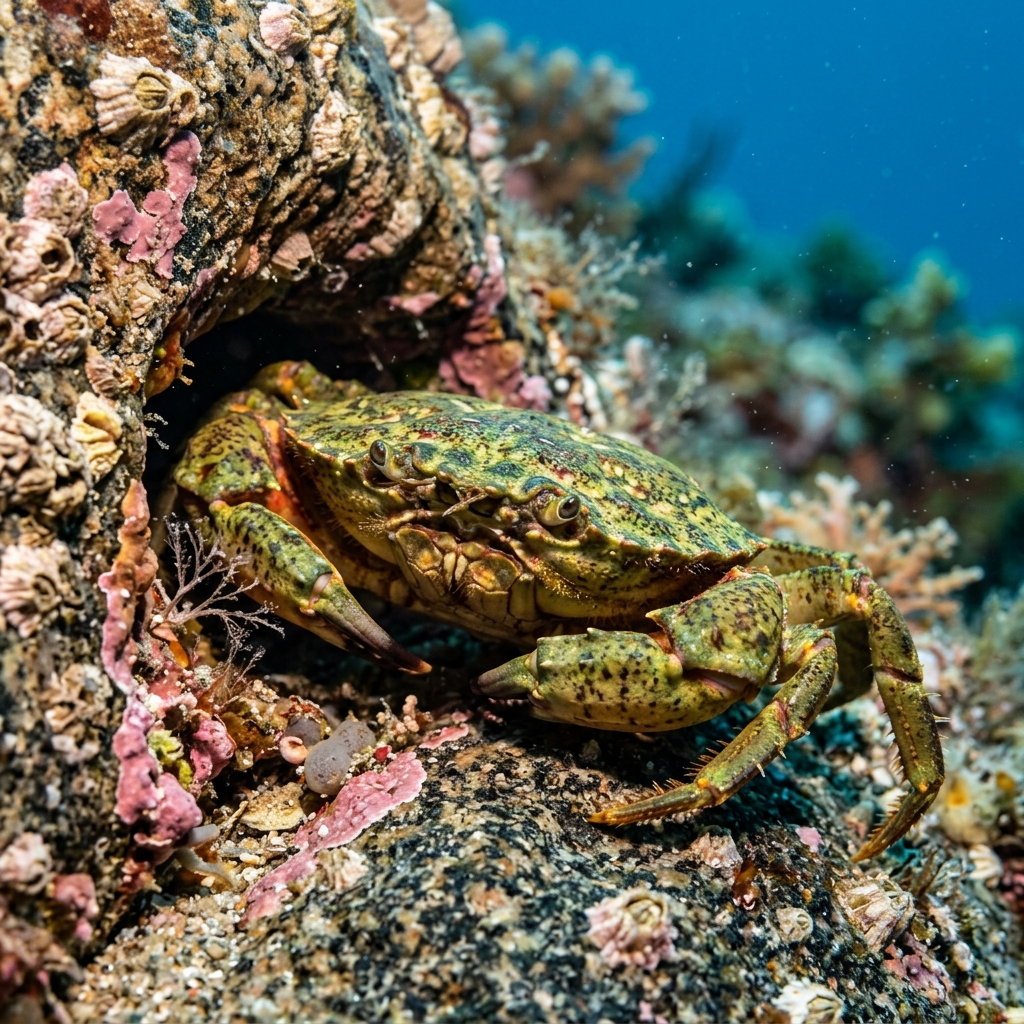
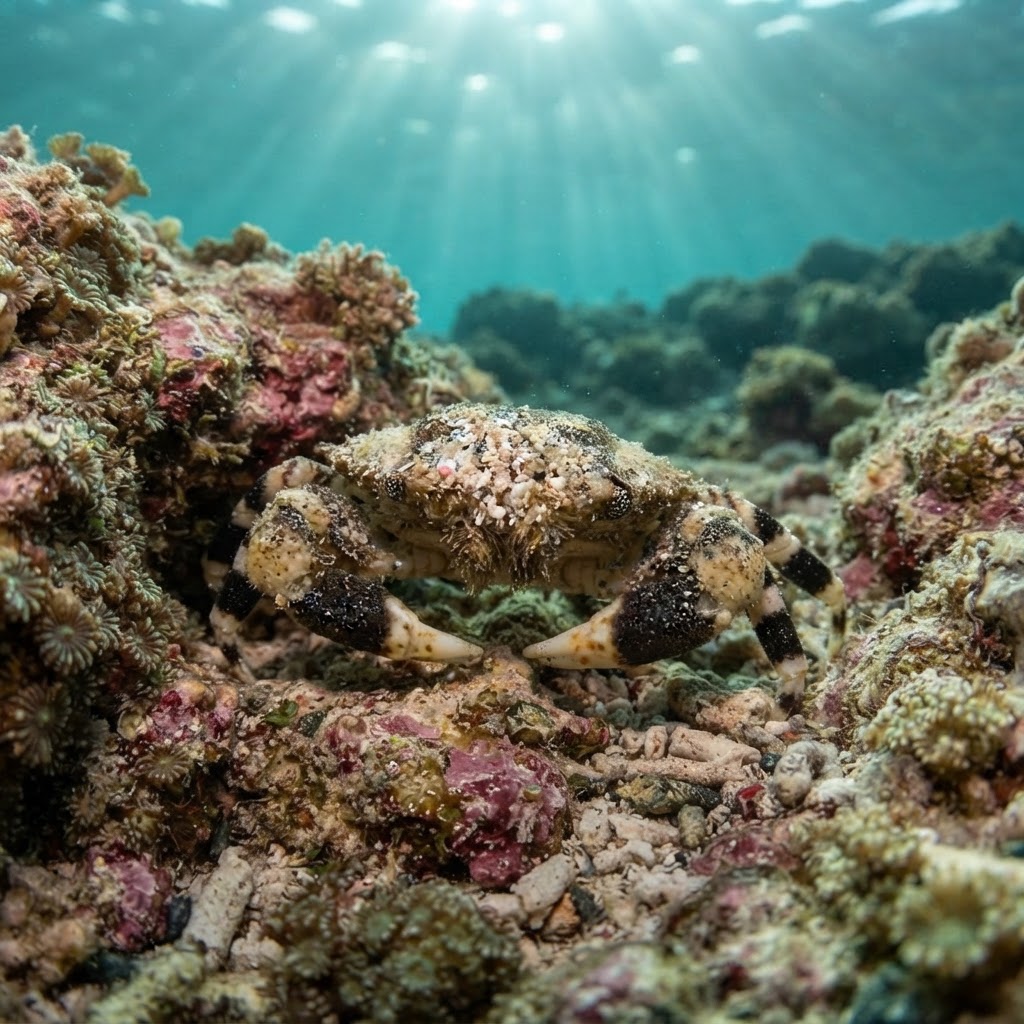
A small, squarish crab, usually just a few centimetres across, with a pale blue-green to olive shell and claws marked by distinct dark bands near the tips. Look for it wedged into the base of an anemone or tucked among coral branches rather than out in the open. The banded pattern on the pincers is the giveaway feature that separates it from plainer reef crabs at a glance.
Divers typically find it sitting still among the tentacles of a corkscrew or giant anemone, or tucked into coral crevices, rather than crawling openly over the reef. It tends to hold its ground rather than bolt when a torch or camera gets close, which makes it an easy macro subject once you clock the banded claws. Most sightings are logged during daytime reef and wall dives at recreational depths.
It shelters among anemone tentacles that would sting most other animals, picking off algae and detritus without triggering a sting response, a handy bit of reef real estate to squat in.
No clear seasonal pattern shows up in the data, and with a comfortable temperature range of roughly 25 to 31 C, it is present on Caribbean reefs all year round. Any month works; the bigger factor is simply slowing down enough to spot one.
Reef neighbours a diver could mistake it for. Use the identification notes above to tell them apart.
Most reliably logged around Les Anses-d'Arlet in Martinique, which accounts for the largest share of sightings, followed by Grand Cayman in the Cayman Islands and the Bay Islands of Honduras. Also turns up in the Yucatán Peninsula in Mexico, around Ocho Rios in Jamaica, and at sites in Curacao and Guadeloupe, making it a widespread but low-key find across the wider Caribbean.
Mapping where Banded Clinging Crab is logged…
Best-known sites cluster around Les Anses-d'Arlet in Martinique, Grand Cayman, and the Bay Islands of Honduras, with further sightings in Mexico's Yucatán Peninsula, Jamaica and Curacao.
There is no strong season in the data, and warm water in the 25 to 31 C range means it is around on Caribbean reefs year-round, so any month is a fair bet.
Look for a small, squarish crab with a blue-green to olive shell and dark bands on its claws, usually sitting still inside an anemone or wedged into coral rather than out in the open.
No. It poses no threat to divers and simply clings to anemones or coral, easy to photograph up close without any risk.
Exact size data is not confirmed, but like other small mithracid crabs it is a compact reef species, typically only a few centimetres across the shell.
Site and sighting data is aggregated from diver logs, iNaturalist and GBIF. For taxonomy and conservation status:
European Green Crab
2,469 sites