Pterocaesio pisang
Slim yellow-blue fusilier logged in Raja Ampat, the Maldives and Fiji, comfortable in warm 26-28C reef water year-round.
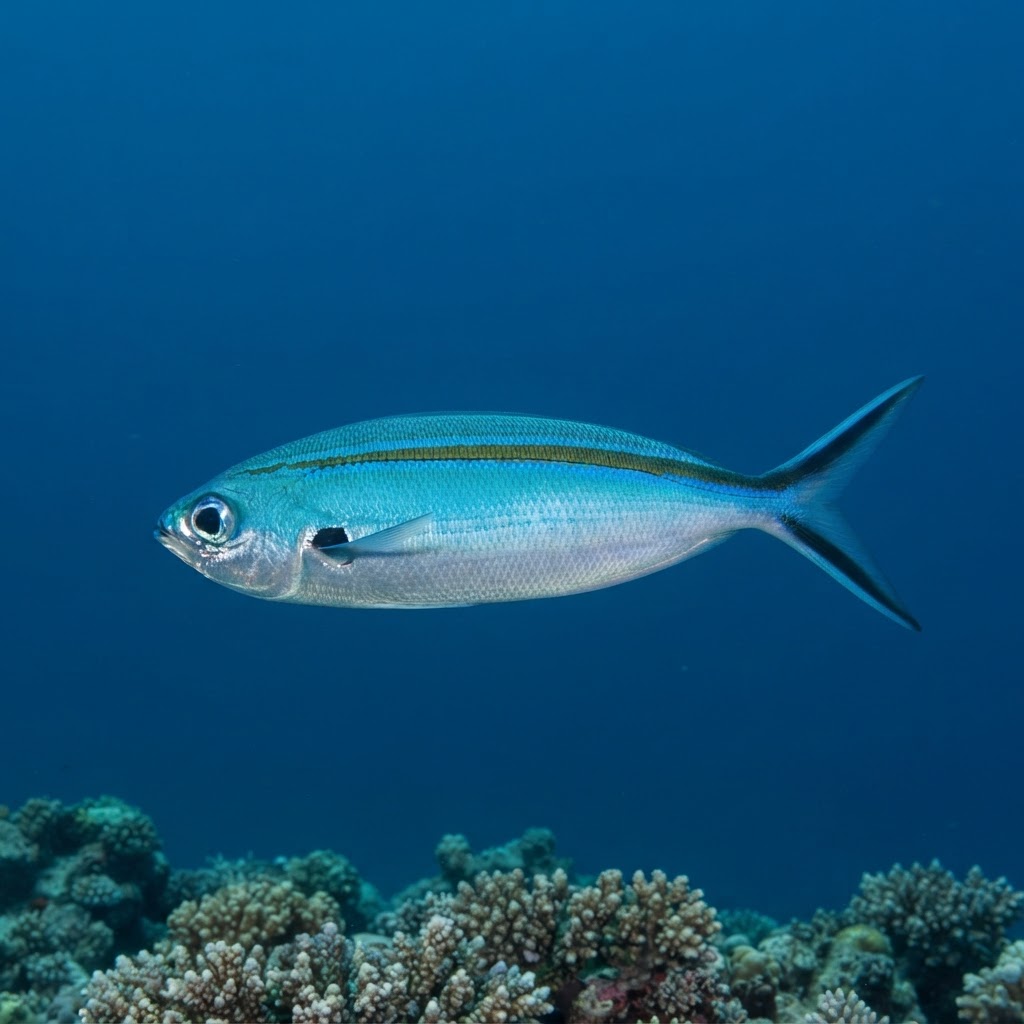
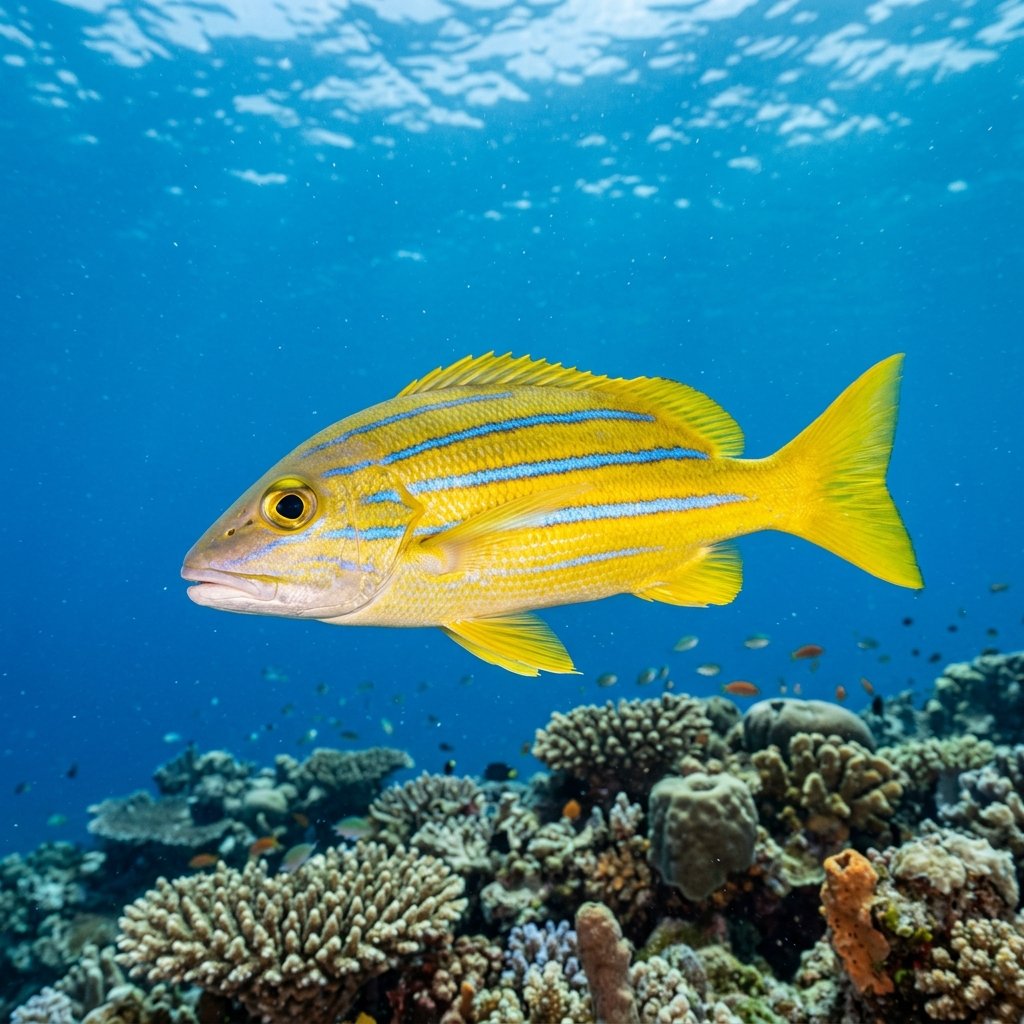
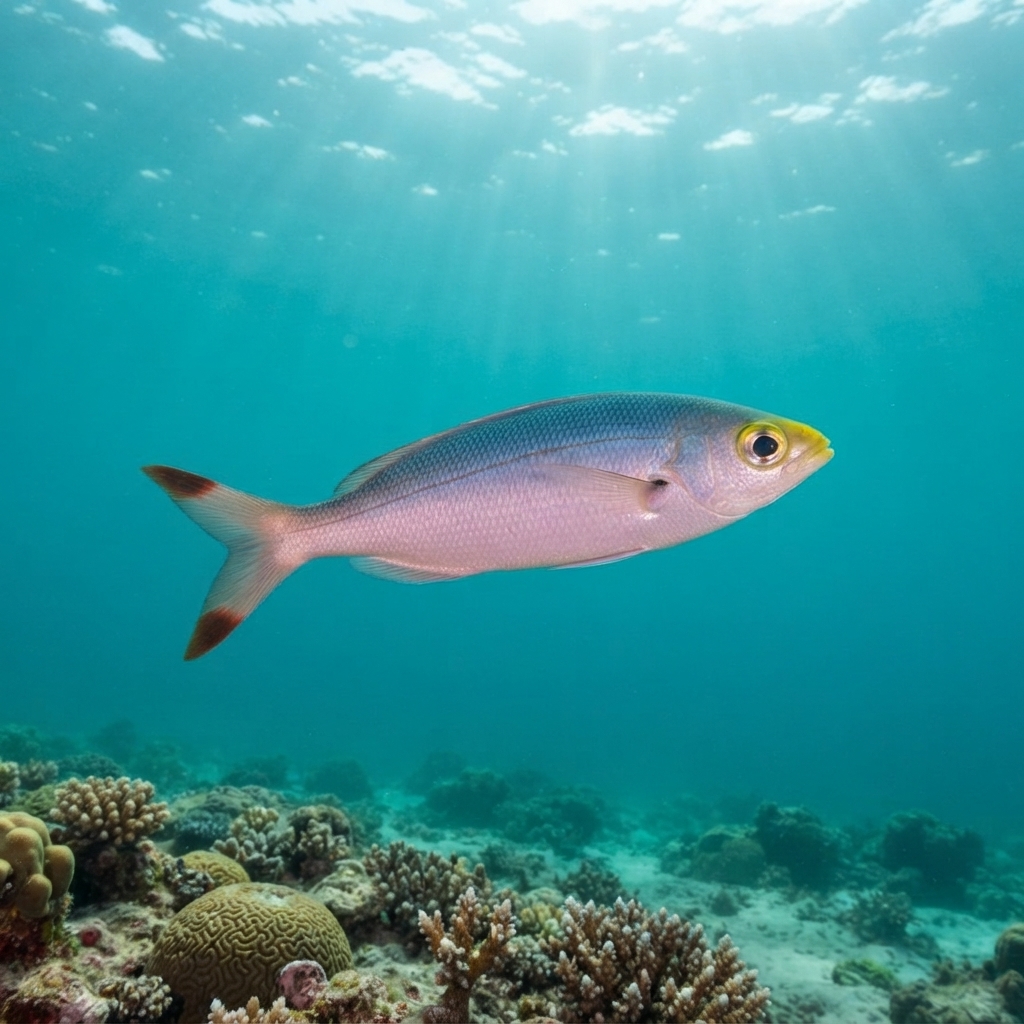
A slim, torpedo-shaped fish around 15 cm, banana-yellow along the back fading to pale blue-silver on the flanks and belly. It swims in loose, fast-moving schools mid-water above the reef rather than sitting still, and the deeply forked tail is a quick giveaway against bulkier reef fish. No strong spots or bars to key on, so the overall yellow-over-blue colour split and schooling habit are the main clues.
Divers typically see it cruising in loose schools over reef slopes and drop-offs, often mixed in with other small fusiliers picking plankton from the water column. It pays little attention to divers, holding its mid-water position or drifting off unhurried rather than diving for cover, and sightings are usually logged as uncommon rather than a guaranteed encounter.
Like other fusiliers, it feeds on plankton drifting in the current, which is why you tend to find schools holding position over exposed reef edges and channels where currents concentrate food.
No clear seasonal pattern in the sightings, and with a comfortable range of about 26 to 28.4C, it's present on these reefs year-round.
Reef neighbours a diver could mistake it for. Use the identification notes above to tell them apart.
Most consistently logged in Indonesia, especially West Papua's Raja Ampat, and a reliable sighting across the Central Atolls of the Maldives. Fiji's Viti Levu also turns up records, with occasional sightings in Sulawesi and the Visayas in the Philippines.
Mapping where Banana Fusilier is logged…
Best logged in Indonesia, particularly Raja Ampat in West Papua, and across the Central Atolls of the Maldives. Fiji's Viti Levu is another solid spot, with scattered records from Sulawesi and the Philippines.
There's no detected season in the sighting data, and warm water in the 26 to 28C range year-round means it can turn up on any dive in these regions at any time of year.
Look for a slender 15 cm fish with a yellow back and pale blue sides, swimming in loose schools mid-water rather than hugging the reef. The forked tail and schooling habit help separate it from solitary reef fish nearby.
They average around 15 cm, a small, slim schooling fish rather than a dive site headliner.
No. They have no defences or behaviours that pose any risk to divers and simply carry on schooling regardless of who's watching.
Site and sighting data is aggregated from diver logs, iNaturalist and GBIF. For taxonomy and conservation status:
Bluestriped Snapper
2,054 sites