Pagellus acarne
A small silvery sparid logged across the Balearic Islands, Azores and Canaries, usually as an uncommon find in cooler water.
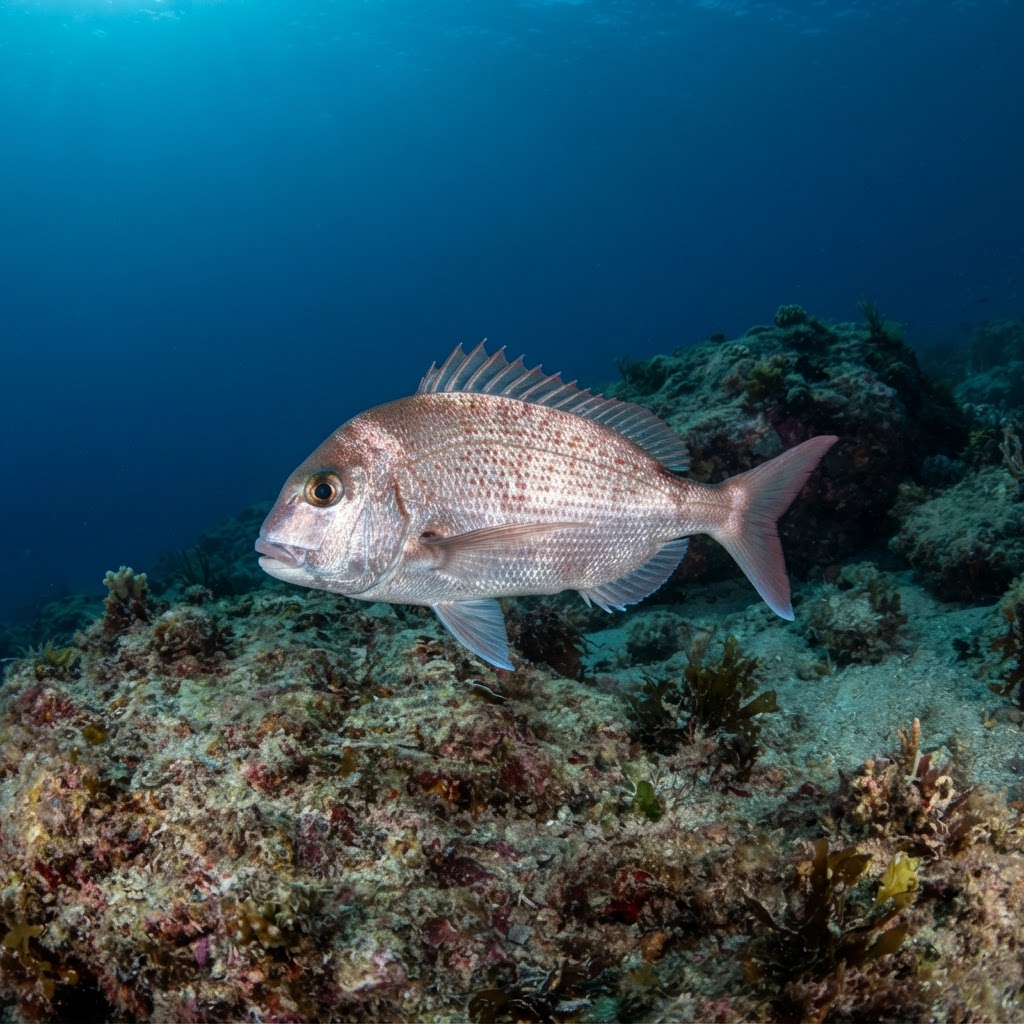
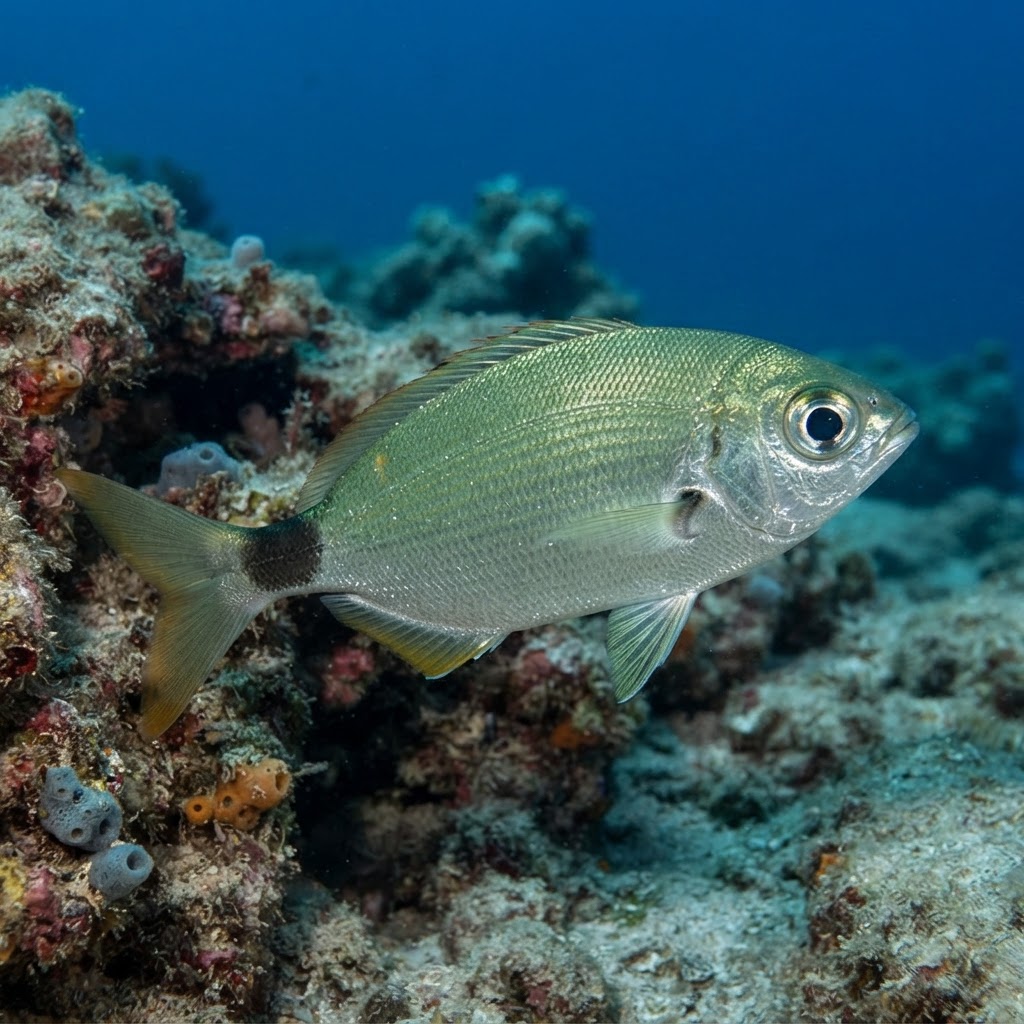
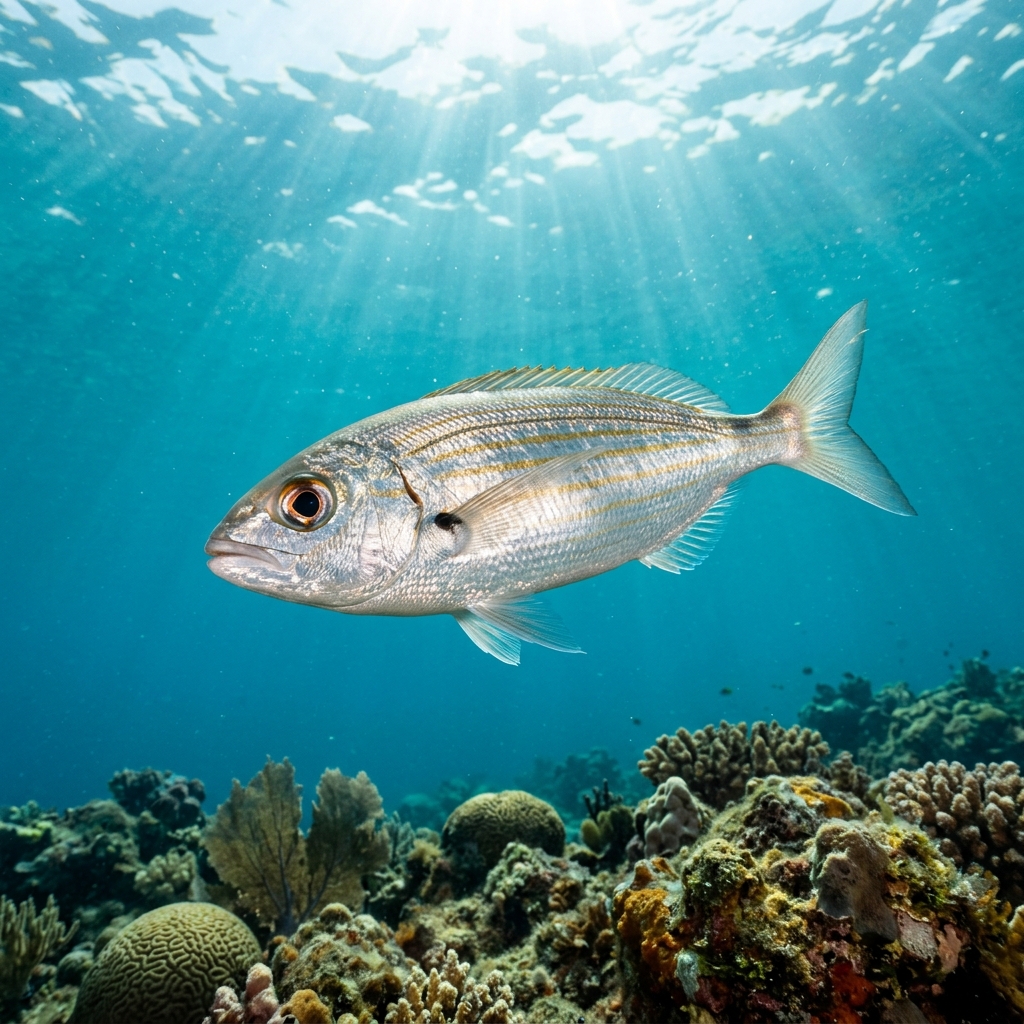
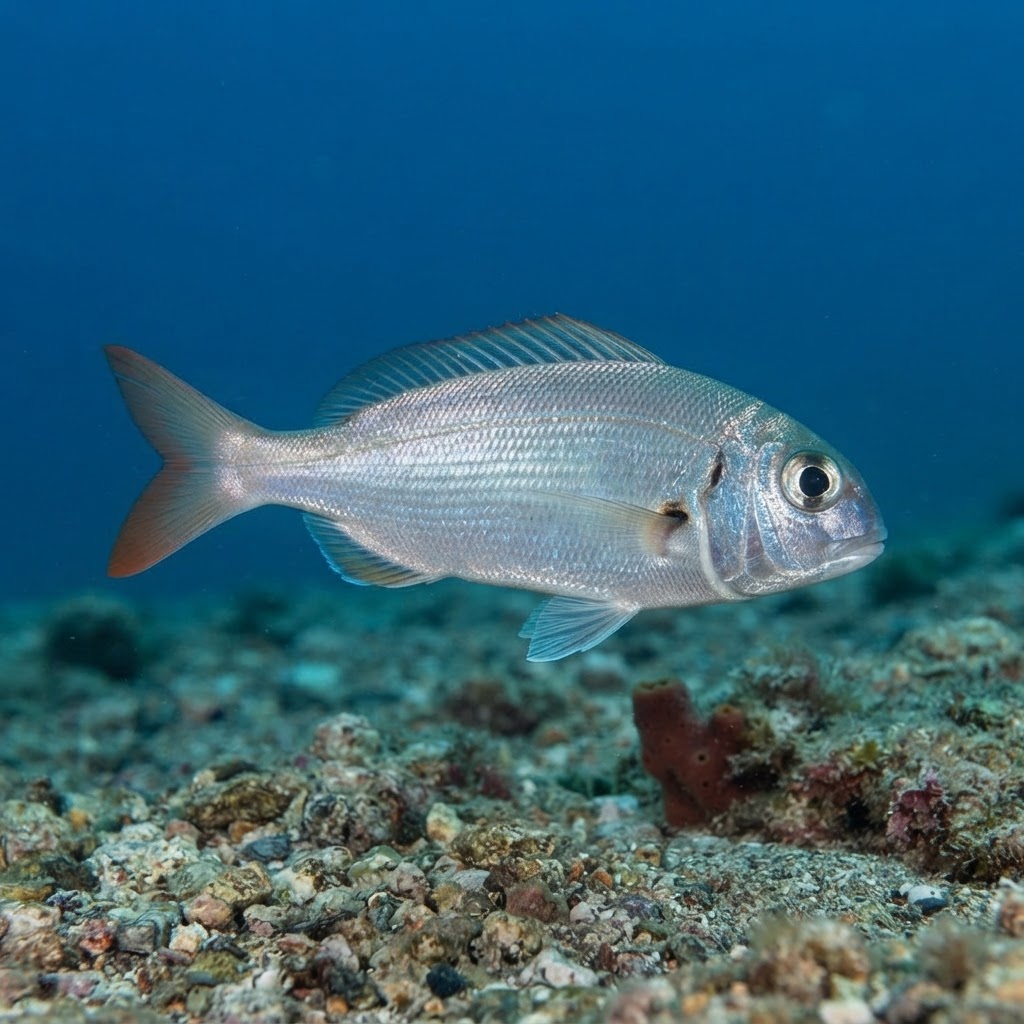
A slim, silvery fish around 25 cm with a slightly pointed snout and a faint pinkish-red wash along the back that fades toward the belly. Look for a small dark blotch at the base of the pectoral fin (the axillary spot that gives it its name), which is the most reliable field mark against similar sparids. It usually holds a fairly streamlined, torpedo-like profile compared to the deeper-bodied bream species it shares reefs with.
Usually seen singly or in small loose groups moving over rocky or mixed sand-and-rock bottoms rather than tight coral structure, consistent with its benthopelagic habit of feeding just above the seabed. It tends to keep a cautious distance from divers rather than approaching, and sightings are more often a brief pass than a lingering encounter. Most reports describe it as an incidental find on reef and rocky-slope dives rather than the main draw of the site.
Its diet as a carnivore focused on small invertebrates and fish ties it to the same rocky and sandy foraging grounds used by several other sparids, which is part of why divers often see it mixed in with other bream species rather than alone.
Sightings are logged year-round with no strong seasonal pattern in the data, which fits its comfort range of roughly 12 to 18.4C, a band that spans much of the year across its Atlantic and Mediterranean range. Expect it as a steady, if uncommon, background sighting on any dive rather than a seasonal target.
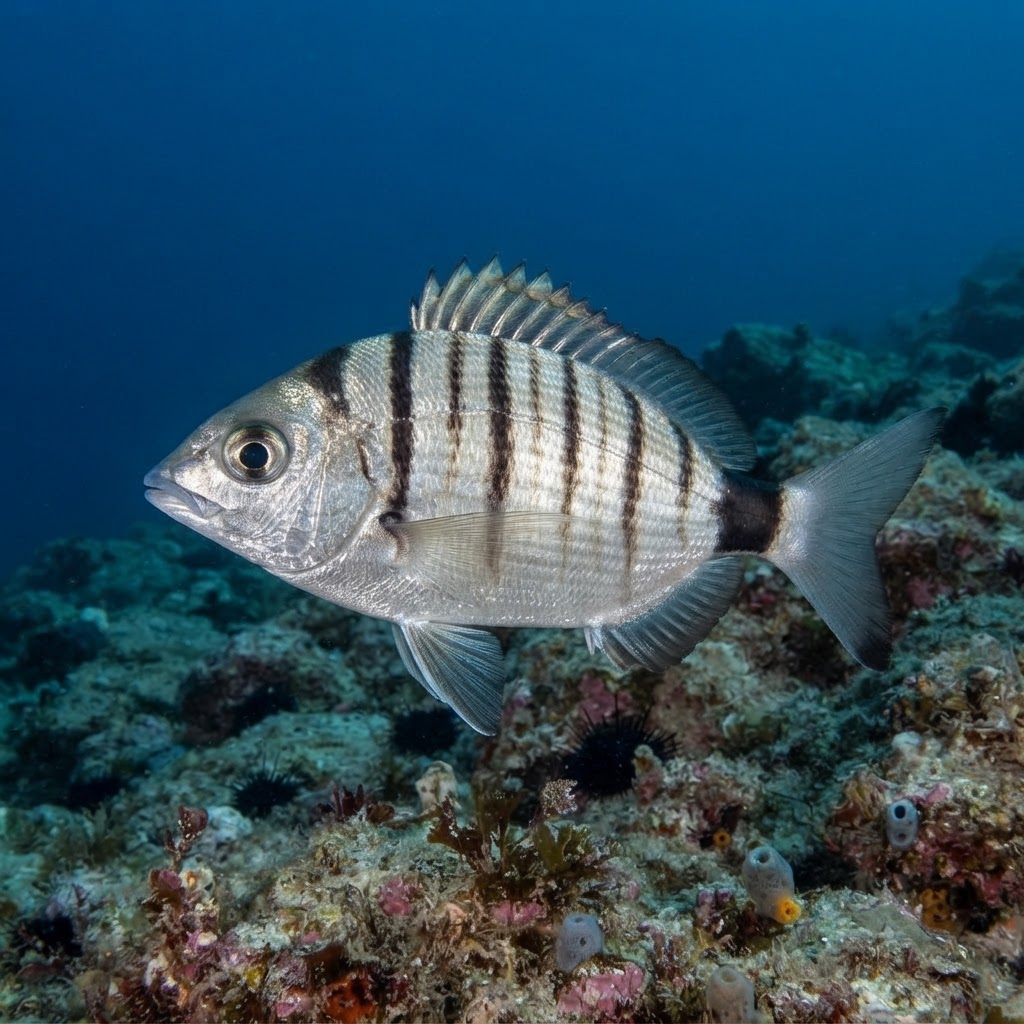
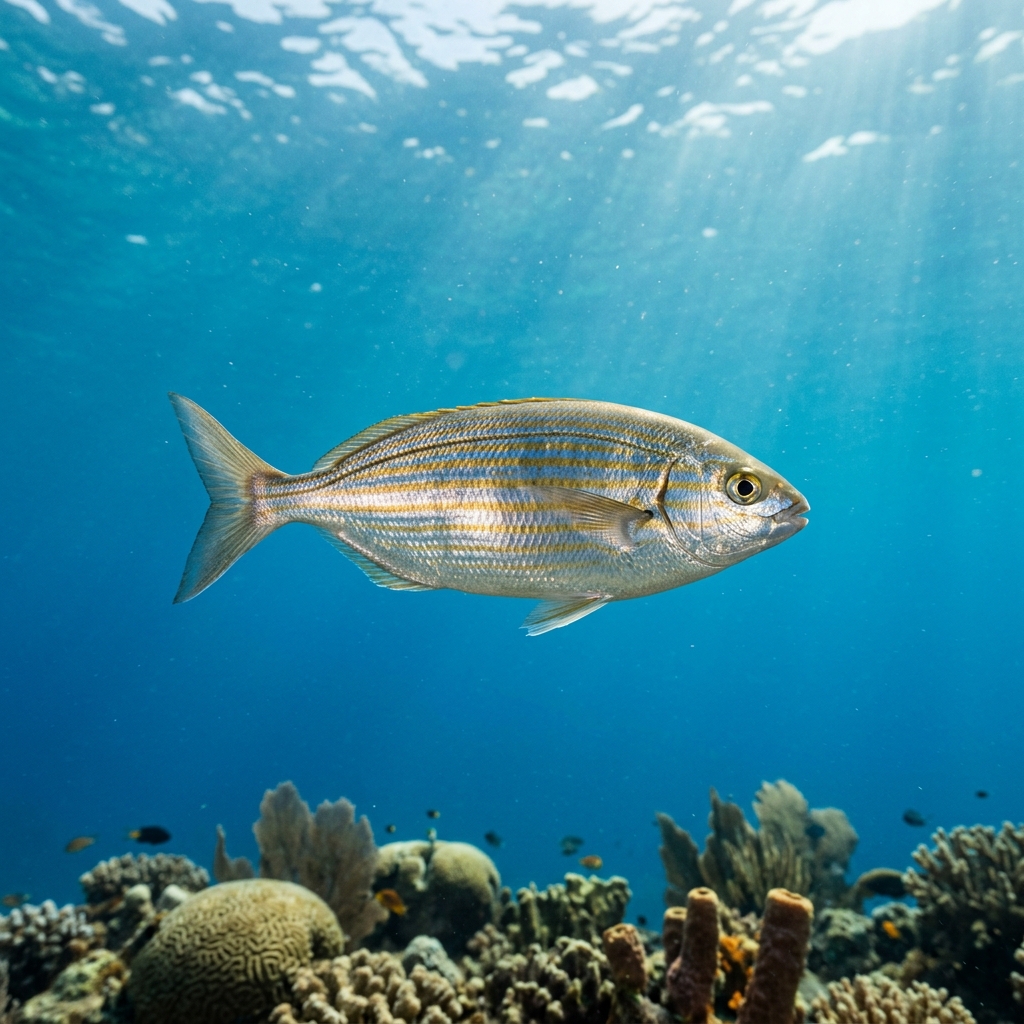
Reef neighbours a diver could mistake it for. Use the identification notes above to tell them apart.
Most reliably logged in Spain and the Canary Islands, with the Balearic Islands and Fuerteventura standing out as strongholds, plus a solid presence around Sao Miguel and Santa Maria in the Azores. France's Occitanie coast and French Riviera, along with Portugal's Algarve, also produce regular but less frequent sightings.
Mapping where Axillary Seabream is logged…
It shows up most consistently in Spain, especially the Balearic Islands, and in the Canary Islands around Fuerteventura and Gran Canaria. The Azores, particularly Sao Miguel and Santa Maria, and parts of France and Portugal's Algarve also produce regular sightings.
There is no strong seasonal pattern in the sighting data, so it is logged across the year. Its comfort range of roughly 12 to 18.4C covers much of the diving calendar in its Atlantic and Mediterranean range.
Look for a slim, silvery body around 25 cm with a faint pinkish tinge along the back and a small dark spot at the base of the pectoral fin. That axillary spot is the key mark separating it from similarly shaped sparids on the same reef.
Divers typically encounter them around 25 cm, a modest, slim-bodied size that keeps them easy to overlook among larger sparids on the same dive.
No, they pose no danger to divers. They keep a cautious distance and are best enjoyed as a passing sighting rather than an interaction.
Site and sighting data is aggregated from diver logs, iNaturalist and GBIF. For taxonomy and conservation status:
Saddled Bream
3,846 sites