Ecsenius axelrodi
A 4cm reef dweller common across Sulawesi's muck and coral sites, in warm 28 to 29 C water, year-round.
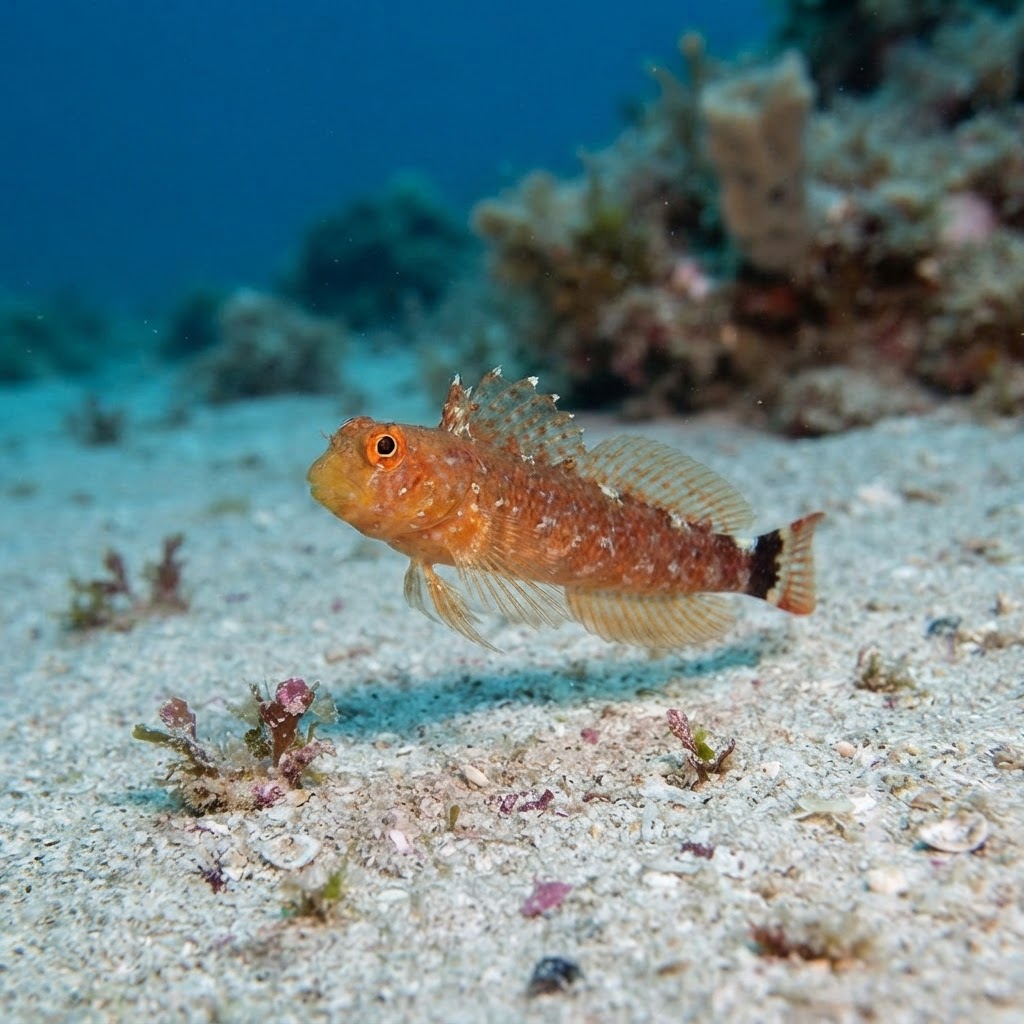
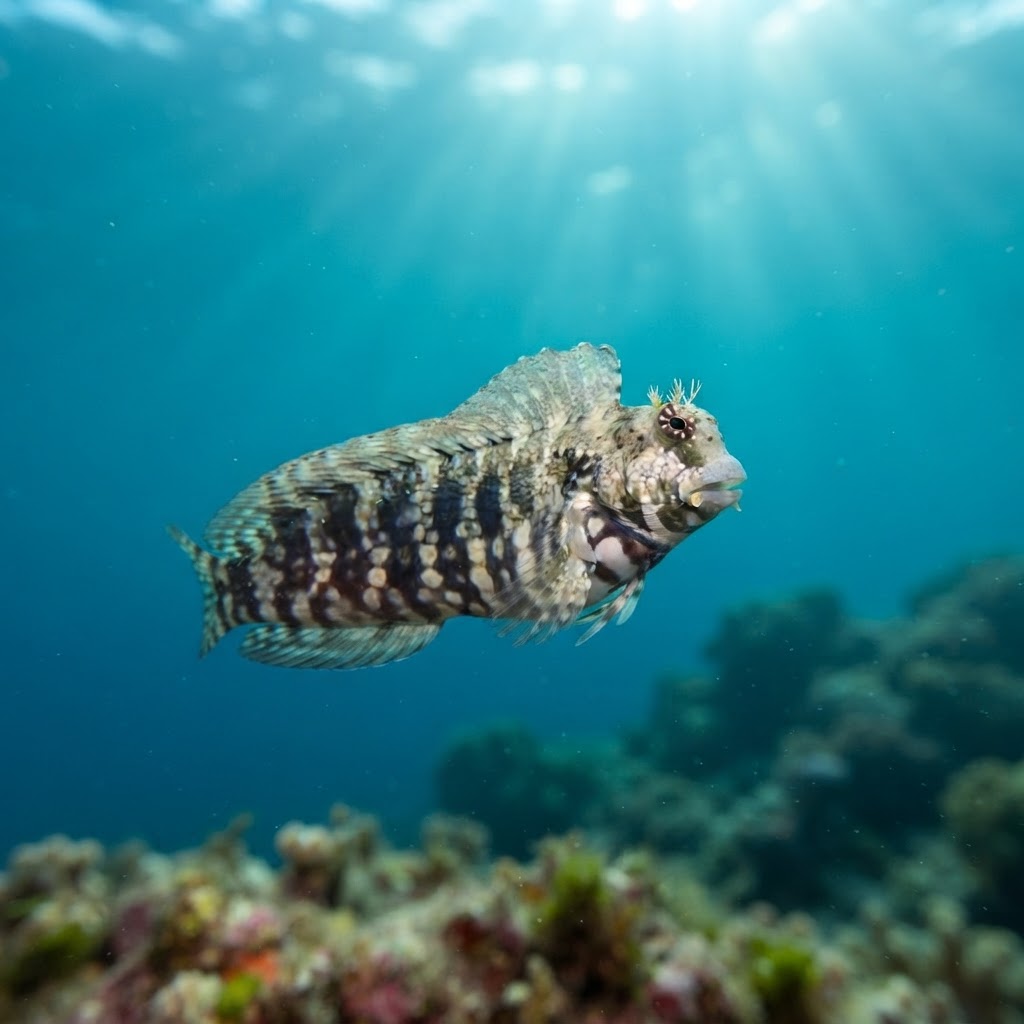
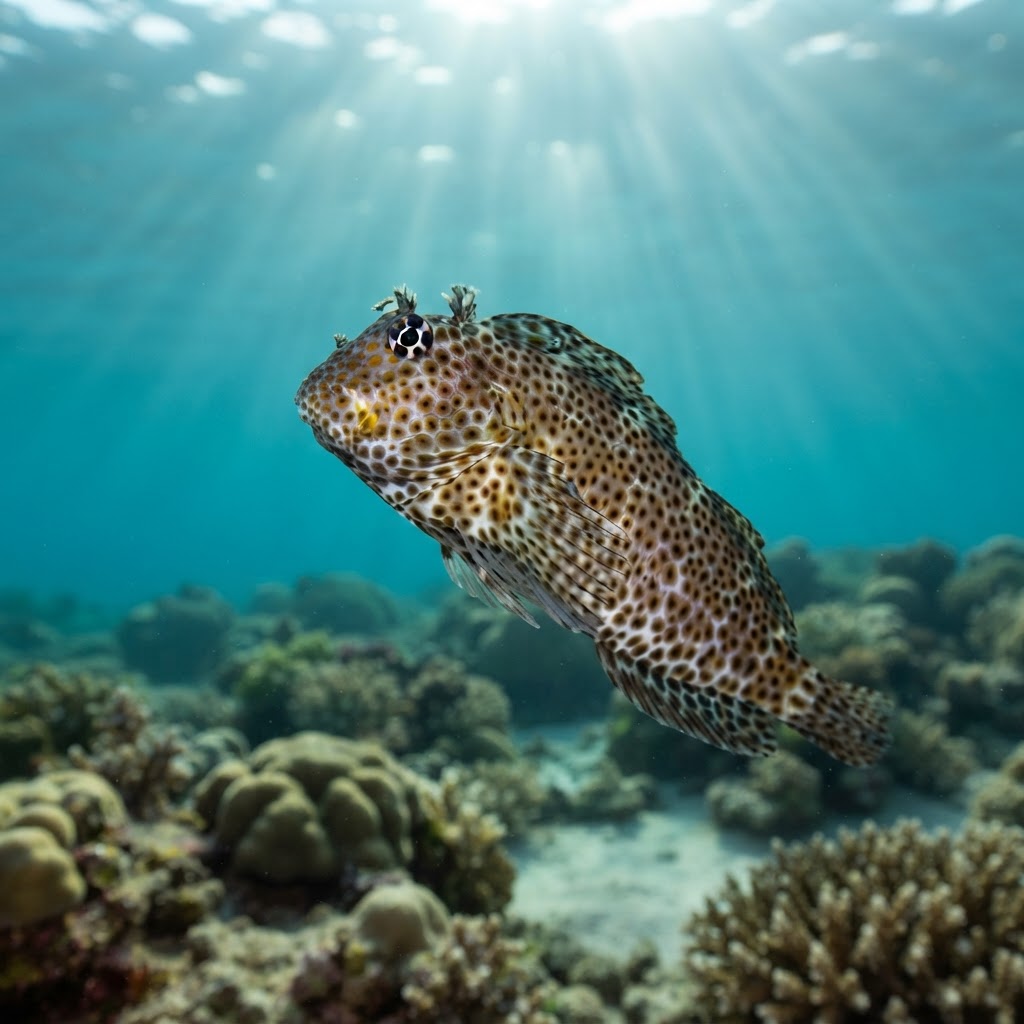
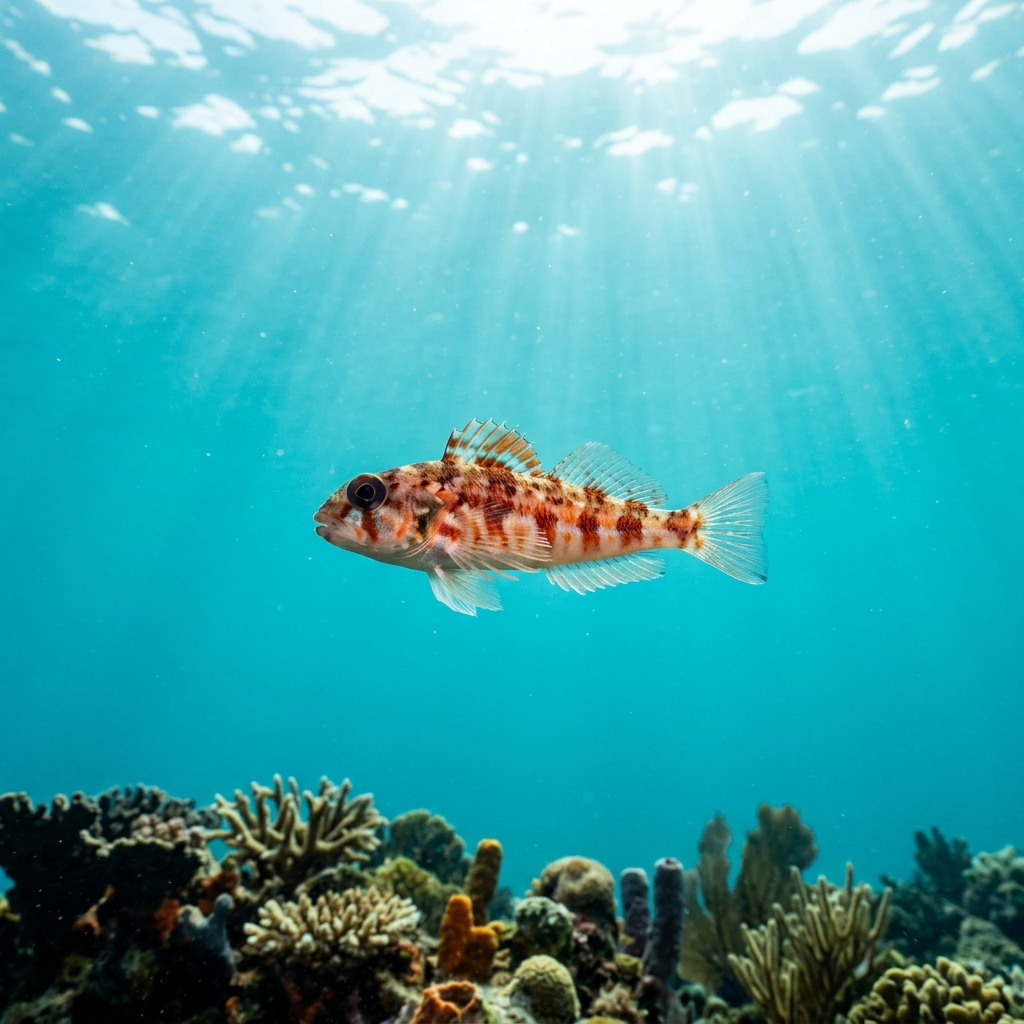
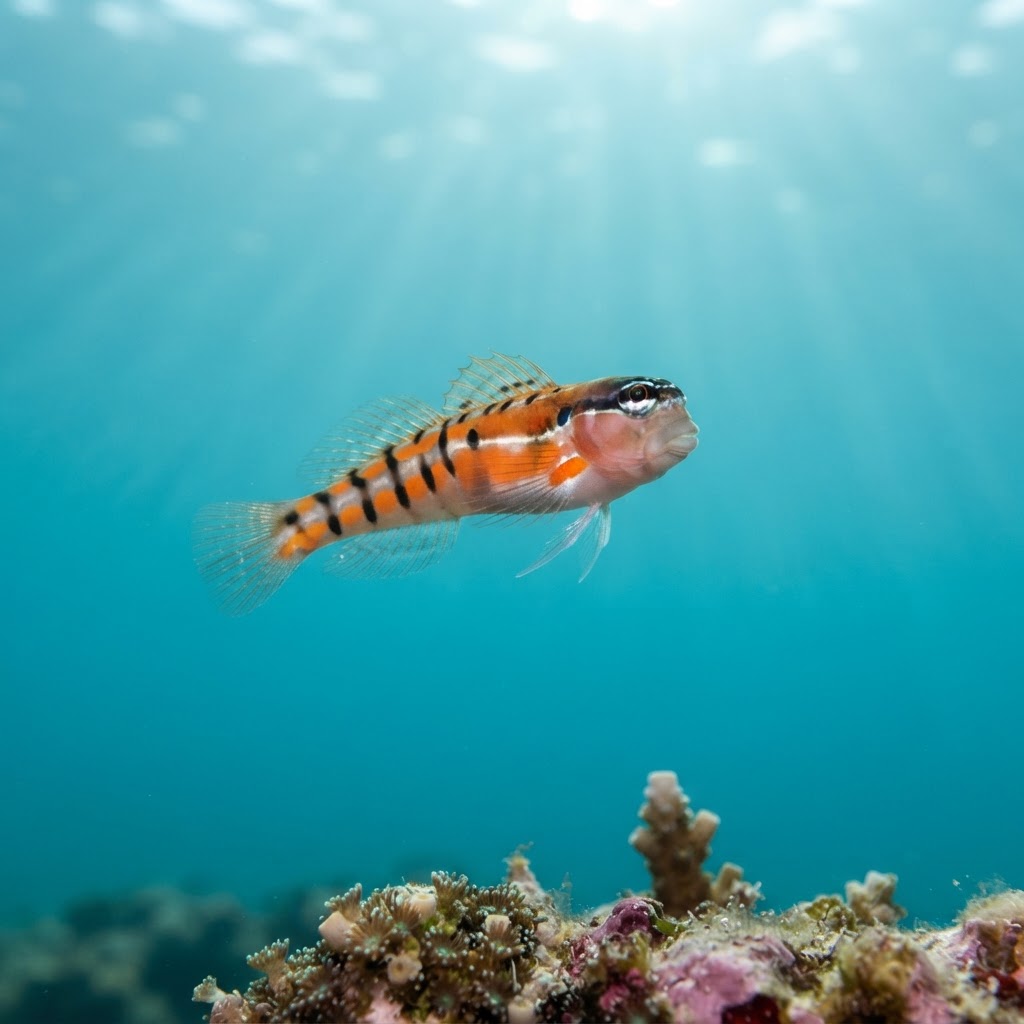
A tiny blenny, only about 4 cm long, with a stocky, tapering body that usually sits propped on its pectoral fins rather than swimming freely. Look for bold longitudinal stripes running along a pale to orange-brown body and a blunt, almost comical face with two prominent eyes set high on the head. It rests still on rubble, coral heads or sponges, darting for cover the instant it feels threatened.
Spend most of a dive perched motionless on a favourite patch of rubble or coral rock, using its pectoral fins like tiny props while it watches the world go by. It is not shy exactly, but a close, sudden approach sends it darting into a crevice, so slow, steady fin work gets the best look. Most sightings come from close-focus reef scanning rather than mid-water encounters, since this fish rarely strays far from its perch.
Like other Ecsenius blennies, it feeds by grazing algae and detritus directly off the substrate rather than hunting, which is why it stays glued to one patch of reef instead of roaming.
No clear seasonal pattern shows up in the sighting data, and with a narrow warm-water niche of 28.4 to 29.2 C typical of Sulawesi's reefs year-round, there is no need to time a trip around it.
Reef neighbours a diver could mistake it for. Use the identification notes above to tell them apart.
Sulawesi, Indonesia is by far the strongest area for this blenny, with dozens of sites logging it as a common find. It also turns up around Tufi in Papua New Guinea, though in much smaller numbers, making Indonesia the reliable destination for a targeted sighting.
Mapping where Axelrod's Clown Blenny is logged…
Sulawesi in Indonesia is the standout region, with this blenny logged as common across dozens of its dive sites. Smaller numbers are also recorded around Tufi in Papua New Guinea.
There is no strong seasonal pattern in the sighting data, and it lives in consistently warm water around 28 to 29 C, so it can be found year-round on Sulawesi's reefs.
Look for a tiny striped fish, about 4 cm long, perched on rubble or coral rather than swimming in the open. Its stocky body, high-set eyes and habit of resting still on its pectoral fins help separate it from similarly sized reef fish.
They stay small, reaching only around 4 cm in length, which is typical for this genus of reef-dwelling blennies.
It grazes algae and detritus straight off the reef surface rather than hunting prey, which explains why it stays anchored to one small patch of rubble or coral for most of a dive.
Site and sighting data is aggregated from diver logs, iNaturalist and GBIF. For taxonomy and conservation status:
Rusty Blenny
2,605 sites