Octopus joubini
A palm-sized octopus rarely logged around Grand Cayman, at home in warm 25-31C water year-round. Here's how to spot one on the reef.
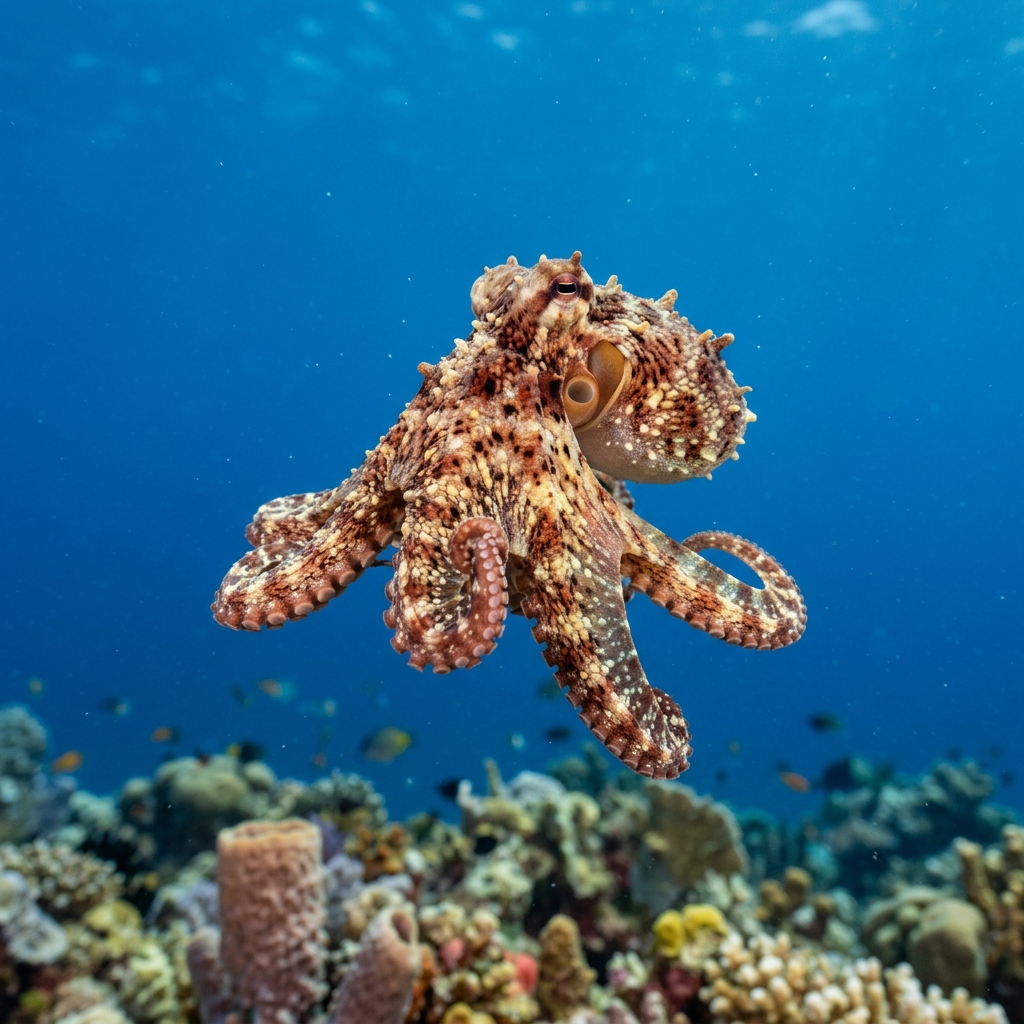
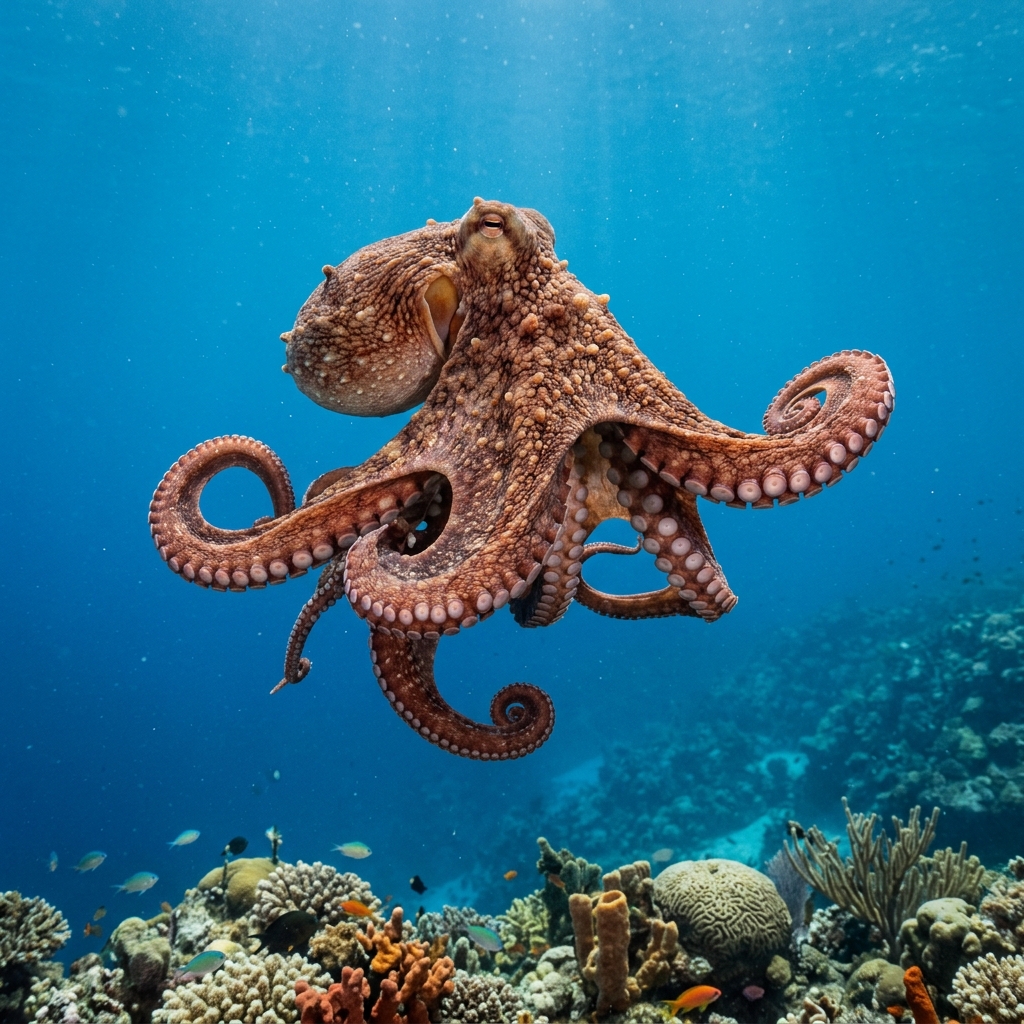
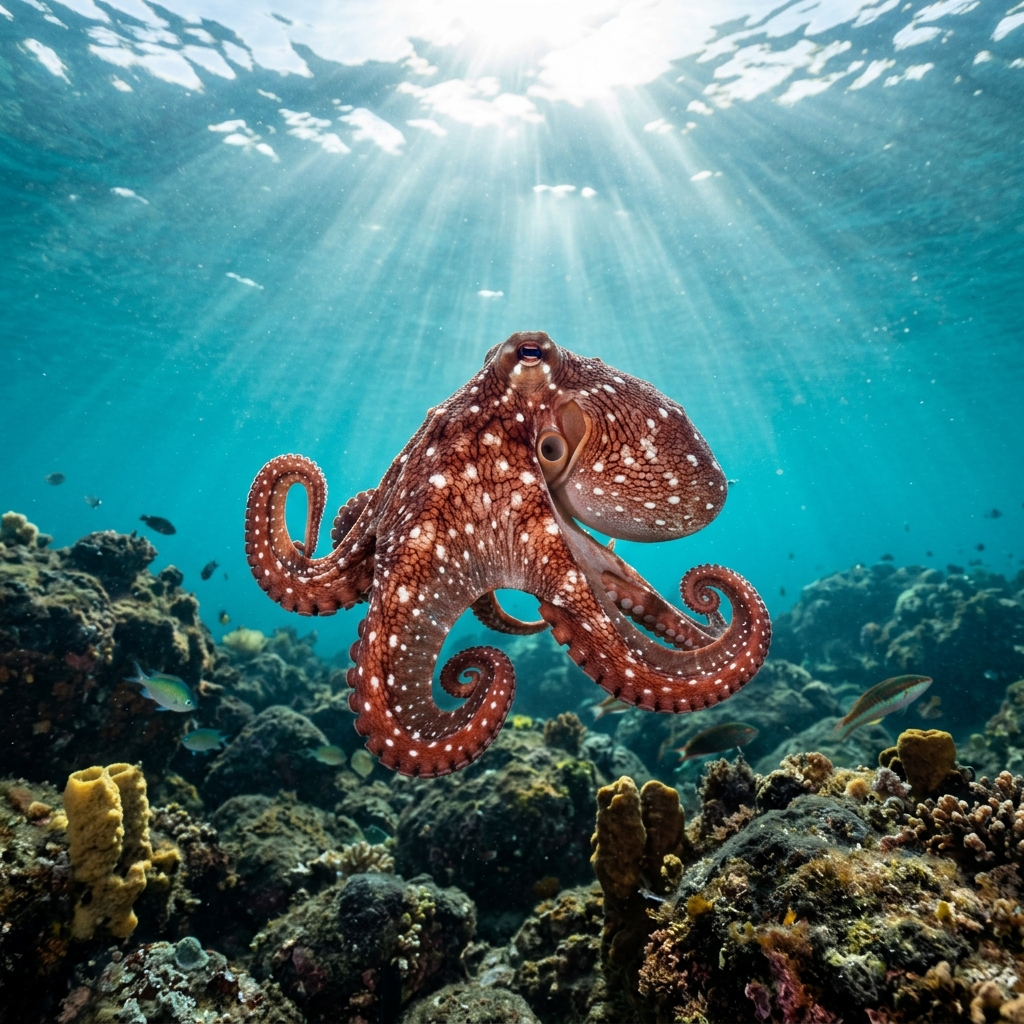
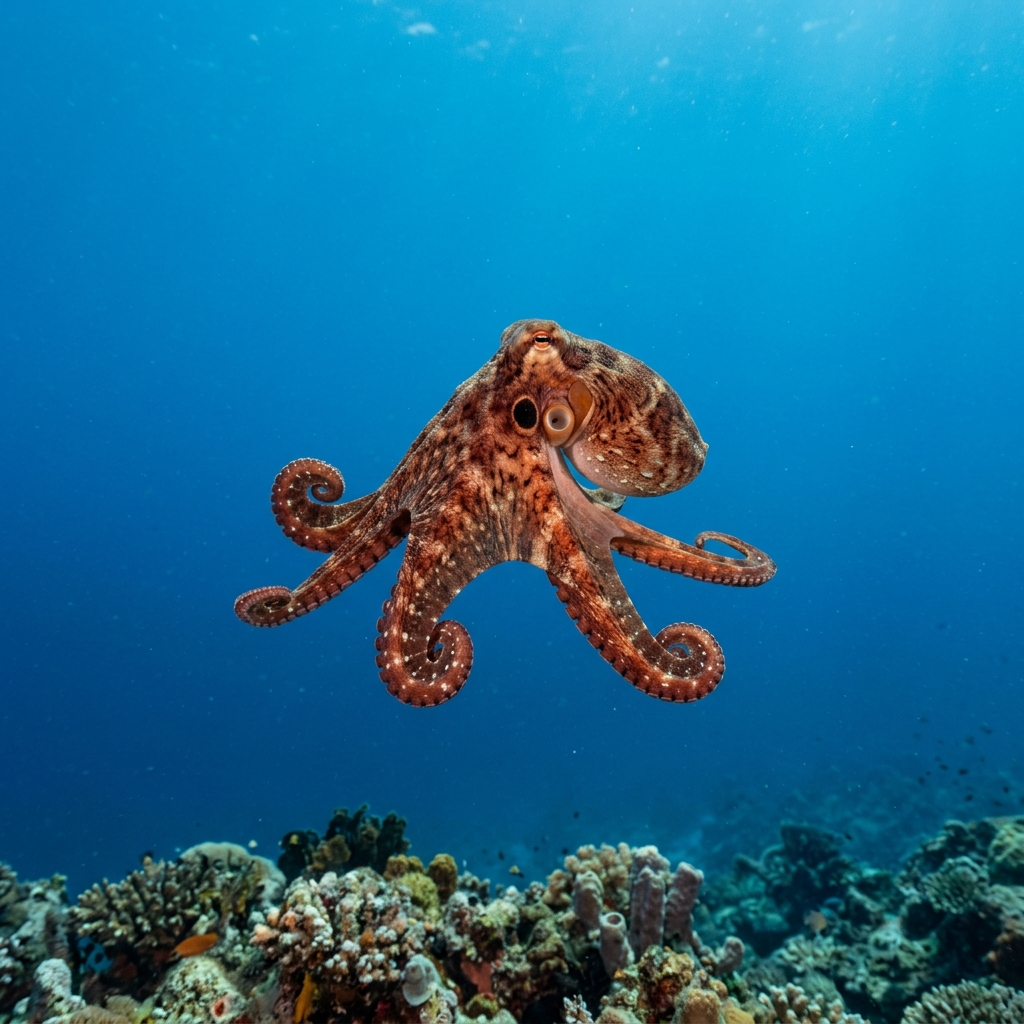
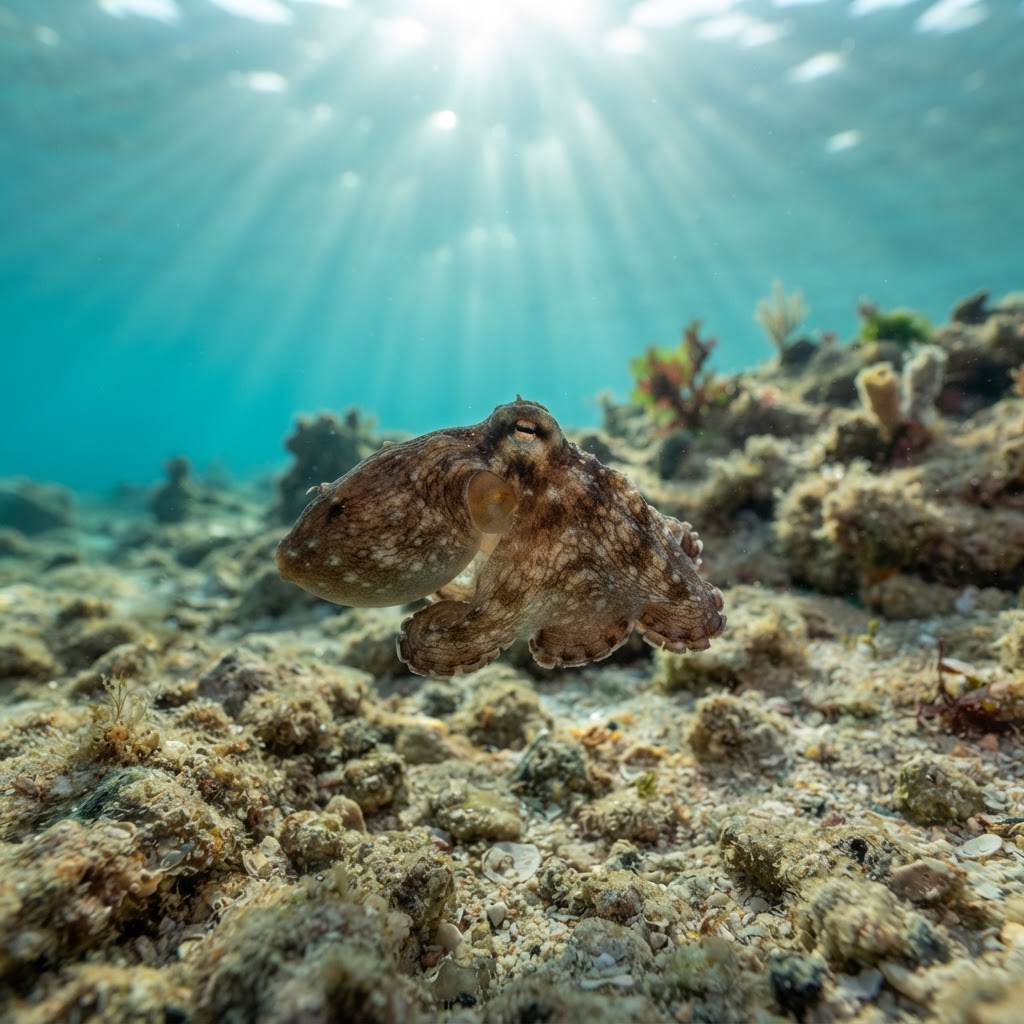
Small enough to fit in a cupped hand, topping out around 10cm including its arms, with a soft, rounded body and mottled brown to grey skin that shifts to match sand or rubble. It has no truly distinctive marking like an eyespot or ring, so identification underwater comes down to size, habitat, and the way it tucks itself into an empty shell or small burrow with only an eye or arm tip showing. Compared to the reef octopuses divers usually notice, this one is noticeably smaller and far more likely to be mistaken for a lump of debris than an animal.
Divers who find this octopus usually spot it hiding rather than moving, tucked into an empty shell, a bit of rubble, or a shallow burrow in the sand with just an arm or eye visible. It is shy around divers and tends to retreat deeper into its shelter rather than swim off in the open, so a slow, patient look at sandy patches near rubble is the best approach. Given its small size and camouflage, most sightings happen when a diver is specifically scanning the substrate rather than the water column.
Like many small octopus species, it commandeers empty bivalve shells as portable shelters, often plugging the entrance with sand or debris once it has settled in.
Sightings show no clear seasonal pattern, and with a comfortable range of 25.2 to 31.2C it likely stays active on Cayman's reefs throughout the year. Treat it as a year-round possibility rather than a seasonal target.
Reef neighbours a diver could mistake it for. Use the identification notes above to tell them apart.
Logged sites for this one are limited to Grand Cayman in the Cayman Islands, where it turns up on sand and rubble patches rather than open reef. It is not a species with a wide known diving range in the data, so Grand Cayman is currently the place to look.
Mapping where Atlantic Pygmy Octopus is logged…
Confirmed sightings come from Grand Cayman in the Cayman Islands, on sandy patches and rubble rather than open reef. It's currently the only well documented spot for reliably finding one.
There's no detected season in current sighting data, and its warm-water niche of 25.2 to 31.2C suggests it stays active year-round on Cayman's reefs.
Look for a small, mottled brown to grey octopus, no more than about 10cm across, tucked into an empty shell or rubble with only an arm or eye showing. It lacks bold markings, so size and hiding behaviour are the main clues.
They're small, reaching roughly 10cm including their arms, making them one of the smaller octopuses a diver is likely to encounter.
It's known for squeezing into discarded shells and small burrows, often sealing the entrance with sand or debris to hide from predators and passing divers.
Site and sighting data is aggregated from diver logs, iNaturalist and GBIF. For taxonomy and conservation status:
Brazilian Reef Octopus
1,142 sites