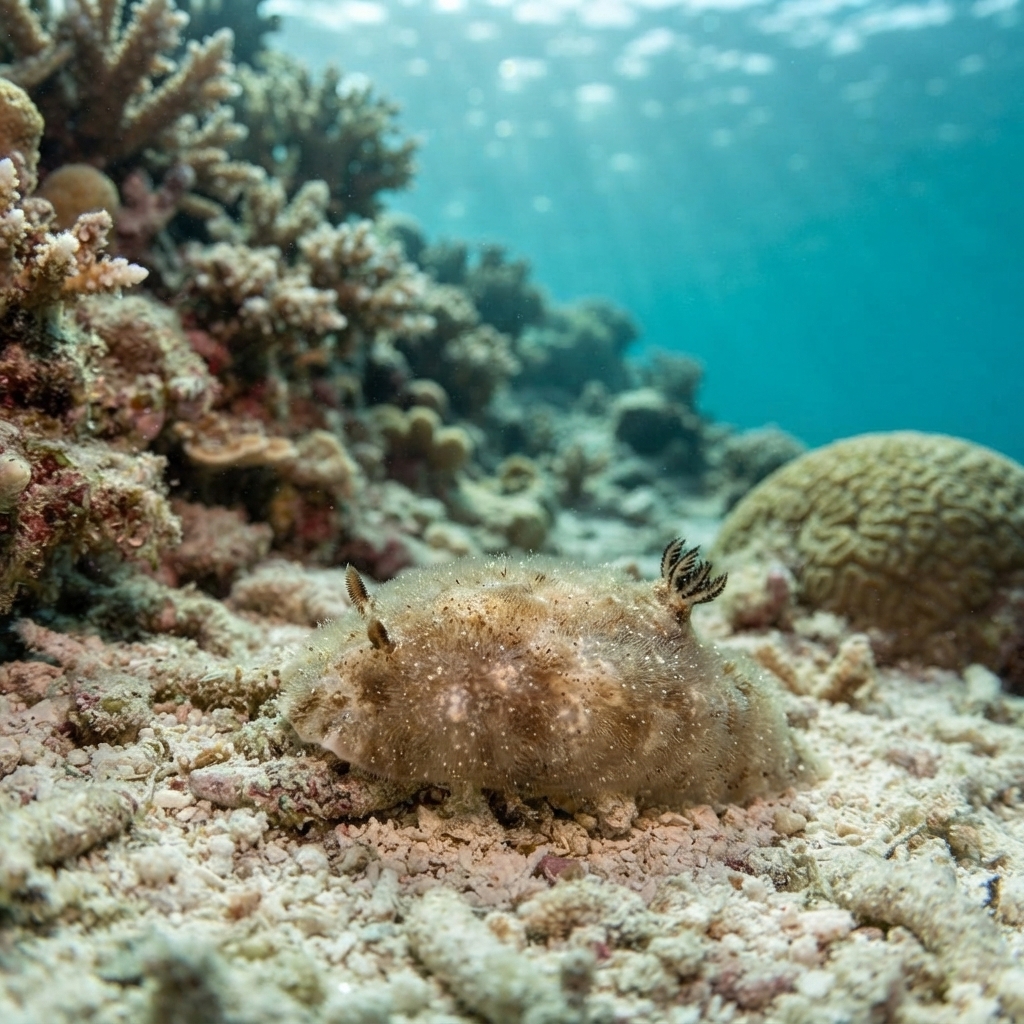
Asteronotus mimeticus
An uncommon warty nudibranch logged in Luzon, Philippines, in reef water between 25 and 31C. Here's how to spot one.
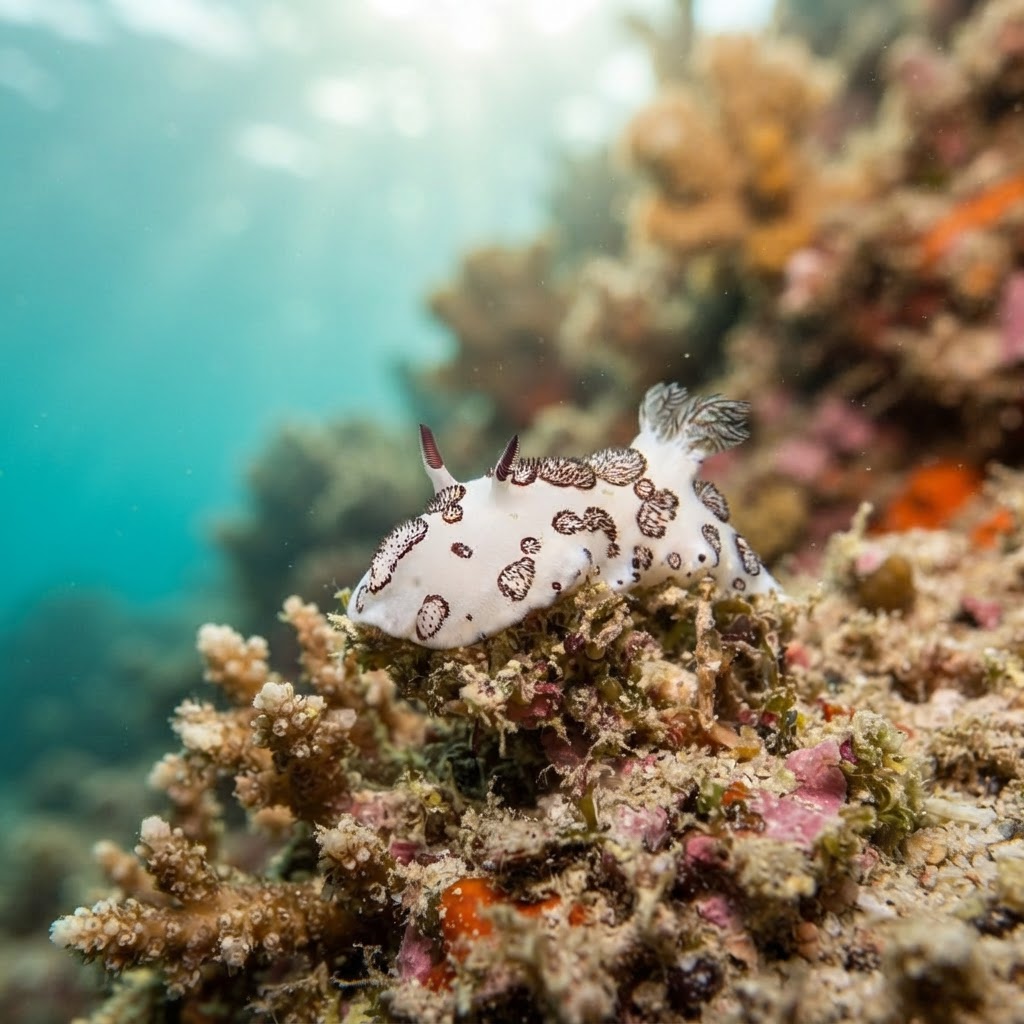
A stocky, wart-covered nudibranch that blends into rubble and sponge-encrusted reef, its body surface rough and mottled in browns and greys rather than smooth or brightly patterned. The rhinophores (the two small sensory horns on the head) sit close together and are typically retractable into pockets, and the gills cluster at the rear in a similarly camouflaged tuft. There's no bold contrasting stripe or spot pattern to key on here, which is itself the tell: divers should look for texture over colour when trying to pick this one out from smoother, more vividly marked nudibranchs nearby.
Like most discodorid nudibranchs, this one moves slowly across sand, rubble and sponge-covered substrate, grazing rather than swimming, and shows no reaction to divers beyond simply continuing its crawl. It's logged as uncommon at every site where it's been found, so sightings tend to come from divers doing a slow, deliberate macro search rather than spotting it in passing. Expect to find it low on the reef or in muck habitat, camouflaged against similarly textured surfaces.
Like other Discodorididae, this species almost certainly feeds on sponges, using its camouflaged, warty body as its main defence rather than the toxic bright colours many reef nudibranchs rely on.
There's no detected seasonal pattern for this species, and it's comfortable across a wide 25.2 to 31.2C range, so it appears to be a year-round find on Luzon's reefs rather than a seasonal visitor.
Reef neighbours a diver could mistake it for. Use the identification notes above to tell them apart.
Every logged sighting of this species so far comes from the Philippines, concentrated specifically in Luzon. If you're hunting for it, Luzon's muck and reef sites are currently the only known reliable ground, and it's worth checking with local dive guides there who specialise in nudibranch macro life.
Mapping where Asteronotus mimeticus is logged…
Every confirmed sighting so far is from Luzon, Philippines, making it the one region divers currently target for this species.
There's no clear season detected. It tolerates a wide temperature range and appears to be present on Luzon's reefs throughout the year.
Look for a warty, rough-textured body in muted browns and greys rather than a bold pattern. Its camouflage against sand and rubble makes texture, not colour, the main clue.
No. It poses no threat to divers and can be observed safely without any special precautions.
It almost certainly grazes on sponges, in line with the diet of other members of the Discodorididae family, relying on camouflage rather than toxins for defence.
It's logged as uncommon at every site where it's been recorded, so finding one usually takes a slow, focused macro search rather than a casual glance across the reef.
Site and sighting data is aggregated from diver logs, iNaturalist and GBIF. For taxonomy and conservation status:
Nudibranch
3,168 sites