Diplodus noct
Uncommon but reliable in South Sinai and Eilat, this small silvery bream turns up on Red Sea reefs in 25-29 C water year-round.
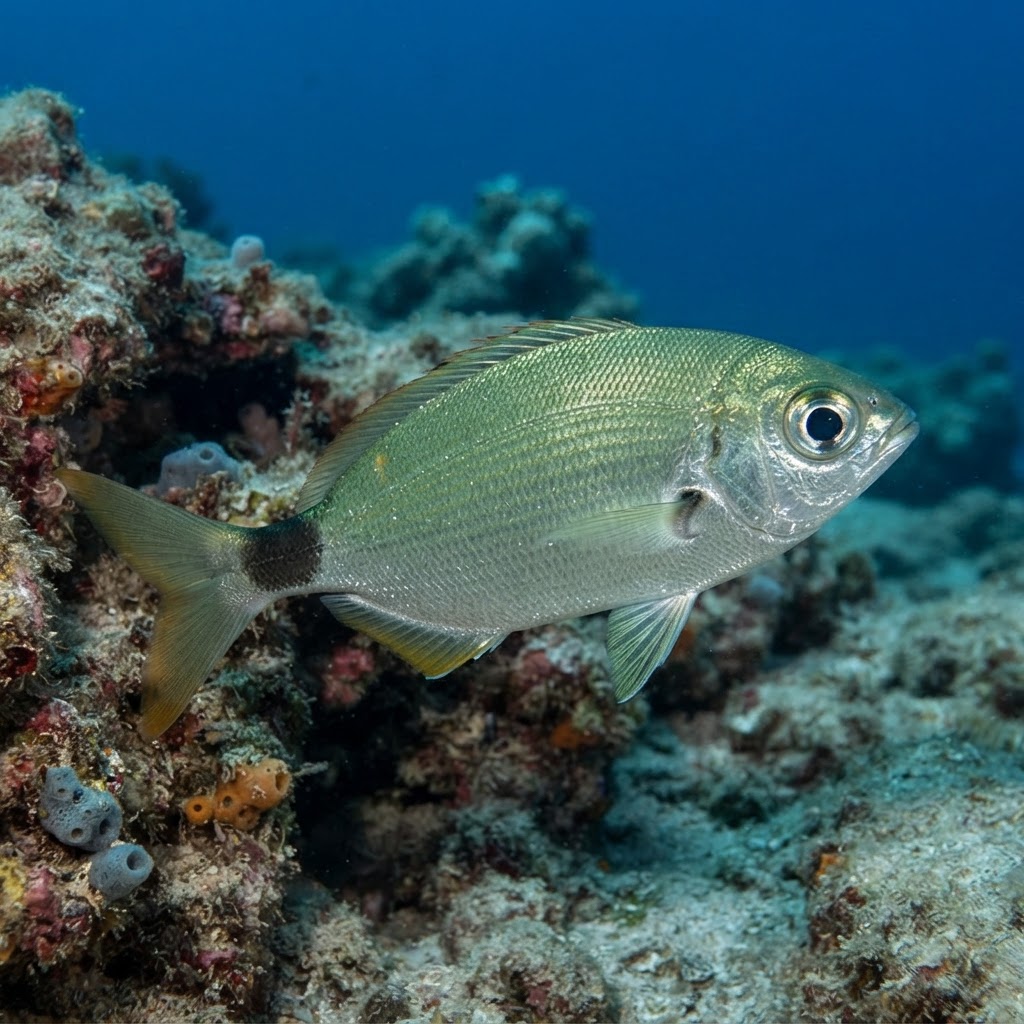
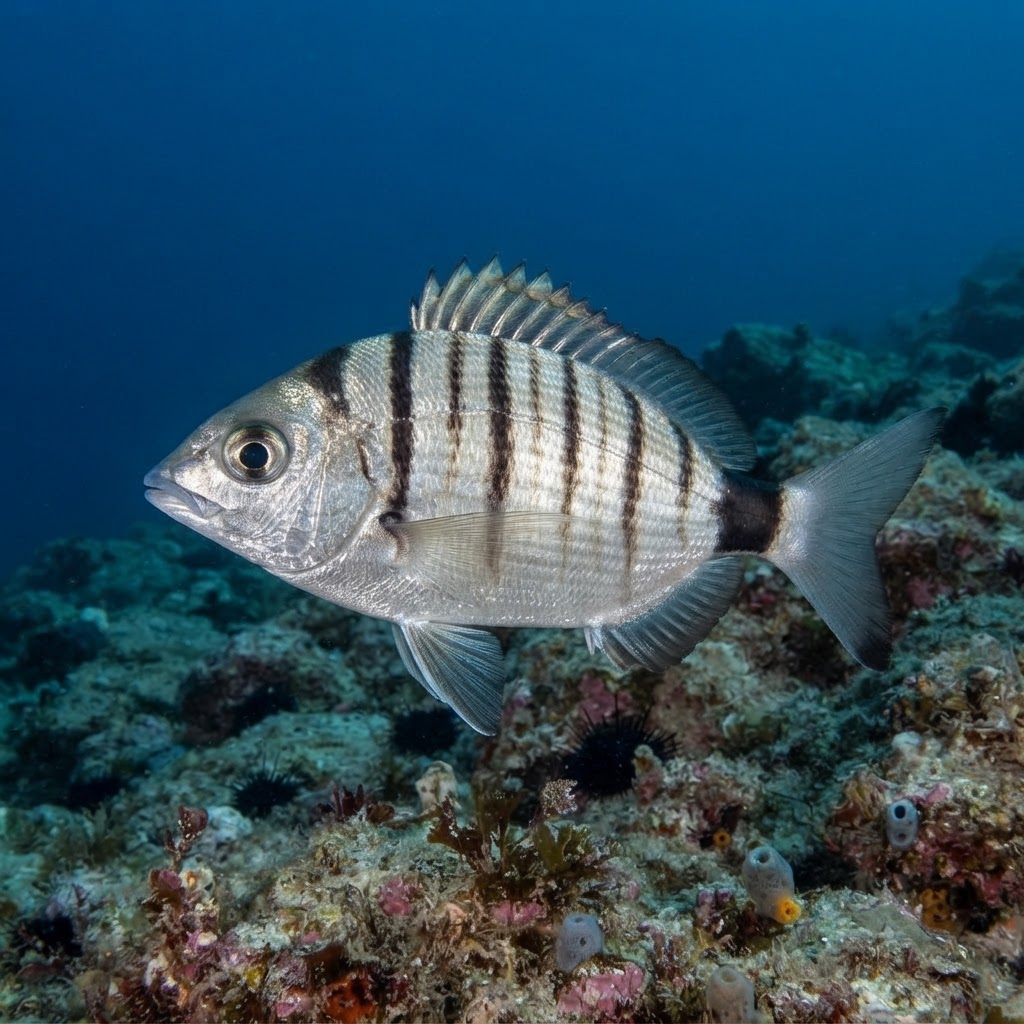
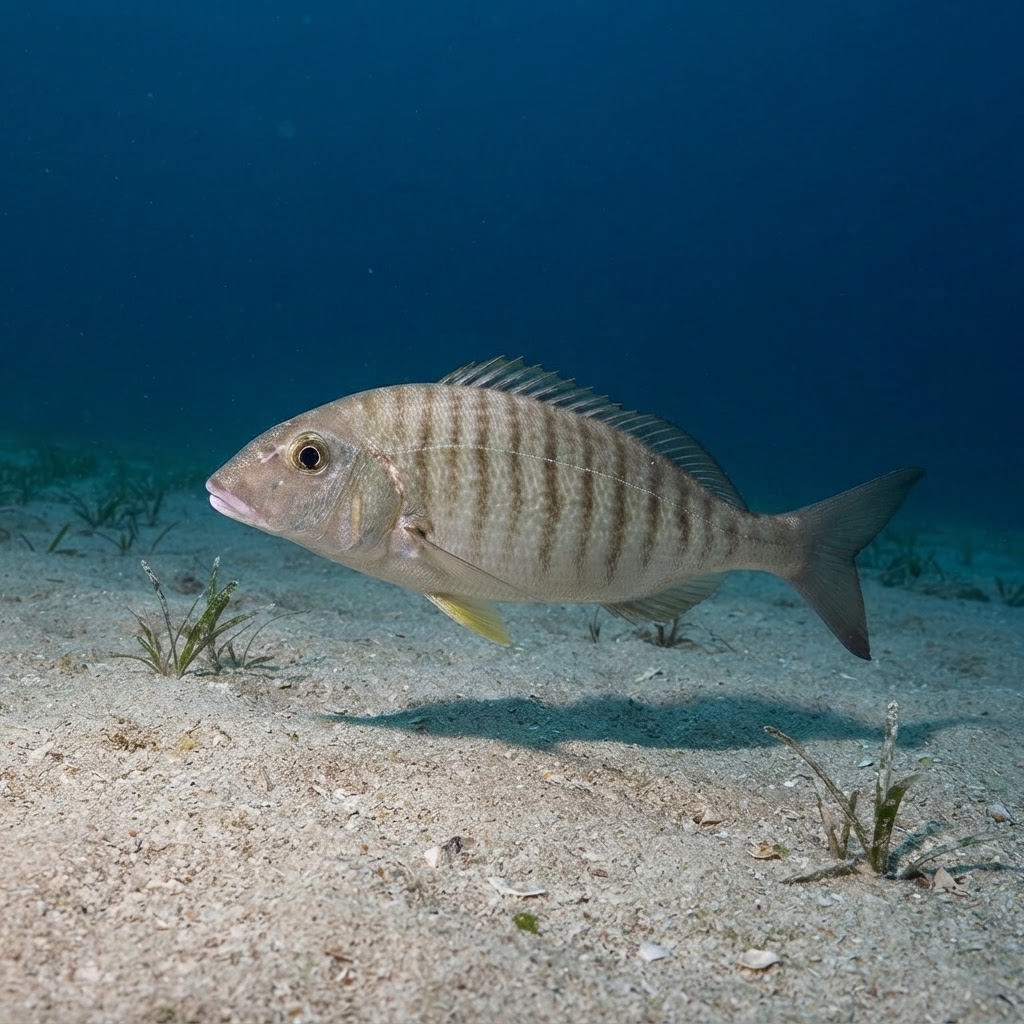
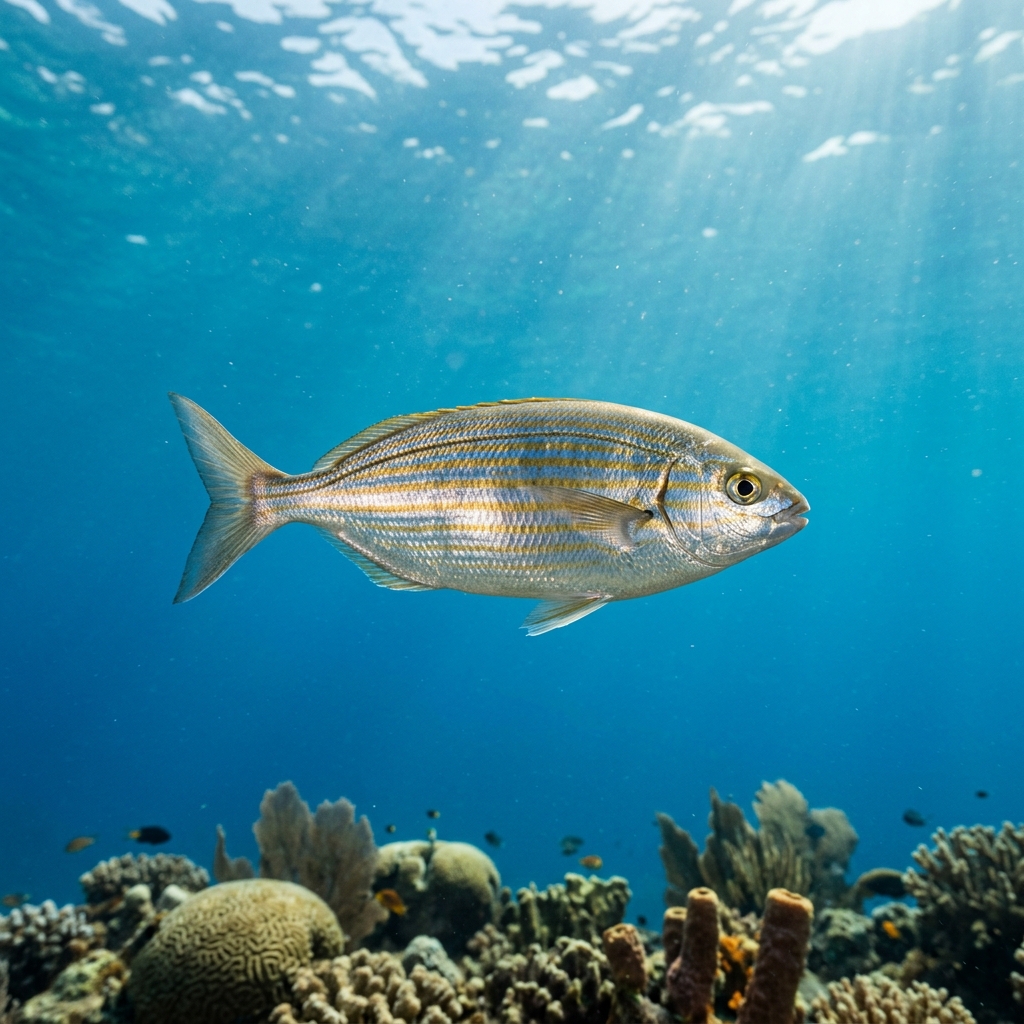
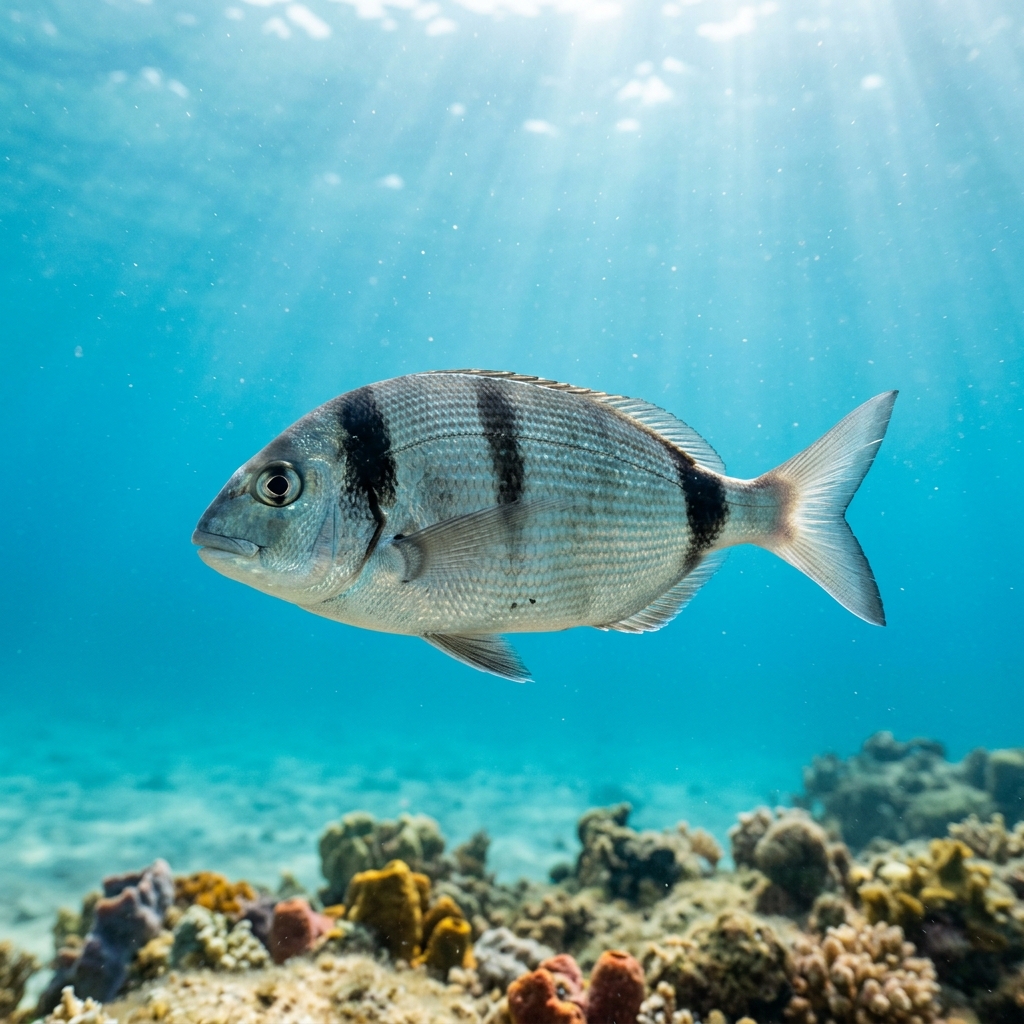
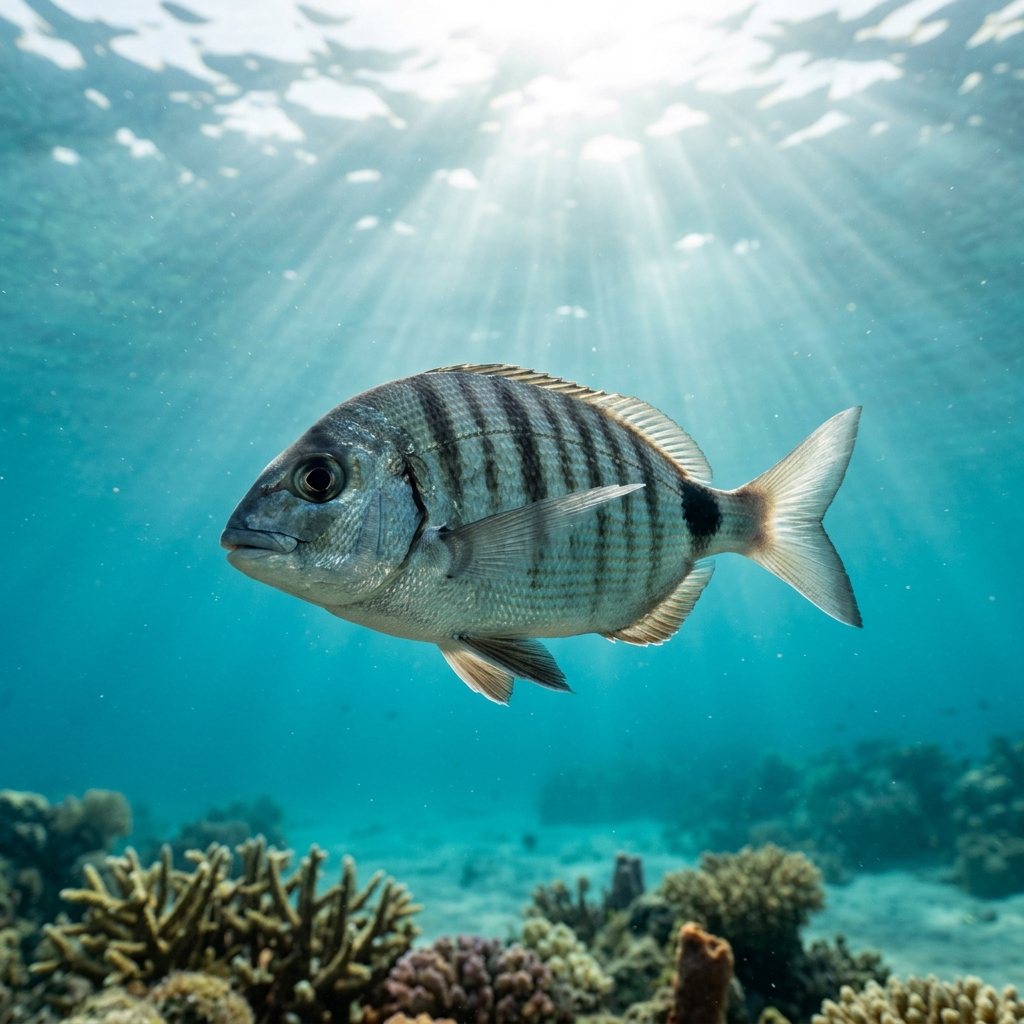
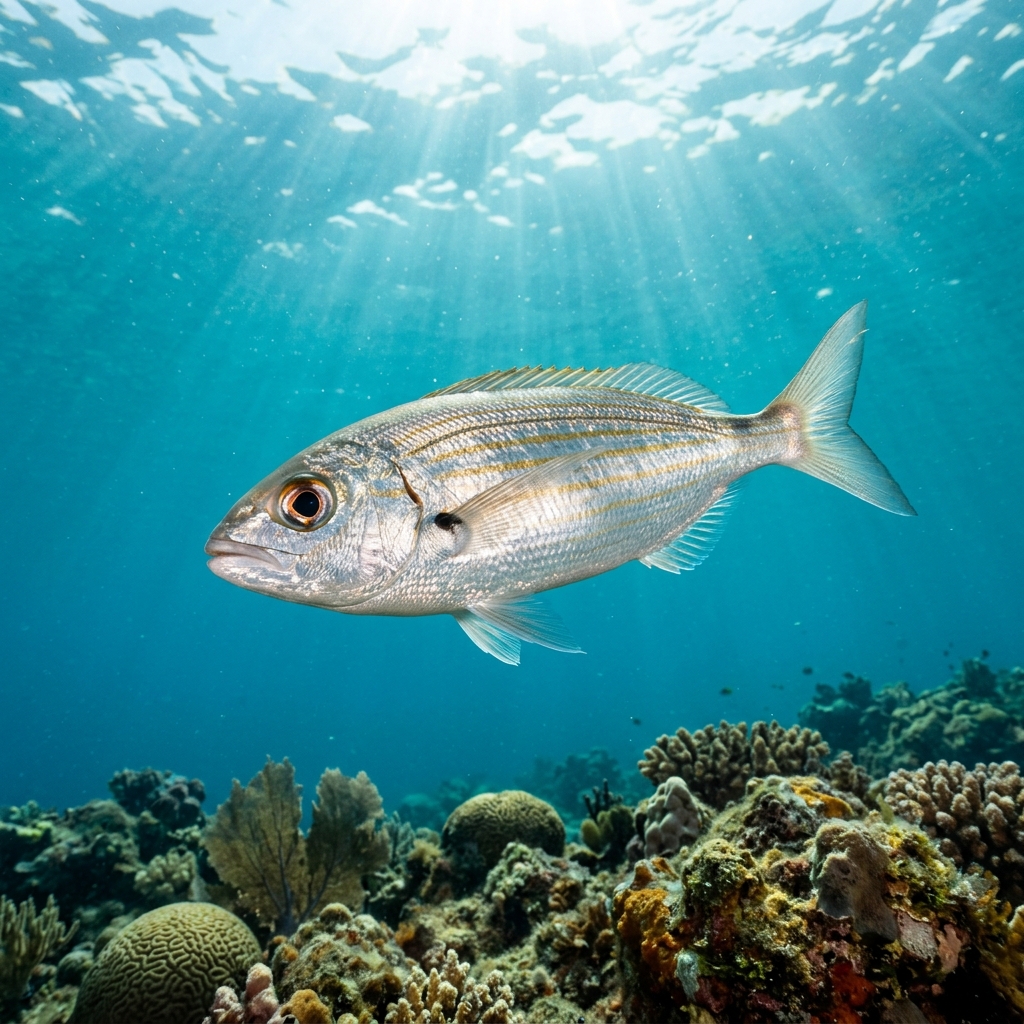
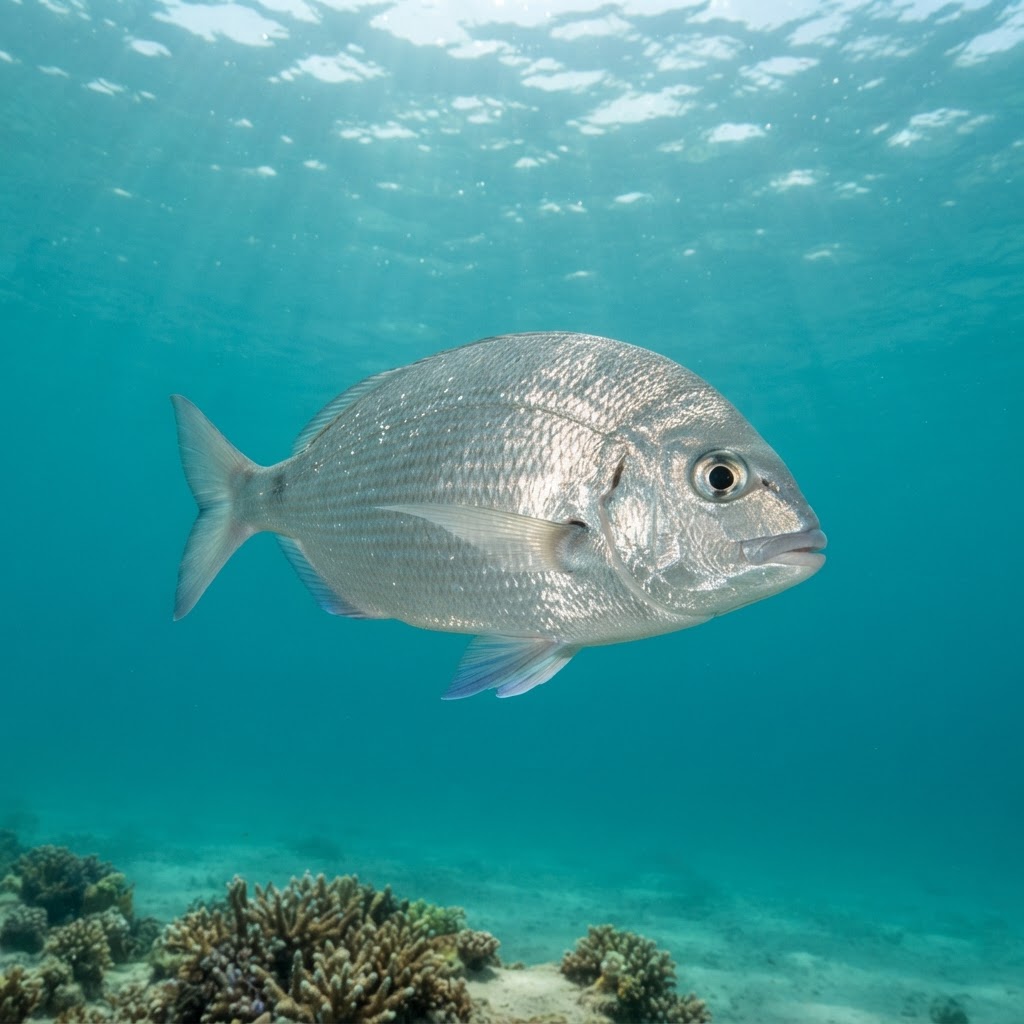
A small, slender-bodied sea bream that reaches about 18 cm, with a silvery-grey flank and faint darker vertical banding that can fade or sharpen depending on light and mood. Look for the compact, deep-bodied bream shape typical of the genus and a single continuous dorsal fin running most of the back. It moves in small, loose groups over reef and rubble rather than open water, so divers usually spot it hugging structure rather than mid-water.
Divers usually find it working reef edges and rubble patches in small, loose groups, picking over the substrate rather than schooling in open water. It keeps a fairly relaxed distance from divers and doesn't dart for cover the way some smaller reef fish do, but it's not a fish that lingers for a photo either. Sightings are logged as uncommon even at sites where it's present, so it's more a case of spotting one among the bream traffic than expecting a crowd.
It belongs to the sea bream family, most of which are opportunistic bottom feeders that pick invertebrates and algae off rock and rubble rather than hunting in open water, which is exactly the low-key foraging behaviour divers report.
No clear seasonal pattern shows up in the sightings, and the 24.8-29.2 C range it's logged in covers the Red Sea's water temperature most of the year, so it's a reasonable year-round encounter rather than a seasonal target.
Reef neighbours a diver could mistake it for. Use the identification notes above to tell them apart.
Most consistently logged in Egypt's South Sinai, with sites around Eilat in Israel also a dependable spot, and a scattering of records along the Red Sea Riviera. Divers doing reef dives in the northern Red Sea corridor stand the best chance of a sighting.
Mapping where Arabian Pinfish is logged…
South Sinai in Egypt is the strongest region for sightings, with Eilat in Israel also producing reliable records. It also turns up occasionally along the wider Red Sea Riviera.
There's no detectable season in the sighting data, and it's recorded across a warm 24.8-29.2 C range, so it can turn up on Red Sea reef dives at any time of year.
Look for a small, silvery-grey sea bream around 18 cm long with faint vertical banding and a deep, compact body shape. It's usually seen alone or in small loose groups close to reef and rubble rather than swimming in open water.
They typically reach about 18 cm, making them one of the smaller members of the sea bream family encountered on Red Sea reef dives.
Site and sighting data is aggregated from diver logs, iNaturalist and GBIF. For taxonomy and conservation status:
Saddled Bream
3,846 sites