Phyllidiopsis annae
Look for Anne's Phyllidiopsis on muck and reef dives in Sabah and Luzon, year-round in warm 25-31C water.
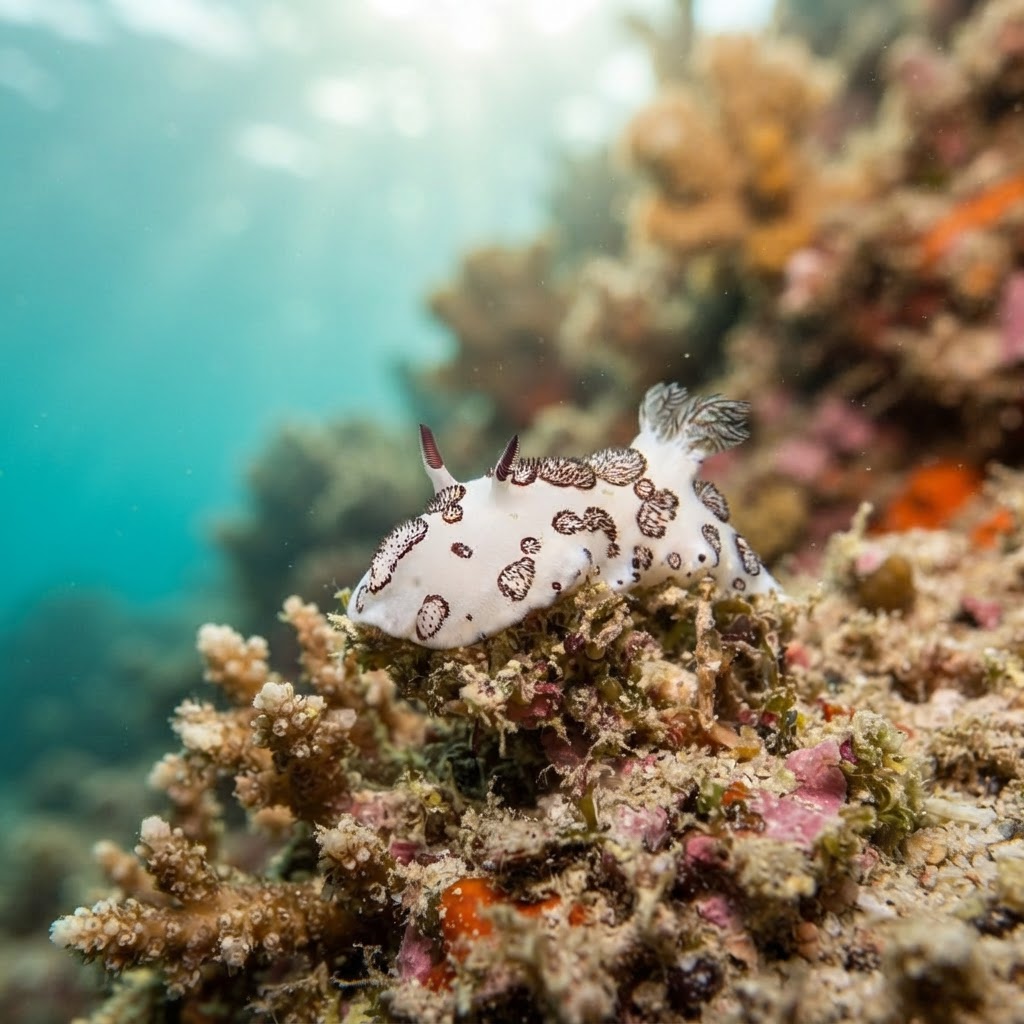
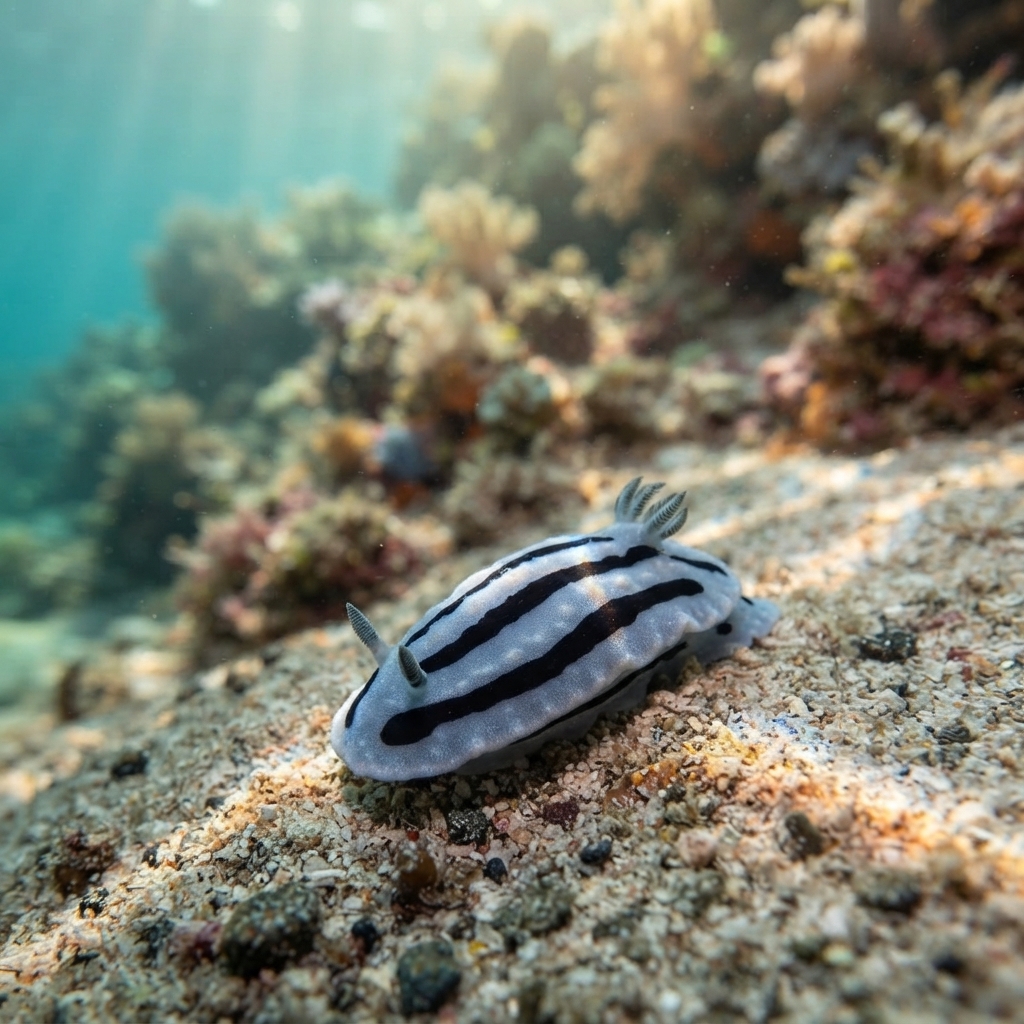
Small, elongate nudibranch with a ridged (tuberculate) back marked in bands of black, white and grey running along the body length, typical of the phyllidiid family. The rhinophores (the pair of sensory horns on the head) are dark and stand out against the paler body. It moves slowly and stays low on the substrate, so divers usually spot it as a compact patterned lump on rubble or dead coral rather than something swimming or exposed.
Divers find it parked on rubble, dead coral or sponge-covered substrate, grazing slowly and rarely moving far during a single dive. It shows no reaction to divers beyond the usual slow retraction if directly disturbed, and its patterned back can look like debris until you get close with a torch or macro lens. Most logs come from muck-style or mixed rubble dives rather than open coral wall, so it rewards divers who slow down and scan the bottom.
Like other phyllidiids, it feeds on sponges and does not need to hide its diet from predators; the toxins it absorbs from that sponge diet are thought to make the boldly patterned back a warning rather than camouflage.
Sightings do not show a clear seasonal pattern, and with a comfortable temperature range of roughly 25 to 31C it is present on these reefs all year, so any time you are diving Sabah or the Philippines is fair game.
Reef neighbours a diver could mistake it for. Use the identification notes above to tell them apart.
This is a reliable find on dives in Sabah, Malaysia, which logs the strongest numbers by far, followed by sites across Luzon and the Visayas in the Philippines. It also turns up around Sulawesi and Bali in Indonesia, on Xiaoliuqiu in Taiwan, and has been recorded near Nha Trang in Vietnam, making it a species worth checking for on muck and rubble dives across a wide stretch of the Coral Triangle and the western Pacific.
Mapping where Anne's Phyllidiopsis is logged…
Sabah in Malaysia is the strongest area for sightings, with further records across Luzon and the Visayas in the Philippines, Sulawesi and Bali in Indonesia, Xiaoliuqiu in Taiwan, and Nha Trang in Vietnam.
There is no strong seasonal pattern in the sightings, and it tolerates a wide warm-water range of roughly 25 to 31C, so it is findable on these reefs year-round.
Look for a small, ridged-backed nudibranch banded in black, white and grey, moving slowly across rubble or dead coral. Dark rhinophores on the head and its typical phyllidiid ridged texture help separate it from smoother dorids nearby.
No, it poses no threat to divers. It has no means of harming a diver and simply retracts slightly if touched or disturbed.
Exact size data is not available, but like most Phyllidiopsis species it is a small nudibranch, typically only a few centimetres long, so a careful eye and a torch help spot it on rubble.
It grazes on sponges, a diet shared across the phyllidiid family, and is thought to take on defensive toxins from that sponge tissue rather than needing to flee predators.
Site and sighting data is aggregated from diver logs, iNaturalist and GBIF. For taxonomy and conservation status:
Light-spotted Aegires
3,168 sites