Inachus phalangium
A spindly, camouflaged crab tucked into anemones off Brittany and Valencia, most divers rate it uncommon to rare year-round.
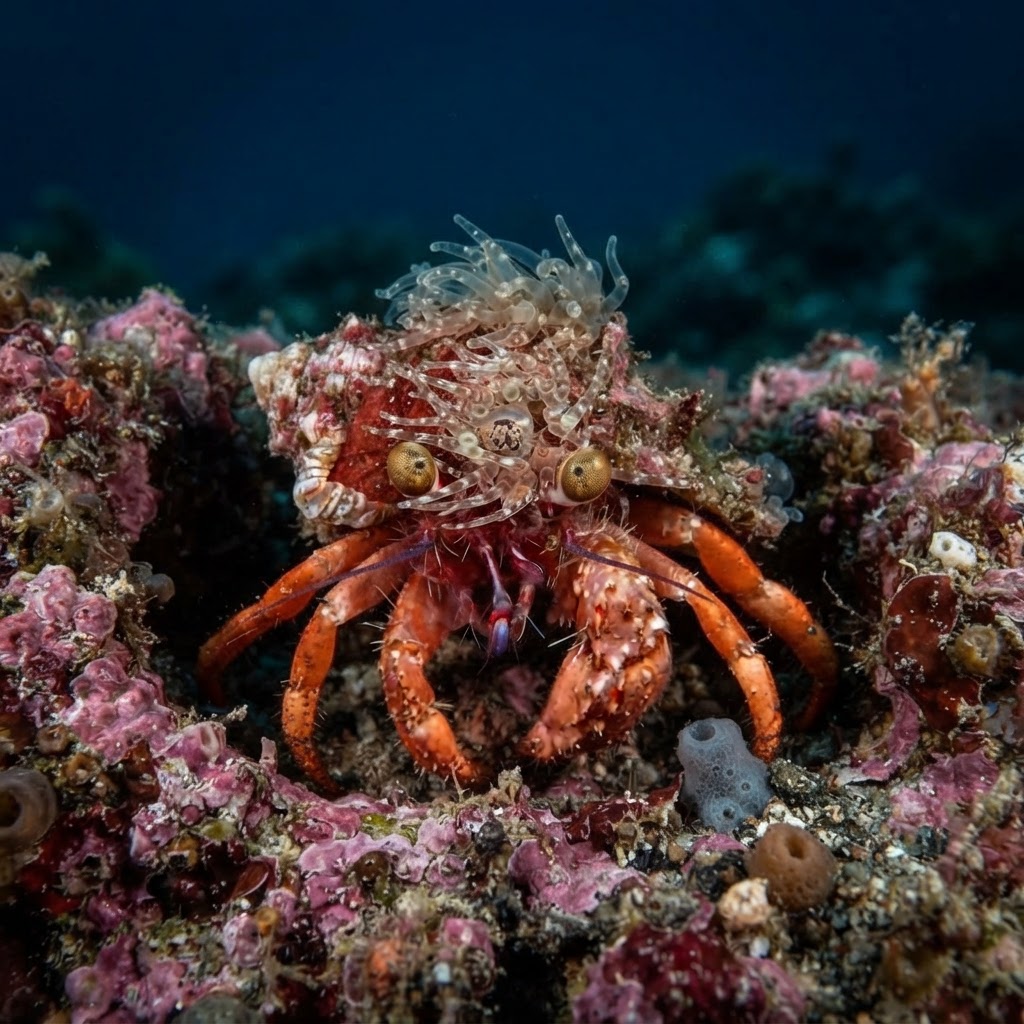
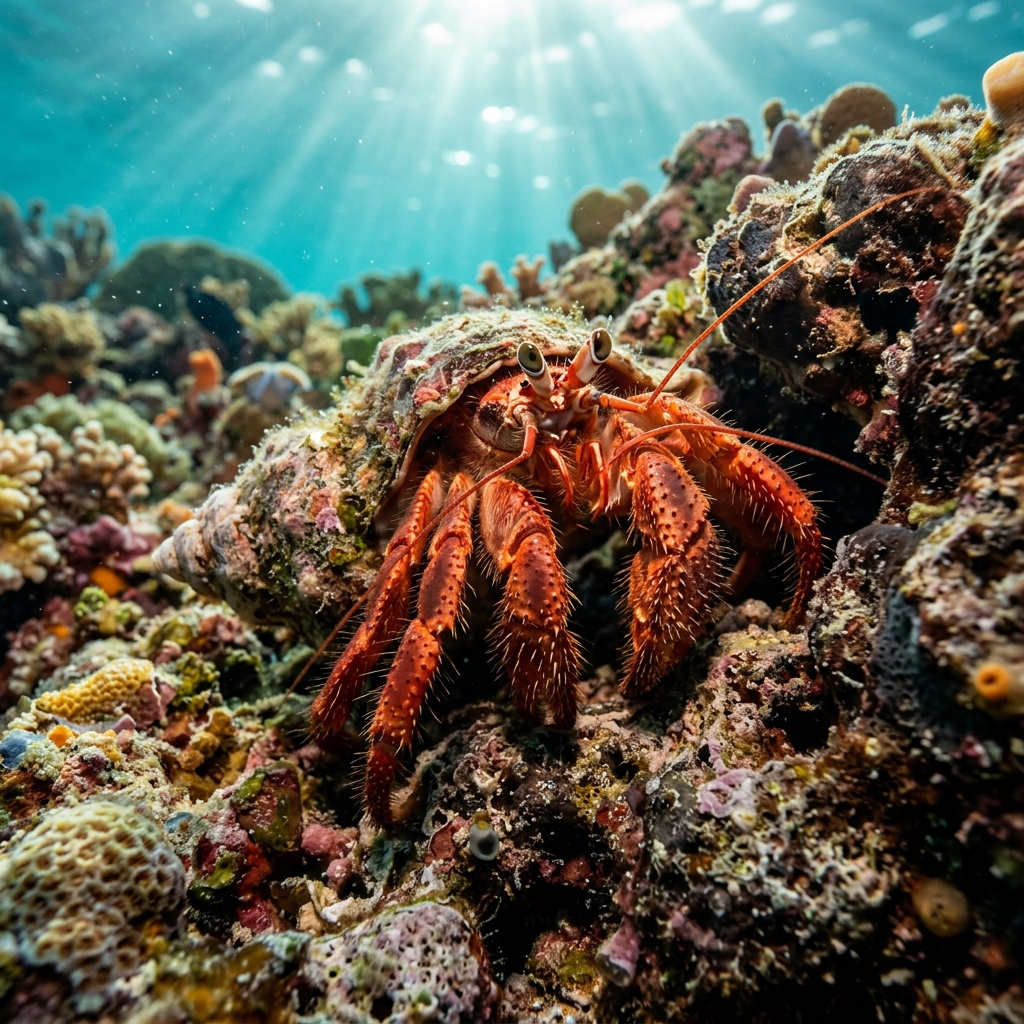
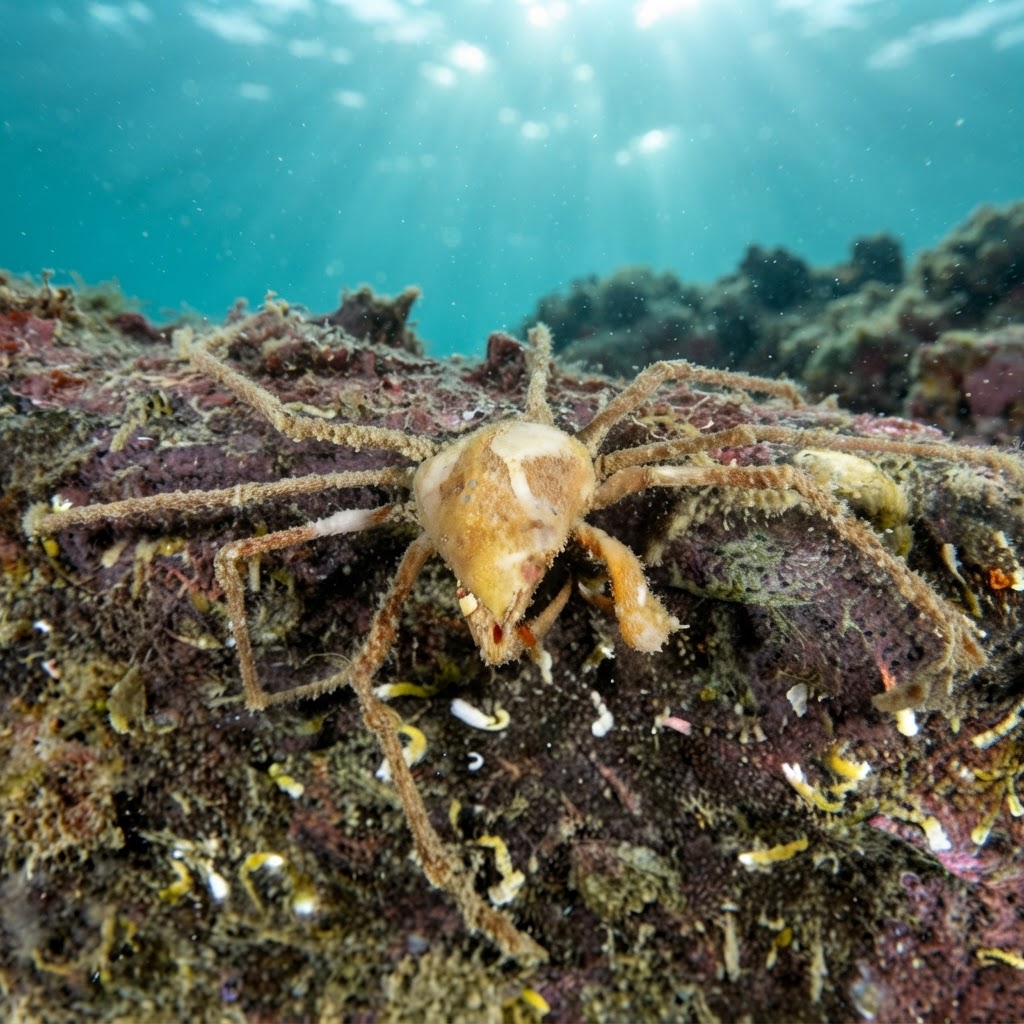
Look for a small, triangular-bodied crab with long, spindly legs tucked right up against an anemone's base or among its tentacles. The shell is mottled brown or reddish, often crusted with algae and debris that breaks up its outline against the anemone. Its slow, deliberate movements and habit of staying pressed close to its host are usually the giveaway, since the body shape alone can blend into the surrounding rock and weed.
Divers most often spot this crab sitting motionless right up against the column or base of a host anemone, using it as cover rather than actively foraging in the open. It doesn't dart away when approached, relying instead on staying still and blending in, so a slow, careful look around anemones on rocky or mixed-substrate reefs is the best way to find one. Most logs describe it as uncommon or rare even at sites where it's known to occur, so finding one usually takes a patient, close look rather than a lucky glance.
Its close association with anemones is thought to offer it some protection from predators, since few things want to brush against a bed of stinging tentacles to get at a small crab hiding within them.
Sightings don't show a clear seasonal pattern, so treat this as a year-round find within its comfortable water-temperature range of roughly 12.8 to 19.4 C. That range points to cooler-water diving conditions typical of temperate Atlantic and Mediterranean sites through most of the year rather than a narrow warm-season window.
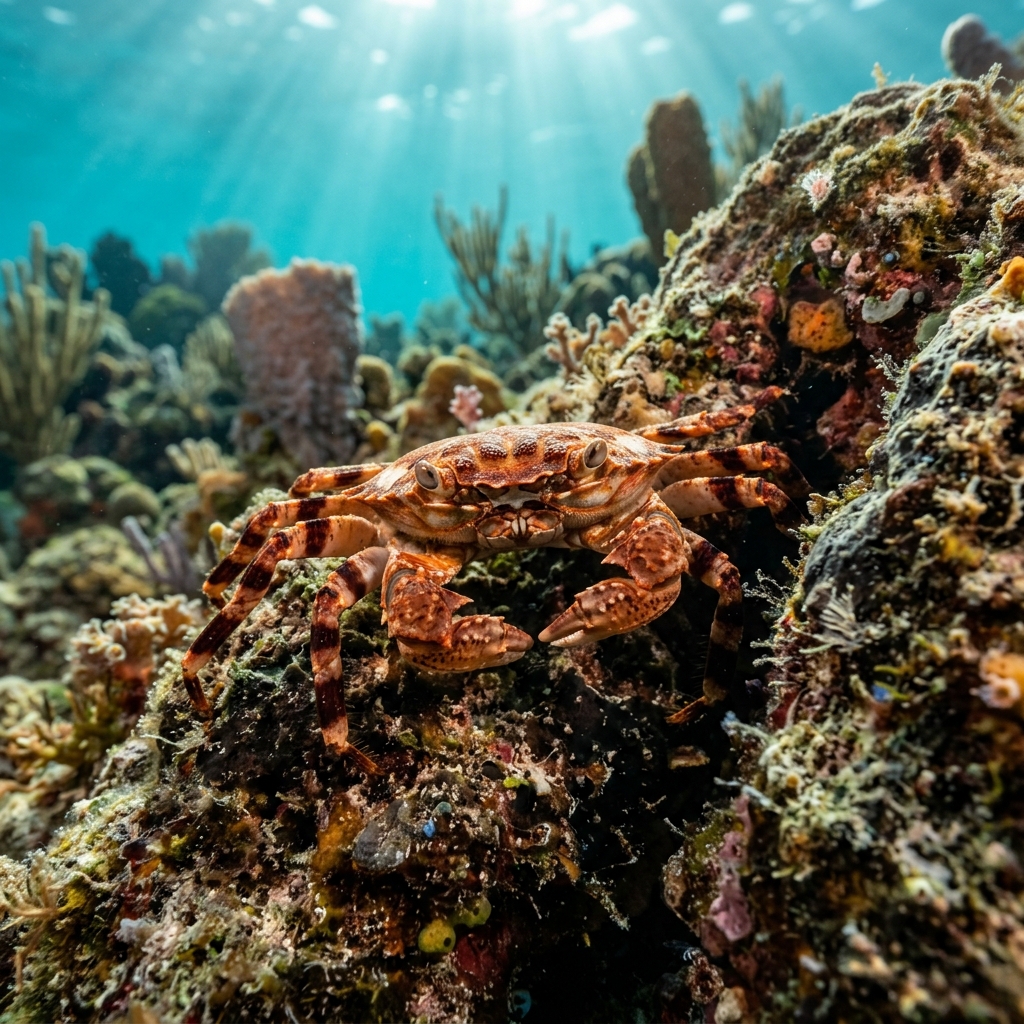
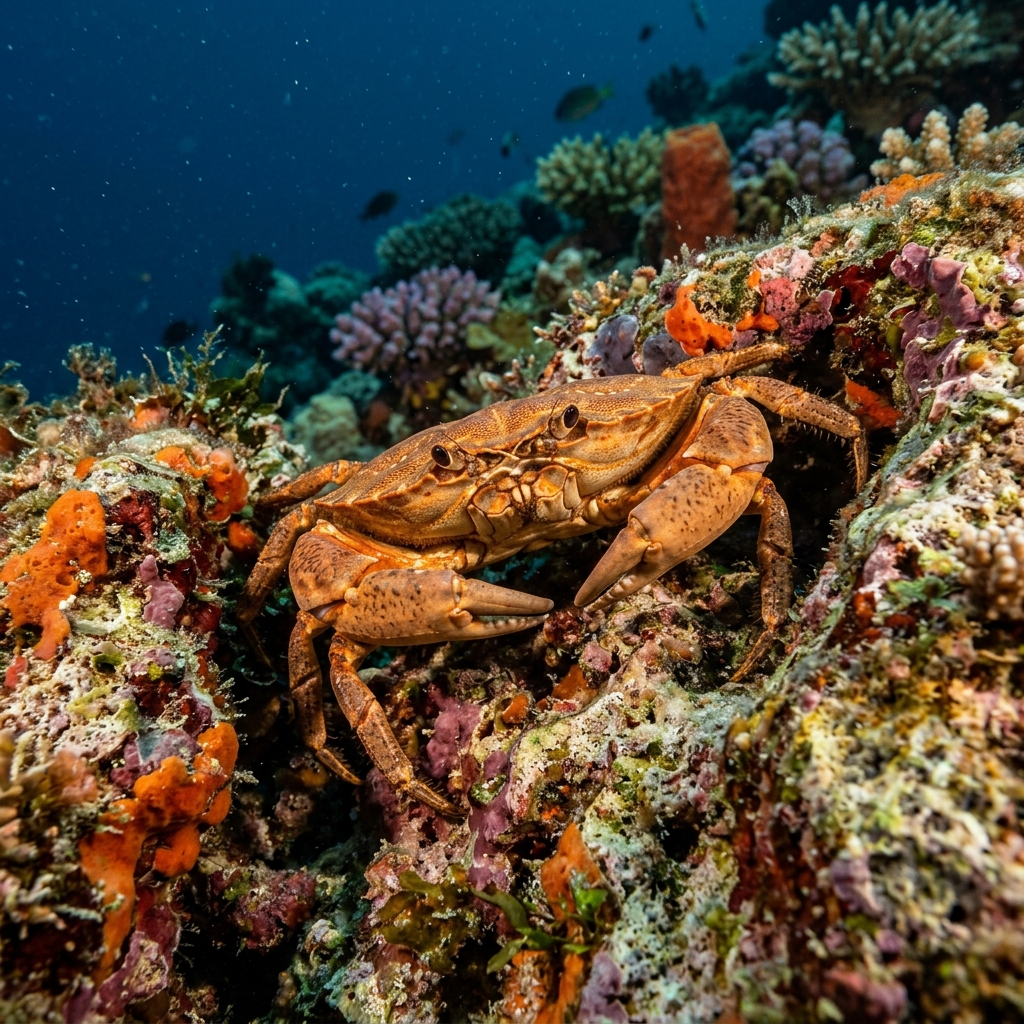
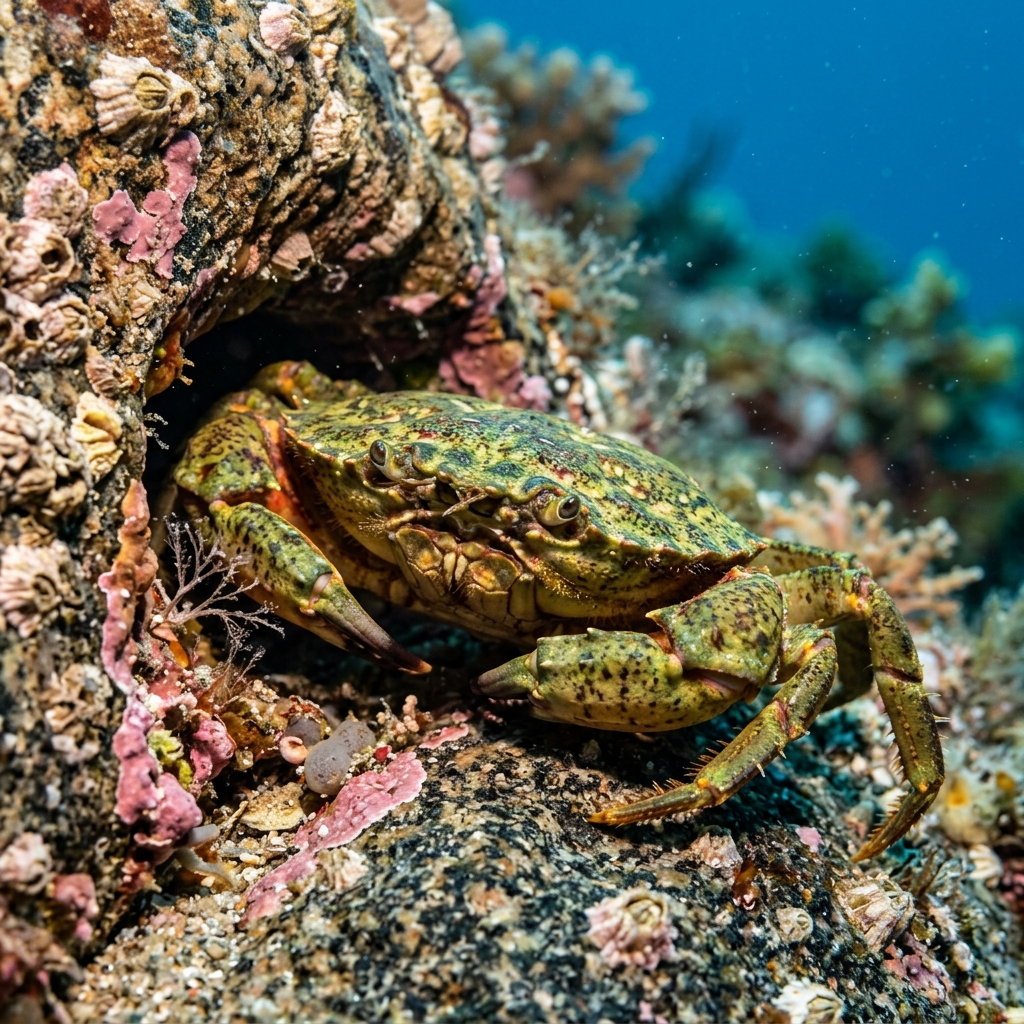
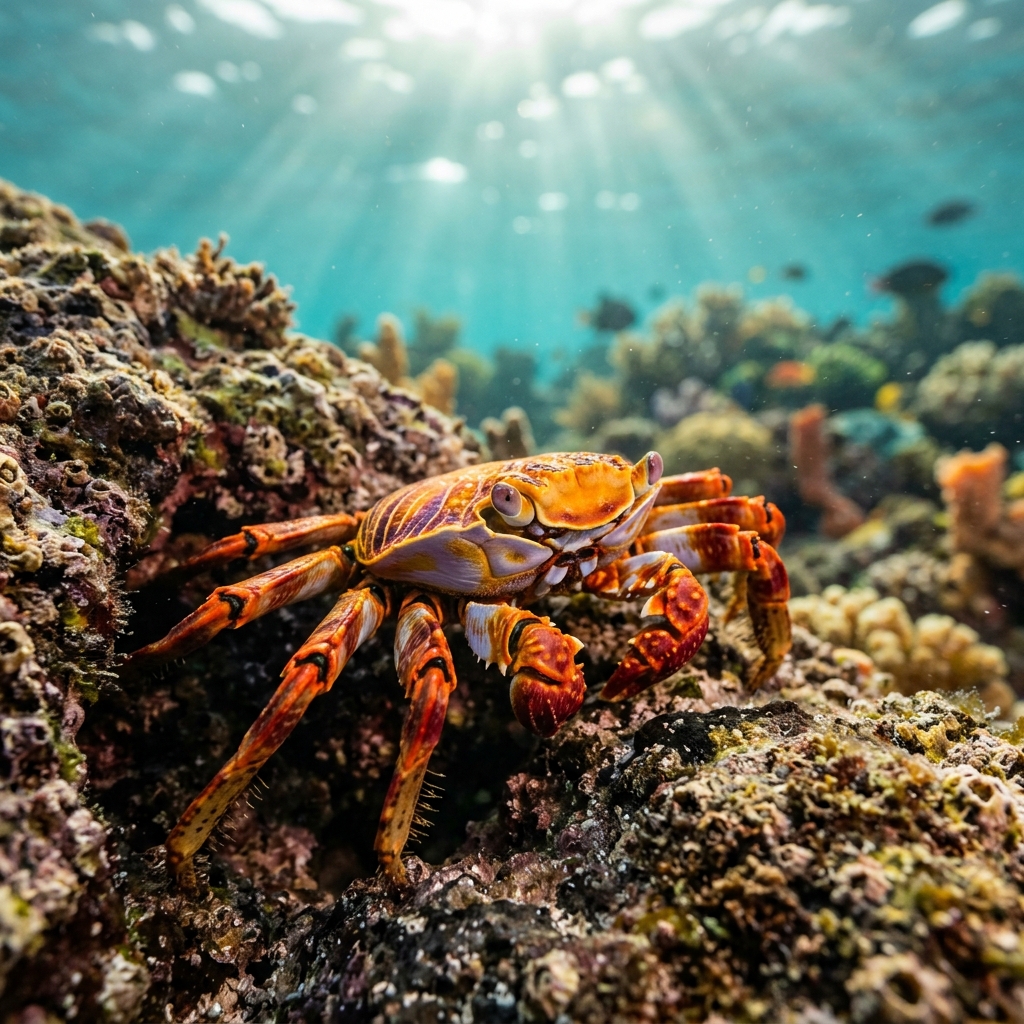
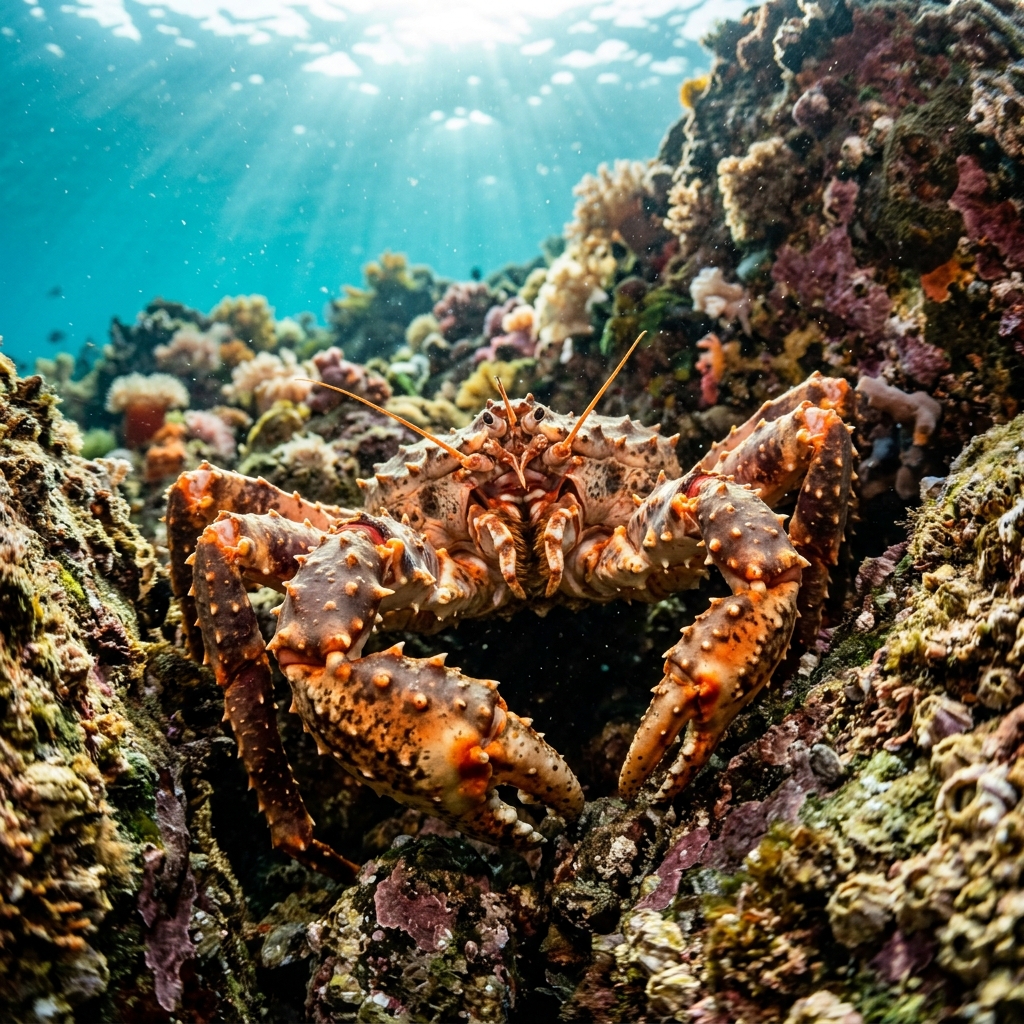
Reef neighbours a diver could mistake it for. Use the identification notes above to tell them apart.
This crab turns up most reliably along the French coast, particularly Brittany and the French Riviera and Provence, with a strong showing in Spain across Valencia and Catalonia too. Italy's Liguria region is another dependable spot, and it has also been logged in smaller numbers around the UK's south coast, the Netherlands' Zeeland, and Greece.
Mapping where Anemone Spider Crab is logged…
Brittany and the French Riviera in France are the most consistent regions, with Valencia and Catalonia in Spain and Liguria in Italy also producing regular sightings. Smaller numbers have been logged in the UK, the Netherlands, and Greece.
There's no strong seasonal pattern in the sightings, so it's considered a year-round find. Its recorded temperature range of about 12.8 to 19.4 C fits typical conditions on temperate Atlantic and Mediterranean dive sites through most of the year.
Look for a small, spindly-legged crab with a mottled brown or reddish shell pressed close to an anemone's base or tentacles. Its camouflaged, debris-covered shell and habit of staying still against its host are the key clues, since it rarely moves far or fast when spotted.
No, this crab poses no threat to divers. It's small, slow-moving, and stays close to its anemone host rather than approaching or reacting defensively.
The relationship is thought to give the crab a safer hiding spot, since predators are less likely to risk brushing against stinging tentacles to reach it. It also gains extra camouflage by staying pressed against the anemone's shape and colour.
Site and sighting data is aggregated from diver logs, iNaturalist and GBIF. For taxonomy and conservation status:
European Green Crab
2,469 sites