Anarhichas lupus
Spot Atlantic Wolffish in Nova Scotia, the Bay of Fundy, or Scotland, a cold-water predator lurking in water as cold as 0.5 °C.
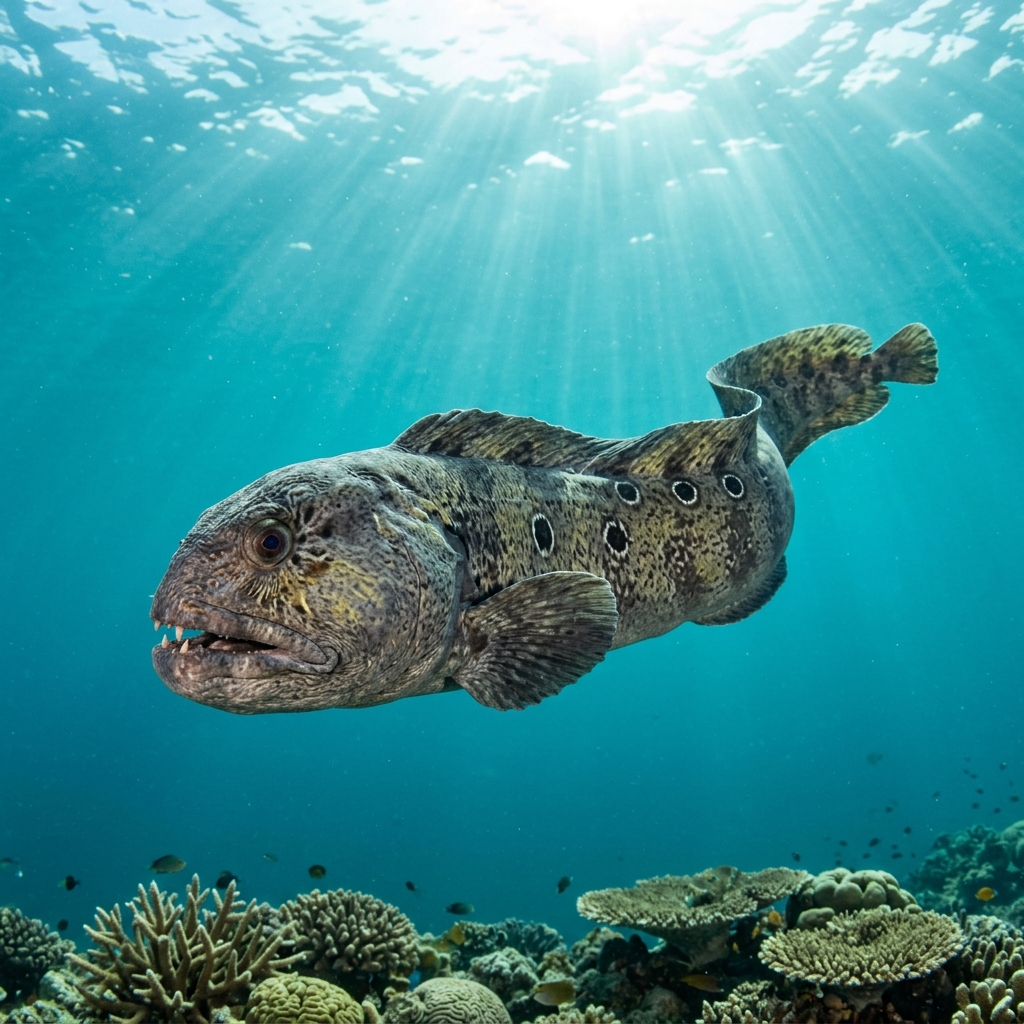
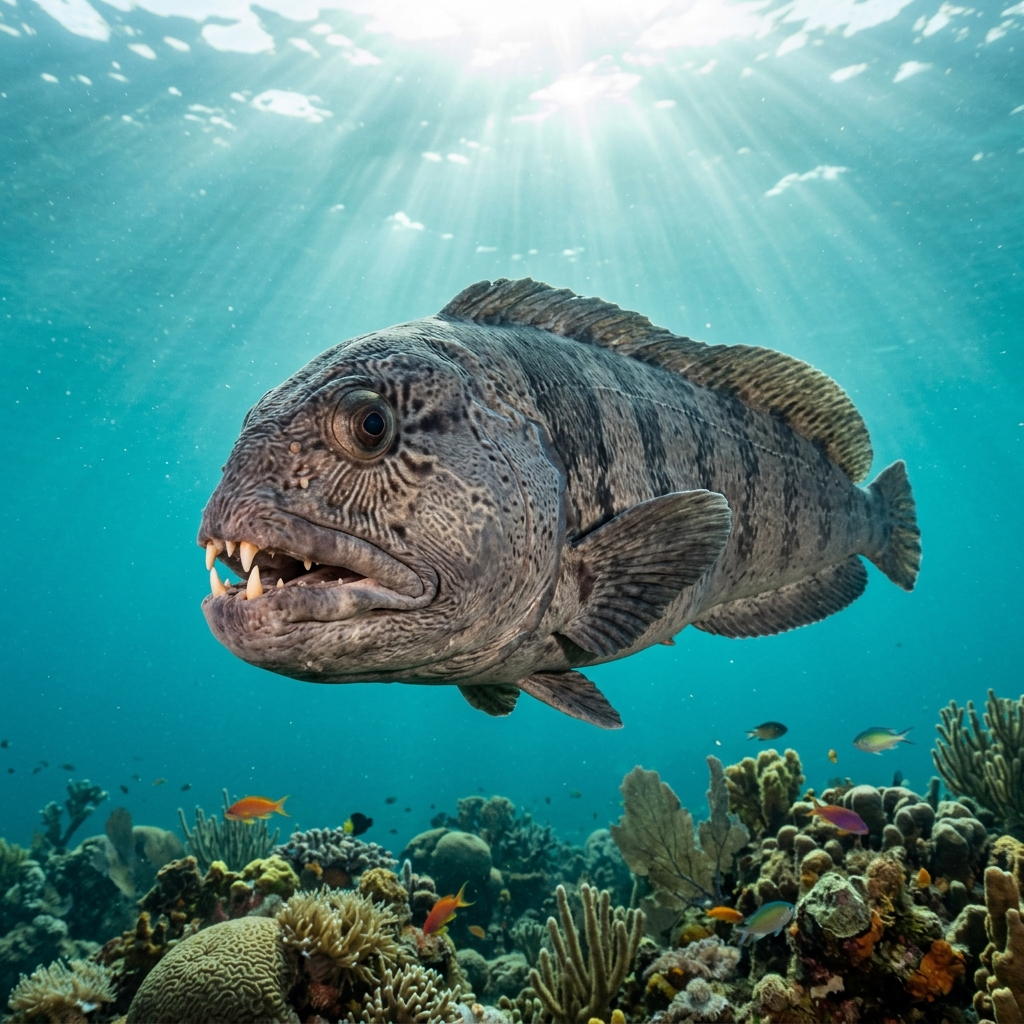
A blunt, heavy-jawed head packed with protruding canine teeth is the feature that stops divers in their tracks, nothing else in cold North Atlantic waters looks quite like it. The body is long and eel-like, tapering toward the tail, and colouring runs from slate grey to blue-grey or brownish, usually with faint darker banding or mottling along the flanks. It lacks a distinct tail fin and its single long dorsal fin runs almost the full length of the back. Most encounters are with an animal wedged into a rock crevice with just its head showing.
Atlantic wolffish are almost always found resting alone inside rocky crevices, caves, or under ledges, with the head facing outward, classic ambush (sit-and-wait predator) posture. They are generally unbothered by slow, non-threatening divers, though the prominent teeth make most people keep a respectful distance. Feeding targets hard-shelled invertebrates such as urchins, crabs, and molluscs, and those powerful jaws are adapted for crushing rather than biting defensively.
Atlantic wolffish produce a natural antifreeze protein in their blood that keeps them active in near-freezing sub-zero water, one of the few bony fish with this adaptation outside polar species.
There is not enough monthly sighting data to point to a specific season, so treat encounters as possible year-round wherever the species is found. Its observed water-temperature range of roughly 0.5 to 13 °C means it is tied to cold water regardless of month.
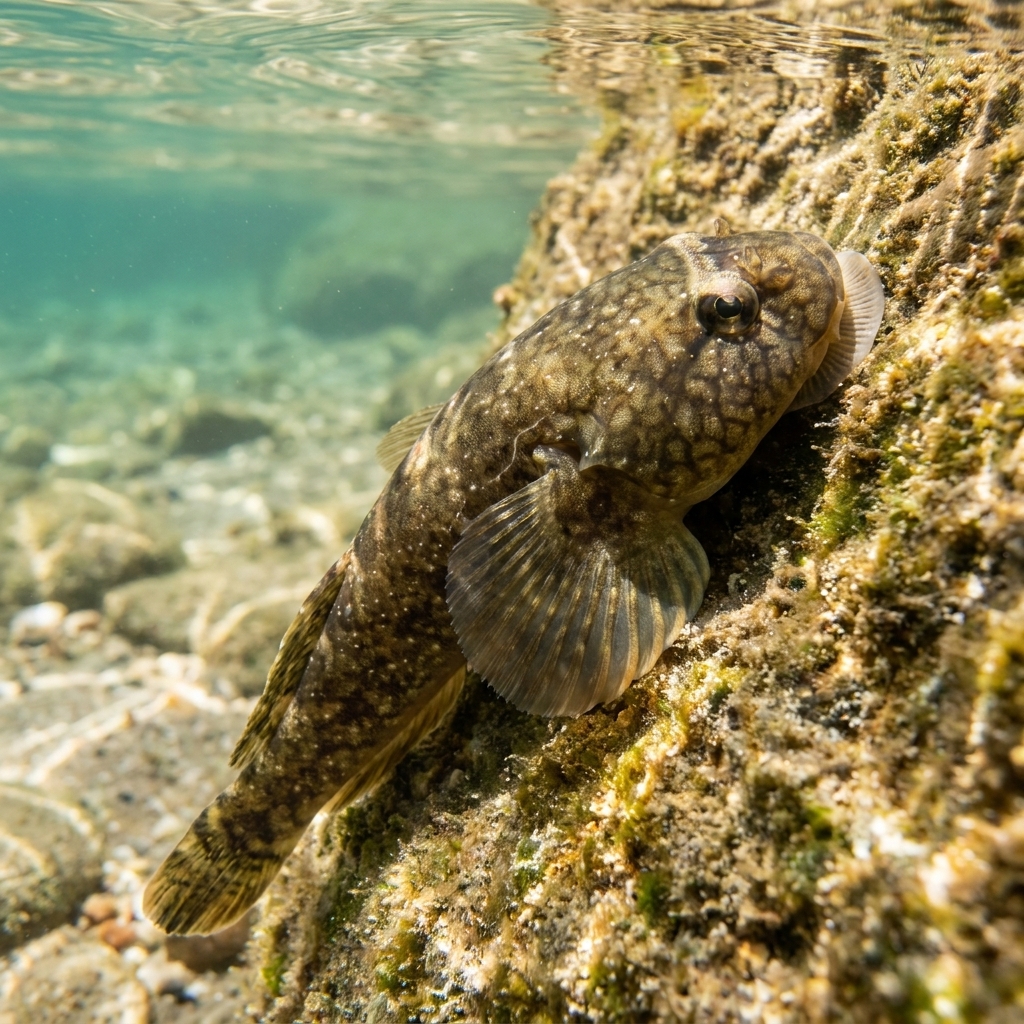
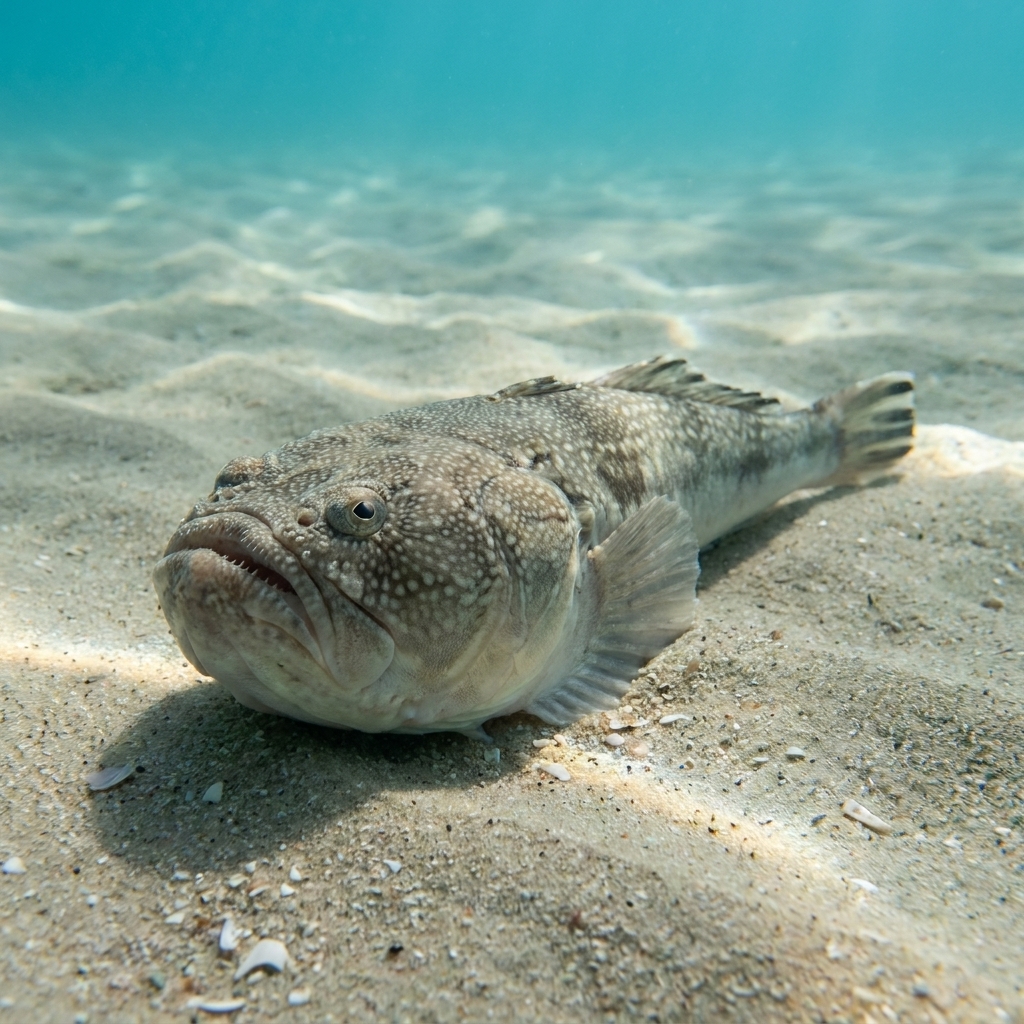
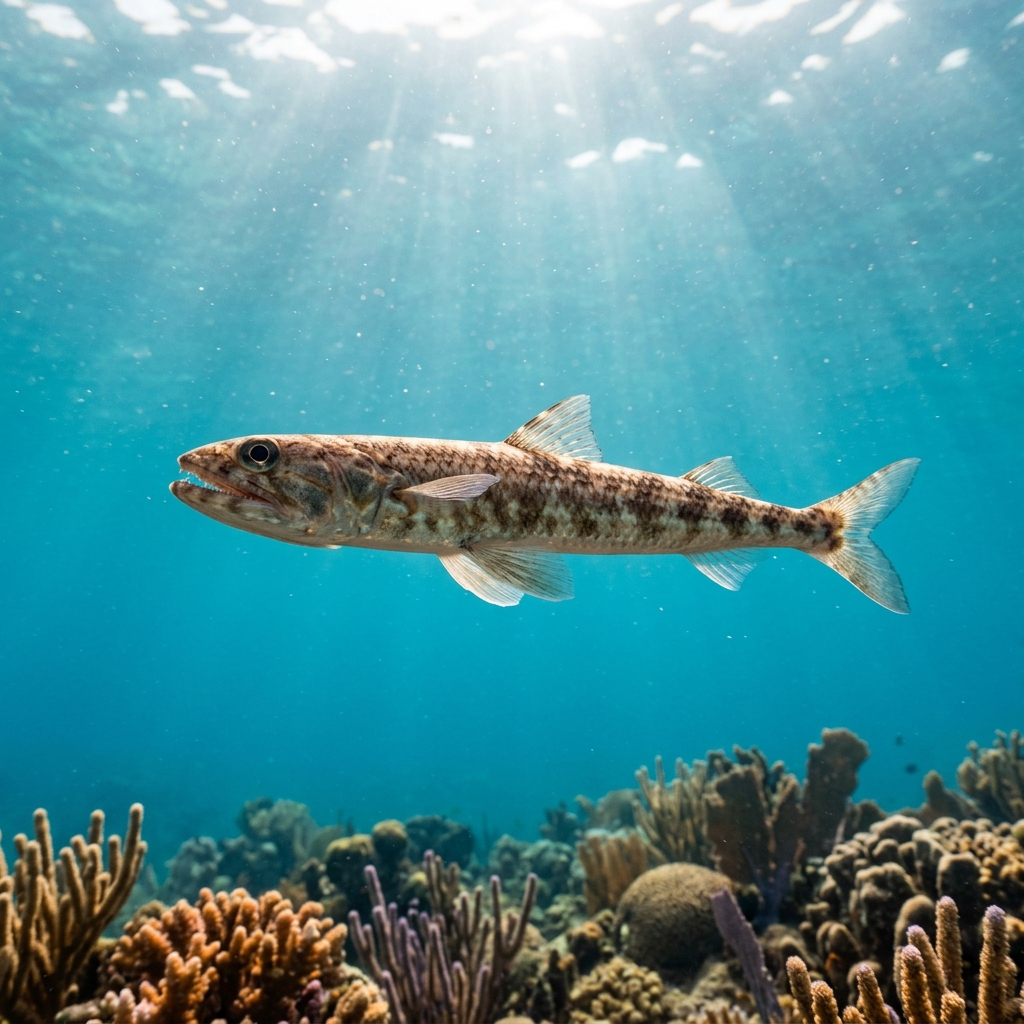
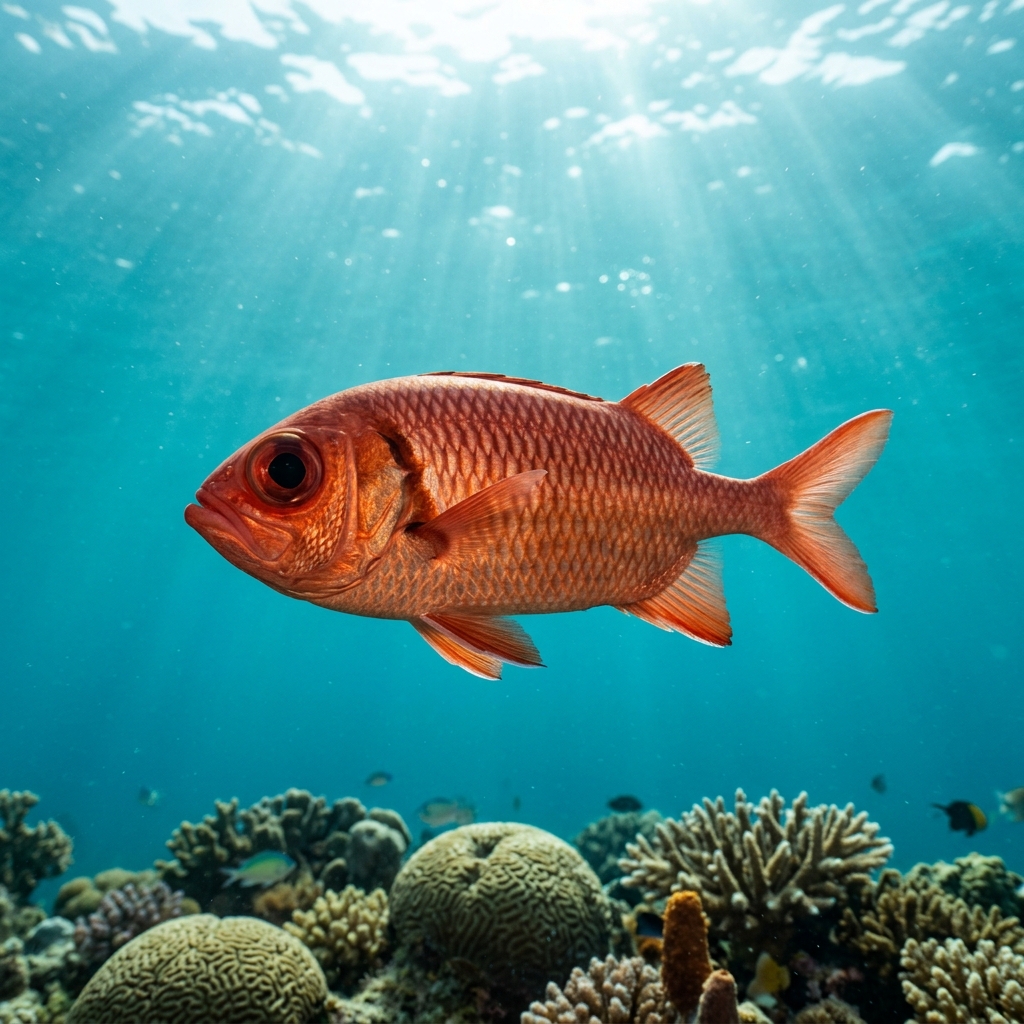
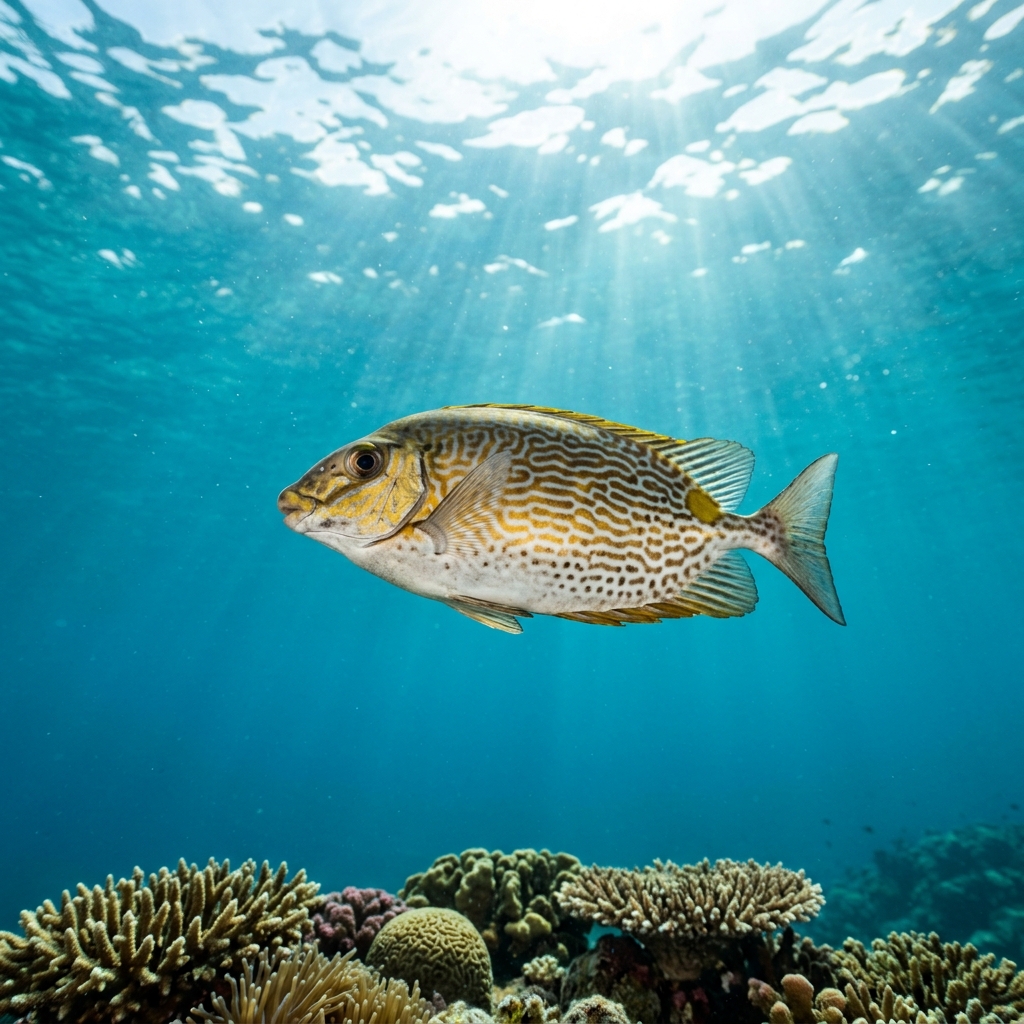
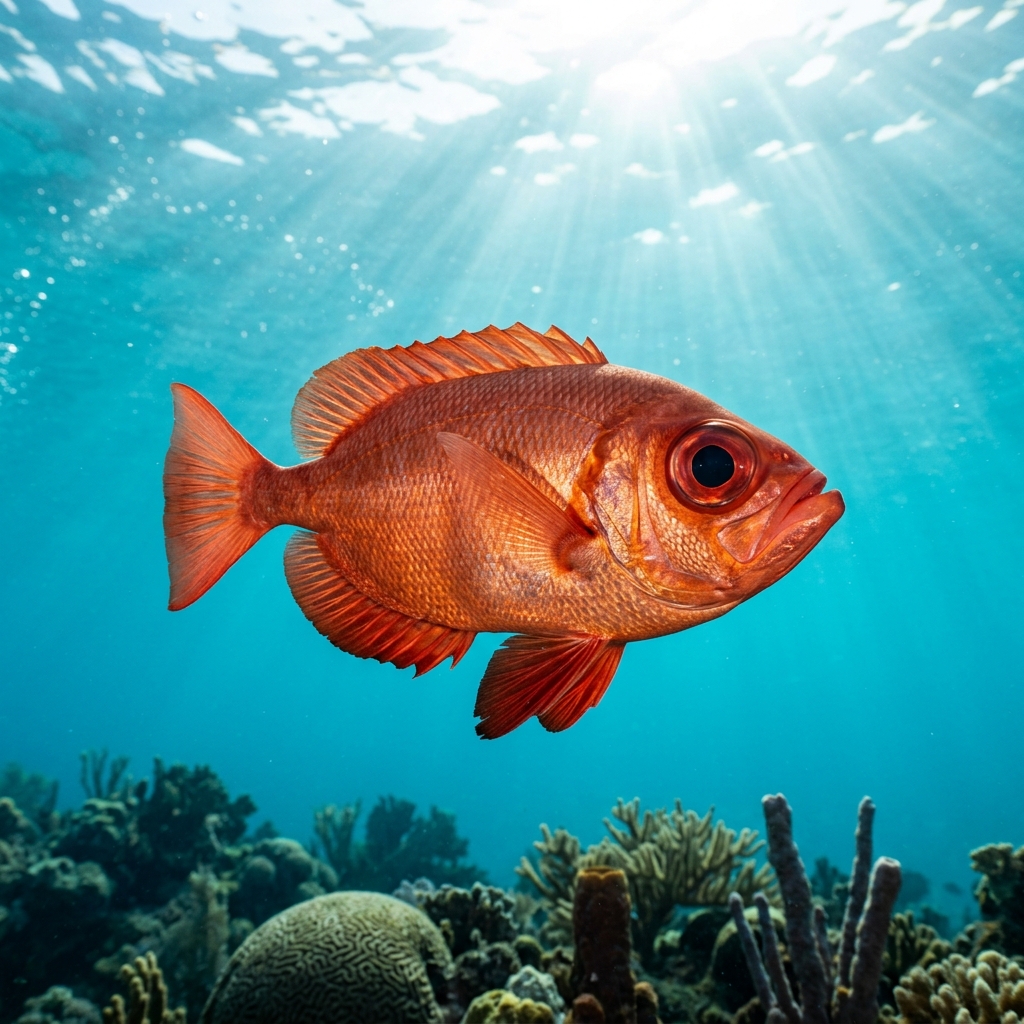
Reef neighbours a diver could mistake it for. Use the identification notes above to tell them apart.
The overwhelming majority of logged sightings come from Canada, with Nova Scotia and the Bay of Fundy accounting for the largest share by far, followed by the St. Lawrence and Quebec region. Smaller but consistent records come from Nordland in Norway and the west coast of Scotland, making those the European go-to options for anyone targeting this species.
Mapping where Atlantic Wolffish is logged…
The best-documented diving for this species is along the Canadian Atlantic coast, particularly Nova Scotia, the Bay of Fundy, and the St. Lawrence region. In Europe, Nordland in Norway and the west coast of Scotland are the most reliably logged locations.
There is no clearly defined season in the sighting data, so encounters can occur year-round. The species lives in cold water ranging from just above freezing to around 13 °C, so cold-water diving conditions apply regardless of the time of year you visit.
Look for a large, blunt head with clearly visible protruding canine teeth, a long eel-like body with a continuous dorsal fin, and mottled grey or brownish colouring. It is nearly always sitting motionless inside a rocky crevice with just the head visible, in cold, often low-visibility water.
Adults commonly reach around 1 to 1.5 metres in length, and larger individuals have been recorded. Their heavy, robust build makes them look even bigger when encountered head-on in a crevice.
They are not considered dangerous to divers. Although those teeth look formidable, Atlantic wolffish are not aggressive and typically remain still when approached calmly. Avoid putting hands near a crevice where one is sheltering, any animal may bite defensively if it feels cornered.
Atlantic wolffish produce antifreeze proteins in their blood, allowing them to remain active in water that is near or below 0 °C. They are also unusual among fish in that pairs guard their egg masses together on the seabed after spawning, with the male often staying to protect the clutch until the eggs hatch.
Site and sighting data is aggregated from diver logs, iNaturalist and GBIF. For taxonomy and conservation status:
Soldierfish
3,612 sites