Amphioctopus mototi
Spot the rare Mototi Octopus in New South Wales, Australia. A cryptic cephalopod with a vivid secret, observed in warm 27-29 °C waters.
Safety warning
This animal carries a powerful venom delivered by a bite or a harpoon-like sting, and it can be fatal. Never handle it or pick up its shell, even one that looks empty.
If you're bitten
Venomous biteGeneral first-aid guidance, not a substitute for professional medical care. In an emergency, call your local emergency number.
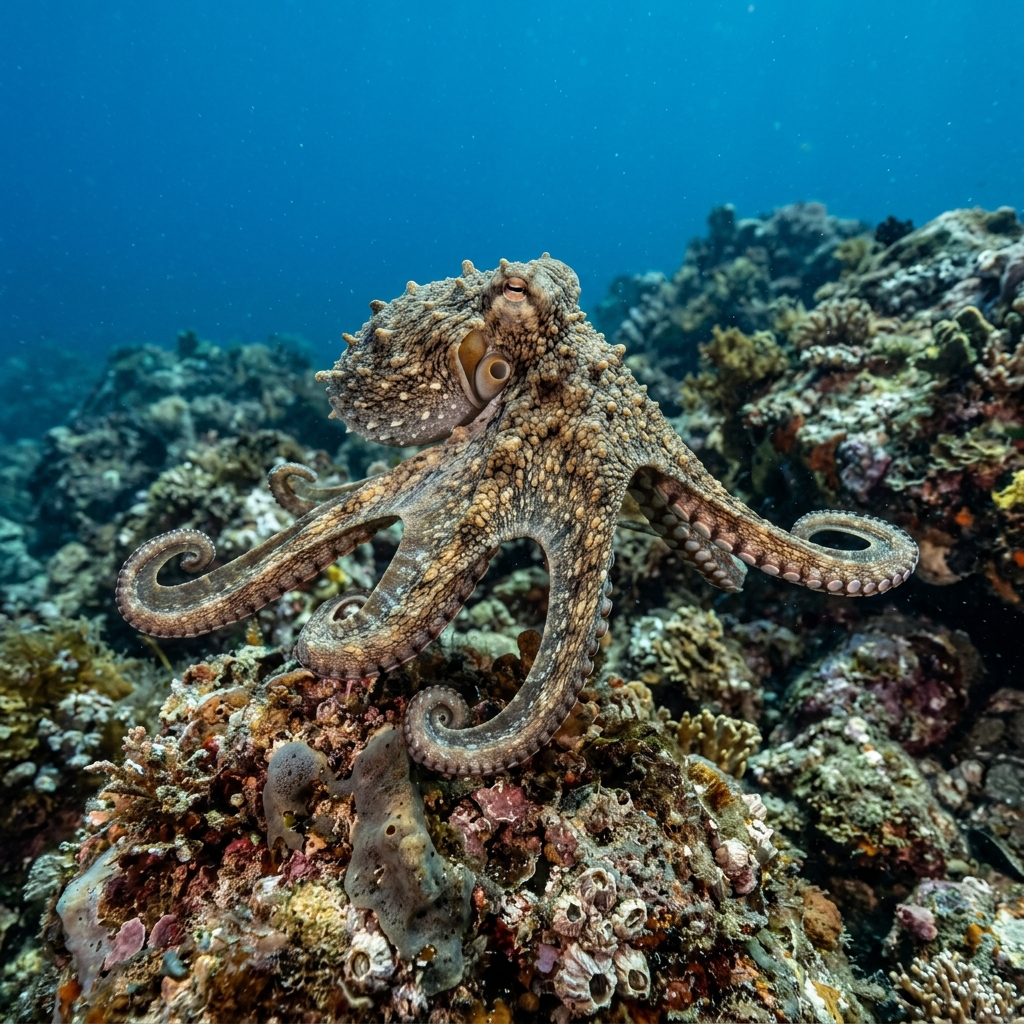
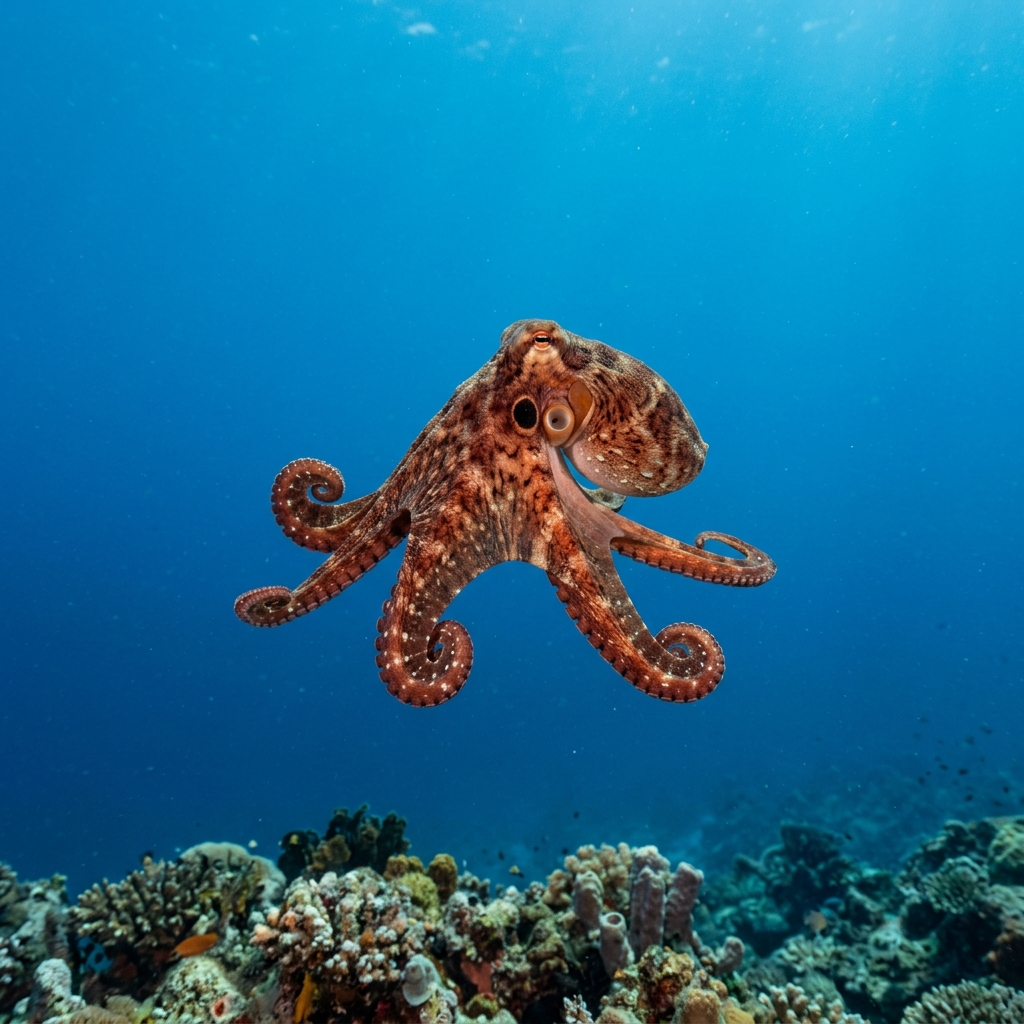
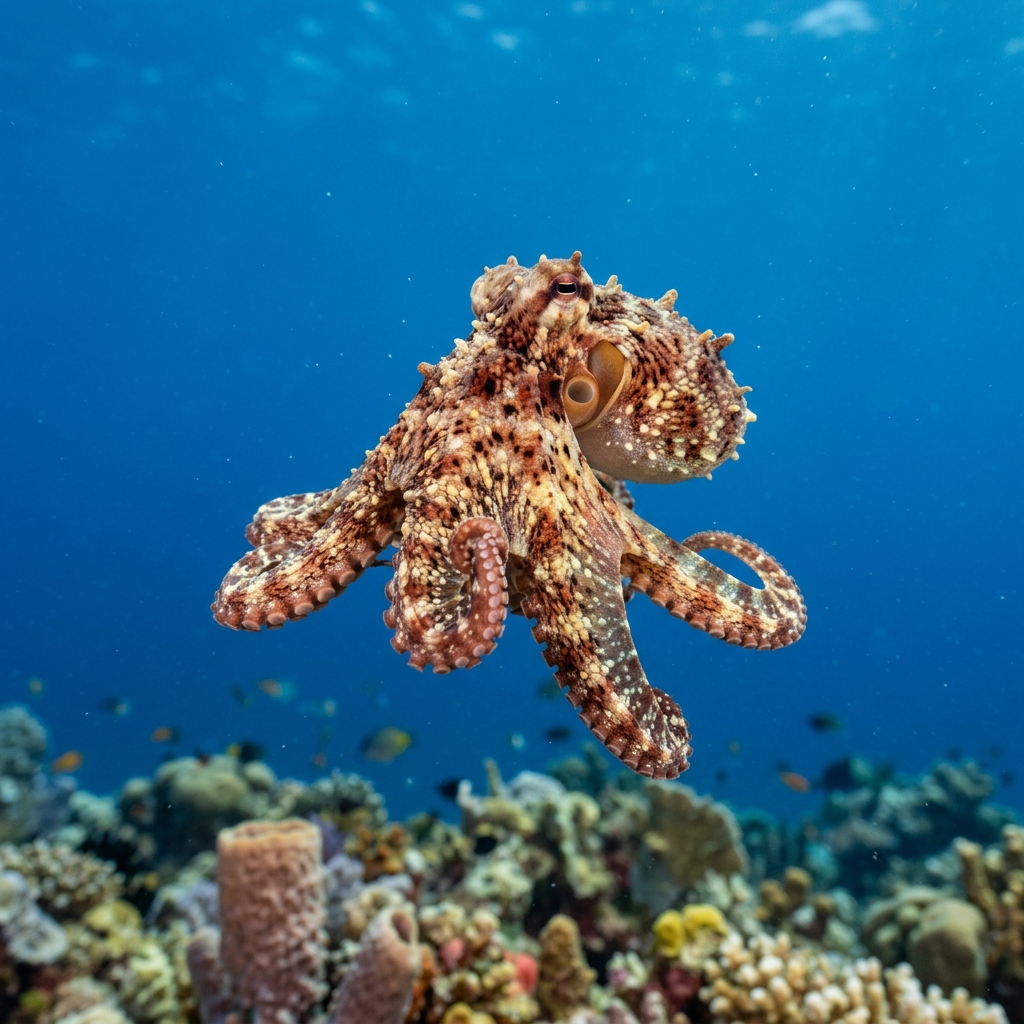
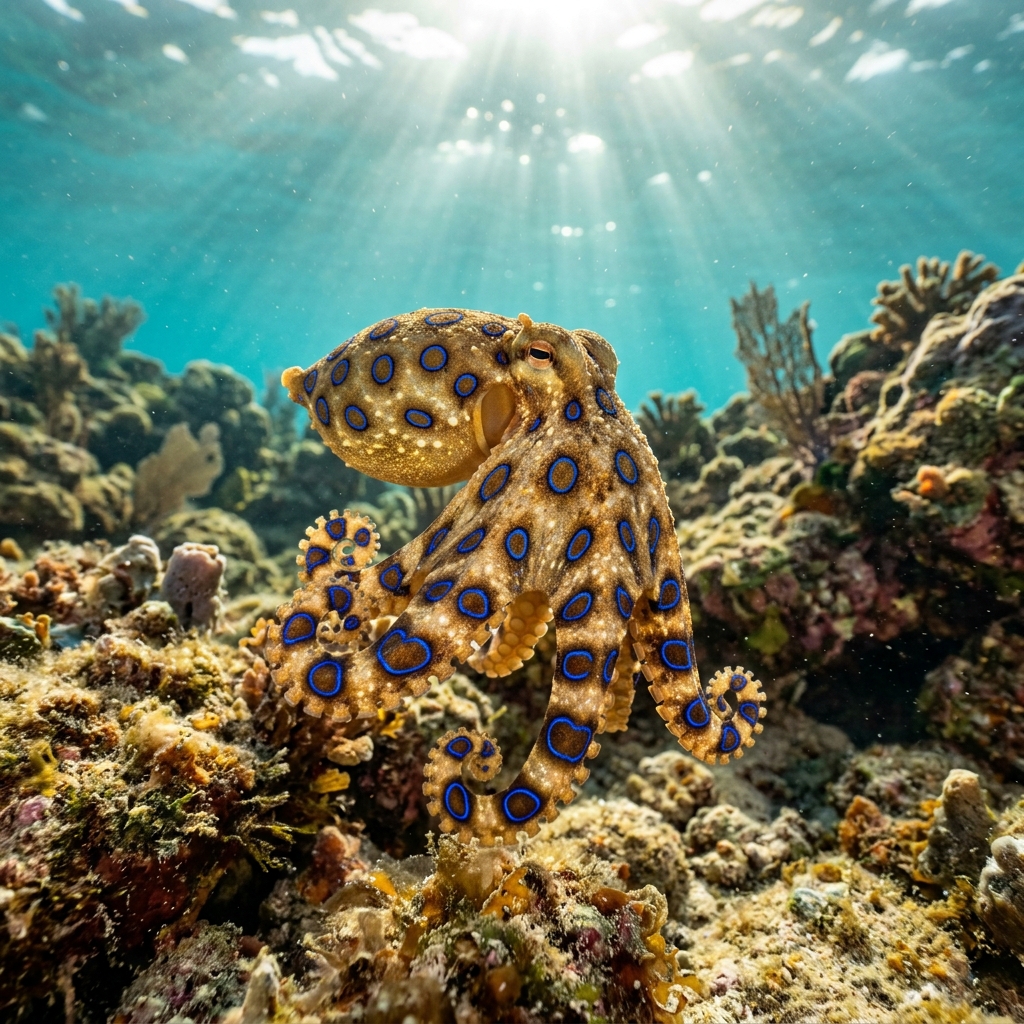
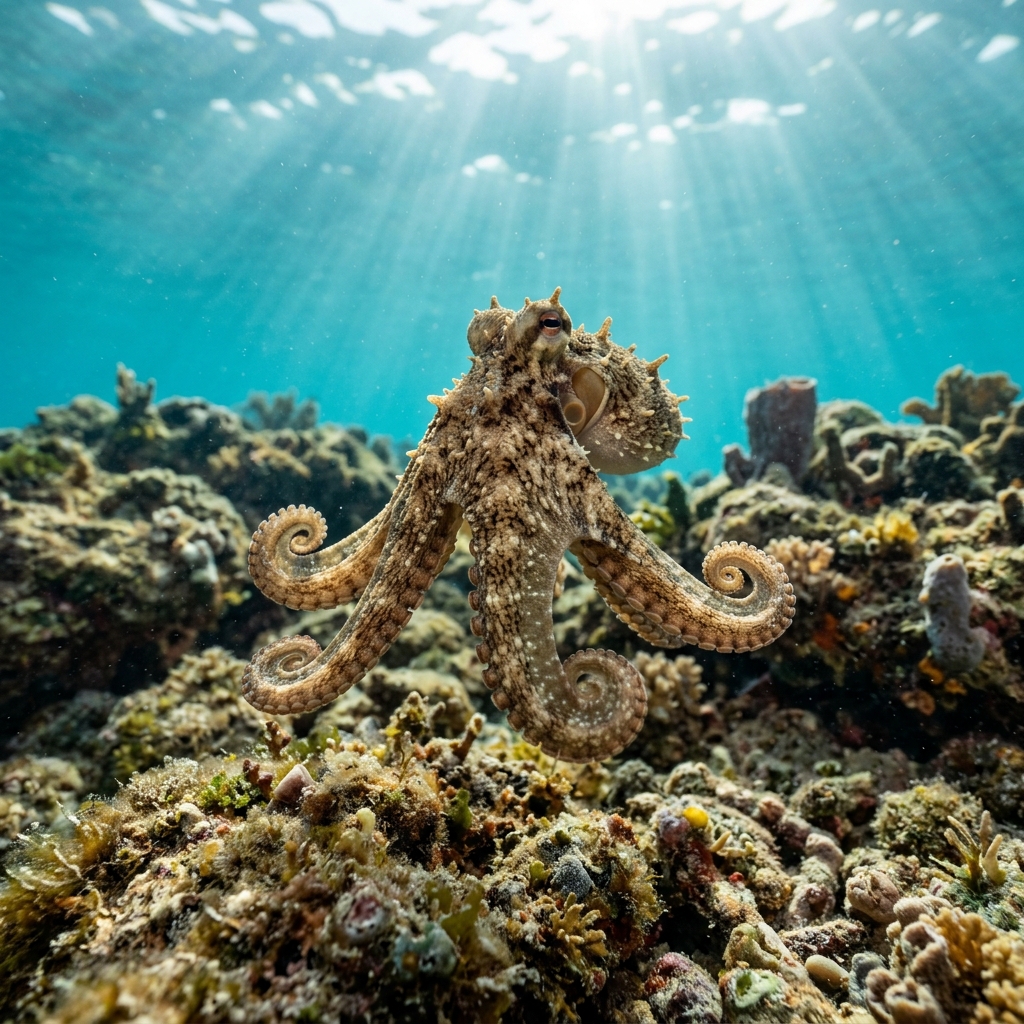
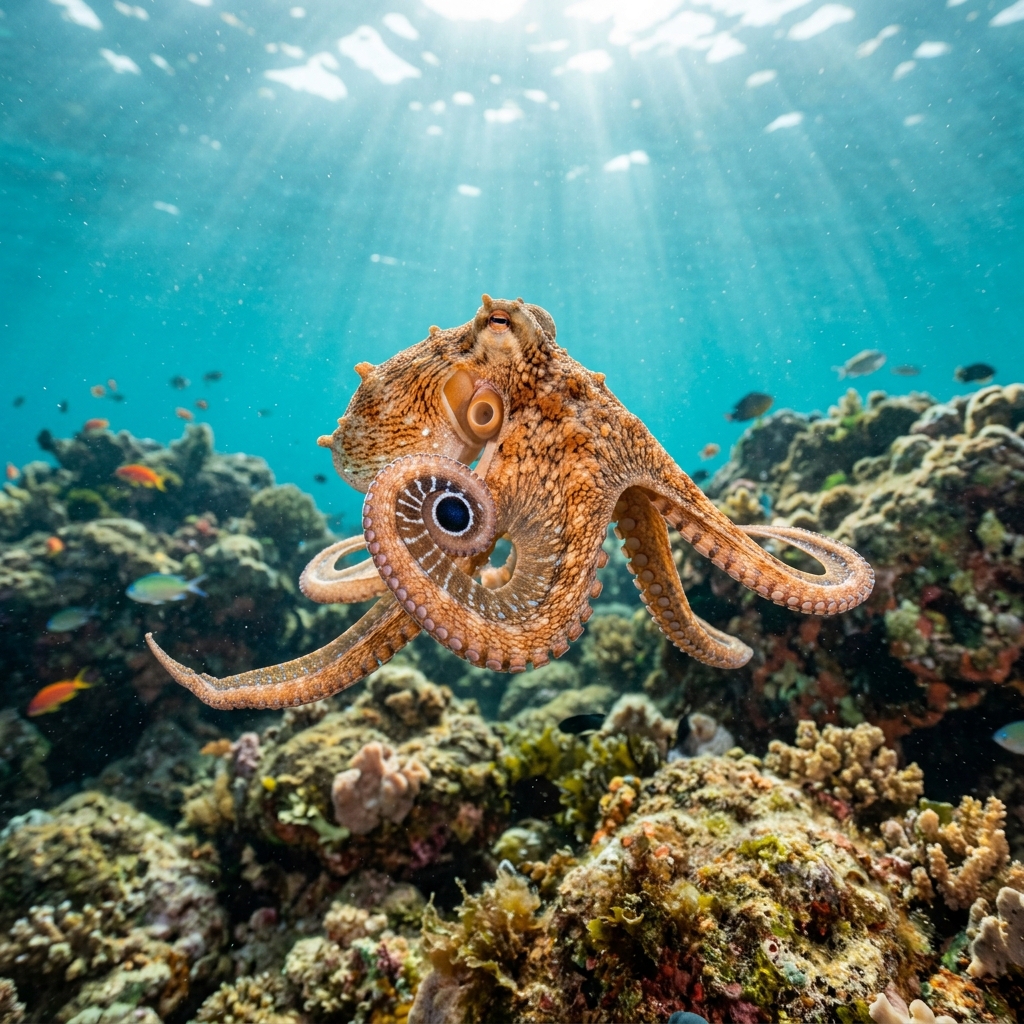
Look for a small, cryptically patterned octopus with a mottled brown-and-white body that shifts texture rapidly to match surrounding rubble or coral. The single most useful field mark is a vivid blue-ringed false eyespot (an iridescent blue-ringed ocellus) located just behind each eye, visible when the animal is alarmed or displaying. At rest, the body is remarkably camouflaged and easy to overlook against sand or rubble. The arms are relatively short compared to some reef octopuses, reinforcing the compact, stocky impression.
Mototi Octopuses are secretive and typically found sheltering in rubble, crevices, or among reef debris during the day, emerging more actively at night to hunt. When a diver approaches, they tend to press into cover and rely on camouflage rather than fleeing, though a threatened individual may flash its blue ocelli as a warning display. Patience and a slow approach are rewarded, as the animal may hold its position long enough for a close observation.
The blue-ringed ocellus behind each eye is not just ornamental. It is thought to mimic the warning colouration of the blue-ringed octopus, a venomous species, giving the Mototi Octopus a defensive bluff that predators take seriously.
There is not enough monthly sighting data to identify a peak season, so it should be treated as a year-round possibility. Observed water temperatures range from roughly 27 to 29 °C, consistent with warmer subtropical to tropical conditions.
Reef neighbours a diver could mistake it for. Use the identification notes above to tell them apart.
Diver observations place the Mototi Octopus in New South Wales, Australia, making this the only confirmed region in the data. It has been logged at a site along the New South Wales coast, so planning a dive in that region gives you the best-known chance of an encounter.
Mapping where Mototi Octopus is logged…
Diver-confirmed sightings are concentrated in New South Wales, Australia. It is a rare find and has been logged at a single site in that region, so divers targeting this species should focus on rubble and reef areas along the New South Wales coast.
The key field mark is a bright blue-ringed false eyespot (ocellus) just behind each eye, visible when the octopus is stressed or displaying. The body is small and stocky with mottled brown-and-white camouflage. At rest it blends closely with rubble and is easy to miss without that blue flash.
No. The Mototi Octopus is not considered dangerous to divers. Its vivid blue false eyespots mimic the warning colouration of venomous blue-ringed octopuses, but the Mototi itself does not carry the same level of venom. Leave it undisturbed and observe without handling.
Precise size data for this species is limited in diver records. It is generally described as a small octopus, noticeably compact with relatively short arms compared to common reef octopuses. Underwater it reads as a small, unassuming animal until it flashes its blue ocelli.
The blue ring is a false eyespot called an ocellus, located just behind each eye. It is thought to be a defensive mimic of the blue-ringed octopus's warning colours, deterring predators without the Mototi needing to carry the same potent venom. The ring glows vividly blue when the animal is alarmed.
There is no clear seasonal peak in the available data, so sightings should be treated as a year-round possibility. The species has been observed in water temperatures of around 27 to 29 °C. Diving after dark may improve your chances, as octopuses in this group tend to be more active at night.
Site and sighting data is aggregated from diver logs, iNaturalist and GBIF. For taxonomy and conservation status:
Brazilian Reef Octopus
1,142 sites