Canthigaster amboinensis
Small reef puffer with blue-ringed eyes, most reliably logged around Hawaii in warm 25-29C water year-round.
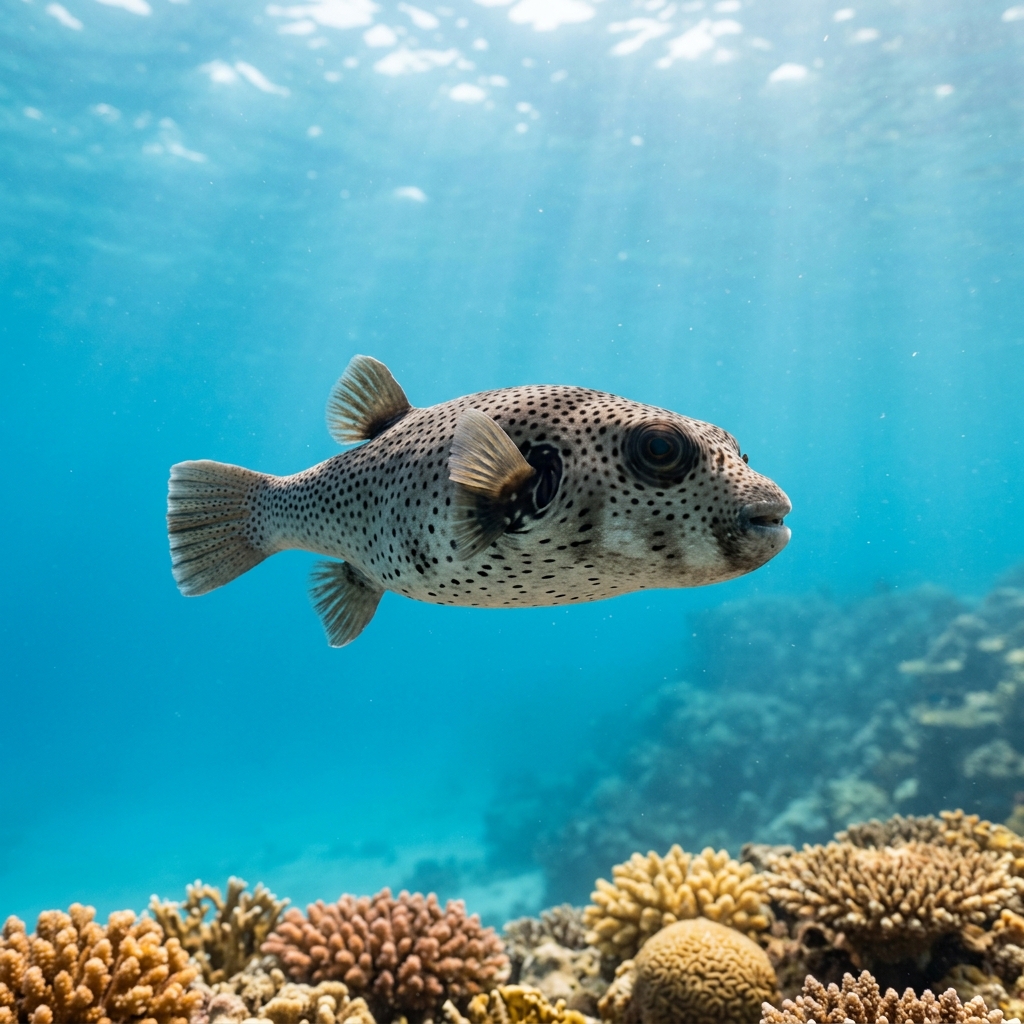
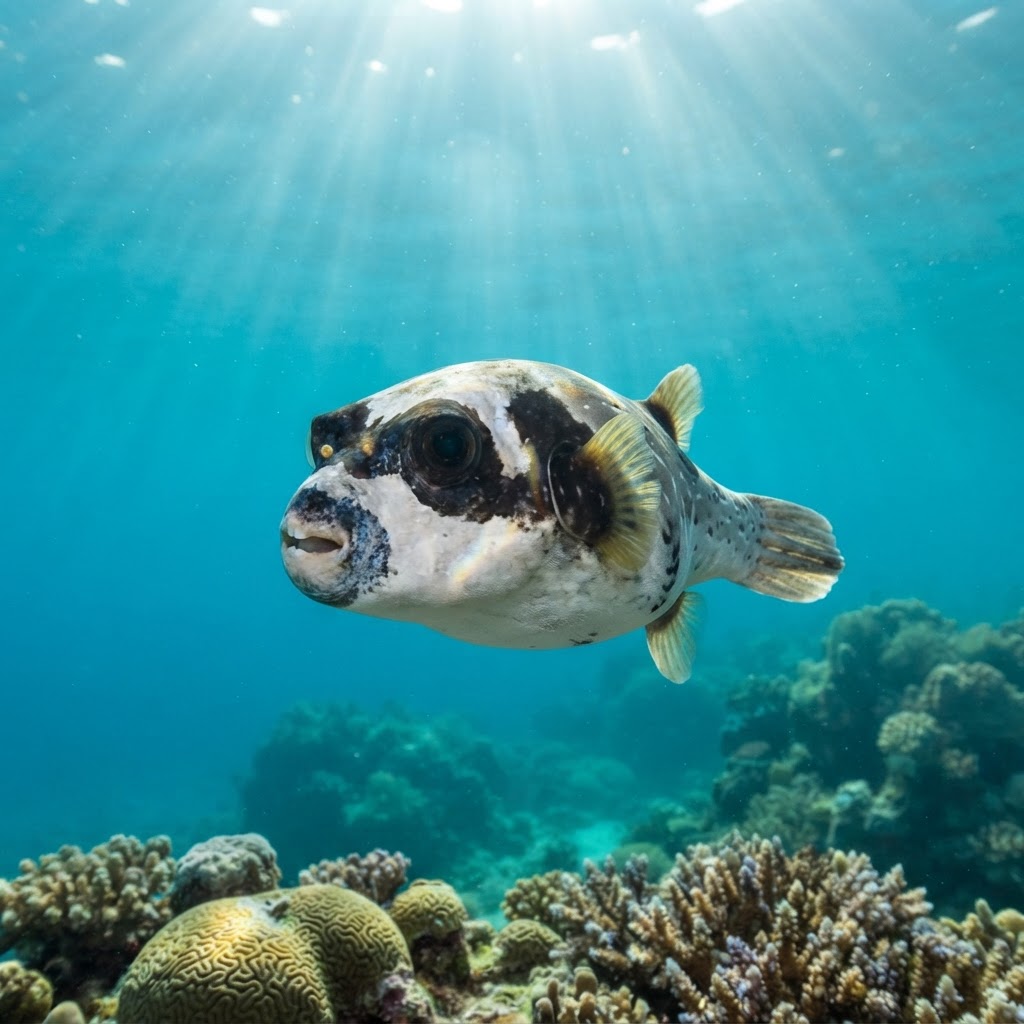
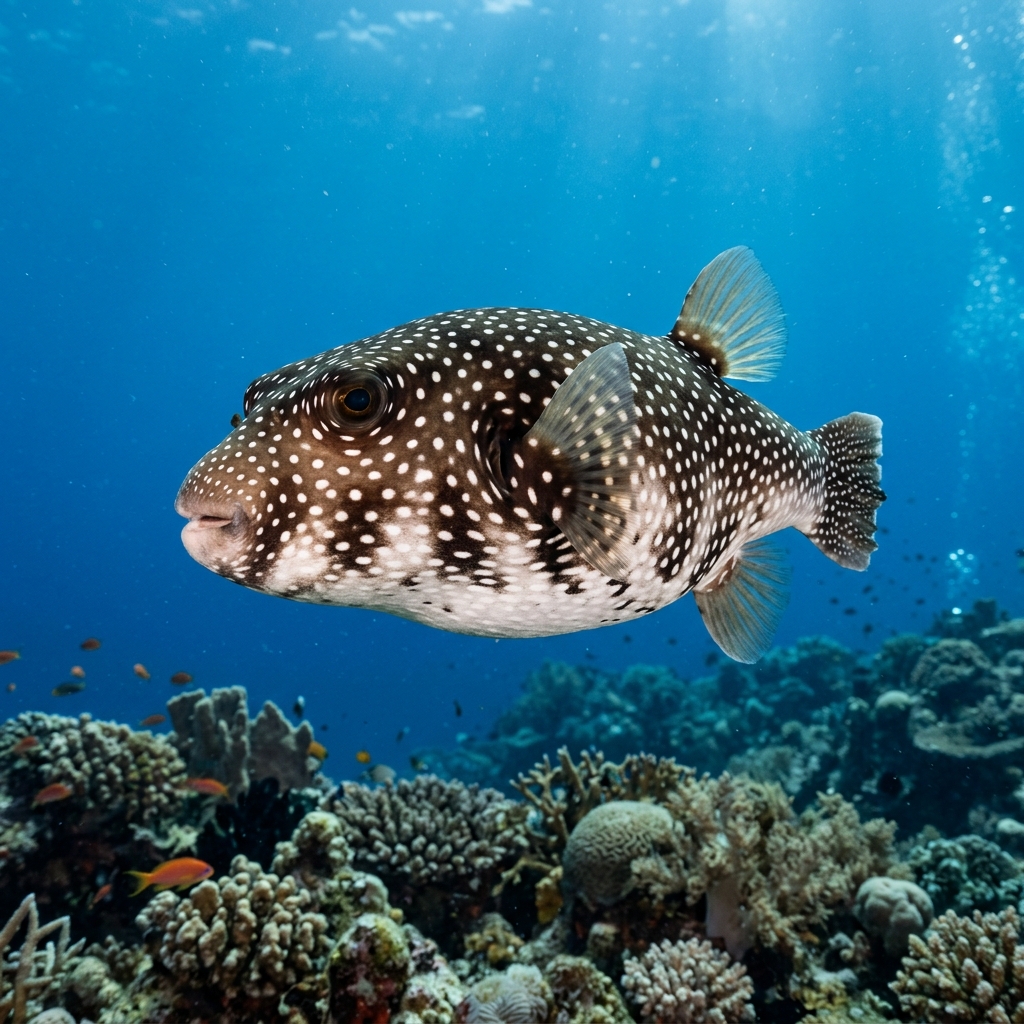
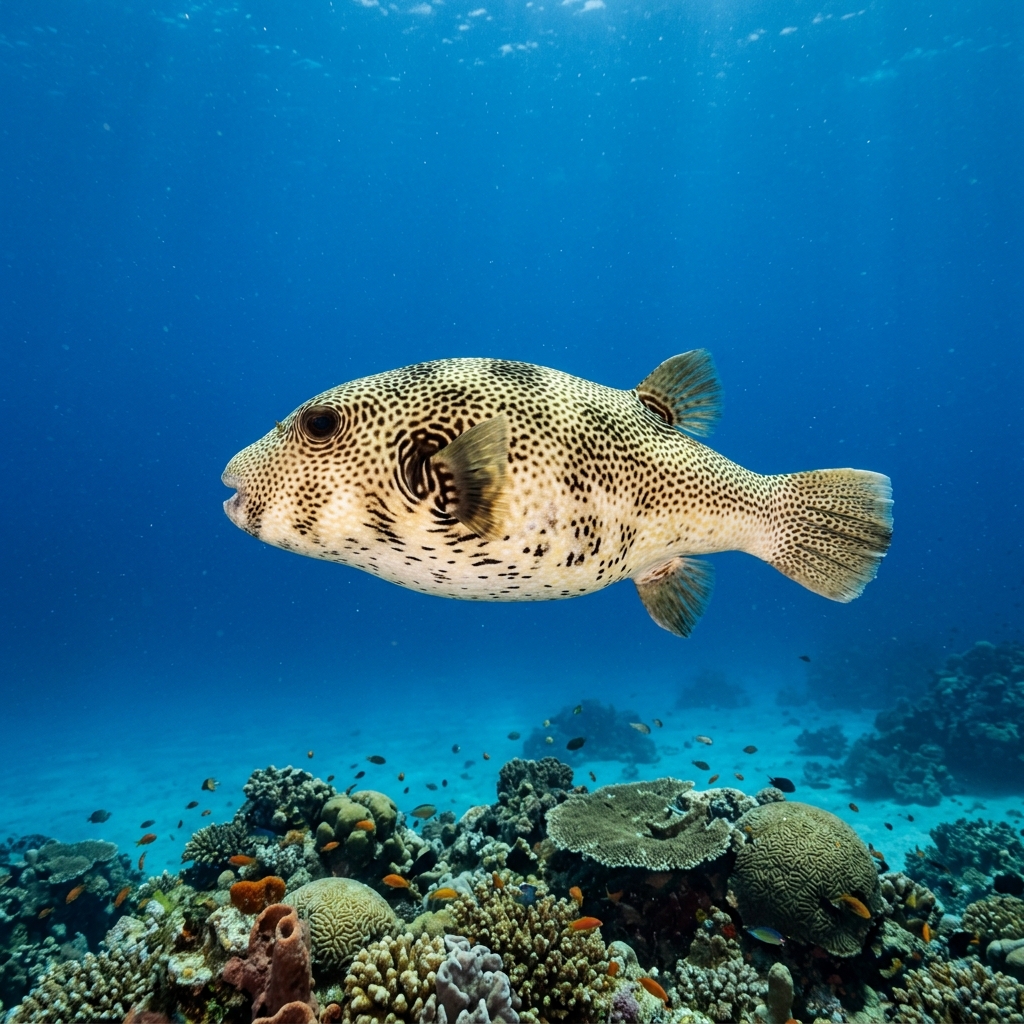
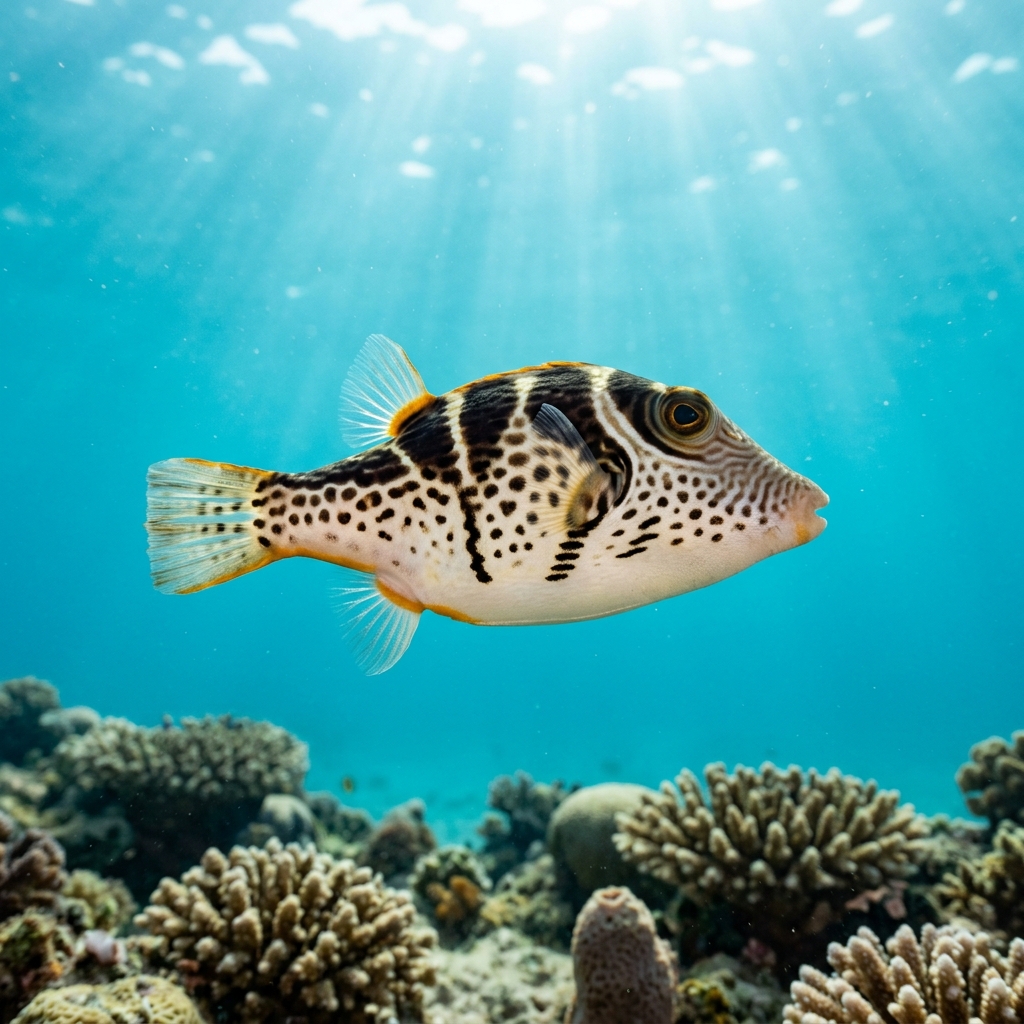
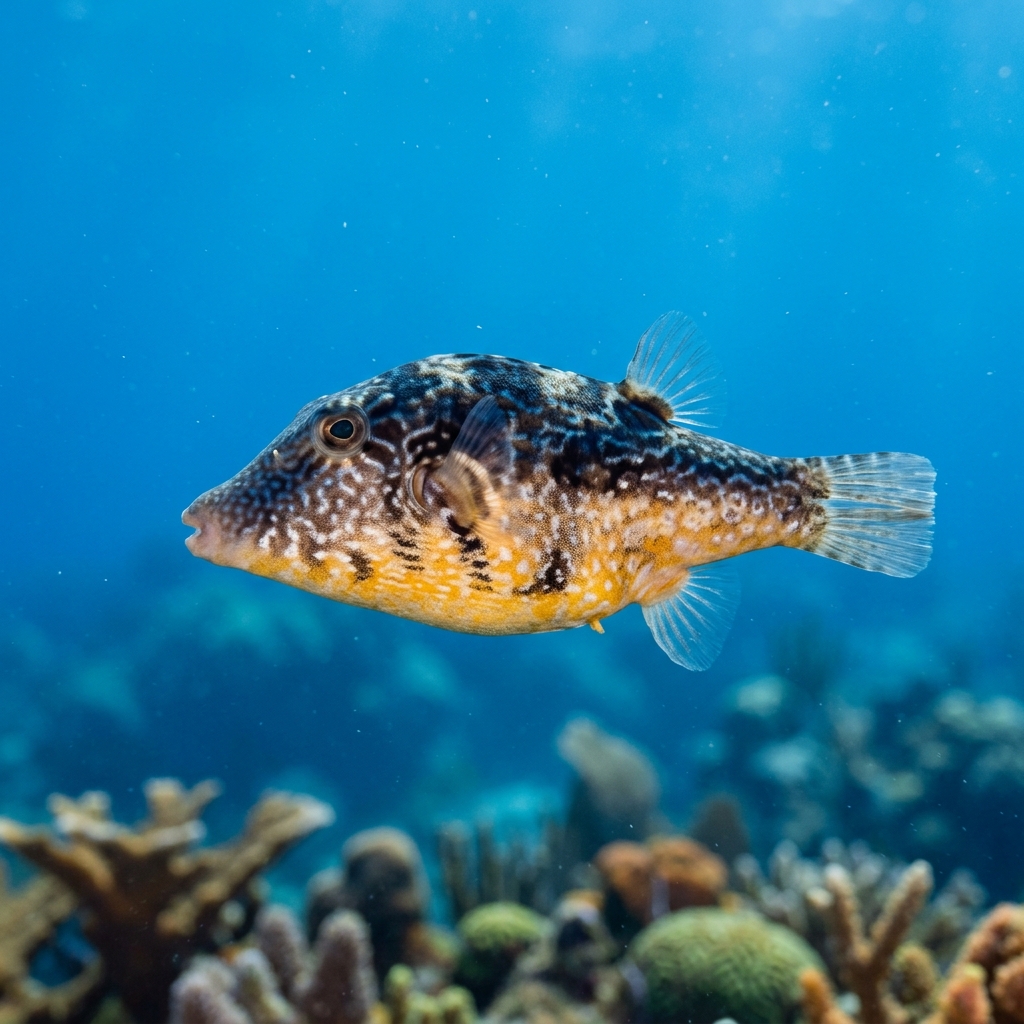
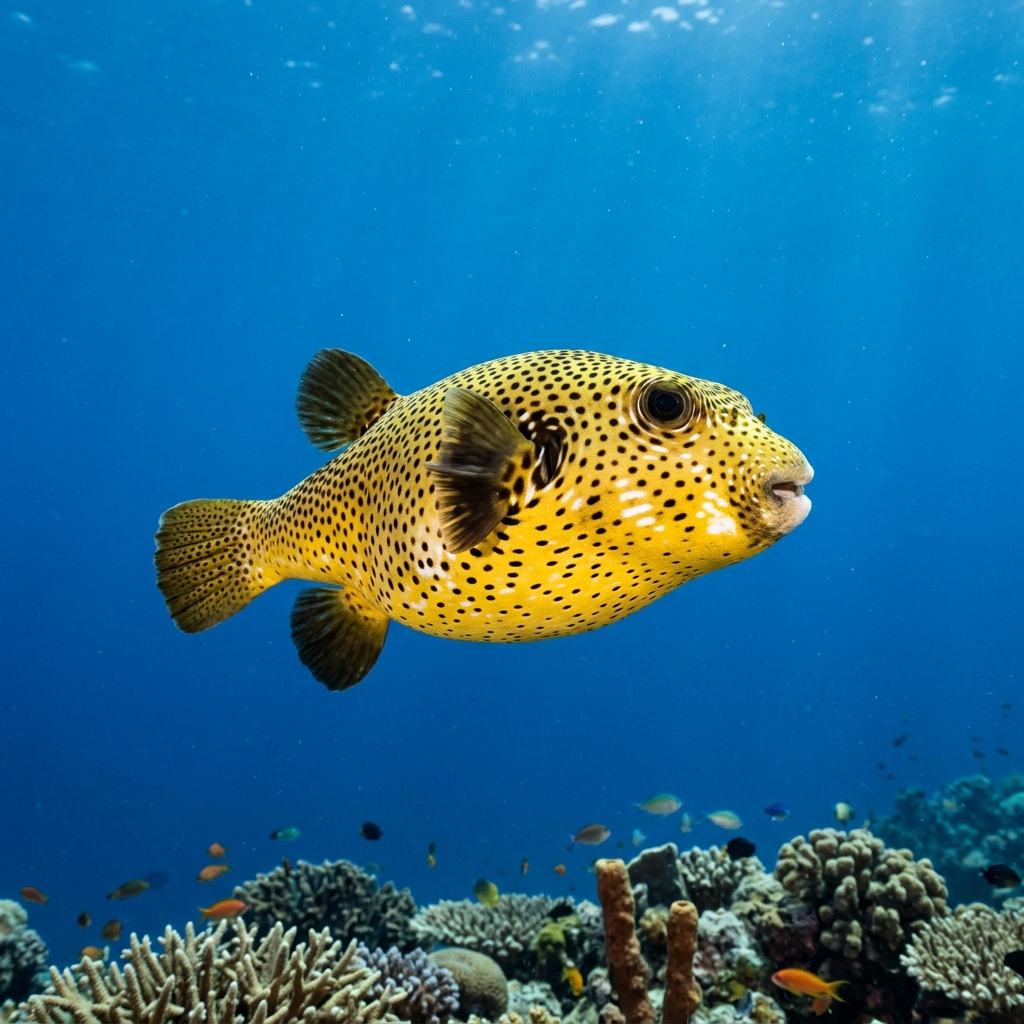
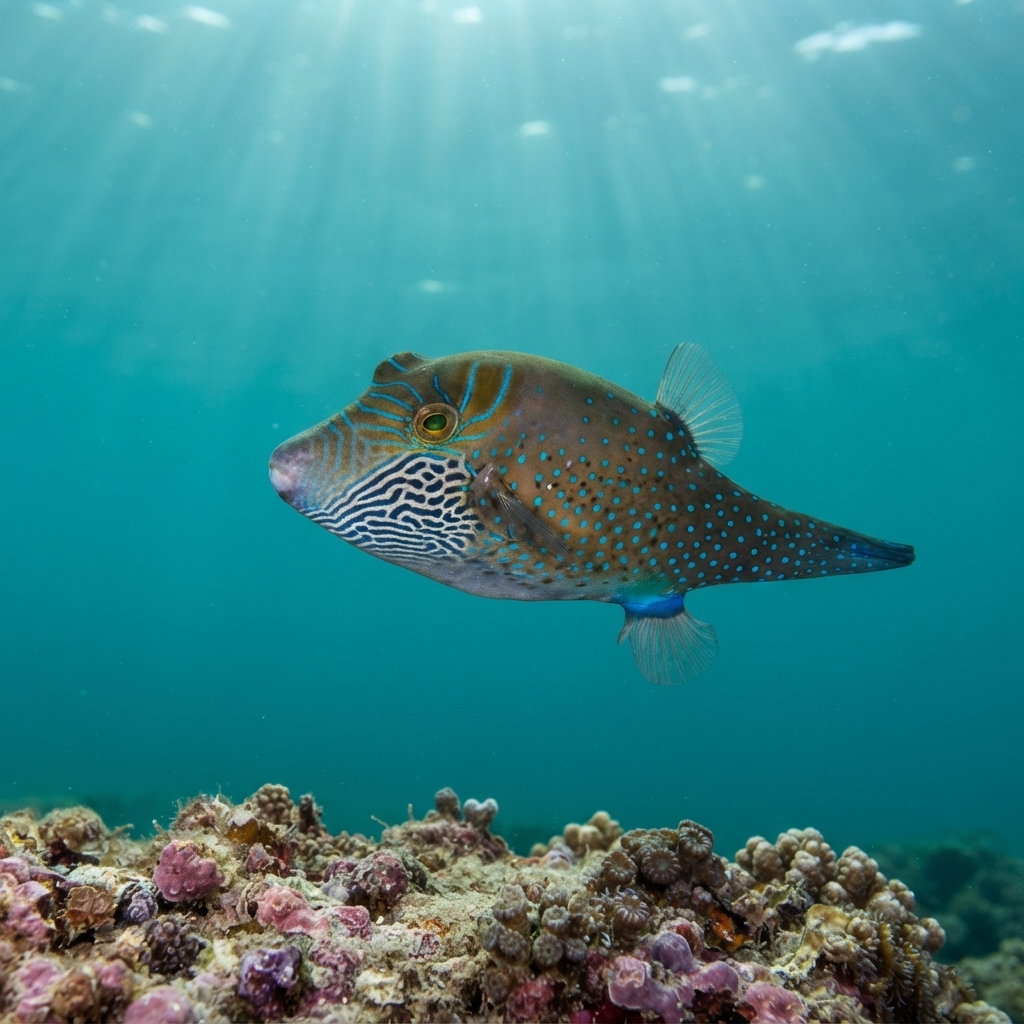
Small and rounded at around 10 cm, with a brownish body covered in fine pale blue lines and spots that concentrate around the eyes and gill area. The eyes themselves often show a bright blue-and-orange ring, which is the easiest tell at a glance. It swims with the slow, hovering paddle-stroke typical of pufferfish, using its dorsal and anal fins rather than a fast tail-beat.
Divers most often find it hovering close to the reef or picking around rubble and coral crevices, browsing on algae and small invertebrates rather than schooling or roaming open water. It's generally unbothered by divers and won't dart off immediately, though it keeps a small buffer and tends to duck toward cover if approached too fast. Most sightings put it at uncommon to common frequency, so it's not a guaranteed tick on every dive but not a rare surprise either.
Like other tobies, it carries tetrodotoxin in its skin and organs as a defence, which is why almost nothing on the reef bothers trying to eat it.
No clear seasonal pattern shows up in the sightings, and its comfort range of roughly 24.7 to 29.2C matches Hawaii's reef temperatures for most of the year, so it's a fair year-round find rather than a seasonal target.
Reef neighbours a diver could mistake it for. Use the identification notes above to tell them apart.
This is very much a Hawaii fish in the logged data, showing up across a large number of sites there and standing as the most reliable place to find it. It has also been recorded on single sites in Réunion (Saint-Paul) and South Africa's KwaZulu-Natal coast, so it turns up well beyond the central Pacific, just far less predictably outside Hawaiian reefs.
Mapping where Ambon Toby is logged…
Hawaii is by far the most consistent place to find it, with sightings logged across many sites there. Isolated records also exist from Réunion and South Africa's KwaZulu-Natal coast, but Hawaiian reefs are the dependable bet.
There's no detected season in the sighting data, and its preferred water temperature of roughly 25 to 29C holds year-round on Hawaiian reefs, so any month is workable.
Look for a small brownish puffer, about 10 cm, with fine pale blue speckling concentrated around the eyes and gill region, plus a distinctive blue-and-orange ring around the eye itself. It hovers and paddles slowly near the reef rather than swimming fast.
They stay small, typically reaching around 10 cm in length, making them an easy fish to overlook unless you're scanning rubble and reef edges closely.
No, they pose no threat to divers and won't approach aggressively. Their toxin is a defence against predators trying to eat them, not a risk from casual contact while diving.
Like other pufferfish, it stores tetrodotoxin in its skin and internal organs, a potent defence that keeps most reef predators from targeting it despite its small size and slow swimming.
Site and sighting data is aggregated from diver logs, iNaturalist and GBIF. For taxonomy and conservation status:
Valentini Pufferfish
2,830 sites