Pycnochromis amboinensis
Small blue-grey damselfish forming loose clouds over Visayas reefs at 26-29C, year-round and reliably uncommon to common.
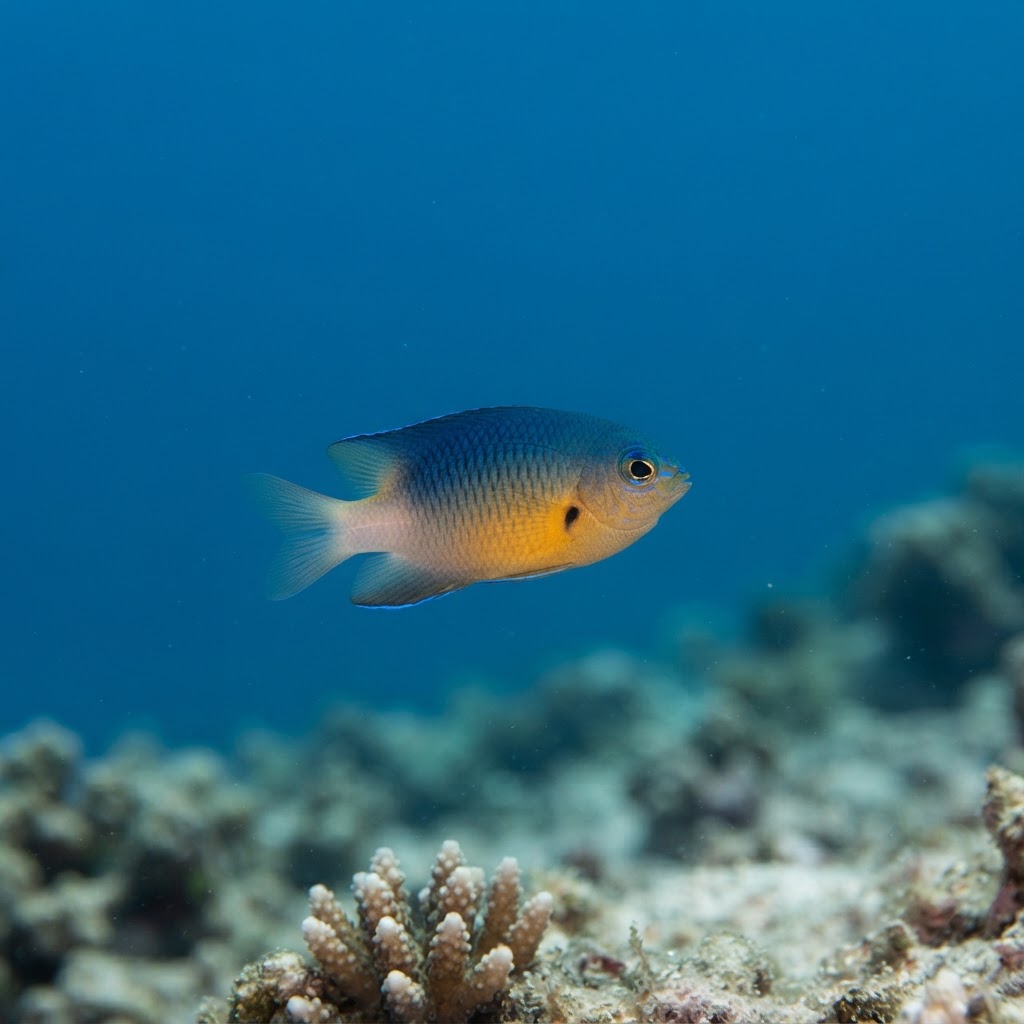
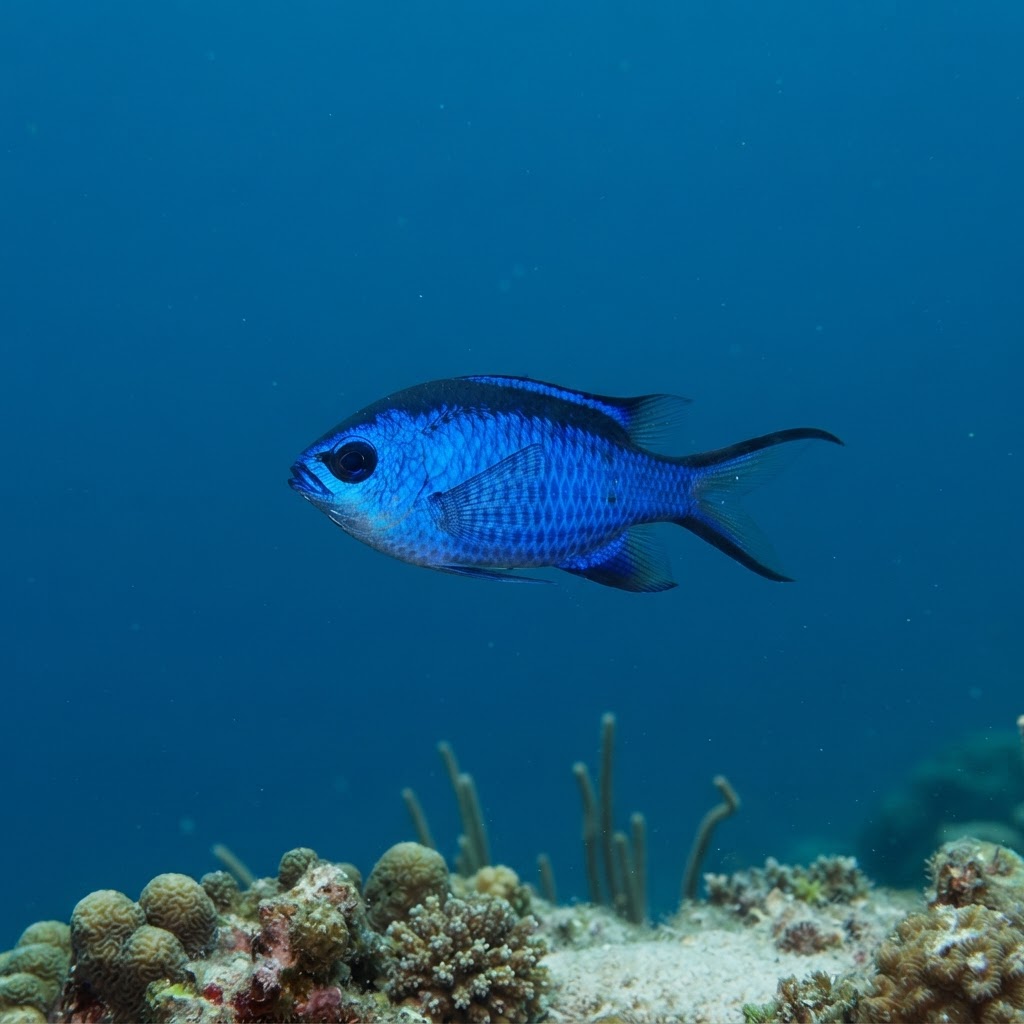
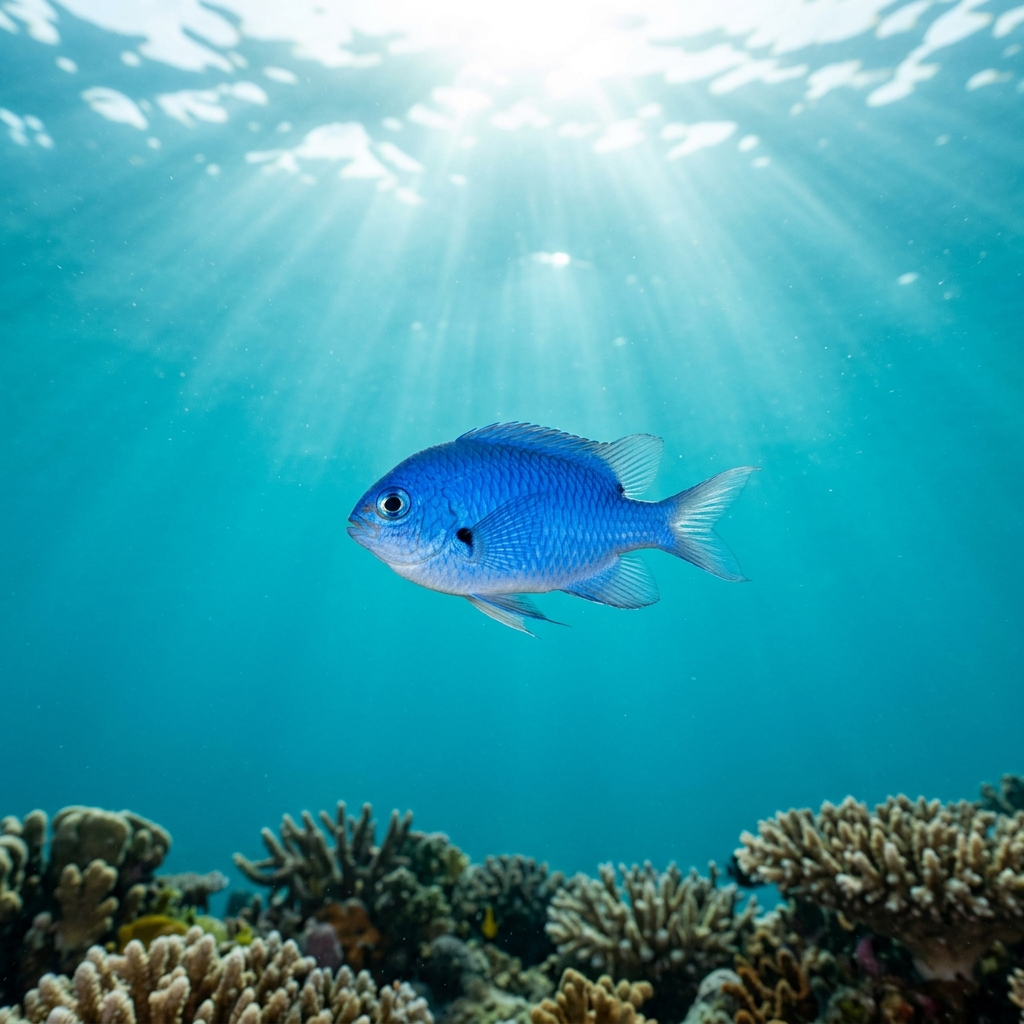
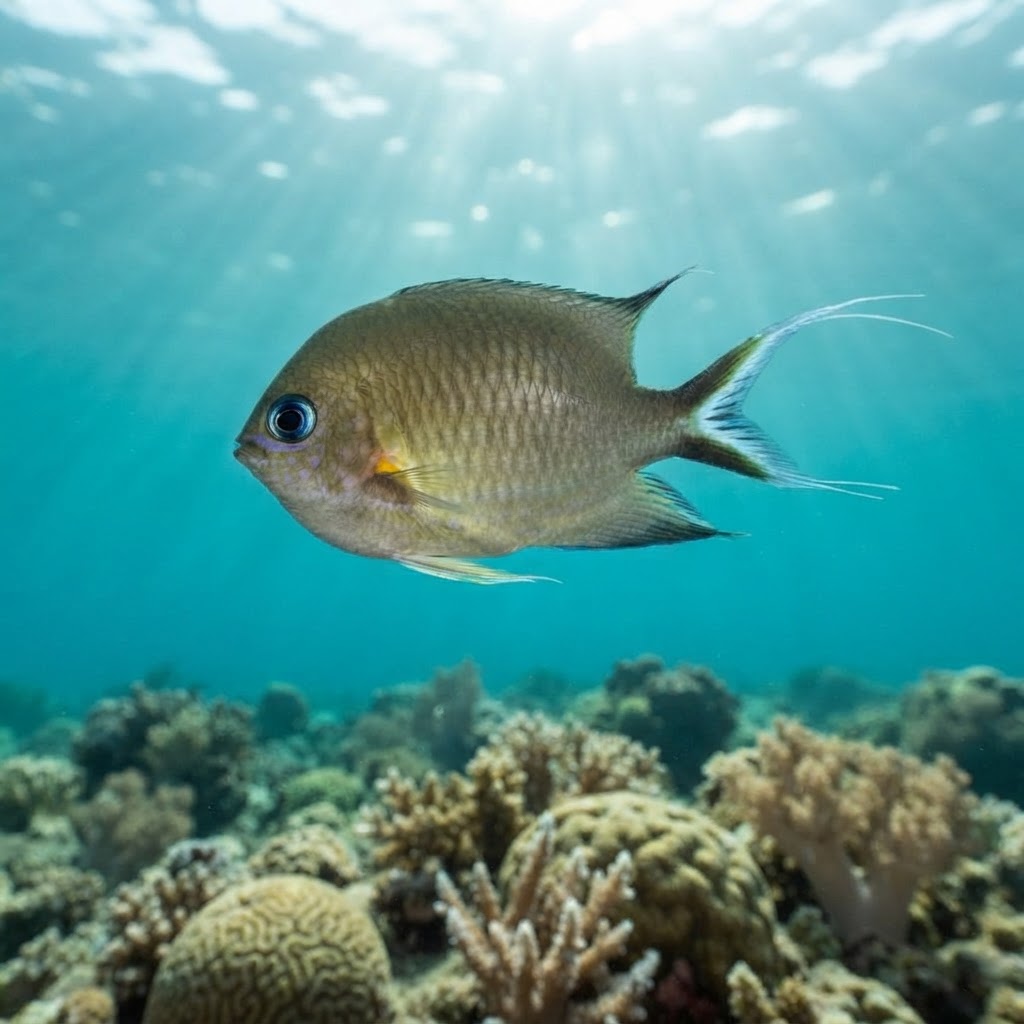
A small, slender damselfish around 7 cm, with a pale grey-blue body that shades darker along the back and a faint dusky smudge near the rear of the dorsal fin. The tail is lightly forked and the fins are mostly translucent, giving it a washed-out look compared to the punchier blues and yellows of other reef damsels. It usually appears in loose groups hovering just off the reef rather than as a single distinctive-looking fish, so the plain colouring and schooling posture are the main clues.
Divers typically find it hovering in loose, drifting groups a metre or two above coral heads and rubble patches, picking at plankton in the water column. It holds its position over the reef rather than darting for cover, and while it is not bold around divers it rarely bolts either, just easing back into the group if you get close. Most sightings come from shallow to mid-depth reef slopes where current brings a steady feed of plankton past the coral.
It feeds mainly on drifting plankton picked straight out of the water column, which is why you find it hanging in midwater over the reef rather than grazing algae or picking at coral like many of its damselfish relatives.
Recorded year-round with no strong seasonal pattern, which fits its comfort range of 26 to 28.9C on tropical reefs that stay warm all year. Plan around the diving conditions at your chosen site rather than a particular month.
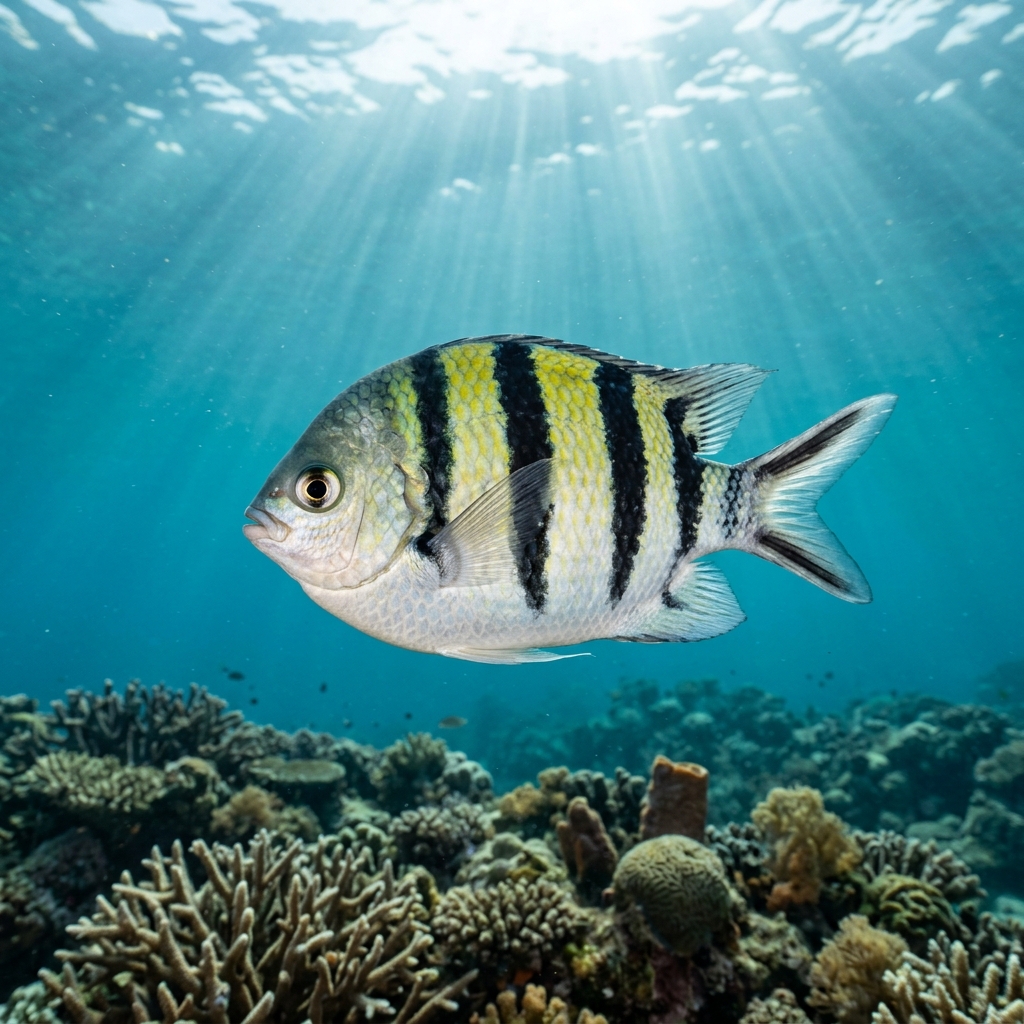
Reef neighbours a diver could mistake it for. Use the identification notes above to tell them apart.
This species turns up most reliably across the Visayas in the Philippines, where it accounts for the bulk of logged sightings, with further records from Sulawesi and Raja Ampat in Indonesia. Smaller but consistent numbers come from Dili in Timor-Leste, Milne Bay in Papua New Guinea, and Tumon Bay and the North Coast of Guam.
Mapping where Ambon Chromis is logged…
The most reliable region is the Visayas in the Philippines, where it turns up at far more sites than anywhere else. It is also logged in Sulawesi and Raja Ampat in Indonesia, Dili in Timor-Leste, Milne Bay in Papua New Guinea, and Guam.
There is no strong season in the data, so it is seen year-round. It sticks to warm reef water between roughly 26 and 29C, which holds steady across the year at most of its tropical sites.
Look for a small, pale blue-grey damselfish around 7 cm long, hovering in loose groups just off the reef. It lacks bold stripes or bright patches, so the plain colouring plus the drifting, midwater schooling habit are the main giveaways.
They stay small, reaching around 7 cm in length, typical for a reef damselfish. You are more likely to notice the group than any single fish.
No, they pose no threat to divers. They are small plankton feeders that keep their distance and have no venomous spines or aggressive territorial behaviour worth worrying about.
Site and sighting data is aggregated from diver logs, iNaturalist and GBIF. For taxonomy and conservation status:
Dascyllus
3,697 sites