Alopias pelagicus
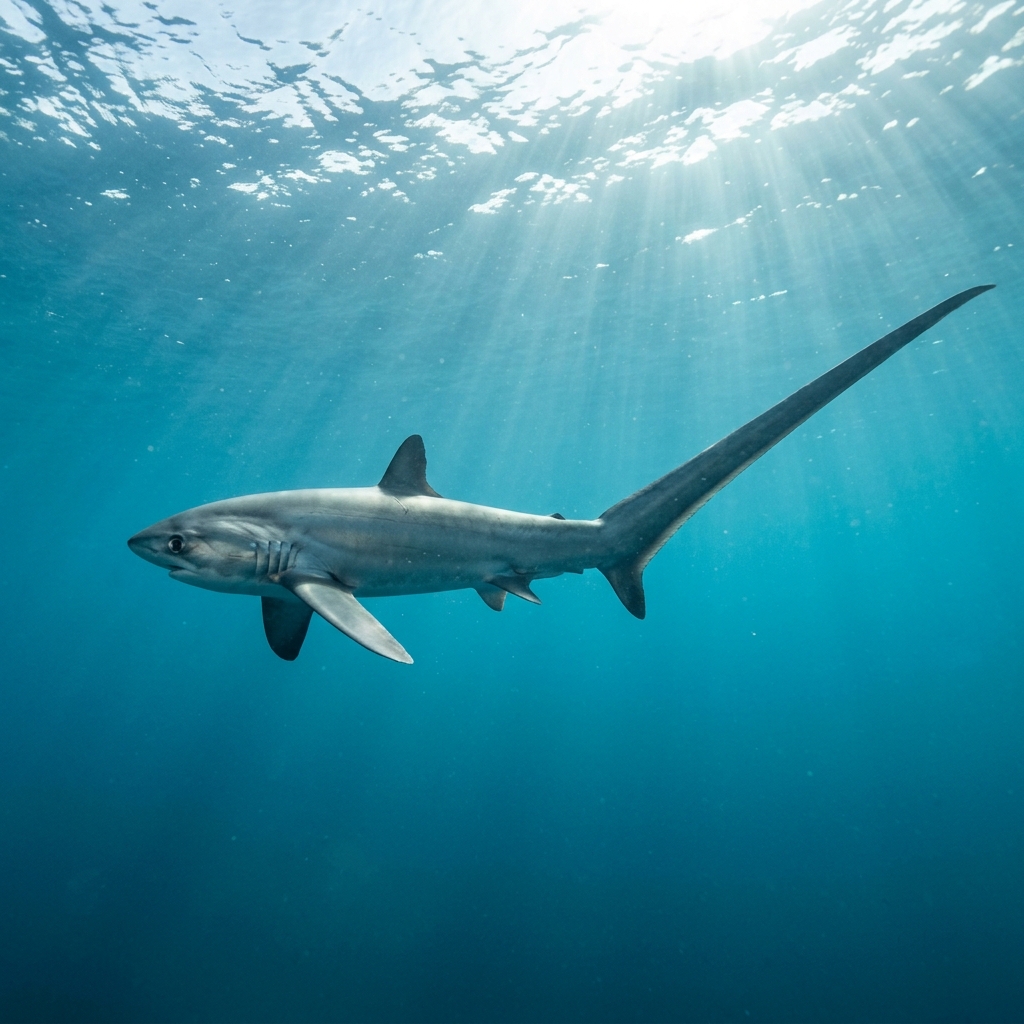
Spot the pelagic thresher shark by its extraordinarily long tail fin. Observed in warm tropical waters around 27-29°C. Here's what divers need to know.
That upper tail lobe is the giveaway: it is roughly as long as the rest of the body, giving the pelagic thresher an unmistakable silhouette no other shark shares. The body is slender and dark grey-blue on top, with a white underside that does not extend over the pectoral fin bases (unlike the closely related common thresher). The head is short and conical, and the eyes are large relative to the skull. In warm, clear pelagic water it often appears almost uniform dark above when viewed from the side.
Pelagic threshers are open-water hunters, most commonly encountered at cleaning stations or in the upper water column rather than on the reef itself. They are generally wary of divers and tend to circle at a distance or move away when approached. The long tail is not just for show: they use it to herd and stun schooling fish with a whip-like strike, a behaviour occasionally witnessed by divers lucky enough to be in the right place.
The tail-slap hunting technique is one of the few confirmed examples of a shark using a body part other than its jaws as a primary weapon to stun prey before eating it.
Seasonality data is insufficient to identify a peak window, so no specific season can be recommended. The observed temperature range of 27 to 29.5°C suggests it favours consistently warm tropical waters year-round.
Reef neighbours a diver could mistake it for. Use the identification notes above to tell them apart.
No verified diver sighting locations are recorded in Fin's database yet for this species, so no specific sites or countries can be recommended. Known biology places it in warm Indo-Pacific and eastern Pacific waters, consistent with the observed sighting temperature range of 27 to 29.5°C, but divers should check current local reports before planning a trip specifically for this animal.
Mapping where Pelagic Thresher Shark is logged…
The elongated upper tail fin, roughly equal in length to the rest of the body, makes this shark unmistakable once you know what to look for. The body is slender and dark grey-blue above, white below, with a short conical snout and notably large eyes. No other shark you are likely to encounter shares that extreme tail proportions.
No. Fox sharks are not considered dangerous to divers. They are typically shy and will move away when approached. The long tail is used to stun fish prey, not as a threat display toward large animals.
Adults typically reach around 3 metres in total length, with a substantial portion of that being the elongated upper tail lobe. They are slender sharks, so despite their length they appear lighter and less bulky than many other open-water species of a similar size.
Yes, the fox shark is listed as Endangered by the IUCN. It is highly susceptible to bycatch in pelagic longline fisheries and has a slow reproductive rate that limits population recovery. Logging verified sightings and supporting responsible fisheries practices are practical things divers can do.
They use their extraordinarily long upper tail fin as a whip to stun or kill schooling fish before eating them. This tail-slapping strike has been filmed and studied, and it is one of the most distinctive feeding techniques documented in any shark species.
The Pelagic Thresher Shark is listed as endangered by the IUCN. Observe from a distance, avoid touching or feeding it, and report sightings to local marine research organisations.
Listed as Endangered on the IUCN Red List, this species faces serious pressure from bycatch in longline fisheries targeting tuna and swordfish. If you encounter one, log your sighting with as much detail as possible, as citizen-science records help researchers track population trends.
Site and sighting data is aggregated from diver logs, iNaturalist and GBIF. For taxonomy and conservation status:
Tiger Shark
1,616 sites