Cephalopholis taeniops
Reddish-orange grouper seen year-round in São Vicente and Sal, Cape Verde, in cool 16-21C water. Here's how to spot one.
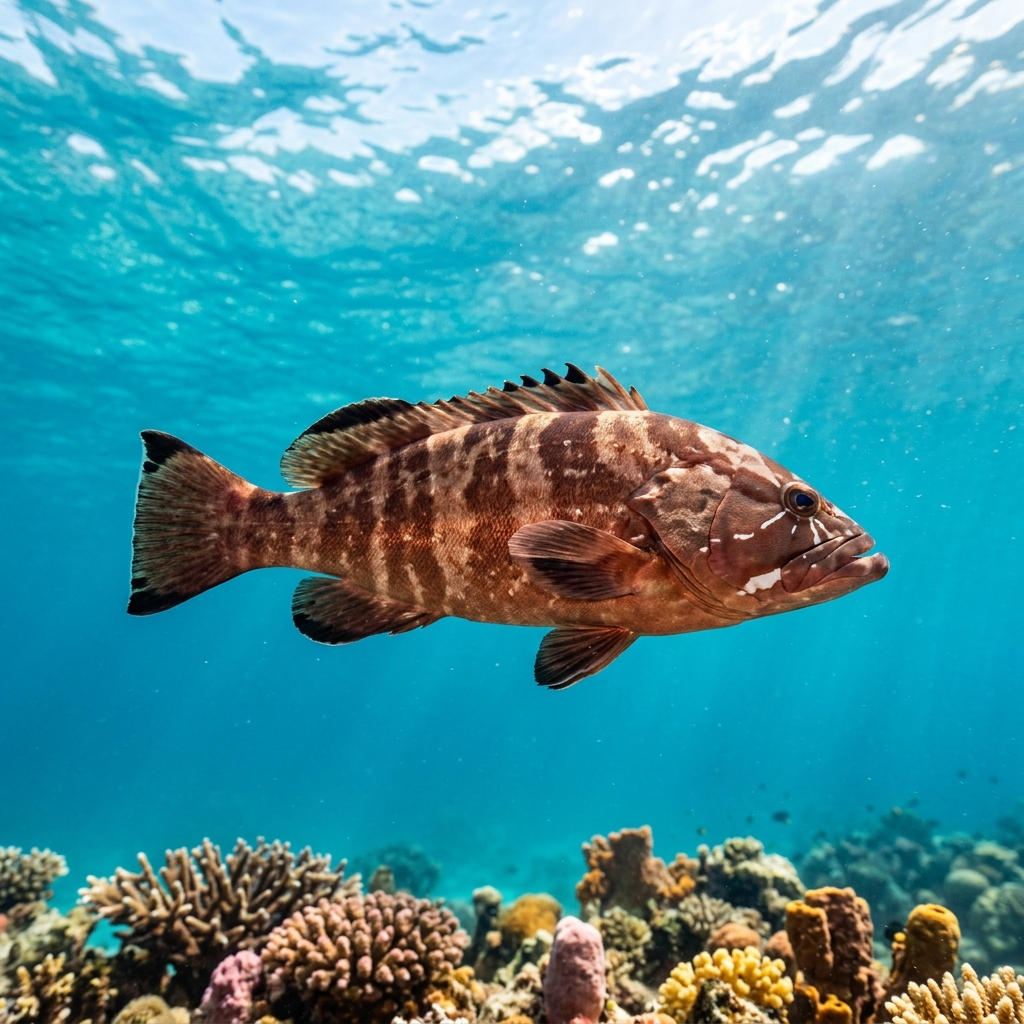
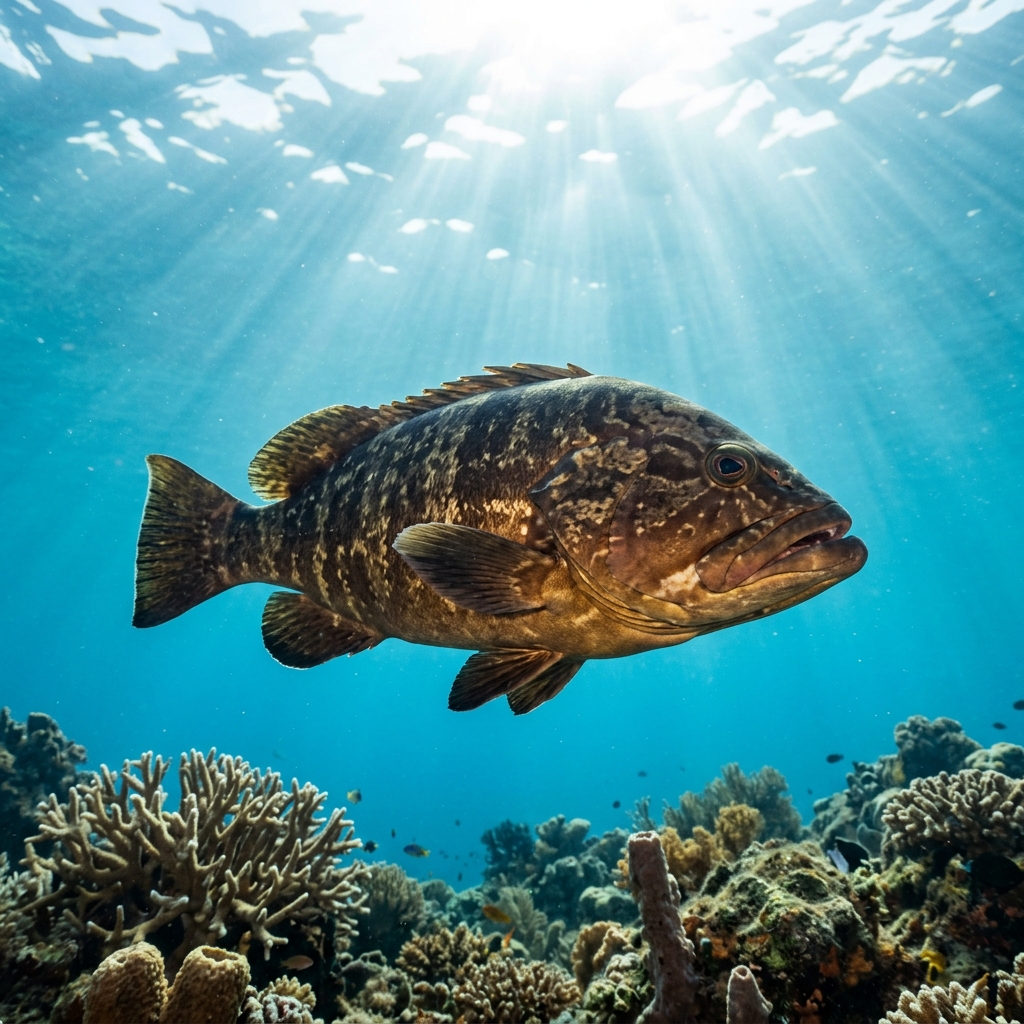
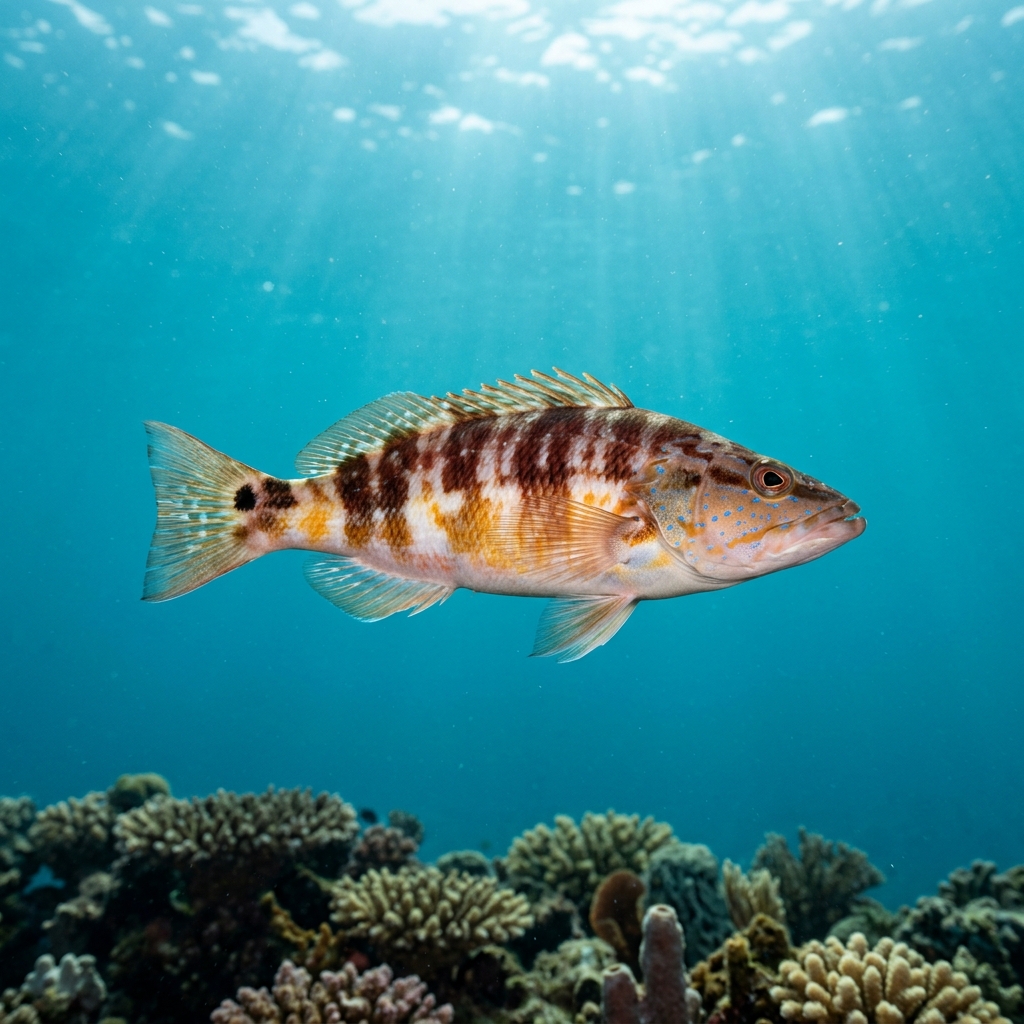
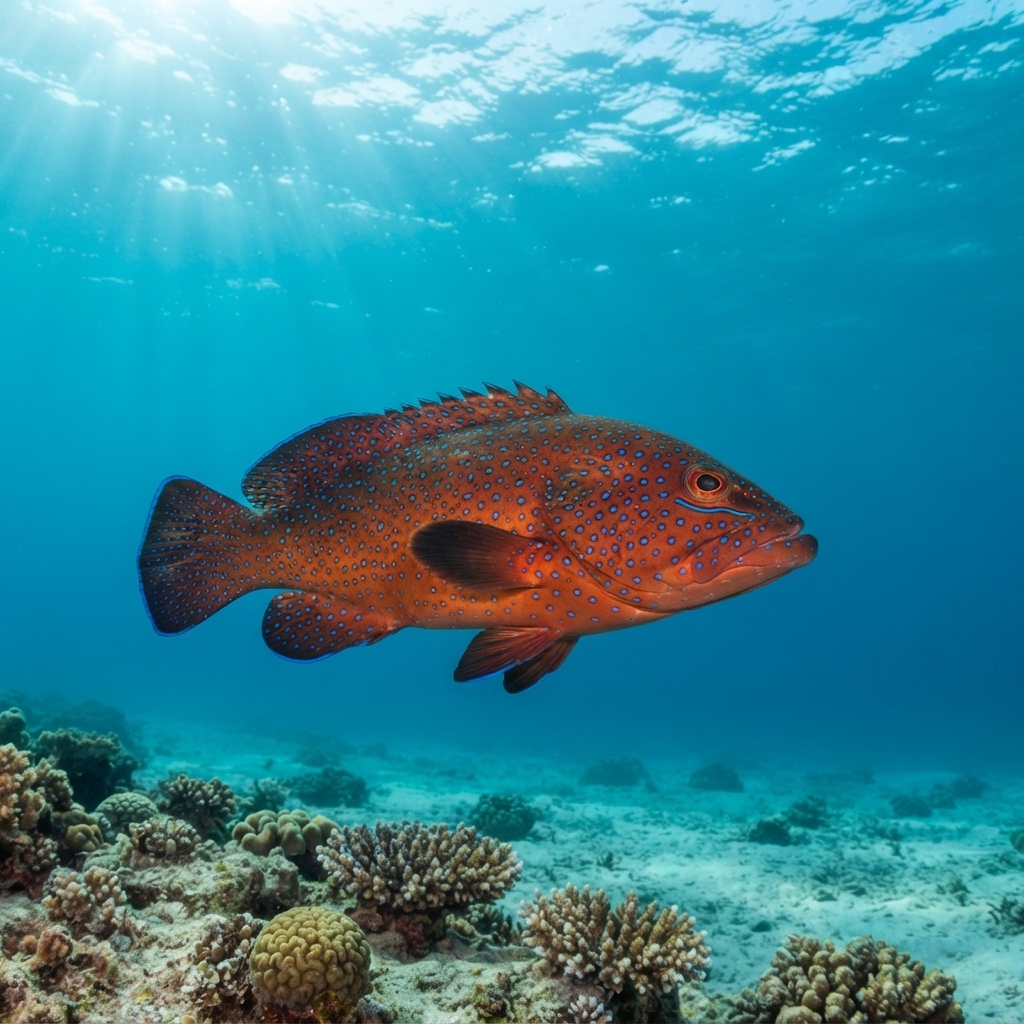
Stocky, compact grouper body reaching about 49 cm, coloured a warm reddish-orange to brick red with scattered pale blue or whitish spots across the head and flanks. It has the typical hind/grouper profile: a heavy-set body, large mouth, and rounded fins, often seen hovering close to rock or reef structure rather than out in open water. The blue spotting against the reddish base is the main giveaway underwater, distinguishing it from plainer reddish reef fish.
Divers typically find it holding station close to rocky ledges and reef crevices, often alone or loosely spaced from others of its kind rather than schooling. It tends to sit still or hover near cover, watching divers pass rather than fleeing, which makes it an easy fish to approach slowly for a photo. Most logs describe it as an uncommon but steady sighting rather than something you have to search hard for on these reefs.
Like many groupers in the hind group, it is a sit-and-wait predator, relying on ambush from rocky cover to take small fish and crustaceans rather than chasing prey in open water.
Sightings are spread across the year with no clear seasonal peak, and the species sits comfortably in the cooler 15.8 to 20.7C water typical of these eastern Atlantic sites year-round, so any month is a reasonable bet.
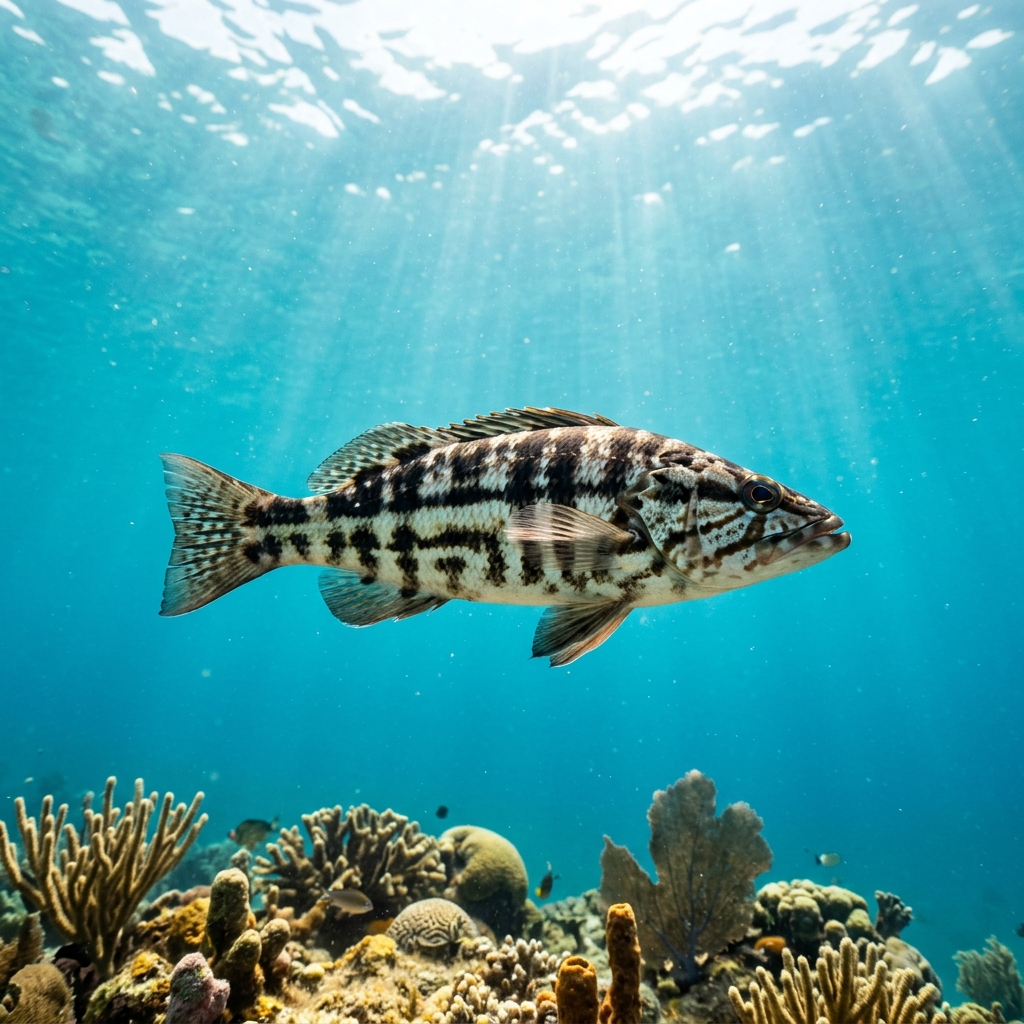
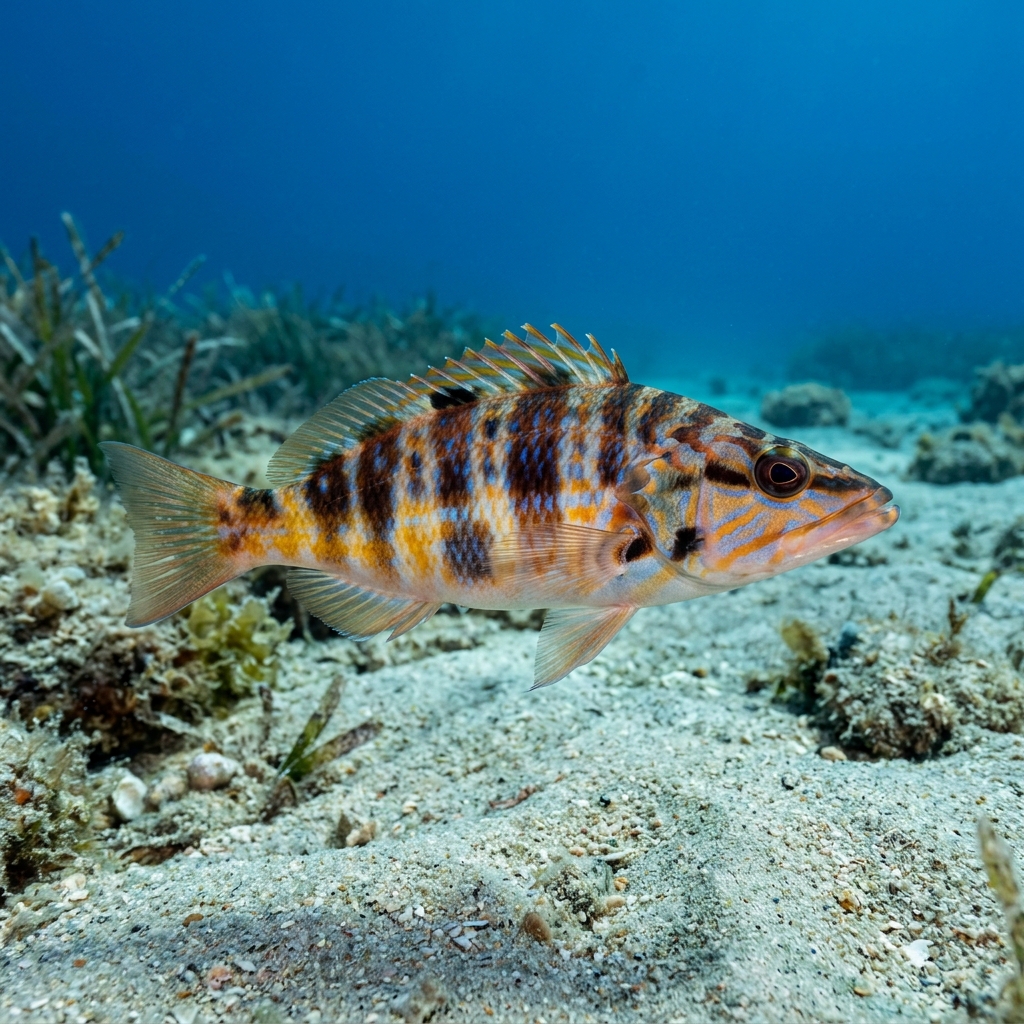
Reef neighbours a diver could mistake it for. Use the identification notes above to tell them apart.
This is very much a Cape Verde fish first, most reliably logged around São Vicente and Sal, with further sightings in Santiago and Santo Antão. Outside Cape Verde it turns up along the Senegal coast near Dakar, and in smaller numbers around La Palma in the Canary Islands.
Mapping where African Hind is logged…
Cape Verde is the stronghold, especially around São Vicente and Sal, with more sites in Santiago and Santo Antão. It also shows up along the Senegal coast near Dakar and around La Palma in the Canary Islands.
There's no strong season in the data, it's logged fairly evenly through the year in water between about 16 and 21C, so you can plan around other priorities for your trip.
Look for a stocky, reddish-orange grouper around 49 cm with pale blue spots scattered over its head and body, usually parked close to rock or reef cover rather than swimming in open water.
They typically reach around 49 cm in length, making them a mid-sized grouper rather than one of the giants in the family.
No, they pose no threat to divers and are generally approachable, often holding still near cover as divers pass by.
Site and sighting data is aggregated from diver logs, iNaturalist and GBIF. For taxonomy and conservation status:
Blacktip Grouper
2,726 sites