Cheilinus abudjubbe
A small Red Sea wrasse logged across South Sinai and Aqaba, comfortable in 25-29C water and seen year-round on the reef.
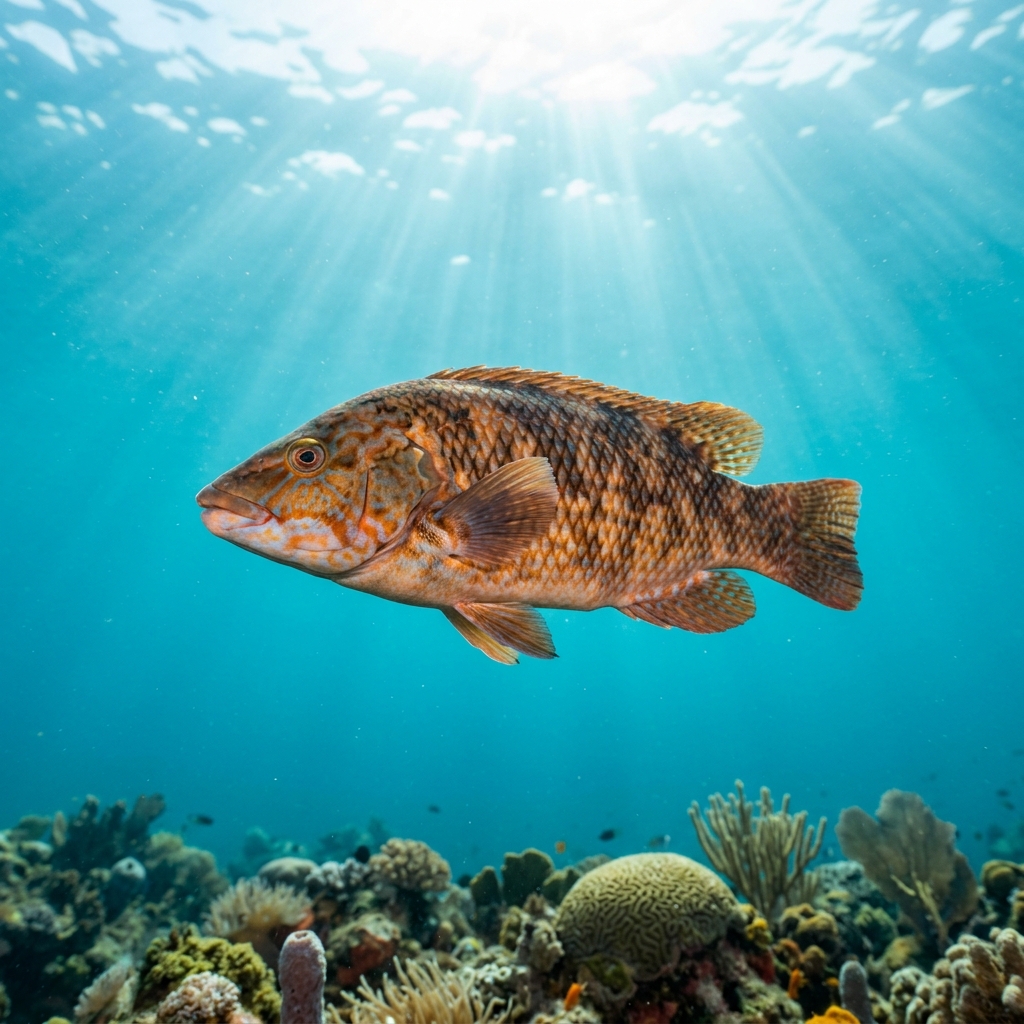
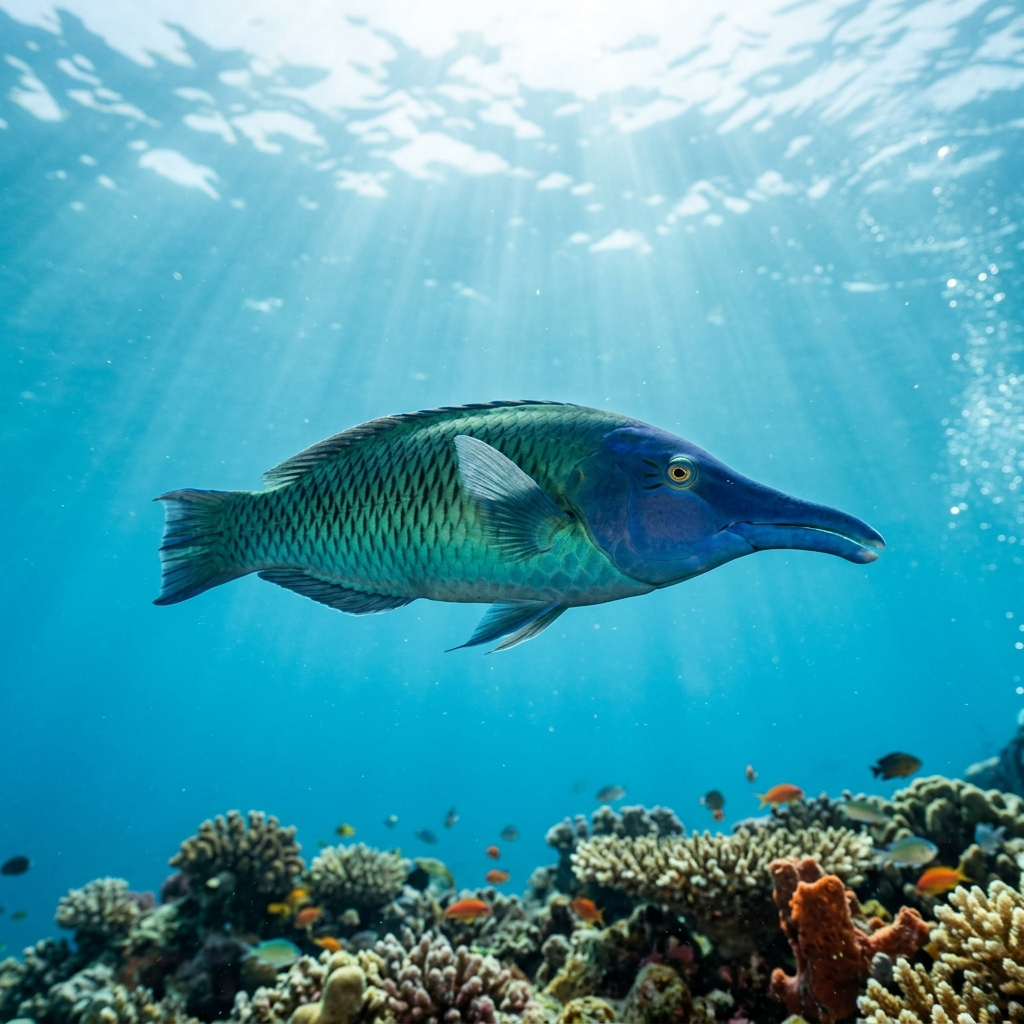
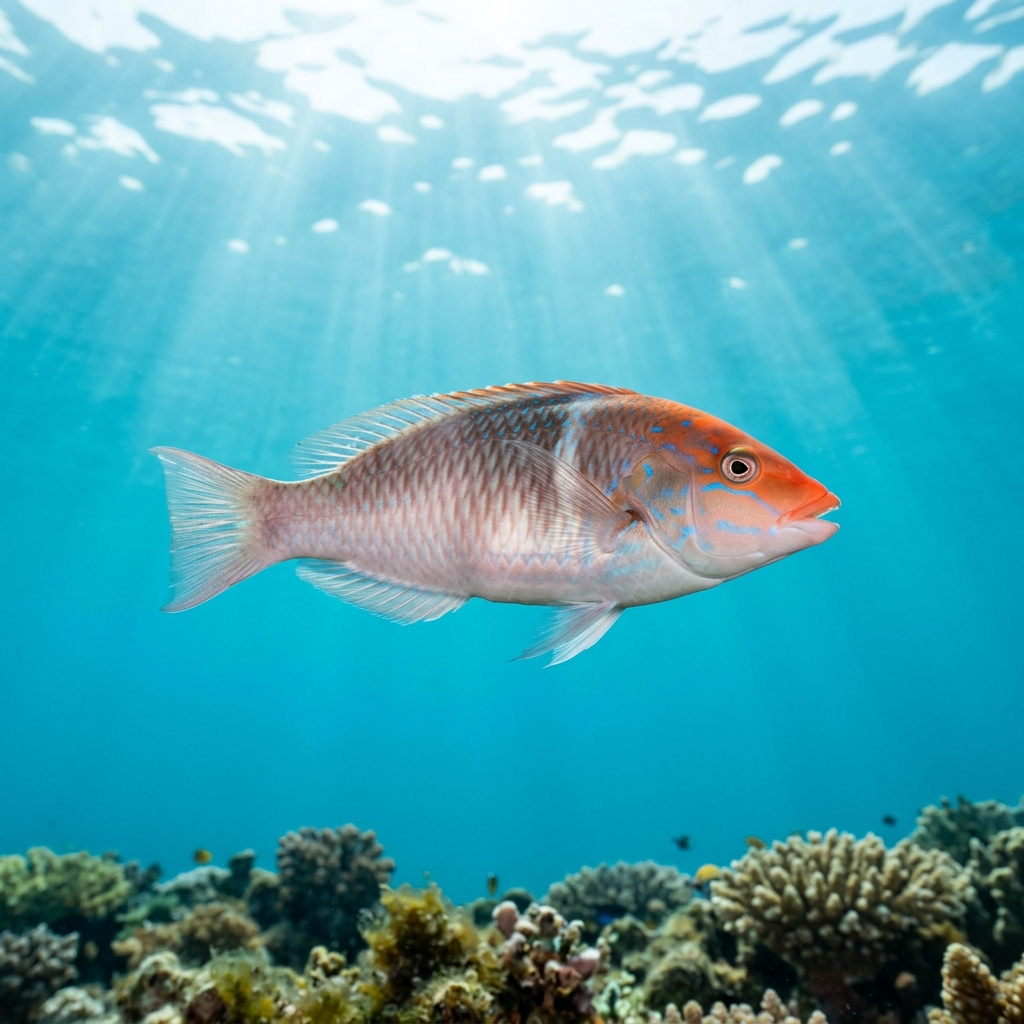
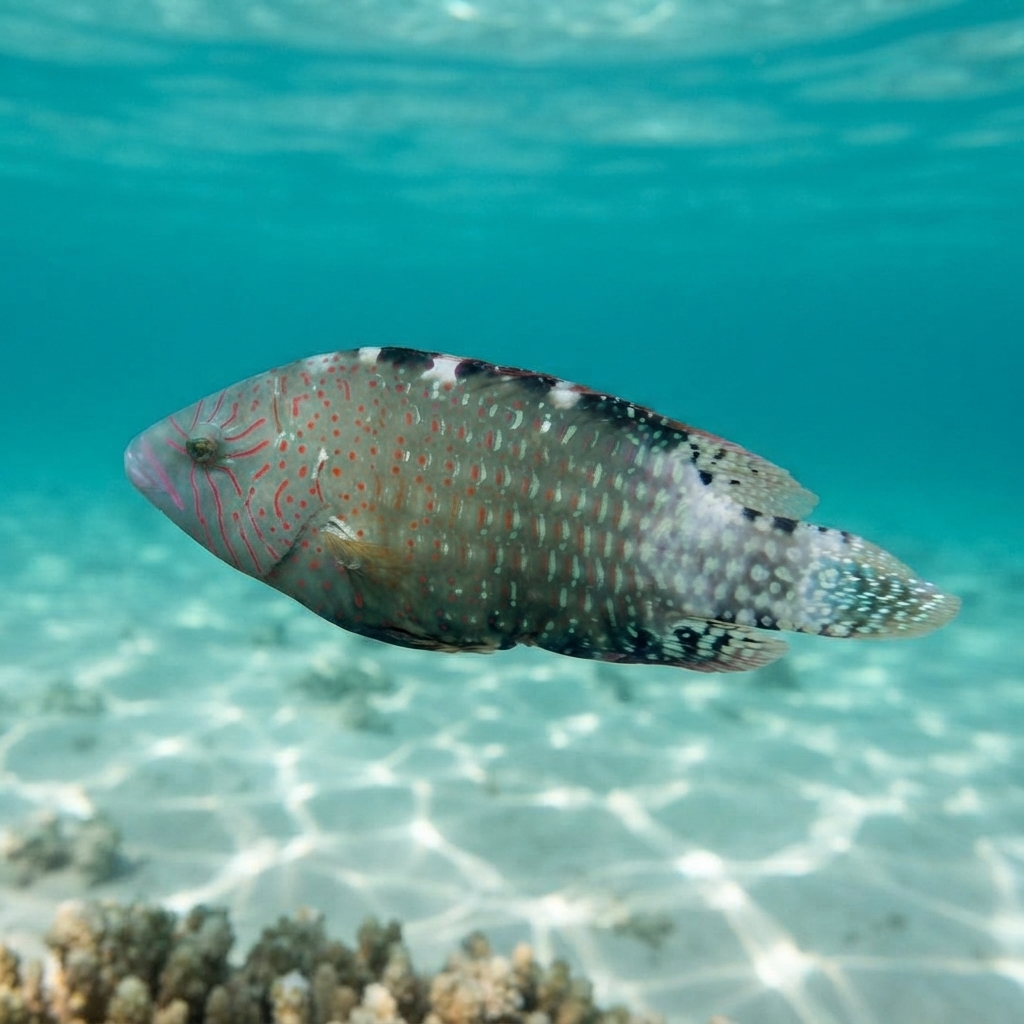
A compact, deep-bodied wrasse that tops out around 15 cm, so it reads as a modest reef fish rather than a showpiece. Look for a mottled reddish-brown to olive body with a blunt head and thick lips, typical of the larger wrasses in its genus. It moves with the slow, deliberate pecking action of a fish working the reef surface for food rather than cruising open water.
Divers most often find it working low over the reef, picking at the substrate rather than schooling or patrolling in open water. It is generally unbothered by divers at a normal distance, holding its ground or drifting off at an easy pace rather than bolting. Most sightings come from reef flats and slopes rather than deep drop-offs or wrecks.
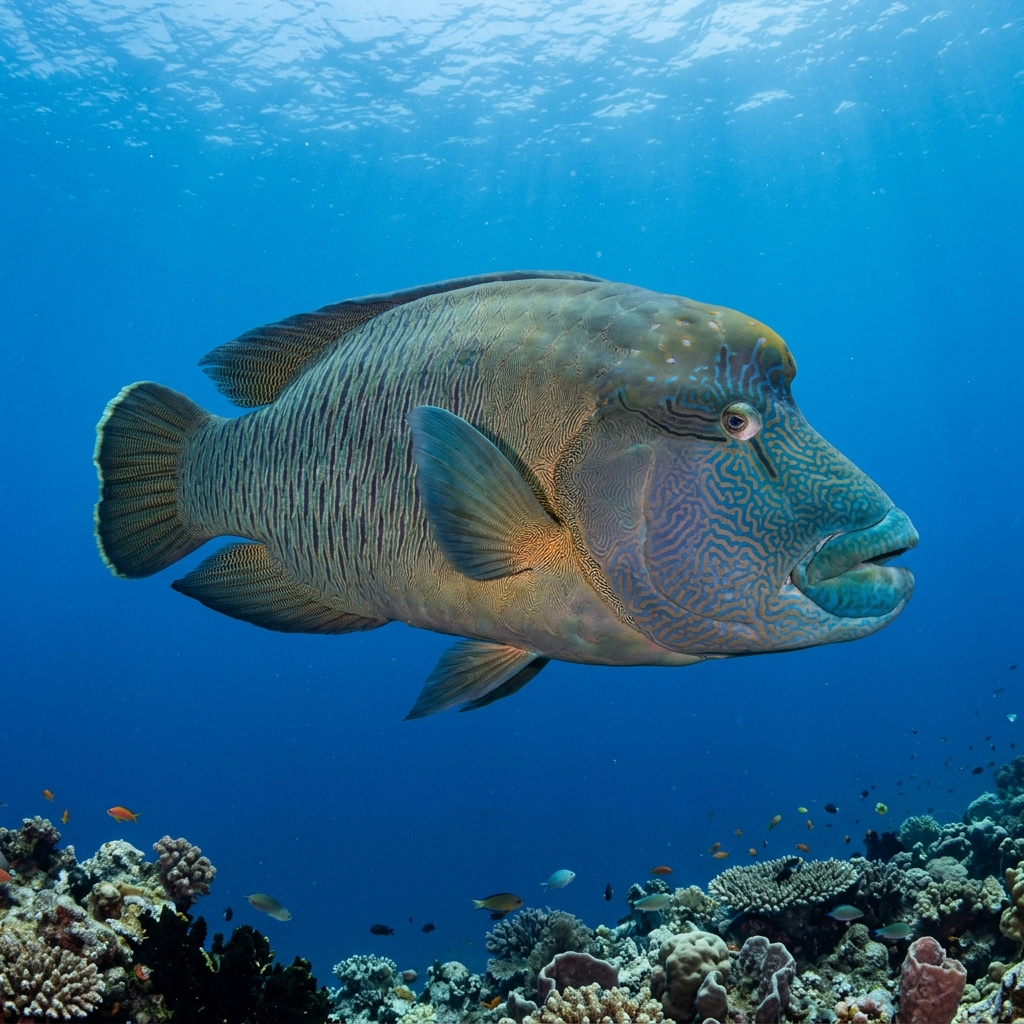
It belongs to the same genus as the Napoleon Wrasse but stays small and reef-bound its whole life, never approaching the scale or bulk that makes its famous relative a signature Red Sea encounter.
Sightings run year-round, with no strong seasonal pattern detected in the data. It sits comfortably in water from about 25 to 29 C, which covers Red Sea conditions for most of the year, so timing your trip around this fish specifically is not necessary.
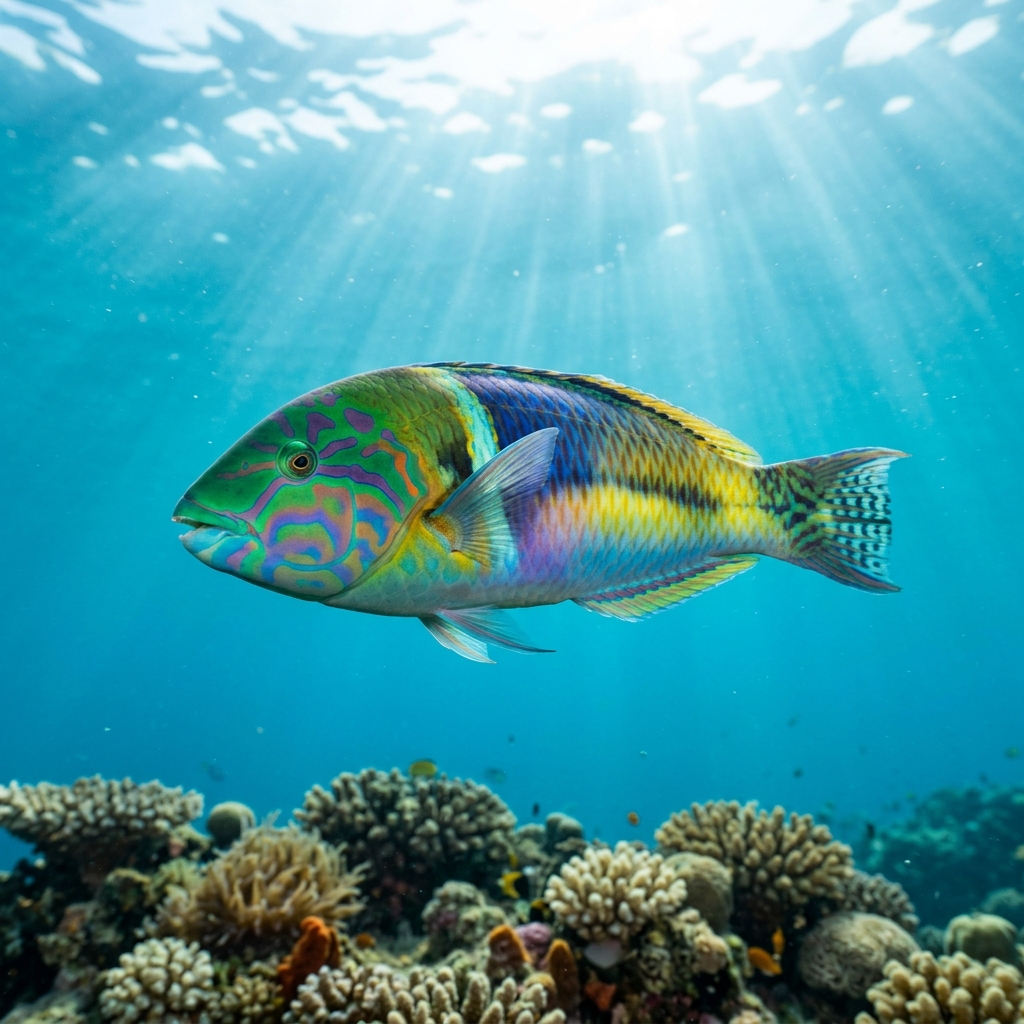
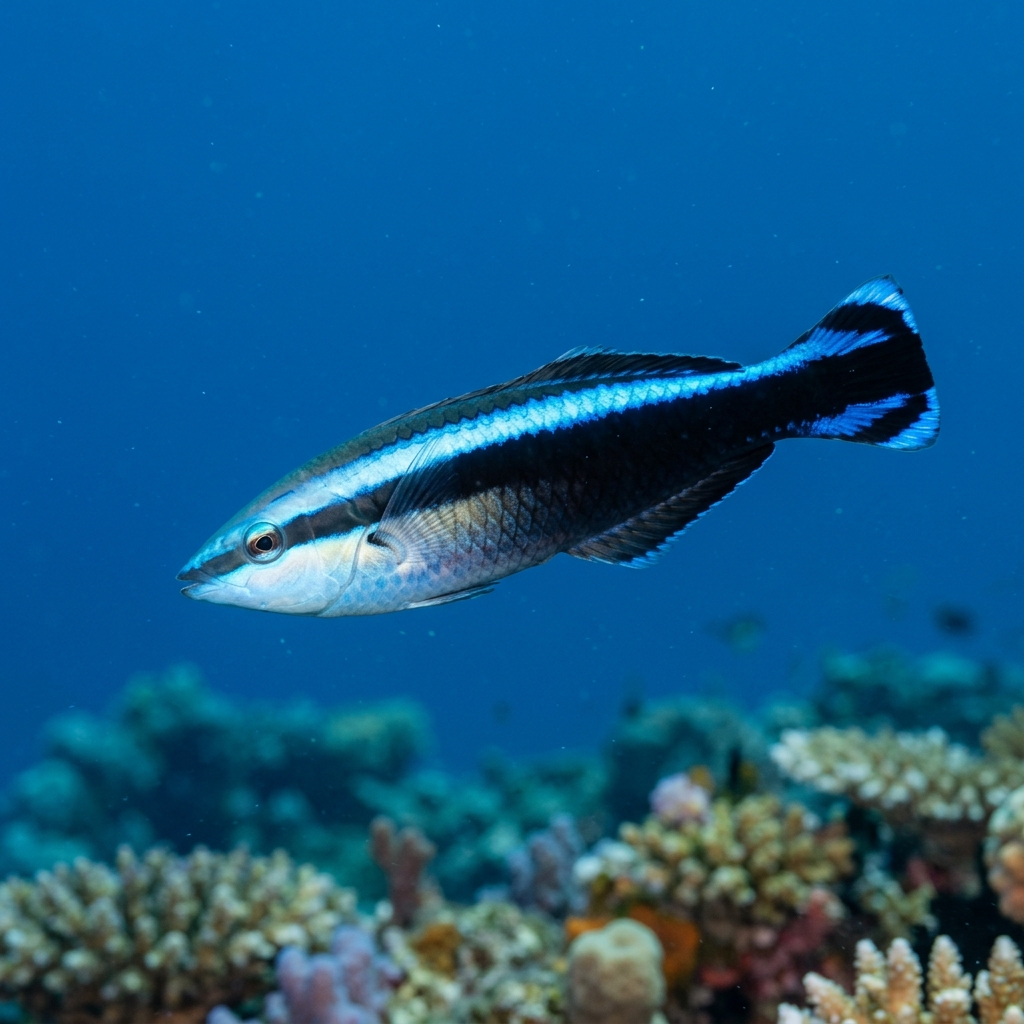
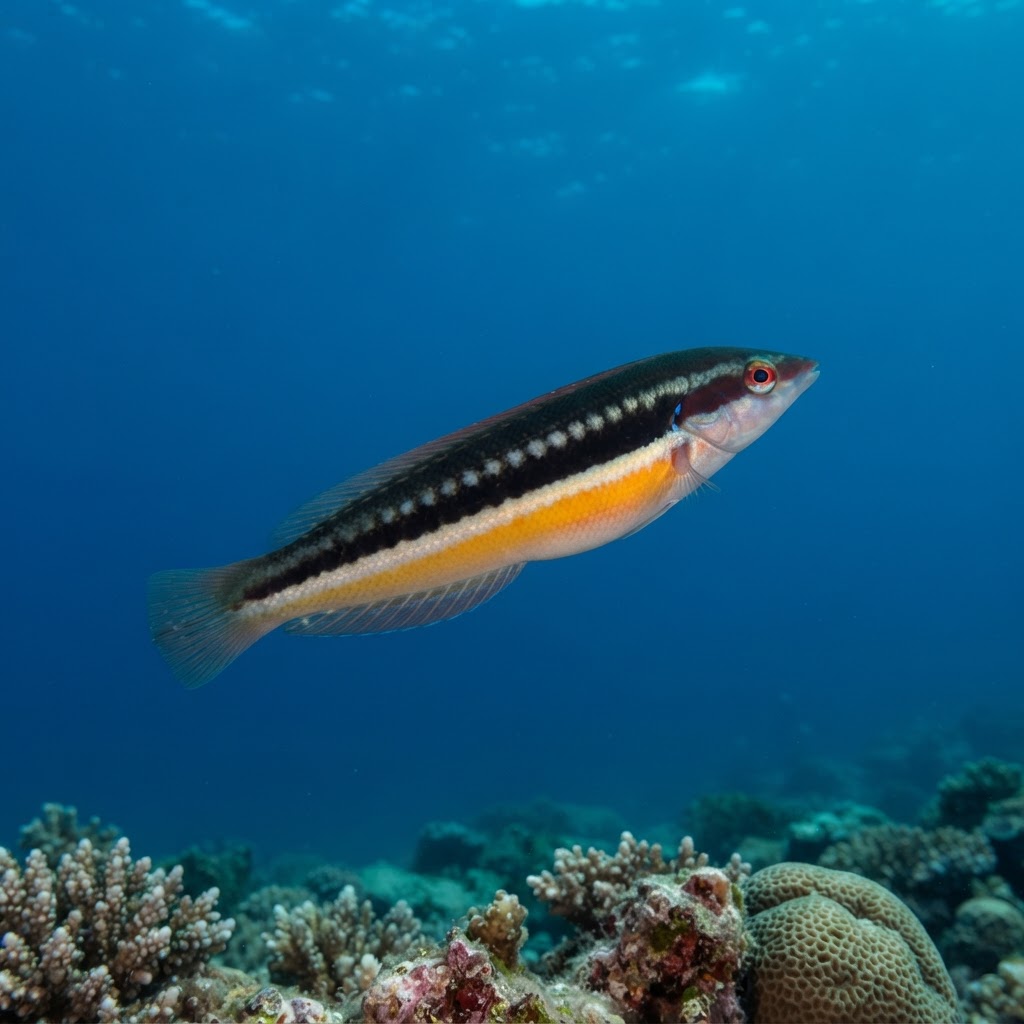
Reef neighbours a diver could mistake it for. Use the identification notes above to tell them apart.
This is a Red Sea specialty, most reliably logged across South Sinai and the Red Sea Riviera in Egypt, with a solid presence in Aqaba, Jordan and occasional sightings off Eilat, Israel. Marsa Alam and the Deep South also turn up records, but Sinai and the Riviera are where divers log it most.
Mapping where Abudjubbe is logged…
It is most consistently logged in South Sinai and the Red Sea Riviera in Egypt, with a good showing in Aqaba, Jordan. Smaller numbers turn up around Marsa Alam and off Eilat in Israel, making it essentially a Red Sea fish.
There is no clear seasonal pattern in the sighting data, so it is considered a year-round fish. Warm Red Sea water in the 25 to 29 C range suits it throughout the diving calendar.
Look for a small, thickset wrasse around 15 cm with mottled reddish-brown colouring and a blunt-lipped face, usually seen picking at the reef surface rather than swimming in open water.
They stay small for a wrasse of this genus, typically reaching around 15 cm, which keeps them easy to overlook against busier reef fish.
Yes, it shares its genus with the Napoleon Wrasse, but it never grows anywhere near as large and spends its life as a small reef forager rather than a giant open-water presence.
Site and sighting data is aggregated from diver logs, iNaturalist and GBIF. For taxonomy and conservation status:
Bird Wrasse
3,632 sites