Best for intermediate divers, 28-32m, boat entry, mild current.
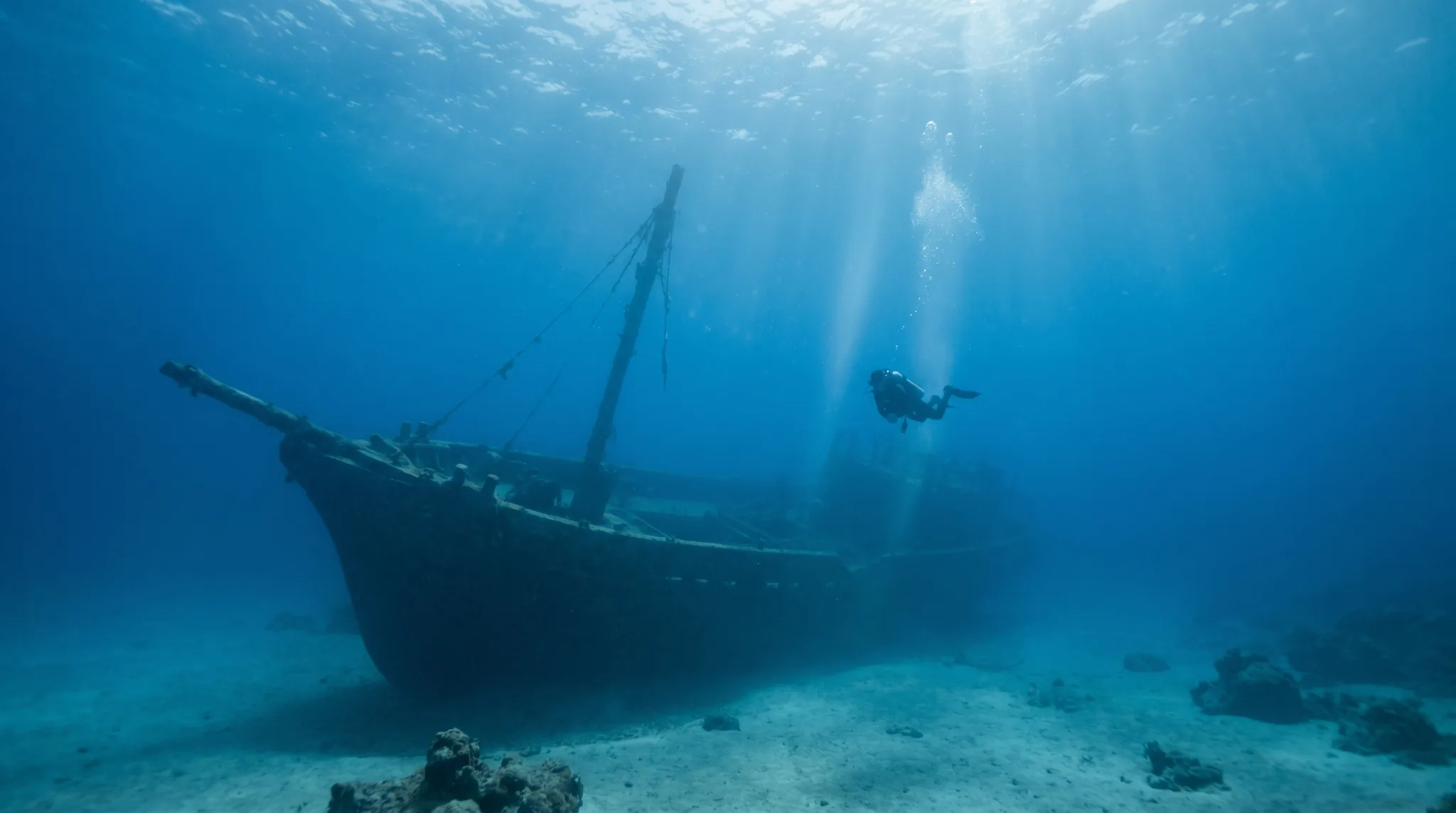
The Mavis Wreck is a World War Two-era flying boat resting at depths between 28 and 32 metres. This site is suitable for intermediate divers with wreck certification. Access is exclusively by boat, and divers should confirm mooring arrangements to avoid damaging the structure. Visibility varies from 10 to 30 metres, and the site features mild currents. Divers should be aware of entanglement risks and the overhead environment associated with the wreck. A torch and line cutter are recommended for all dives. Typical dive times are around 40 minutes, with water temperatures consistently between 29 and 30 degrees Celsius.
-9.10972, 160.18673
Boat access is the only option, so confirm your operator's mooring arrangement before you go down as anchoring on the wreck is destructive and can disturb the structure. Carry a torch and a line cutter regardless of whether you plan full penetration.
Access info coming soon
Recorded at this site
Depth
28-32m
Visibility
10-30m
Skill Level
Intermediate
Entry
Boat
Boat required
Water Temp
29-30°C
Current
Mild
Typical Dive
40 min
The wreck sits at a depth of 28 to 32 metres, with an average depth of 30 metres.
No, this site is intended for intermediate divers who hold a wreck certification.
Boat access is the only way to reach this site. Anchoring directly on the wreck is discouraged to prevent structural damage.
The main hazards include entanglement risks and the overhead environment created by the aircraft structure.
Snorkelling is not recommended as the wreck lies at a depth of 28 to 32 metres.
Diving at Mavis Wreck in Tulagi requires the following certifications: Open Water, Wreck. Always dive within your training limits.
A rashguard or 2mm shorty is recommended for diving at Mavis Wreck in Tulagi. Water temperatures range from 29°C to 30°C.
Mavis Wreck in Tulagi typically has mild currents that most divers can handle comfortably.
Visibility at Mavis Wreck in Tulagi typically ranges from 10 metres to 30 metres. Conditions vary with weather, tides, and seasons.