Amphiprion polymnus
Spot the Brownsaddle Clownfish in Bali, Sulawesi and Timor-Leste in warm 27-29 °C water. ID tips, best seasons and top dive sites inside.
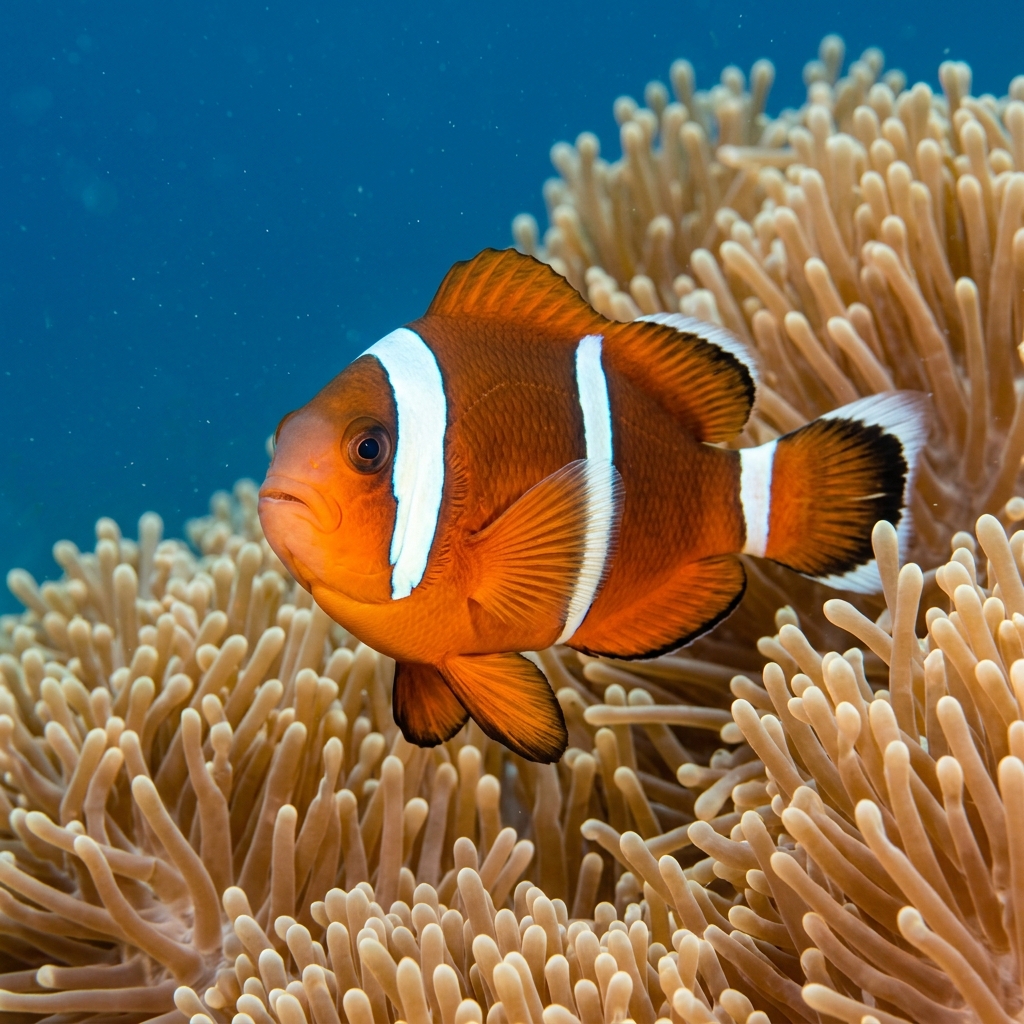
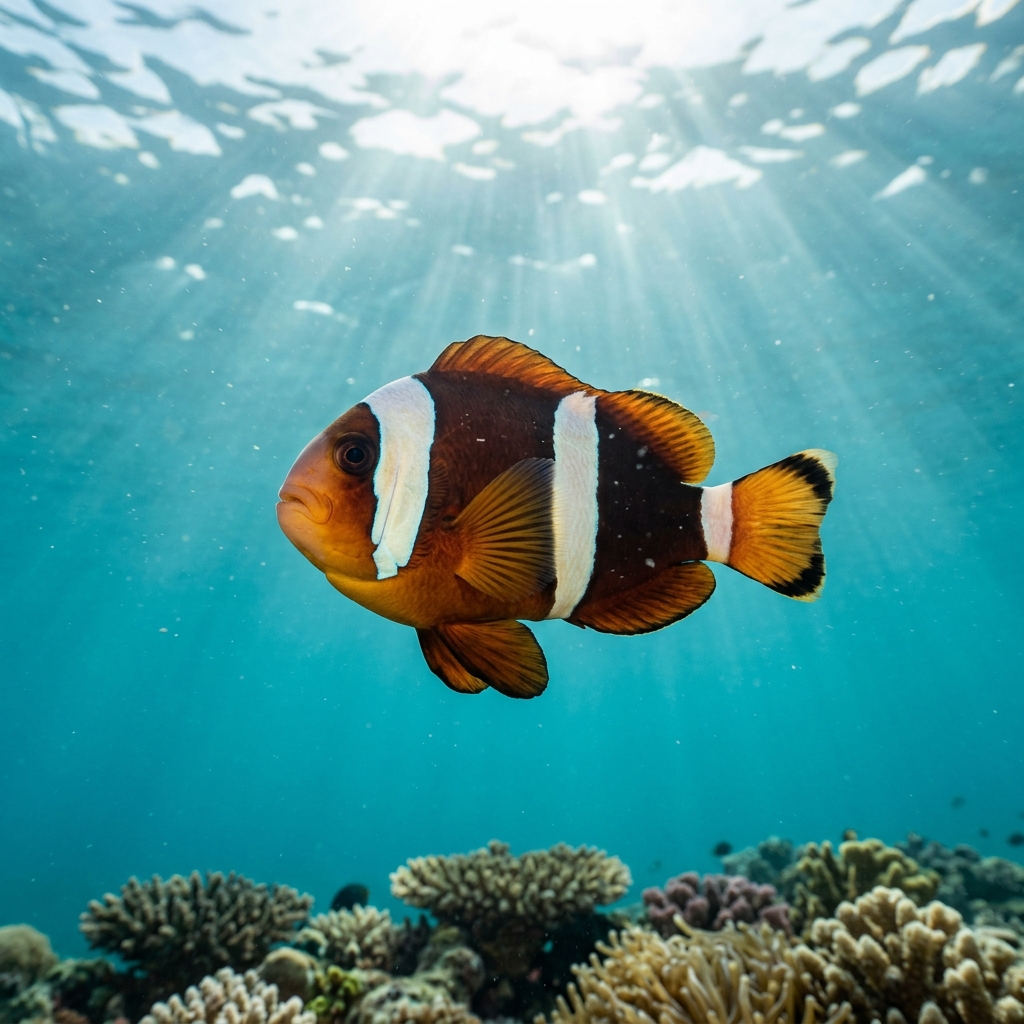
A mid-sized orange clownfish with a distinctive brown or dark saddle-shaped patch draped across the middle of the body, which is the key mark that separates it from most other clownfish at a glance. The head carries a single white bar just behind the eye, and a second white bar sits at the rear of the body near the tail. The overall tone is warmer orange than some relatives, and the combination of that dark saddle with just two white bars is the ID shortcut to lock onto.
Like all clownfish, brownsaddle clownfish live in an obligate partnership with sea anemones (usually saddleback-tolerant species such as Stichodactyla haddoni or Haddon's carpet anemone), rarely venturing more than a body-length or two from their host. When a diver approaches, expect rapid, darting movements in and out of the tentacles rather than flight, they will often face you down from the edge of the anemone rather than retreating into it. Most encounters happen in sheltered bays and sandy reef margins where carpet anemones settle, generally at shallow recreational depths.
All clownfish are born male and the dominant individual in any group transitions to female, if the resident female disappears, the largest male changes sex and takes her place. This means the fish guarding the anemone most aggressively is almost certainly female.
Southern Hemisphere site data shows sightings concentrate from July through January, so this period covers the best window for Indonesian and Timor-Leste reefs. The species occupies warm water in the 27-29 °C range, which is typical of these tropical sites throughout that season.
Reef neighbours a diver could mistake it for. Use the identification notes above to tell them apart.
Indonesia dominates sightings by a wide margin, with Bali, Lombok and Java producing the most records, followed by Sulawesi and the Maluku and Papua region. Timor-Leste's north coast around Dili and the reefs of Sipadan and East Sabah in Malaysia are also reliably logged sites, and there are observations from Fujairah in the UAE that extend the known range into the Arabian Sea.
Mapping where Brownsaddle Clownfish is logged…
Most sightings come from Indonesia, particularly around Bali, Sulawesi, and the Maluku and Papua region. Timor-Leste's north coast and Sipadan in Malaysian Borneo are also well-logged locations. Unusually, there are confirmed records from Fujairah in the UAE, making this one of the few clownfish species observed in the Arabian Sea.
At Southern Hemisphere sites such as Indonesia and Timor-Leste, sightings peak between July and January. The species favours warm water around 27-29 °C, which is consistent across its range during these months. Outside this window encounters are less frequent but not impossible.
Look for the brown or dark saddle-shaped patch across the middle of the body, that mark is not shared by most other clownfish in the same region. Combine it with two white bars (one behind the eye, one near the tail) on an orange body and you have a confident ID. Clark's anemonefish is the most similar species but typically shows three white bars rather than two.
Yes, like all clownfish, they are protandrous hermaphrodites, meaning they begin life as males and can transition to female. In any anemone group the largest individual is the dominant female; if she dies, the largest male changes sex to replace her. It is one of the more remarkable reproductive strategies on the reef.
Site and sighting data is aggregated from diver logs, iNaturalist and GBIF. For taxonomy and conservation status:
Dascyllus
3,697 sites