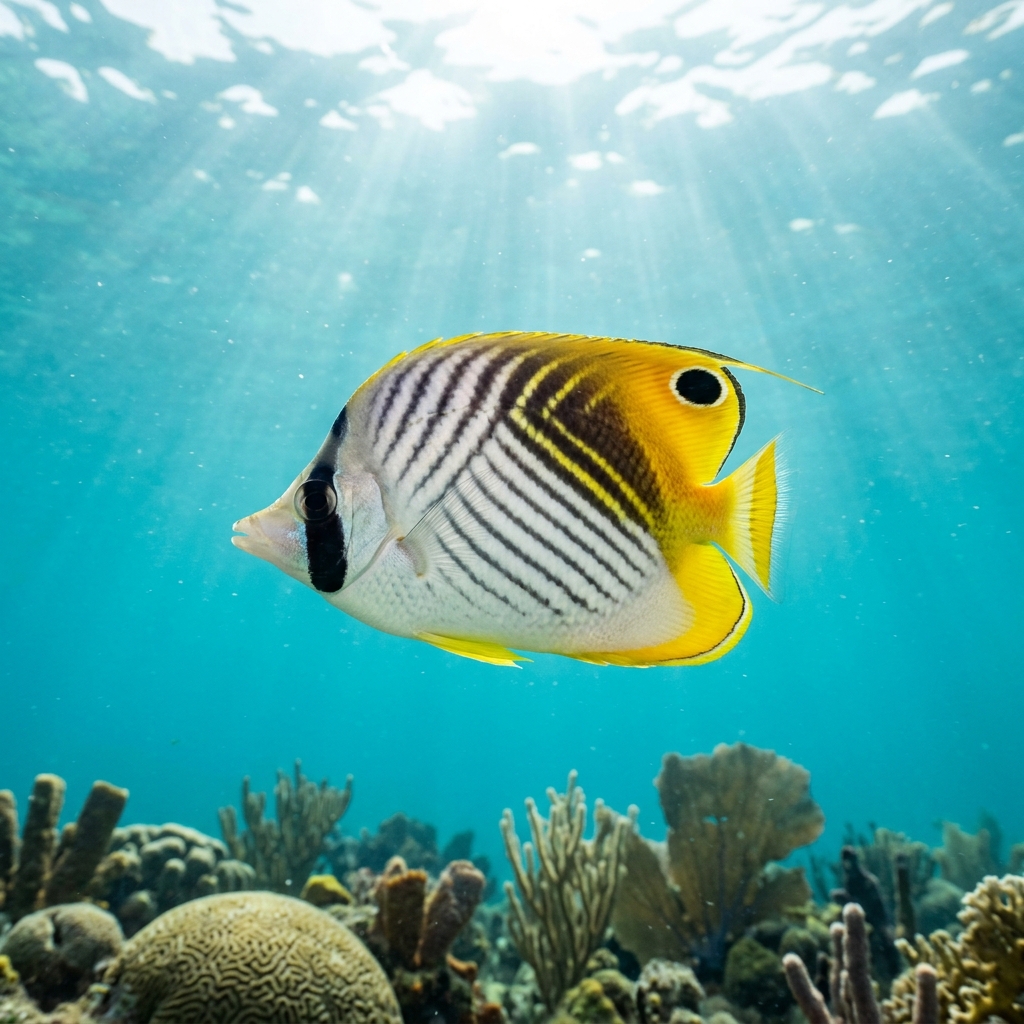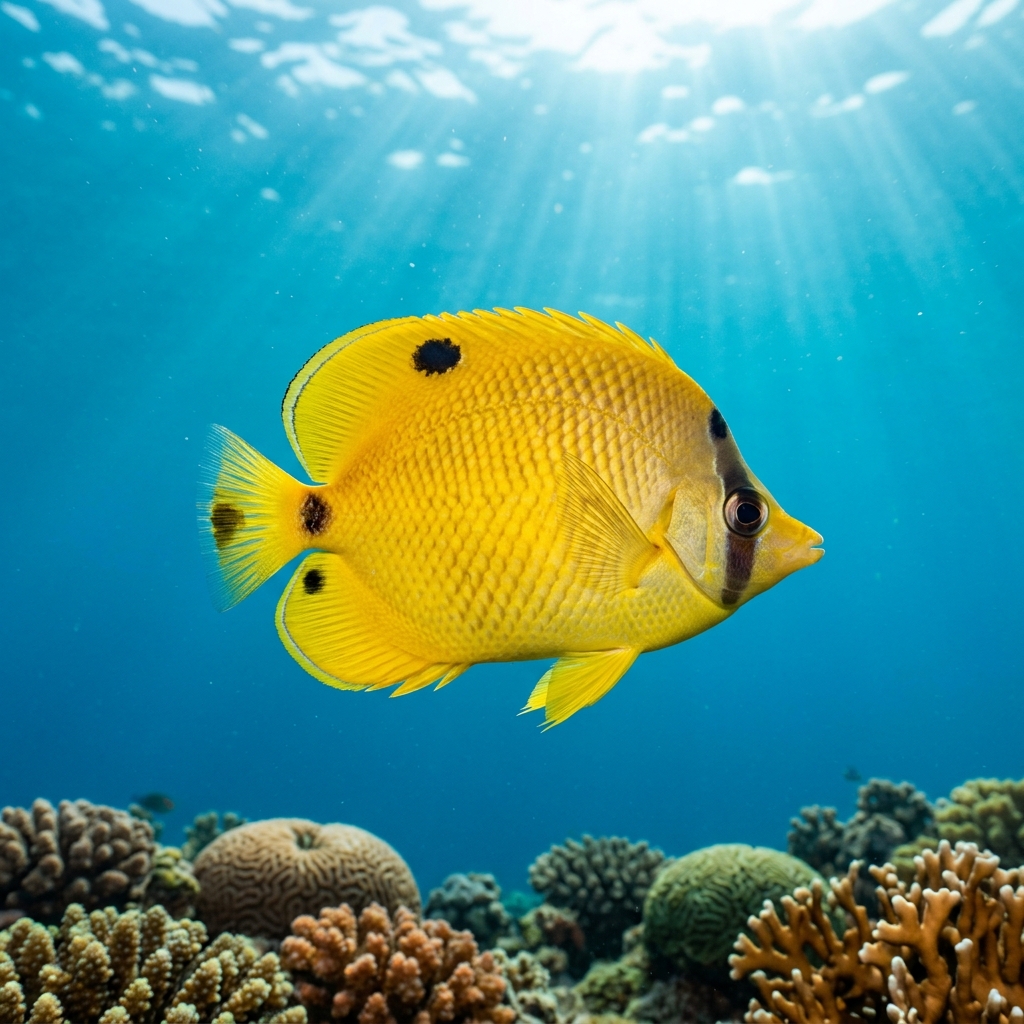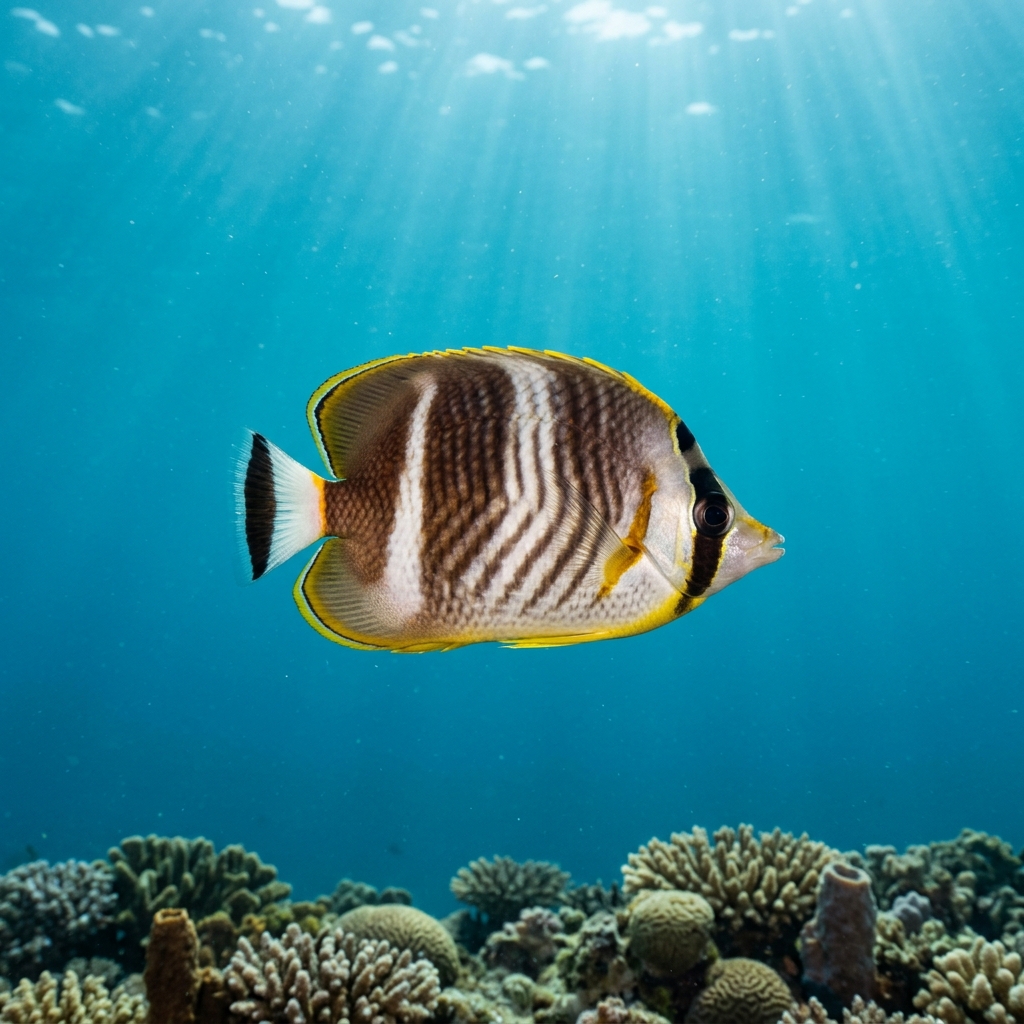
Coradion chrysozonus
Spot the Goldengirdled Coralfish in Malaysia's Perhentian & Redang islands or Palawan. Best sightings Apr, Sep in warm 27-29 °C Indo-Pacific reefs.
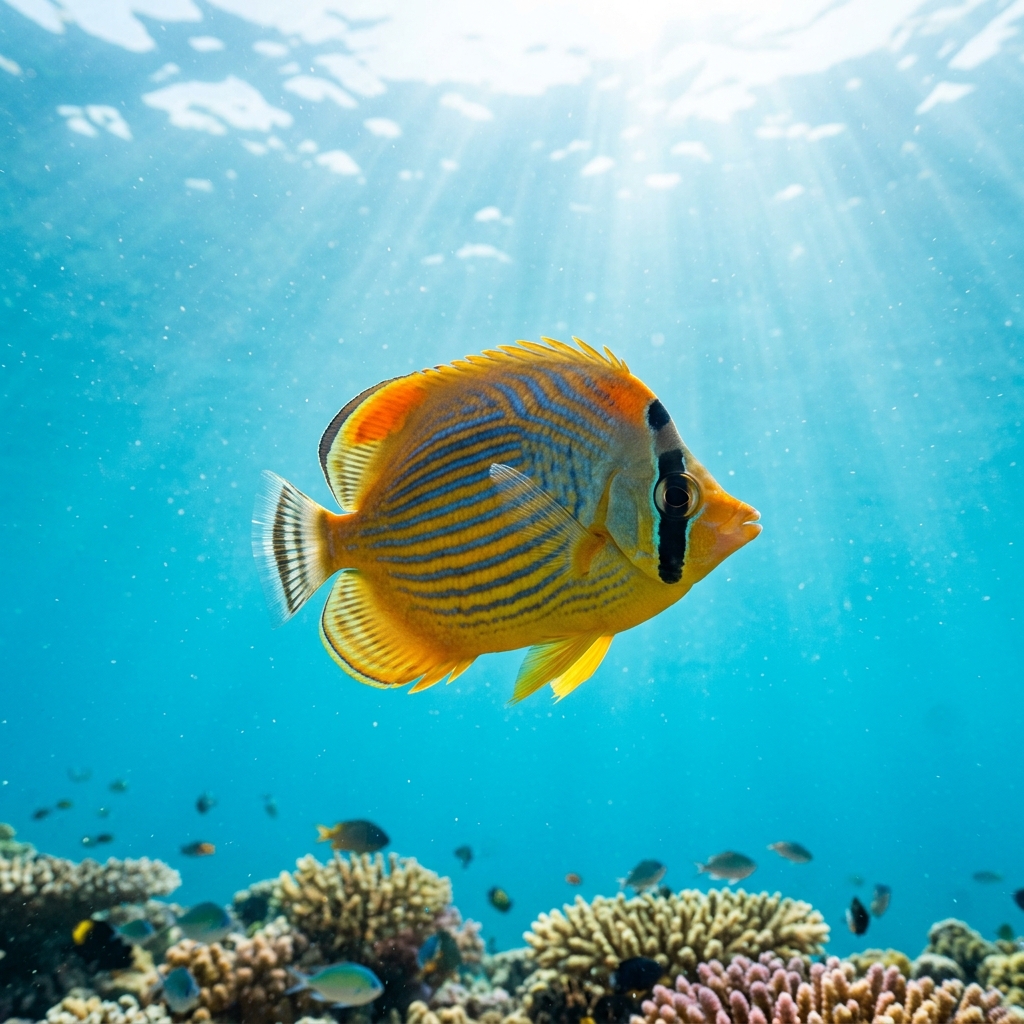
A disc-shaped butterflyfish with a white base colour crossed by two broad, vivid orange-gold vertical bands and a prominent black bar running through the eye. A dark blotch sits near the rear of the dorsal fin, giving it a useful anchor point for quick ID at depth. The snout is distinctly elongated compared to many butterflyfish, useful for picking food from crevices. Juveniles carry a large false eyespot (ocellus) near the tail base that fades as the fish matures.
You will typically encounter this fish moving steadily along coral-rich sections of the reef, picking at invertebrates and coral polyps with its pointed snout. It is usually seen alone or in a loose pair rather than in schools, and tends to stay close to branching or plating corals where it can retreat quickly. It is wary rather than bold around divers; slow, non-aggressive approaches get you the closest before it drifts to the next coral head.
The juvenile's prominent false eyespot near the tail is a classic butterflyfish trick: it redirects predator strikes away from the vulnerable real eye and head, giving the youngster a better chance of escaping with only a nipped tail.
In the Northern Hemisphere, covering the Malaysian, Philippine, Indonesian, and Palauan sites where this fish is most commonly seen, sightings concentrate from April through September. Southern Hemisphere sightings, primarily from Australian and Solomon Islands sites, peak between December and May.
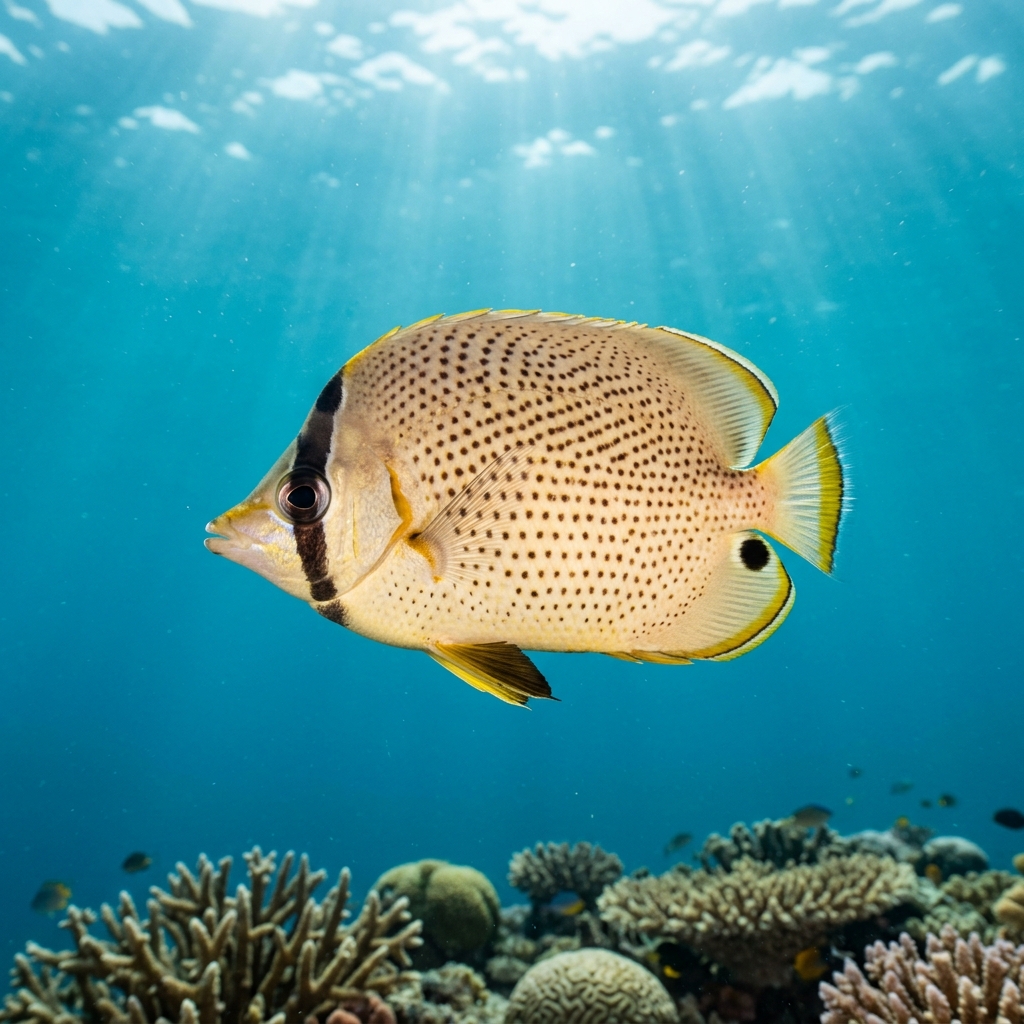
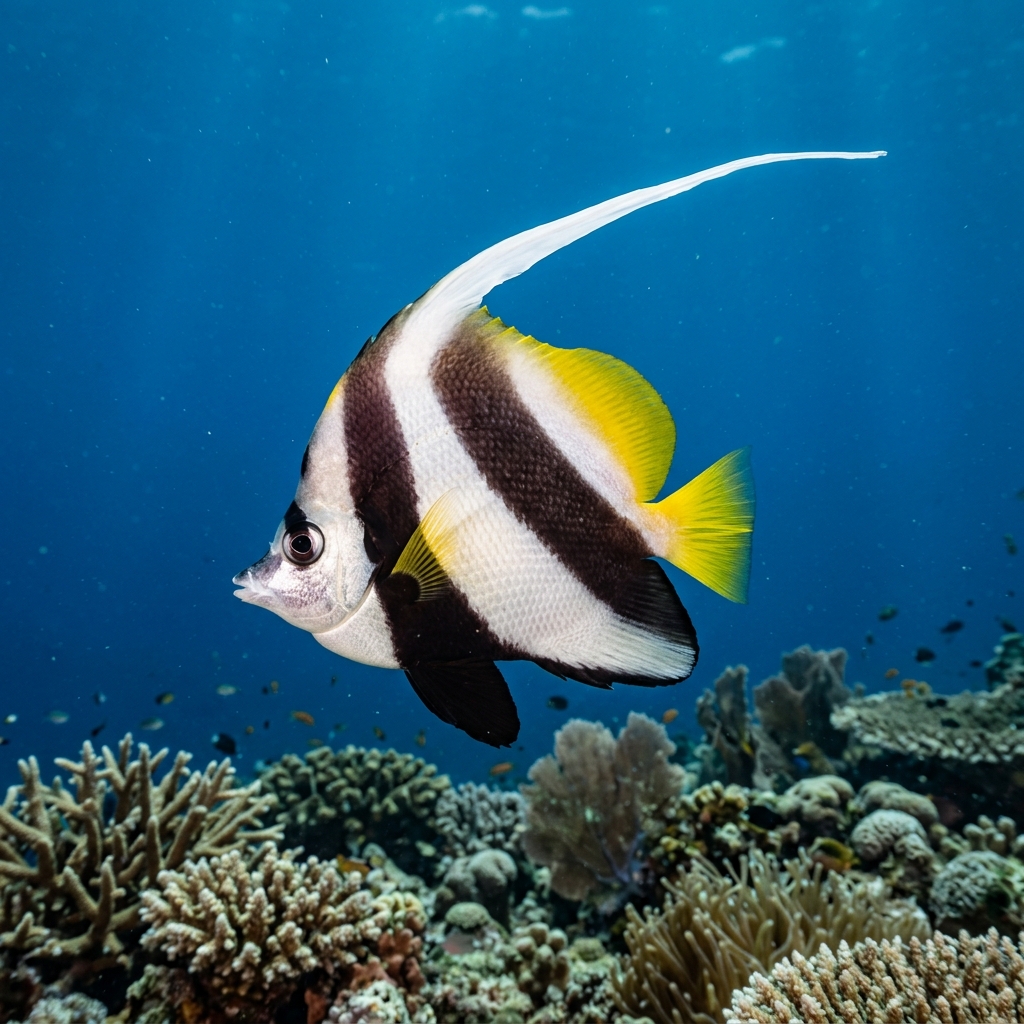
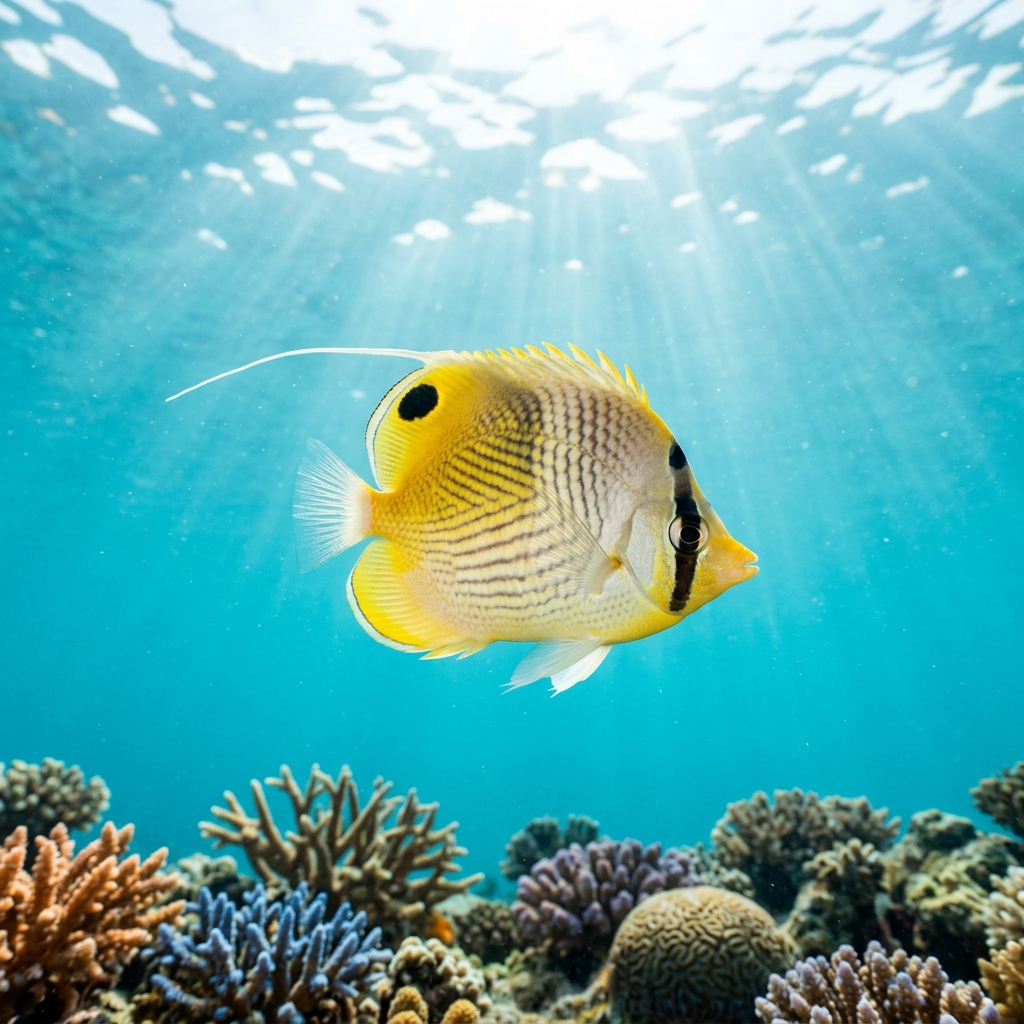
Reef neighbours a diver could mistake it for. Use the identification notes above to tell them apart.
Most reliably logged across Malaysia, the Philippines, and Indonesia, which together account for the overwhelming majority of recorded sightings. In Malaysia, the Perhentian and Redang islands top the charts, followed by West Sabah, Labuan, and Sipadan in the east; in the Philippines, Palawan, Apo Reef, and the Western Visayas are the standout areas. Sulawesi and the Maluku and Papua regions of Indonesia also produce strong records, and Palau's Rock Islands offer a further reliable option.
Mapping where Goldengirdled Coralfish is logged…
The best-documented sites are in Malaysia (especially the Perhentian and Redang islands and East Sabah around Sipadan), the Philippines (Palawan, Apo Reef, and Western Visayas), and Indonesia (Sulawesi, Maluku, and Papua). Palau's Rock Islands also have solid records. All are warm Indo-Pacific reef destinations.
At the main Malaysian, Philippine, and Indonesian sites, April through September sees the highest concentration of sightings. If you are diving in Australia or the Solomon Islands, aim for December through May instead.
Look for a round, disc-shaped body that is largely white, crossed by two broad orange-gold vertical bands. A dark bar runs through the eye and a black blotch marks the rear dorsal fin. The elongated snout is a further clue. Juveniles also carry a large false eyespot near the tail base.
It is classed as uncommon across most sites where it is recorded, and rare at a significant number of them. Only a small proportion of sites log it as common. Go in with realistic expectations: a sighting is a treat rather than a guarantee, even at the best locations in Malaysia and the Philippines.
No. The species is currently assessed as Least Concern on the IUCN Red List, meaning populations are not considered at risk at a global level. Standard reef-safe dive practices, no touching, no feeding, no anchor damage, are all that is needed from visiting divers.
Site and sighting data is aggregated from diver logs, iNaturalist and GBIF. For taxonomy and conservation status: