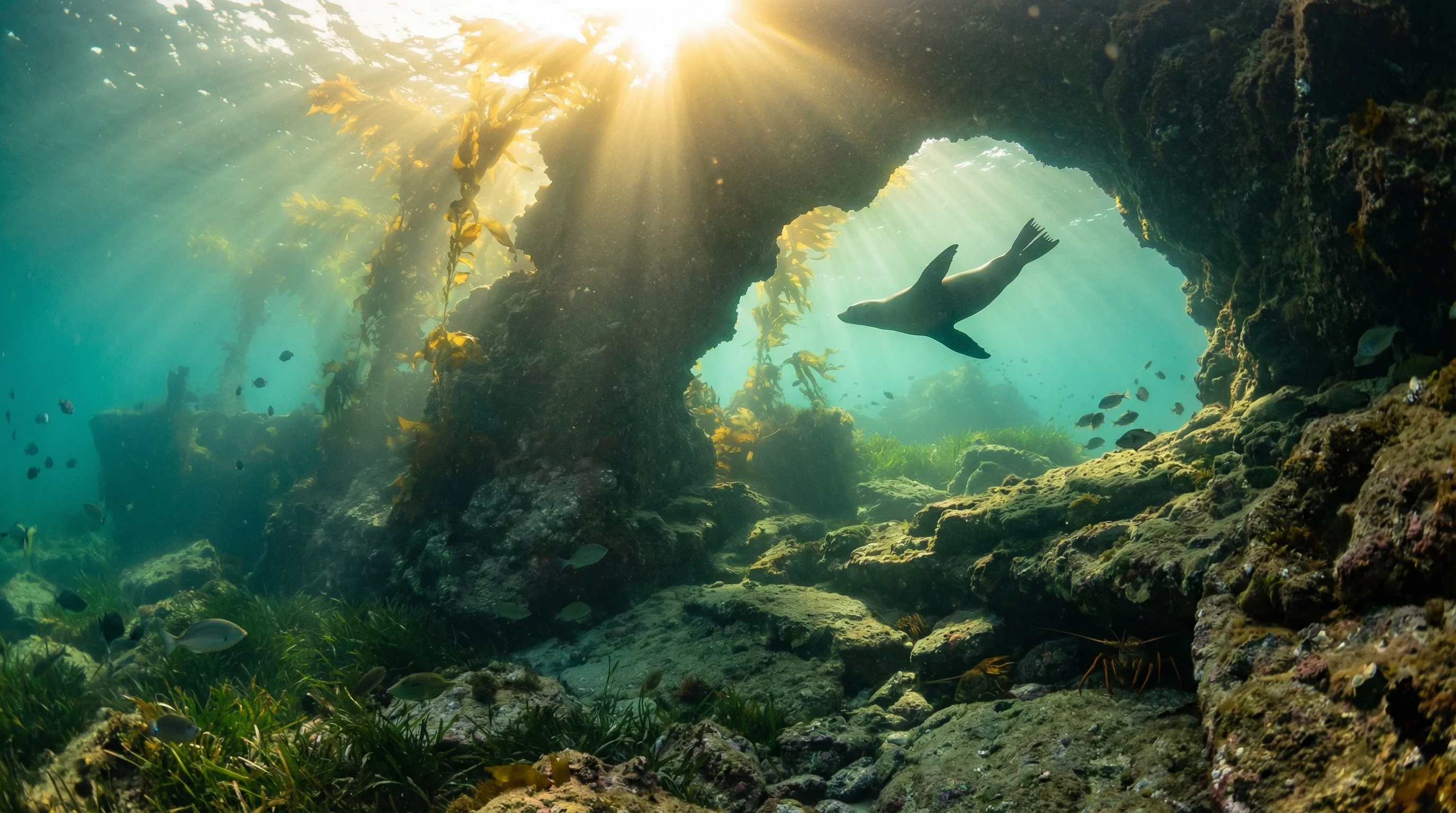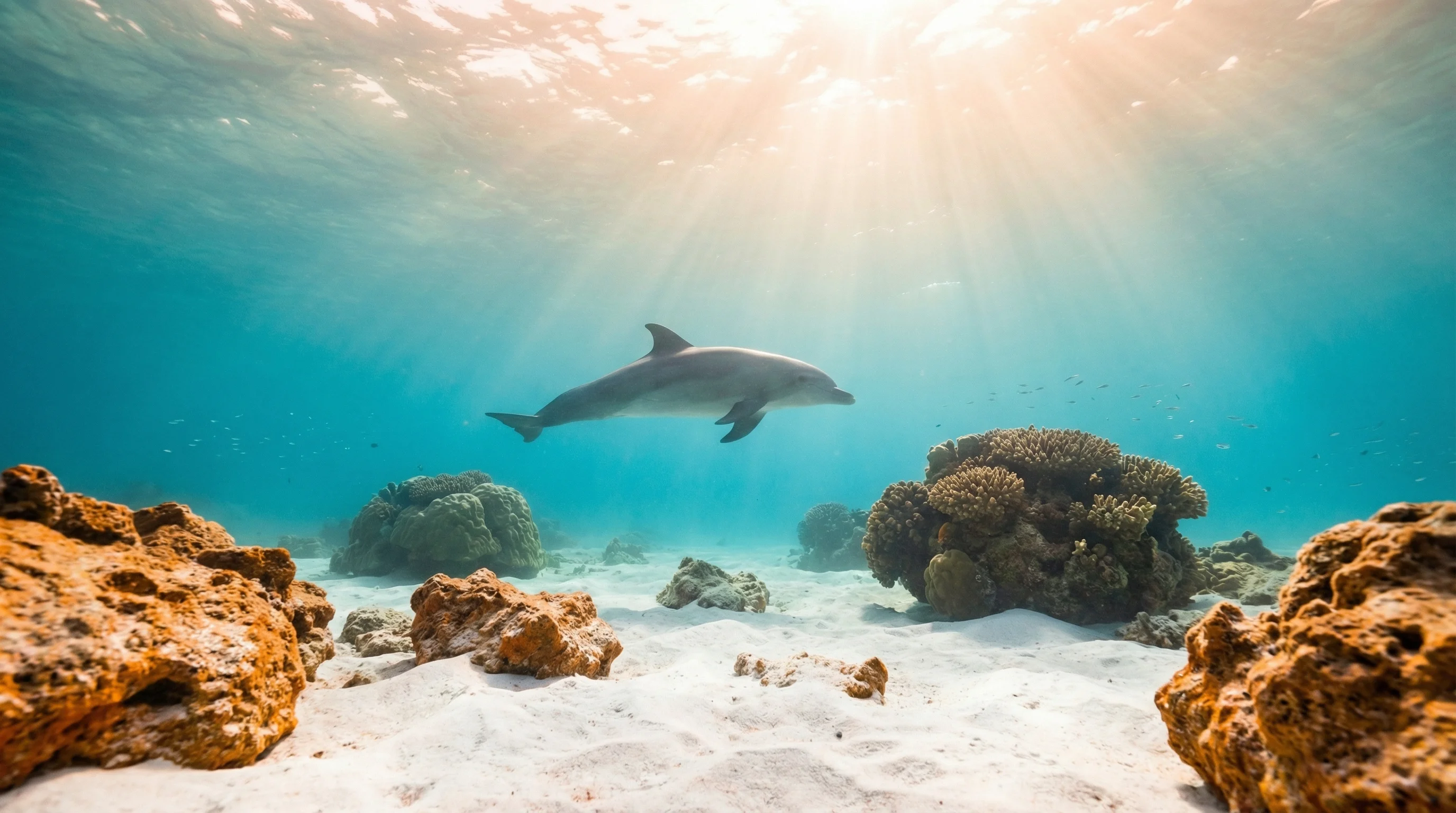
Best for beginner divers, 0m, shore entry, mild current.
Dolphin Bay on Kangaroo Island is a shore-accessible reef site known for its calm, shallow waters. The bay is reasonably protected, making it suitable for beginner divers and snorkellers. Entry is direct from the shore, with parking available on-site. While the bay is generally calm with mild currents, visitors must remain aware of potential rip currents and large swells that can affect beaches in the area. Conditions can vary, so checking the water before entry is essential. The site is most accessible during the summer months, which offer the most favourable conditions for water activities.
-35.19280, 136.86930
Check the water conditions carefully before entering, as a rip current can catch you off guard even on calm-looking days. Arriving early in the morning during the November to March season often gives you quieter water and the best chance of a dolphin encounter.
The beach is accessible via a 100m walk from the car park within Dhilba Guuranda-Innes National Park. Wooden stairs lead down to the sand. A park entry permit is required.
Recorded at this site
Depth
0m
Visibility
0m
Skill Level
Beginner
Entry
Shore
Water Temp
14-20°C
Current
Mild
Best Time
Jan, Feb, Mar, Nov, Dec
Yes, the site features shallow, calm waters and mild currents, making it approachable for beginner divers and snorkellers.
Dolphin Bay is a shore dive with direct entry from the beach.
While generally calm, the site is subject to rip currents and large swells that can affect all beaches in the park.
The best months to visit are November, December, January, February, and March.
Yes, the site is suitable for both diving and snorkelling, though it has a snorkel rating of 1/5.
Diving at Dolphin Bay in Yorke Peninsula requires the following certifications: Open Water. Always dive within your training limits.
A 7mm wetsuit or semi-dry is recommended for diving at Dolphin Bay in Yorke Peninsula. Water temperatures range from 14°C to 20°C.
Dolphin Bay in Yorke Peninsula typically has mild currents that most divers can handle comfortably.