Palmadusta ziczac
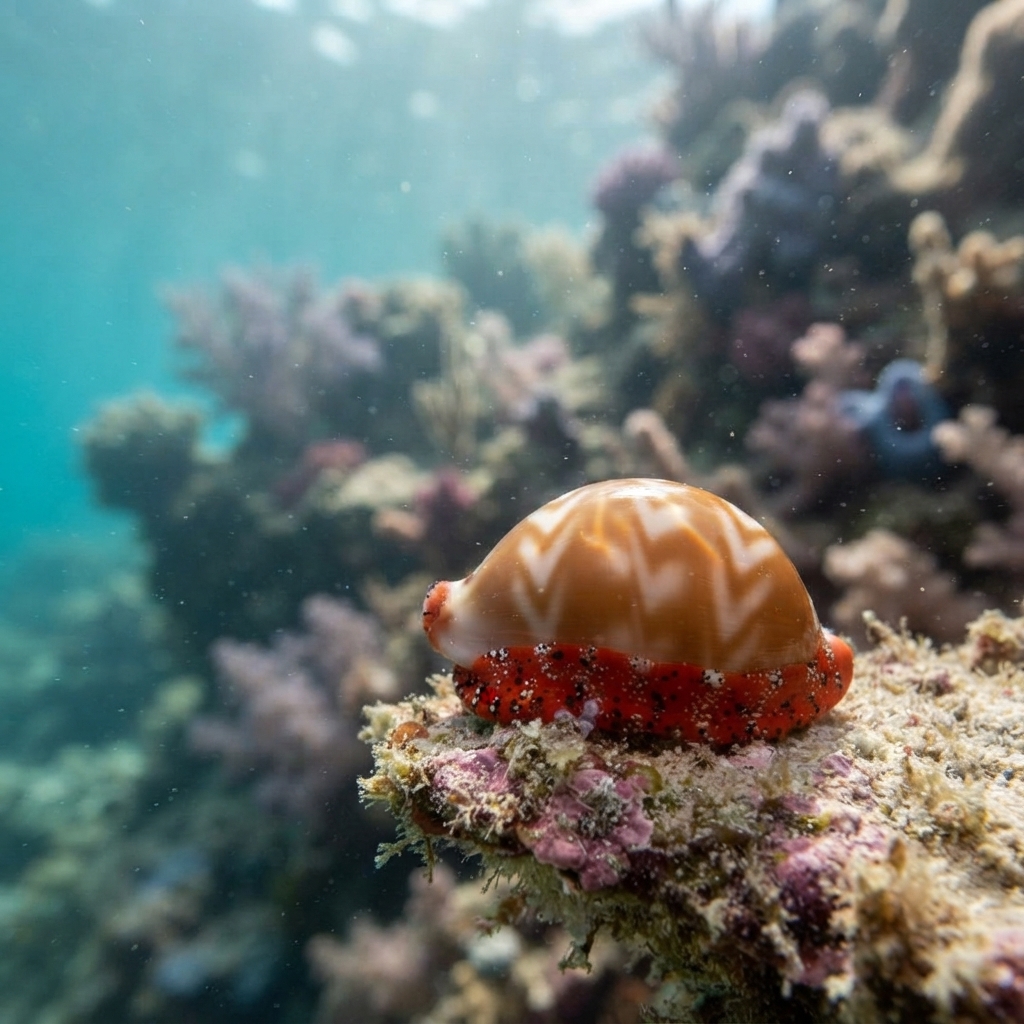
A 1cm cowry with a zigzag shell pattern, most often logged in Bali's reefs at warm, tropical temperatures year-round.
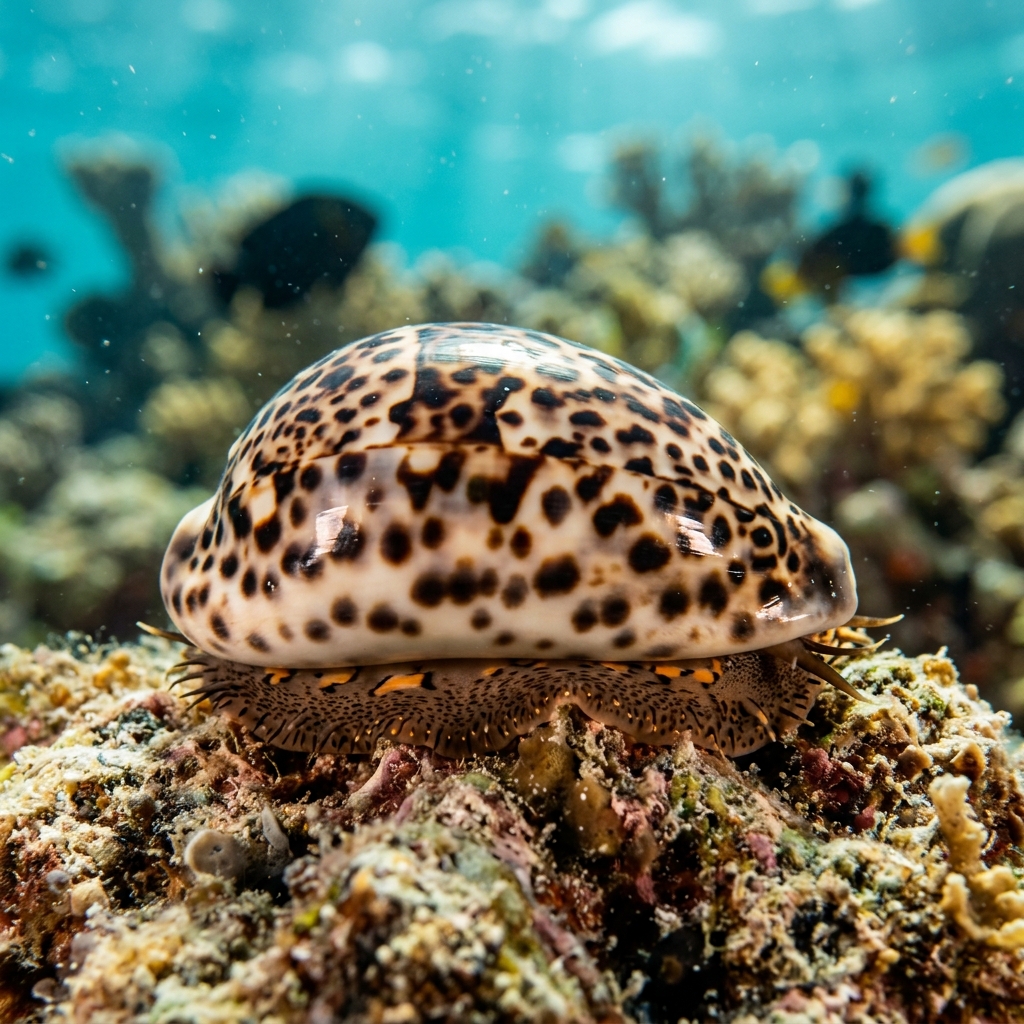
At just 1 cm, this is a shell you spot only by looking closely at coral rubble and crevices rather than by scanning open water. The glossy, oval shell carries a fine zigzag pattern in brown and cream running across its curved back, which is the single mark that separates it from plainer cowries nearby. The mantle (the soft tissue that can extend over the shell when active) is often mottled and can partly obscure the pattern when the animal is out feeding.
This is a slow, nocturnal-leaning grazer that tends to sit tucked into rubble, coral crevices or under ledges during the day, making it an easy thing to overlook unless you are doing a dedicated macro or night dive. It shows no real reaction to divers beyond retracting its mantle slightly if disturbed, and logs describe it as uncommon at most sites where it turns up, so finding one usually takes a patient, close look rather than luck.
Cowries like this one can extend their mantle tissue up over the shell while active, which both camouflages the glossy shell and helps deposit the fine patterning divers use for identification.
No clear seasonal pattern shows up in the data, and with a warm-water niche of roughly 25 to 31°C it fits comfortably into tropical reef conditions year-round. Treat this as a species to search for on any dive in its range rather than one tied to a particular month.
Sightings cluster strongly in Bali, Indonesia, with a further confirmed record from Luzon in the Philippines. Indonesia is the more reliable bet by a wide margin based on current logs, so muck and rubble sites around Bali are the better starting point if you are hunting for this one specifically.
Mapping where Zigzag Cowry is logged…
Bali, Indonesia is the strongest area for sightings, with an additional record from Luzon in the Philippines. It shows up on rubble and reef substrate rather than in open water.
There is no detected season, and its warm-water niche of about 25 to 31°C means it can be found year-round on tropical reefs in its range.
Look for a tiny, glossy shell around 1 cm long with a fine brown-and-cream zigzag pattern across its back. It is usually tucked into rubble or crevices rather than exposed on open reef.
They stay tiny, typically reaching only about 1 cm in shell length, so a close, slow look at rubble and crevices is needed to spot one.
No. This is a small, harmless sea snail with no sting or bite risk to divers.
Site and sighting data is aggregated from diver logs, iNaturalist and GBIF. For taxonomy and conservation status:
Elysia Timida
573 sites