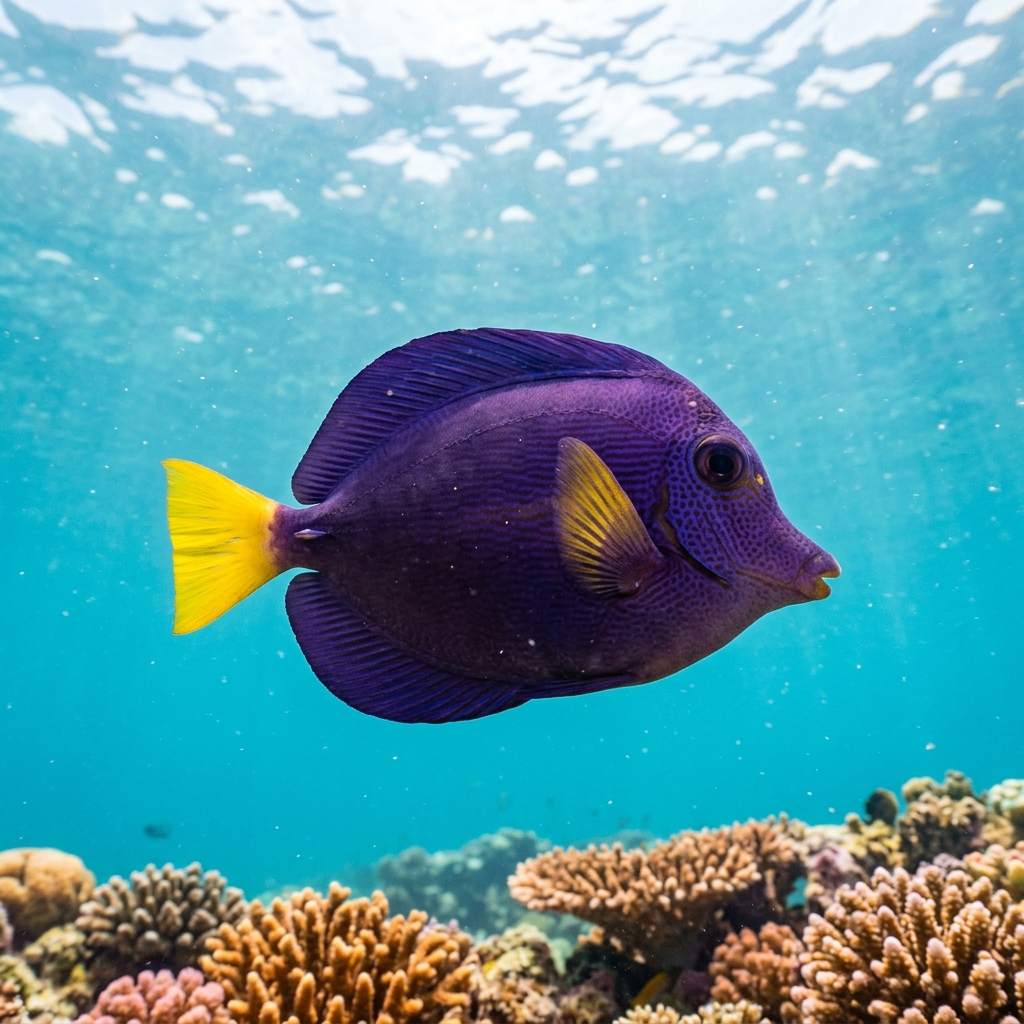
Zebrasoma xanthurum
Spot Purple Tang in the Red Sea from Sep to Apr. Most reliably seen around Sharm el Sheikh and Marsa Alam in waters between 22 and 28 °C.
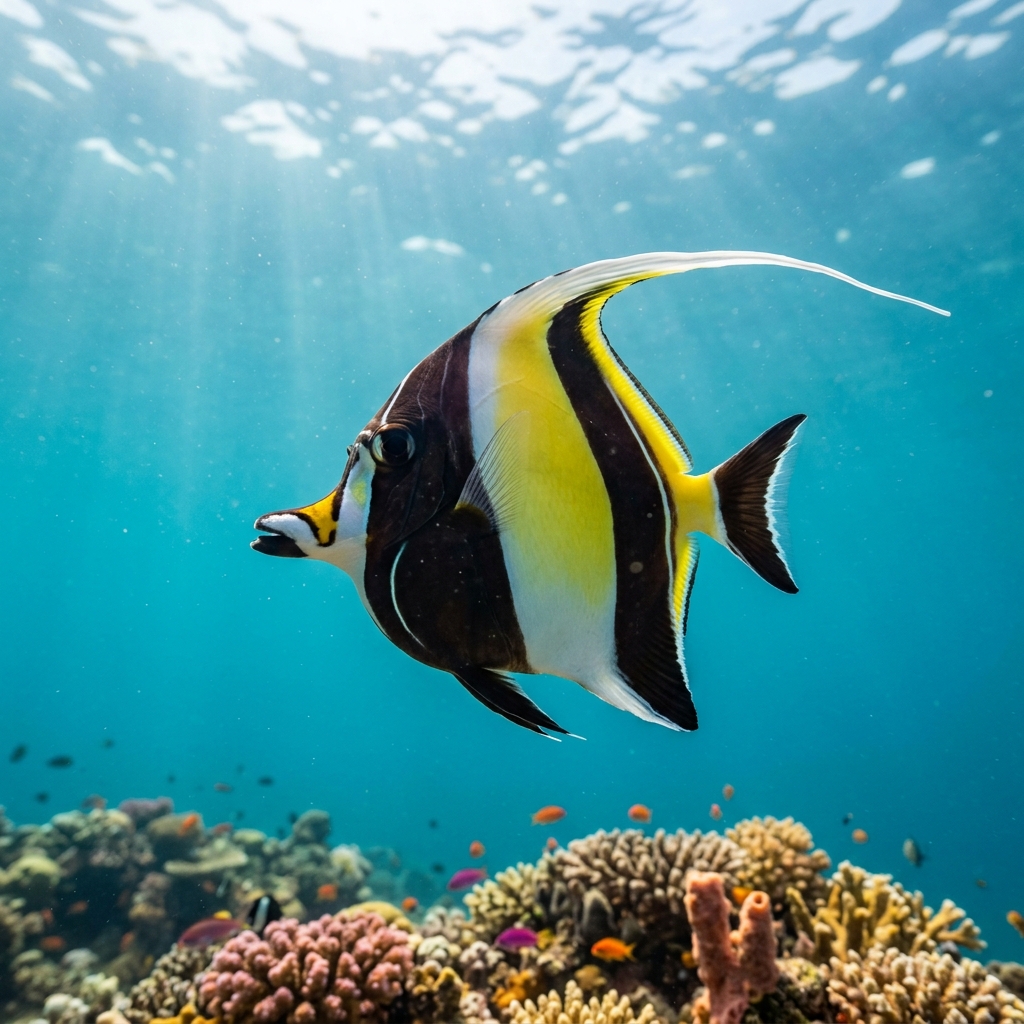
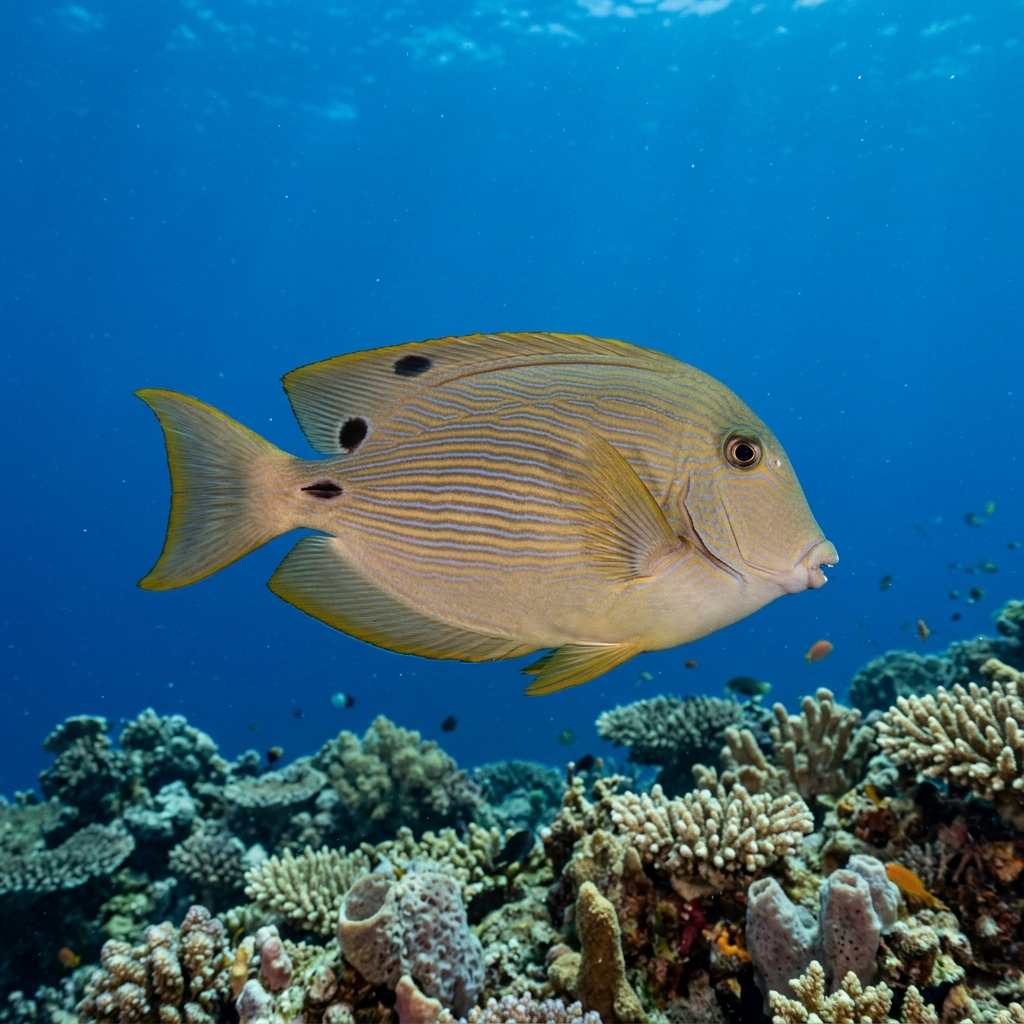
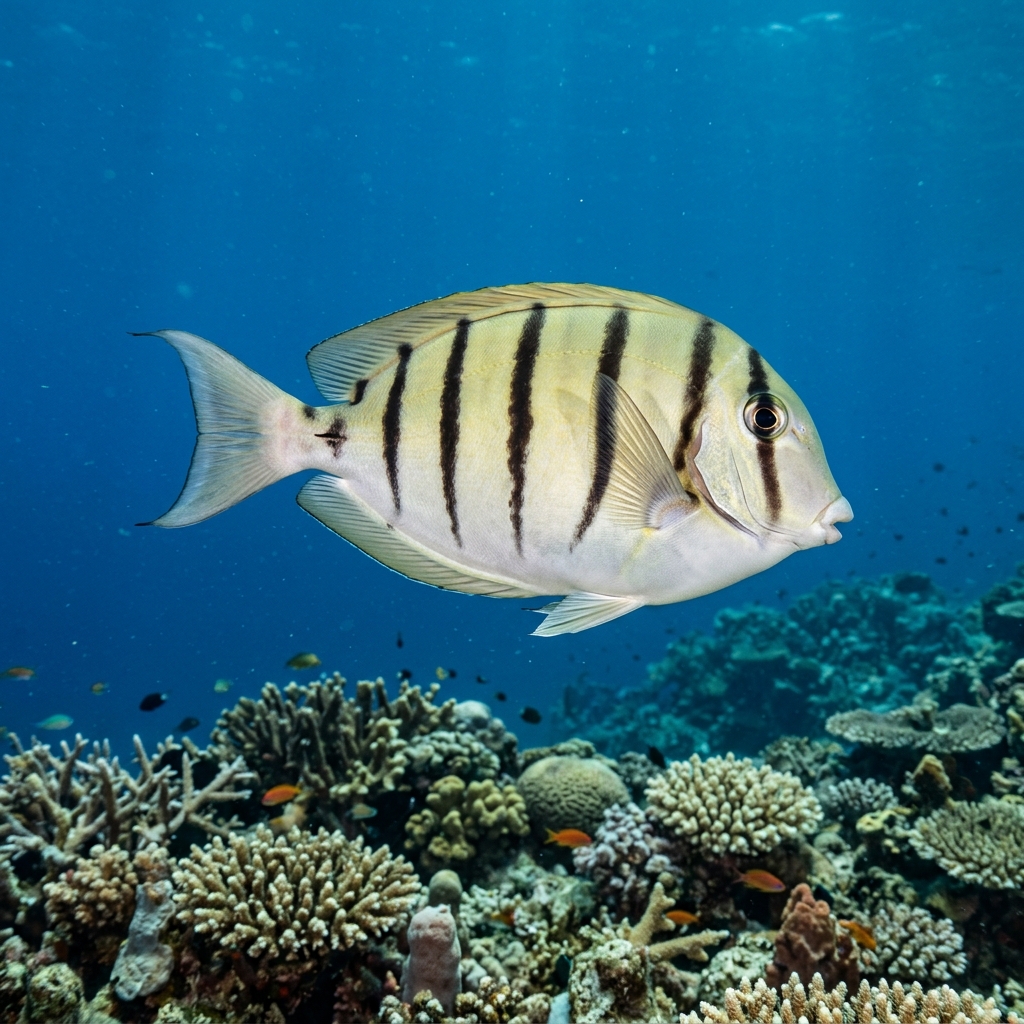
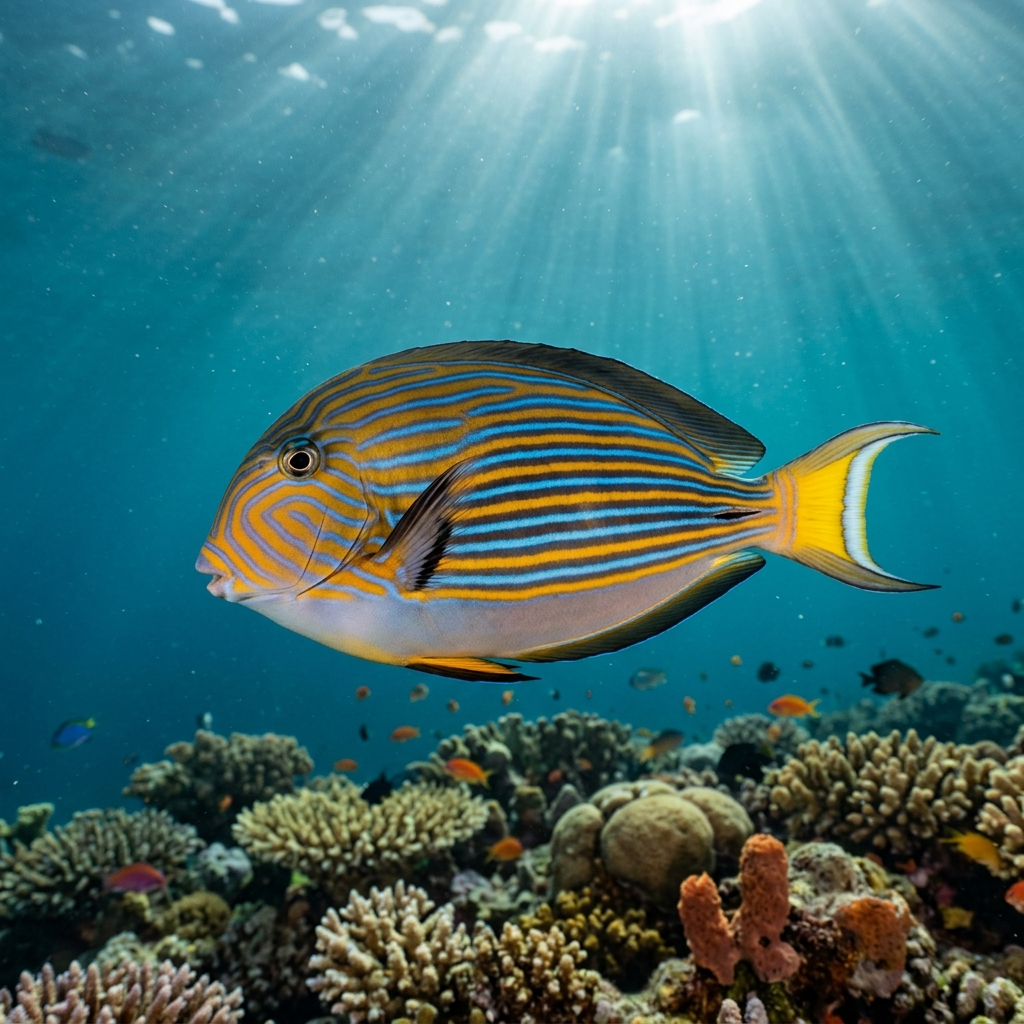
That deep violet-blue body paired with a vivid yellow tail is the immediate giveaway, no other surgeonfish in the Red Sea carries that colour combination. Body shape is classic tang: oval, laterally compressed (flattened side-on), with a pointed snout and the scalpel-like spine at the base of the tail characteristic of all surgeonfish. In the water it reads as a solid purple disc with a yellow flash at the rear. Juveniles share the same colour scheme but are noticeably smaller and tend to stay tighter to coral cover.
Purple tangs are typically seen grazing algae from hard coral surfaces and rocky reef walls, working methodically across the substrate. They're not especially shy but tend to keep a comfortable distance from divers, moving away without bolting, slow, patient approaches work best. You'll most often encounter them singly or in small loose groups rather than the large schools some surgeonfish form.
Like all surgeonfish, the purple tang carries a sharp, scalpel-like spine on each side of the tail base. It's not aggressive, but that spine can inflict a nasty cut if a fish is cornered or handled, always give it space to move freely.
Sightings in the northern hemisphere concentrate between September and April, which aligns with the Red Sea's cooler, calmer season when water temperatures sit in the lower end of the species' 22 to 28 °C range.
This is almost entirely a Red Sea species in diver records, with Egypt accounting for the great majority of logged sightings, Sharm el Sheikh and Marsa Alam are the most reliable spots, followed by Safaga and Hurghada. Beyond Egypt, Aqaba in Jordan, Eilat in Israel, and Muscat in Oman all have solid populations worth seeking out.
Mapping where Purple Tang is logged…
Purple tangs are strongly concentrated in the Red Sea. Egypt, especially Sharm el Sheikh, Marsa Alam, Safaga, and Hurghada, is where most diver sightings are logged. Aqaba in Jordan, Eilat in Israel, and Muscat in Oman are also reliable destinations. Outside the Red Sea, records are very sparse.
Sightings peak between September and April across Red Sea dive sites. This cooler season brings calmer conditions and water temperatures in the low-to-mid 20s °C, which sit comfortably within the species' preferred range.
Look for a deep violet, oval-shaped fish with a bright yellow tail fin. No other surgeonfish in the Red Sea shares that colour combination, making it one of the easier tangs to pick out. The compressed, disc-like body shape and pointed snout confirm it's a tang rather than anything else.
No, they pose no real threat to divers. Like all surgeonfish they carry a sharp spine at the tail base, but they are not aggressive and won't use it unless physically cornered or handled. Simply keep a respectful distance and the spine is a non-issue.
Purple tangs are herbivores that graze algae from reef surfaces. Underwater you'll typically see them picking steadily at hard coral rubble and rocky substrate, helping to keep algae growth in check and maintain healthy reef conditions.
Site and sighting data is aggregated from diver logs, iNaturalist and GBIF. For taxonomy and conservation status:
Striped Surgeonfish
3,289 sites