Lythrypnus zebra
Red-and-white striped goby found tucked in rocky crevices off Baja California and California, year-round in cool water.
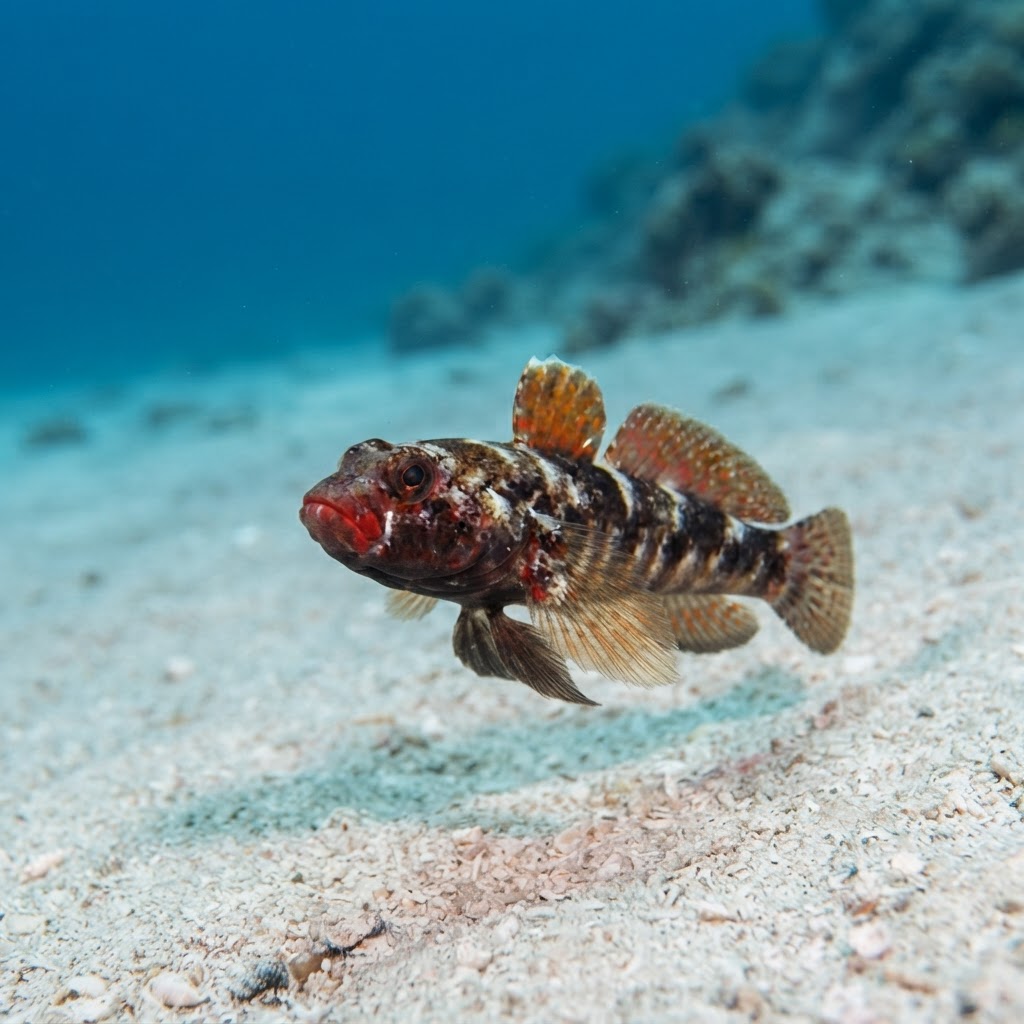
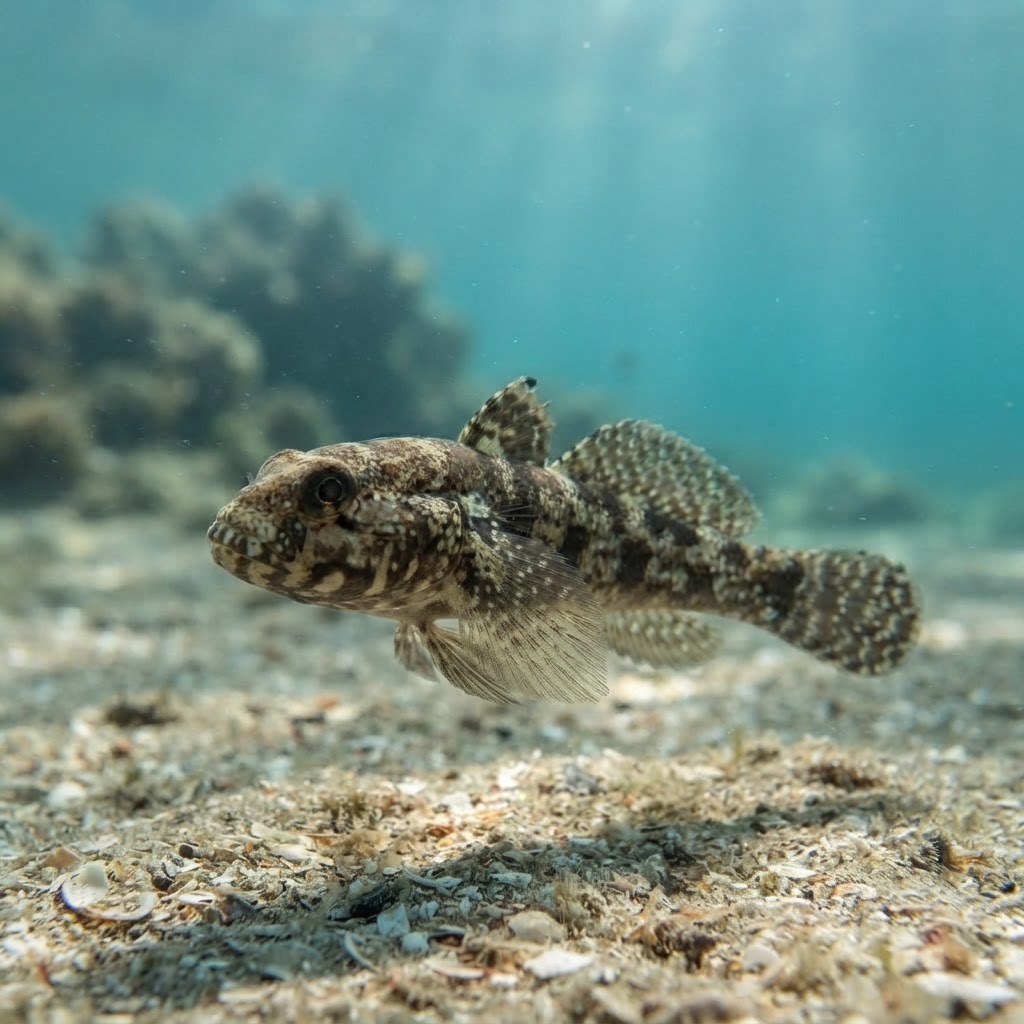
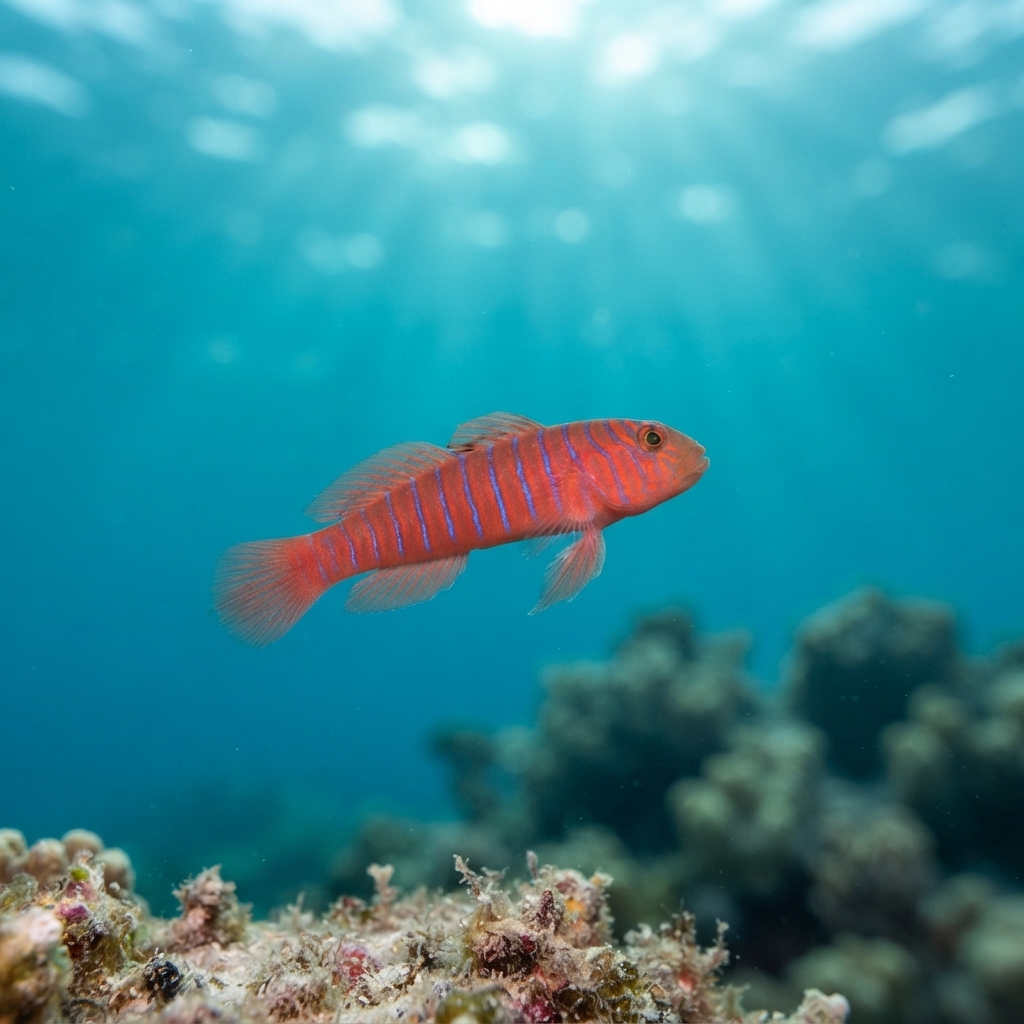
A tiny fish, barely 4 cm, with alternating red-orange and pale white bands running the length of its body, which is how it earns the name. It has a slender, elongated goby shape and tends to perch on rock rather than swim in open water, often near the mouth of a crevice or hole. No strong colour difference is documented between the sexes at this size.
Expect to find it perched motionless on rock faces or hovering just above a crevice entrance rather than swimming out in the open. It is a small, low-key subject that rewards a slow, close look rather than active searching across a reef, and divers most often log it as uncommon or rare even at sites where it is known to occur.
Like many small gobies in the genus Lythrypnus, it is thought to be a simultaneous or sequential hermaphrodite capable of changing sexual role, an unusual trait for a reef fish this size.
No clear seasonal pattern shows up in sighting data, and the wide observed temperature range of 13.2 to 26.9 C suggests it tolerates both cool upwelling months and warmer stretches, so it is worth looking for year-round.
Most reliably logged along Baja California in Mexico and California in the United States, with sites split evenly between the two. These rocky reef and kelp forest habitats on both sides of the border are currently the only well-documented range for divers hoping to spot one.
Mapping where Zebra Goby is logged…
It turns up on rocky reef sites along Baja California, Mexico and California, United States, which together account for nearly all logged sightings. Look on rock walls and around crevices rather than open sand or coral.
There is no strong season in the sighting data, and it has been recorded across a wide temperature range from 13.2 to 26.9 C, so divers report it throughout the year rather than in a narrow window.
Look for a tiny fish, around 4 cm, with bold red-orange and white stripes running along its body. It usually sits still on rock or near a crevice mouth rather than swimming in open water.
They stay small, reaching only about 4 cm in length, which makes them easy to overlook against a busy rocky reef background.
No, it poses no threat to divers. It is a small, non-aggressive fish that simply perches on rock and ignores passing divers.
Like related species in its genus, it is believed capable of switching sexual role over its lifetime, a trait uncommon among reef fish of any size.
Site and sighting data is aggregated from diver logs, iNaturalist and GBIF. For taxonomy and conservation status:
Slender Goby
806 sites