Anampses meleagrides
Spot this small reef wrasse in South Sinai, Sulawesi and Zanzibar year-round in 24-29C water. Uncommon but worth watching for.
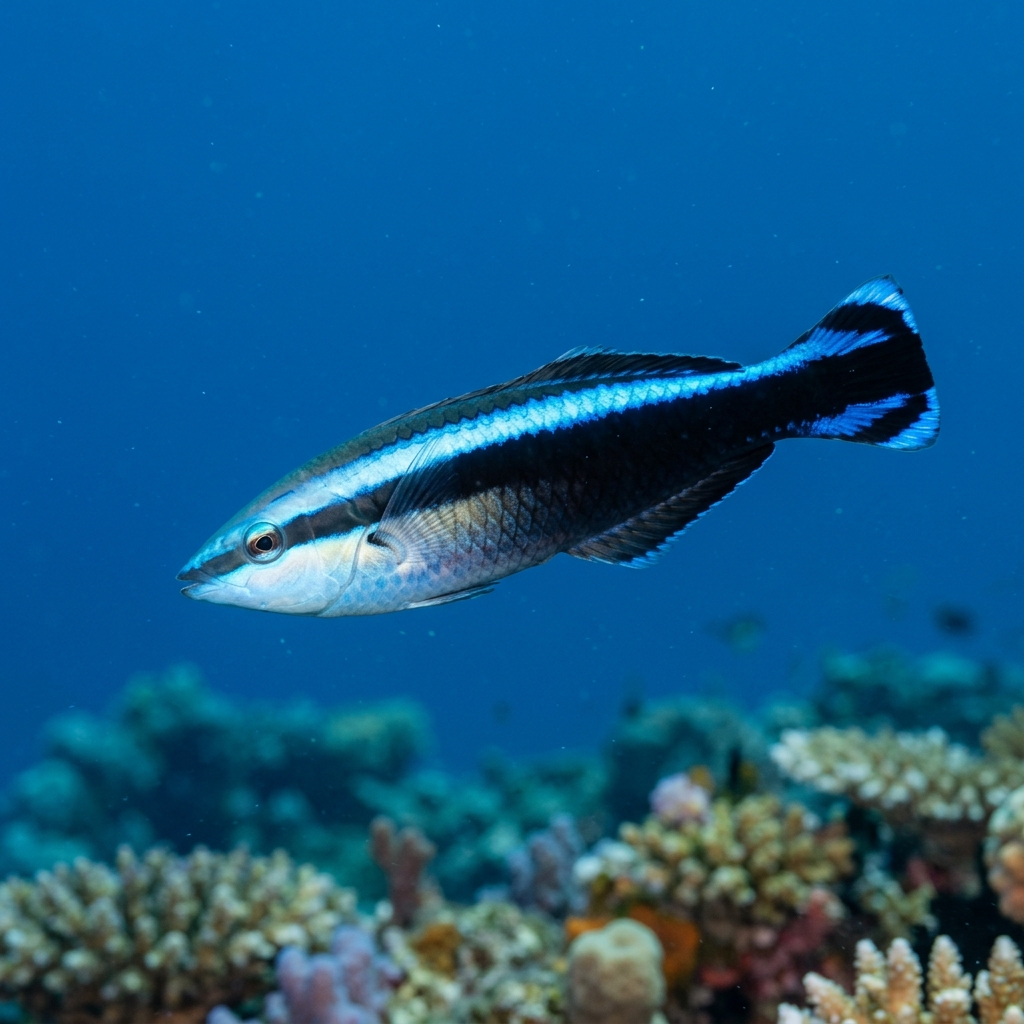
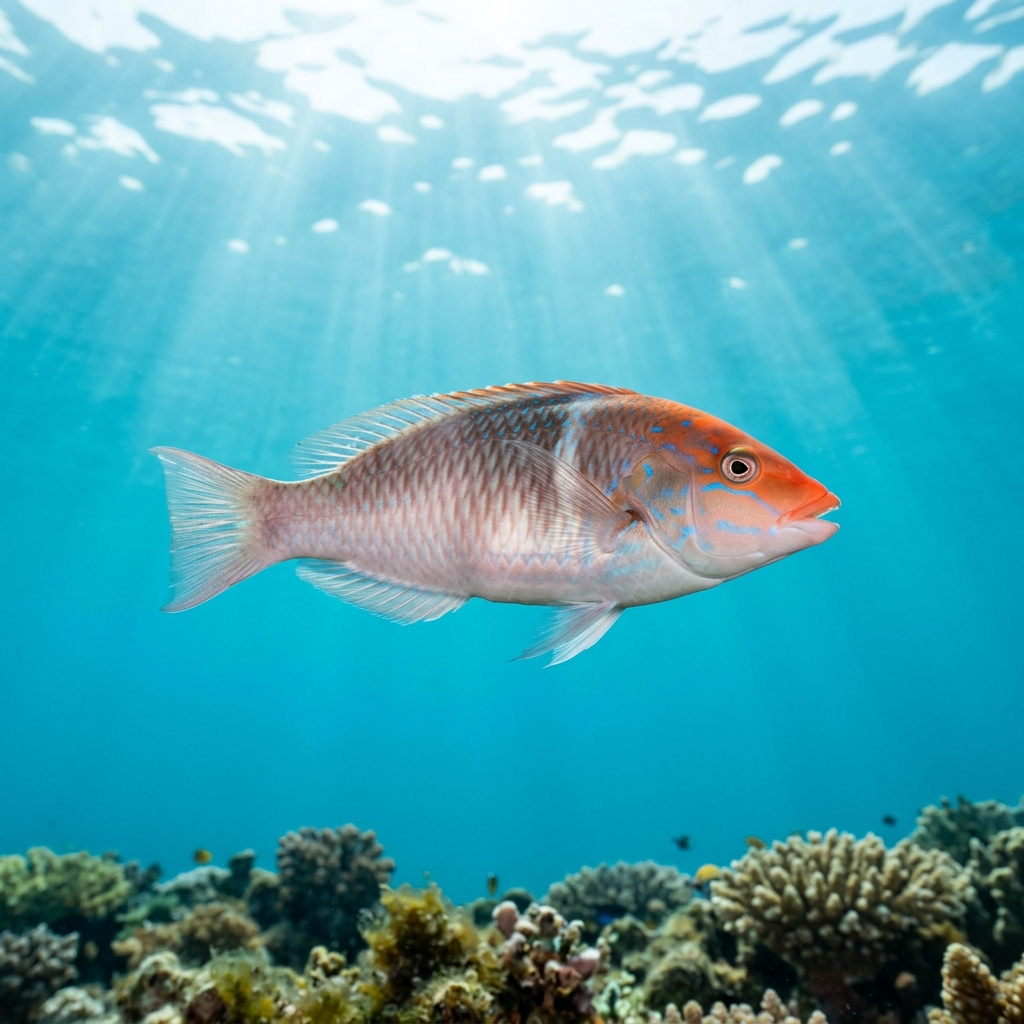
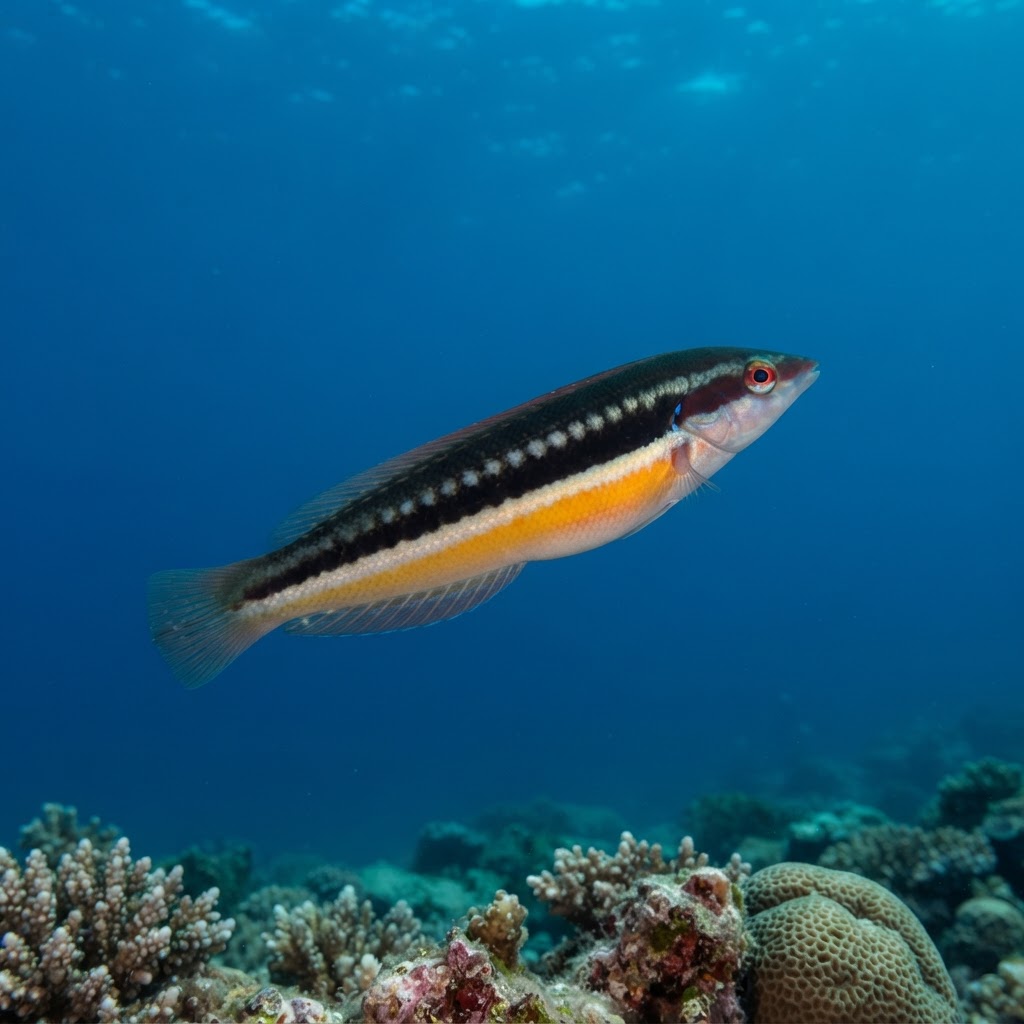
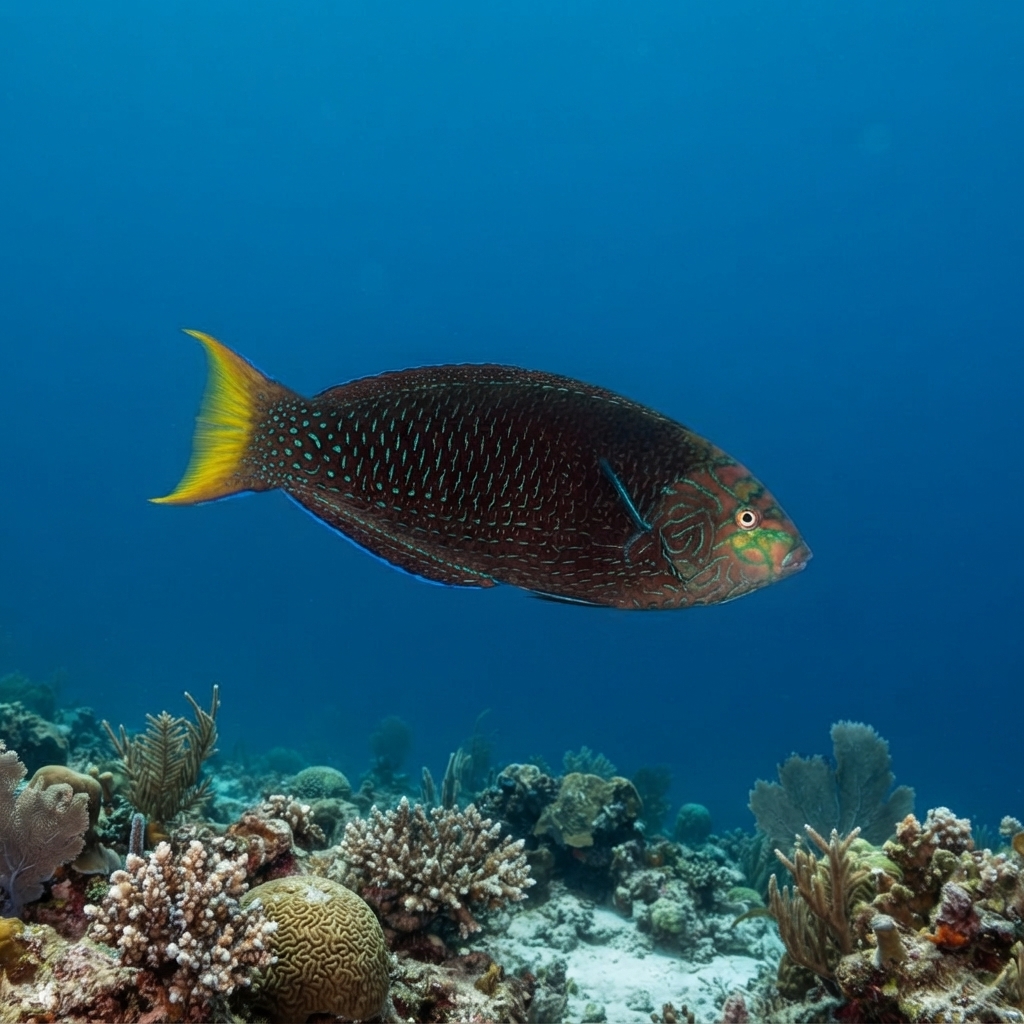
A slim, 15 cm wrasse with a dark blue-black to greyish body speckled with fine pale spots, ending in a sharply contrasting bright yellow tail. It swims with the quick, darting motion typical of small wrasses, staying low over reef structure rather than out in open water. The yellow tail against the darker body is the single mark most divers use to clinch the ID.
Usually spotted picking over reef rubble and crevices alone, foraging for small invertebrates rather than schooling or holding station. It tends to keep a bit of distance from divers and slips into cover if approached too fast, so a slow, patient pass over the reef gives the best look. Logged across a wide depth range from shallow reef flats down to 60 metres, so it's not tied to one particular depth band.
Like many wrasses in this family, it hunts by picking small invertebrates out of sand and rubble rather than grazing algae, making it a useful indicator of a healthy, well-structured reef bottom.
Sits comfortably in 24 to 29 C water, so it's present on these reefs all year with no strong seasonal pattern in the sightings data. Plan around whichever region's general dive season suits you rather than chasing a specific month for this fish.
Most reliably logged in Egypt, especially South Sinai and the Red Sea Riviera, with strong showings in Sulawesi (Indonesia), Zanzibar (Tanzania) and Grand Baie and Coin de Mire in Mauritius. Smaller numbers turn up in Fiji's Taveuni region, the Maldives' Central Atolls, Australia and Papua New Guinea.
Mapping where Yellowtail Tamarin is logged…
South Sinai and the Red Sea Riviera in Egypt are the most consistent spots, alongside Sulawesi in Indonesia and Zanzibar in Tanzania. Mauritius, particularly around Grand Baie, also turns up regular sightings.
There's no strong season in the sightings data. It lives in water between 24 and 29 C, which holds steady on these reefs year-round, so any time you'd normally dive the region works.
Look for a small, slim wrasse around 15 cm long with a dark, finely speckled body and a bright yellow tail that stands out sharply against it. It moves in quick darts low over the reef rather than swimming in open water.
They reach about 15 cm in length, making them one of the smaller wrasses you'll encounter on a reef dive.
No. They pose no threat to divers and tend to keep their distance rather than approach.
It's logged as uncommon at nearly every site where it appears, so it's a real find rather than a guaranteed sighting, even in strongholds like South Sinai or Zanzibar.
Site and sighting data is aggregated from diver logs, iNaturalist and GBIF. For taxonomy and conservation status:
Bird Wrasse
3,632 sites