Hypoplectrus chlorurus
Small, color-morphing reef fish most reliably logged along Bonaire's Leeward Coast in water around 25-28C, year-round.
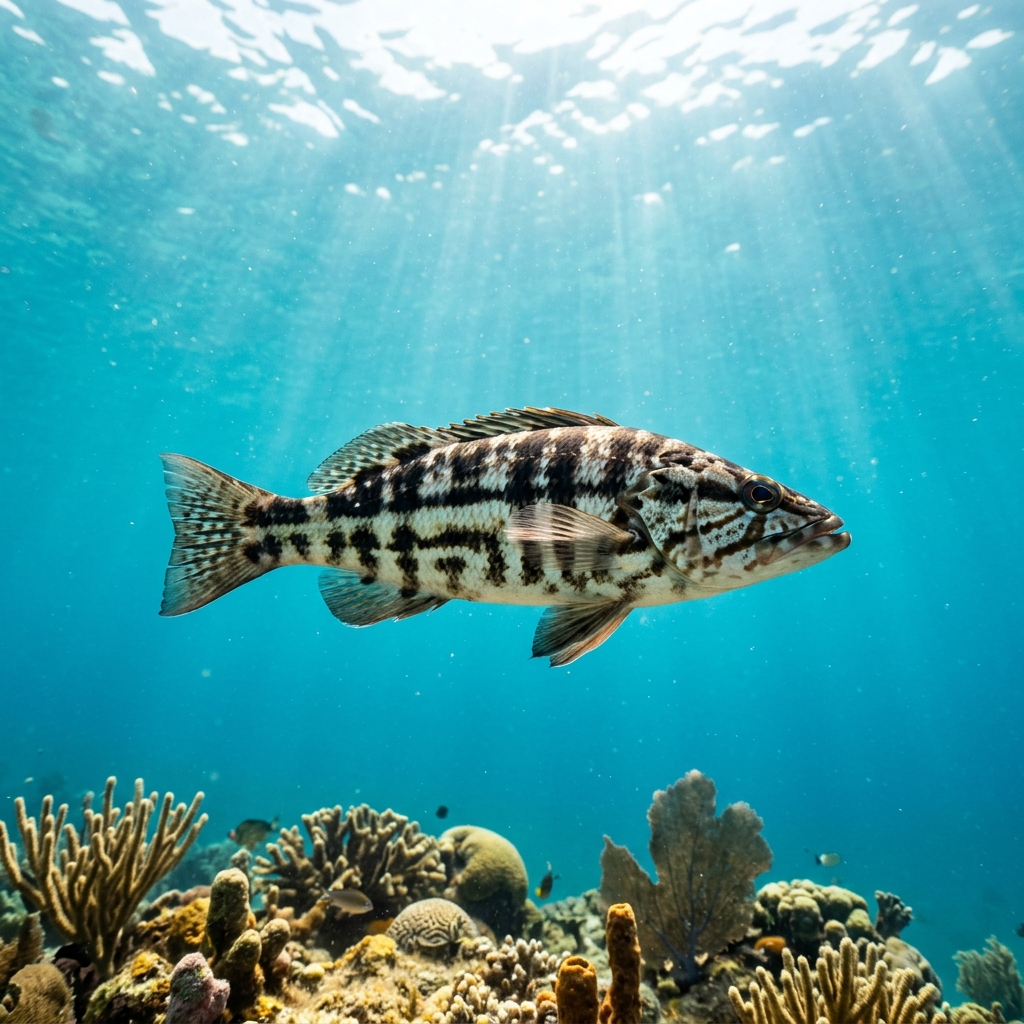
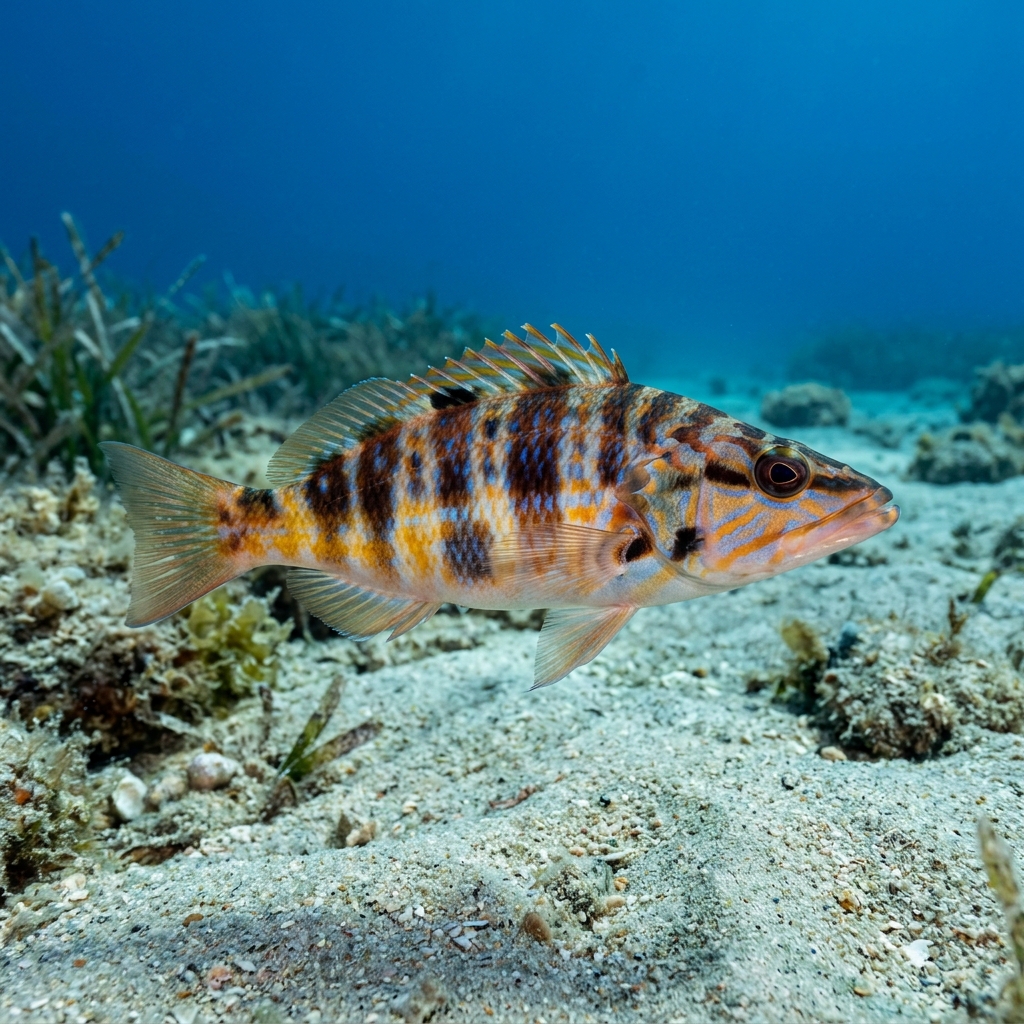
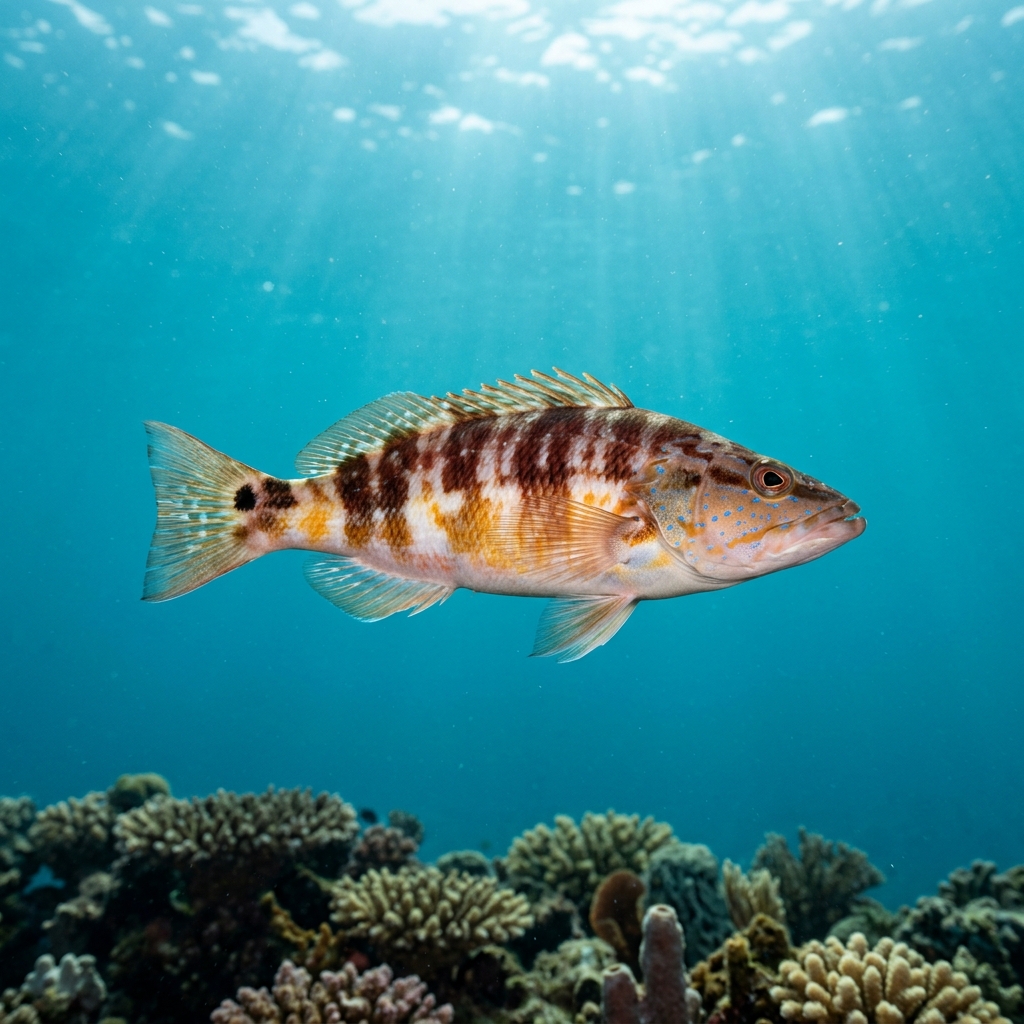
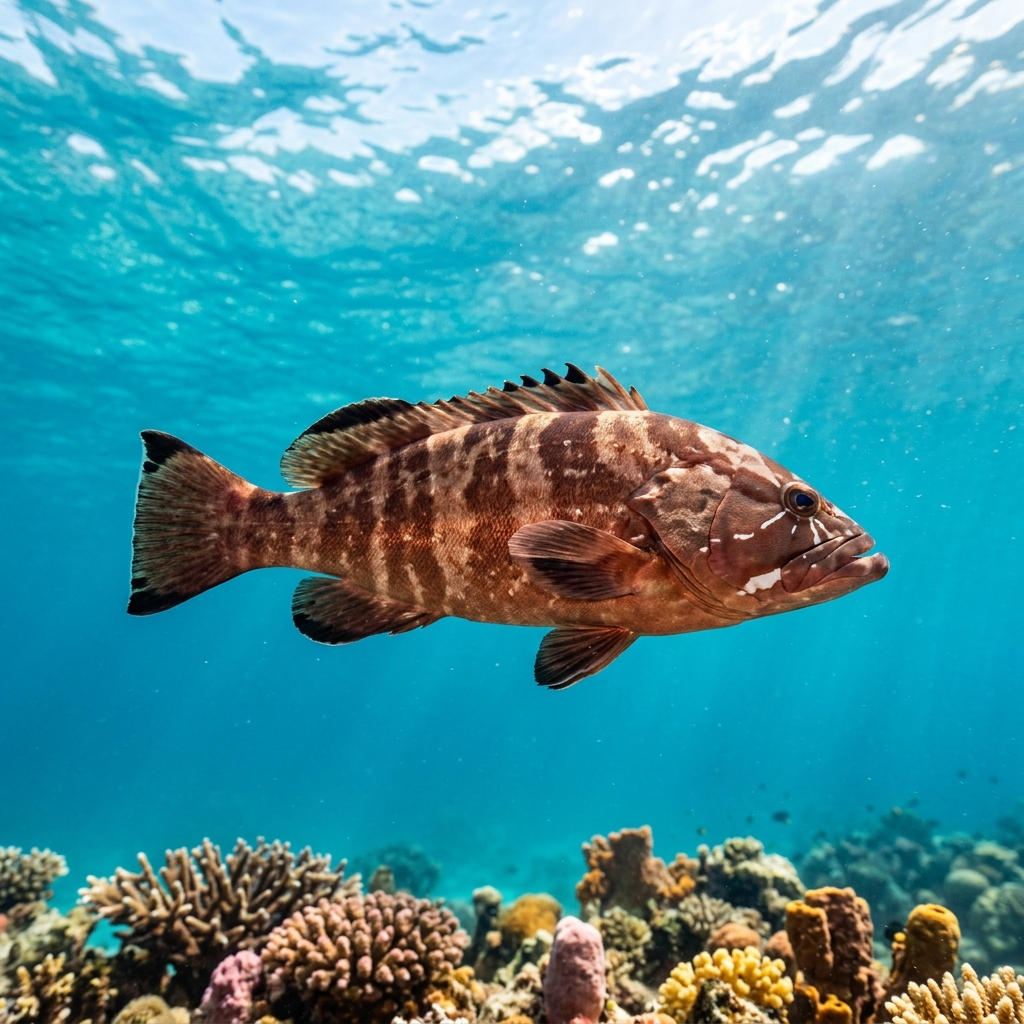
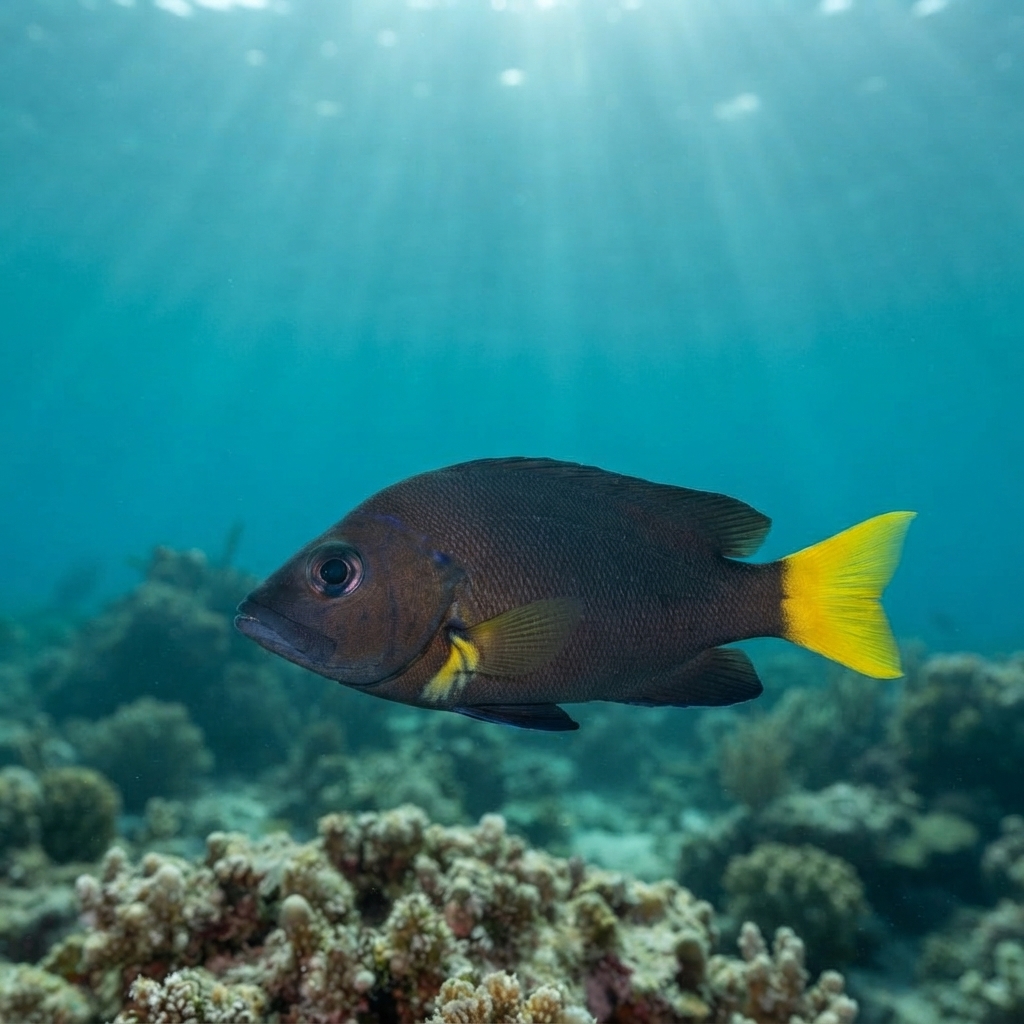
A small, deep-bodied reef fish, around 10 cm, with a bluish-grey to dark body that contrasts sharply against a bright yellow tail and rear fins. That two-tone split, dark front, yellow back end, is the single mark to look for. It hovers rather than darts, usually alone or in loose spacing near reef structure, holding a fairly stiff, oval-bodied posture typical of hamlets.
Divers most often spot it hovering just off the reef face or tucked near coral heads and rubble, picking at small invertebrates rather than chasing anything down. It tends to hold its ground rather than bolt when a diver approaches, though it is not a fish that will come to you either. Most sightings come from slow, close-focus reef dives rather than open water or wall dives, which fits its habit of sticking near structure at modest depths.
Hamlets are simultaneous hermaphrodites, meaning every individual carries both male and female reproductive organs, and pairs typically trade roles back and forth during a single spawning session rather than settling into one sex.
No clear seasonal pattern shows up in the sightings, and the water it is found in sits in a narrow 24.7-28.1C band typical of Caribbean reefs year-round, so any month is fair game. Plan around site access and visibility rather than season.
This is overwhelmingly a Bonaire fish in the logged data, with the Leeward Coast, East Coast Bonaire, and Klein Bonaire all producing strong, repeated sightings. Outside Bonaire it turns up more occasionally in the Cayman Islands (notably Cayman Brac), Grenada, Curacao, and the US Virgin Islands, so it is a realistic find across the southern Caribbean but a near-guarantee on Bonaire's fringing reefs.
Mapping where Yellowtail Hamlet is logged…
Bonaire is by far the most reliable place, with sightings concentrated along the Leeward Coast, East Coast Bonaire, and Klein Bonaire. It is also seen occasionally in the Cayman Islands, Grenada, Curacao, and the US Virgin Islands.
There is no strong seasonal pattern in the sightings, and it lives in a fairly stable warm-water band year-round, so it can be found on any given dive trip regardless of month.
Look for a small, roughly 10 cm reef fish with a dark bluish-grey front half that gives way sharply to a bright yellow tail and rear fins. It hovers near reef structure rather than swimming in open water, holding a stiff, oval body shape.
They stay small, typically around 10 cm long, making them an easy fish to overlook against busier reef backgrounds unless you are looking closely.
Like other hamlets, every individual is a simultaneous hermaphrodite, carrying both male and female organs, and mating pairs alternate roles during spawning rather than being fixed as one sex.
No. They are small, non-aggressive reef fish that pose no risk to divers and typically just hold their position near the reef as you pass.
Site and sighting data is aggregated from diver logs, iNaturalist and GBIF. For taxonomy and conservation status:
Blacktip Grouper
2,726 sites