Coris flavovittata
A large, uncommon wrasse logged in Hawaii's reefs, comfortable in 16 to 25 C water and worth learning to spot up close.
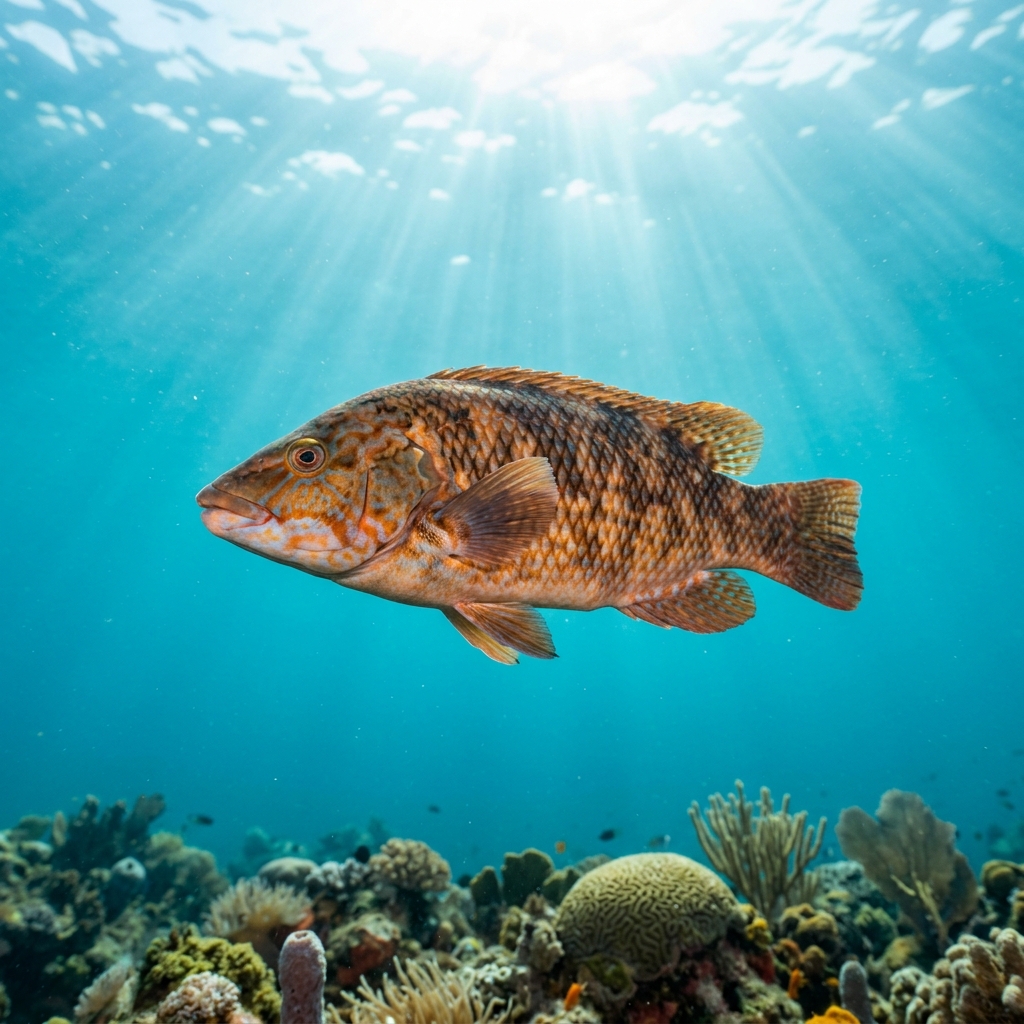
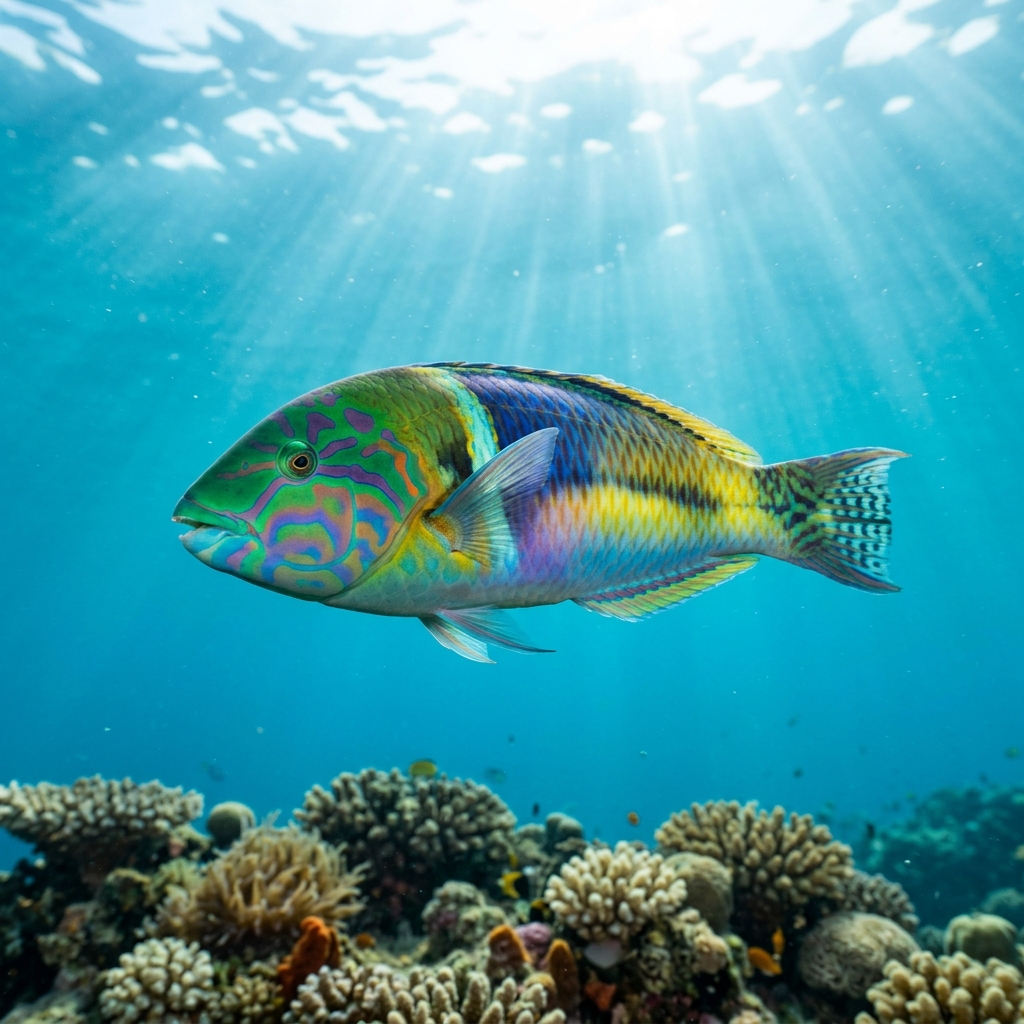
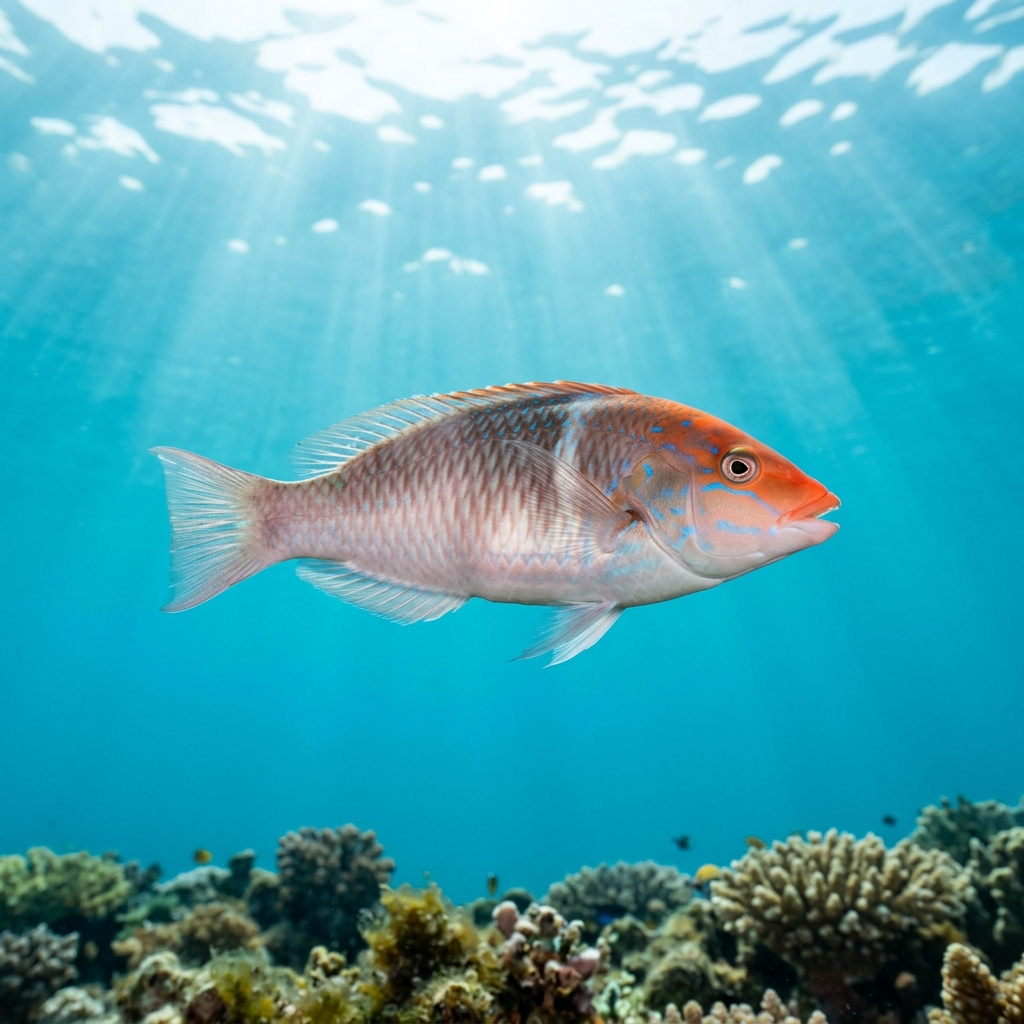
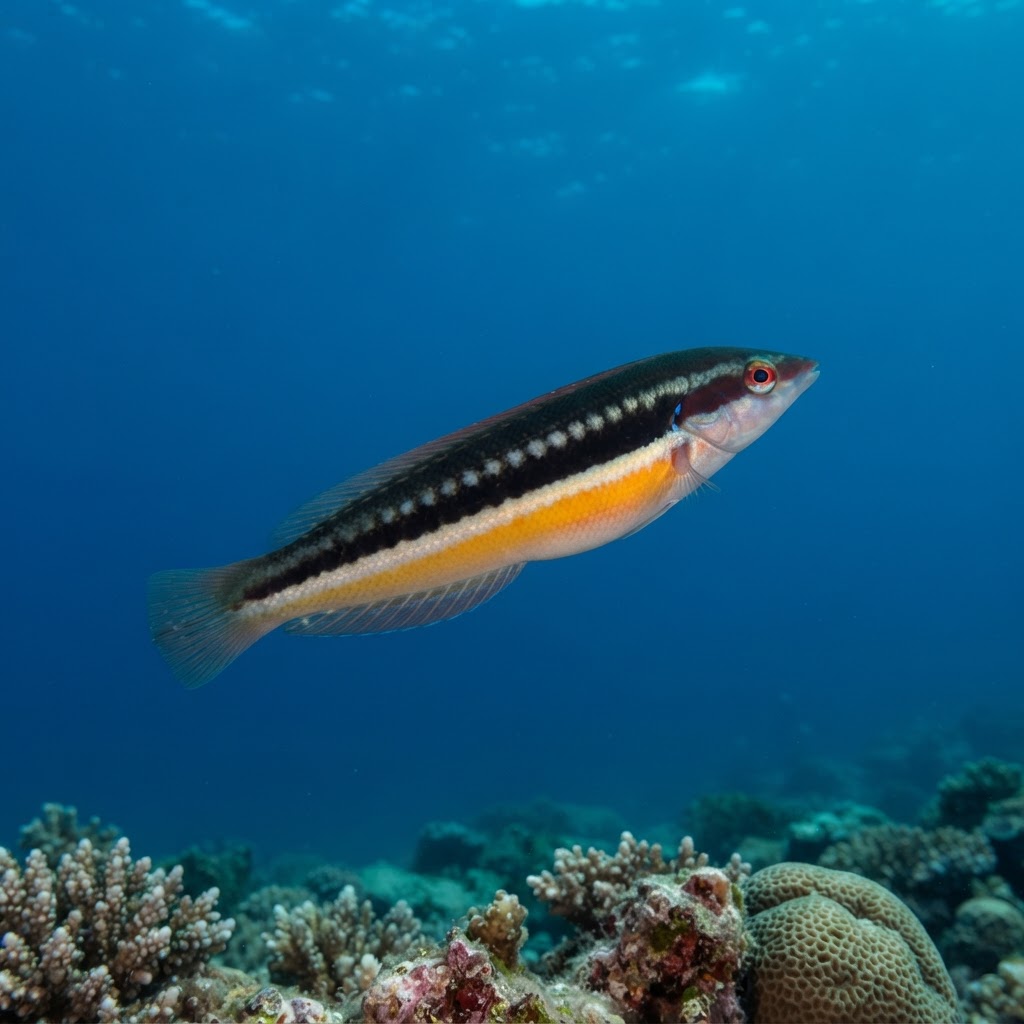
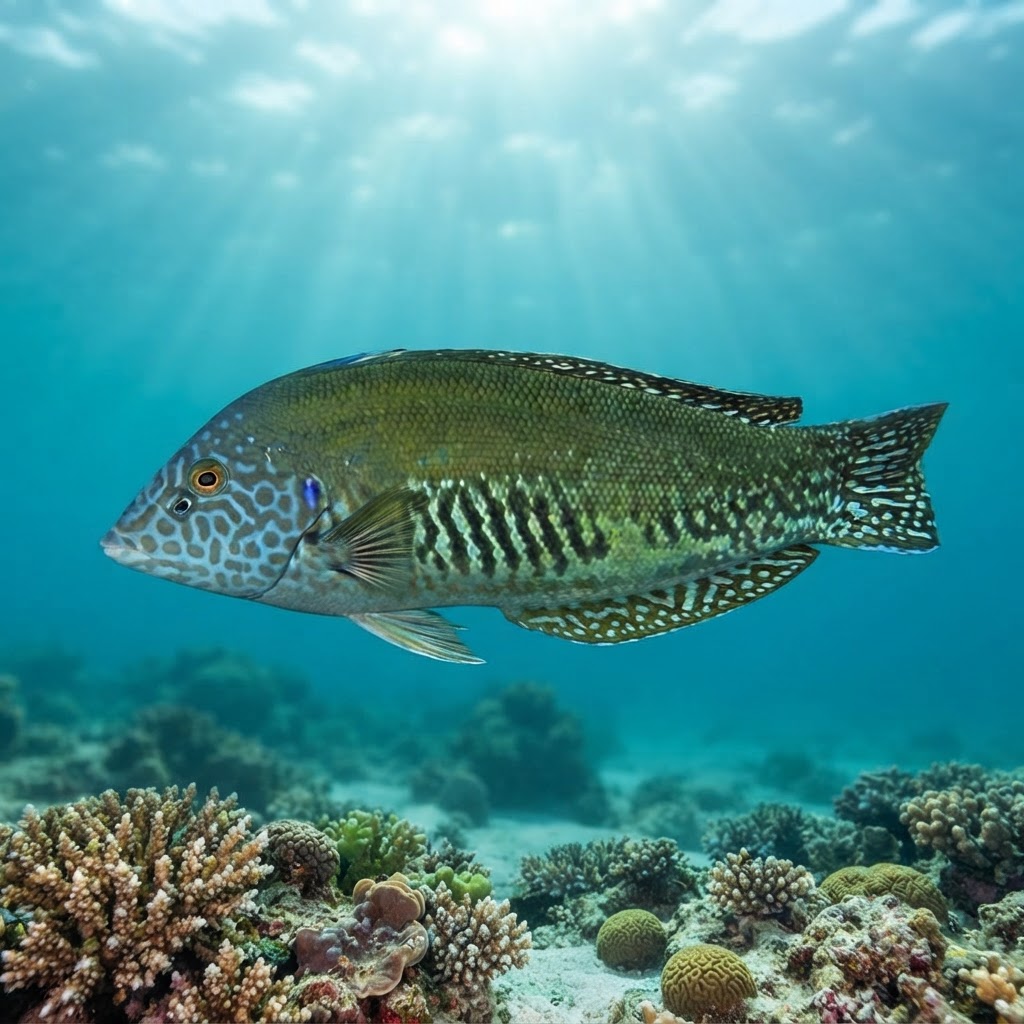
A big-bodied wrasse reaching around 36 cm, with a torpedo-shaped profile typical of the coris group and a steep, almost blocky head. Look for pale to greenish body tones broken by yellow striping running along the flanks, more distinct than the mottled patterning seen on many reef wrasses its size. It tends to cruise low over rock and rubble rather than hovering mid-water, which combined with its size makes it stand out once you clock it.
Divers log it moving along rocky bottom and rubble zones, foraging low over the substrate rather than schooling or holding station in open water. It is not reported to react strongly to divers, and sightings are uncommon even at the one Hawaiian site where it has been recorded, so a calm, unhurried approach along the bottom gives the best chance of a close look.
Like other coris wrasses, it is a bottom-foraging hunter that noses through sand and rubble for small invertebrates rather than picking food from the open water column.
No clear seasonal pattern shows up in the sighting data, so treat it as a year-round possibility on Hawaiian reefs. Its recorded temperature range of 16.3 to 25.4 C spans the islands' normal seasonal swing, which supports sightings across the year rather than a narrow window.
Currently logged almost exclusively in Hawaii, United States, making the Hawaiian Islands the place to look for it. Sightings elsewhere have not been documented, so treat this as a Hawaii-specific find for now.
Mapping where Yellowstripe Coris is logged…
The only documented sightings come from Hawaii, United States, so the Hawaiian Islands are currently the place to look for this wrasse.
There is no detected seasonal peak in the sighting data, so it is best treated as a year-round possibility on Hawaiian reefs given its wide observed temperature tolerance.
Look for a large wrasse around 36 cm with a torpedo-shaped body, a steep head, and yellow stripes running along a pale to greenish flank. It is usually seen cruising or foraging low over rock and rubble rather than in open water.
They reach around 36 cm in length, making them one of the larger wrasses a diver might encounter on a Hawaiian reef.
No, they are not considered dangerous to divers and show no aggressive behaviour toward people on the reef.
They forage over sand and rubble bottoms, nosing through the substrate to pick out small invertebrates, a typical feeding style for coris wrasses.
Site and sighting data is aggregated from diver logs, iNaturalist and GBIF. For taxonomy and conservation status:
Bird Wrasse
3,632 sites