Torquigener flavimaculosus
Small sandy-bodied puffer with yellow spots, most reliably logged along Turkey's Turquoise Coast and Crete in water around 21 to 29 C.
Safety warning
Its skin and internal organs contain tetrodotoxin, a potent nerve toxin, so it is not safe to touch or handle even though it will not actively attack a diver. Keep hands off and let it sit undisturbed on the sand; the real risk is to anyone tempted to collect or eat it, not to divers who simply look.
Handle with care
Toxic if eatenGeneral first-aid guidance, not a substitute for professional medical care. In an emergency, call your local emergency number.
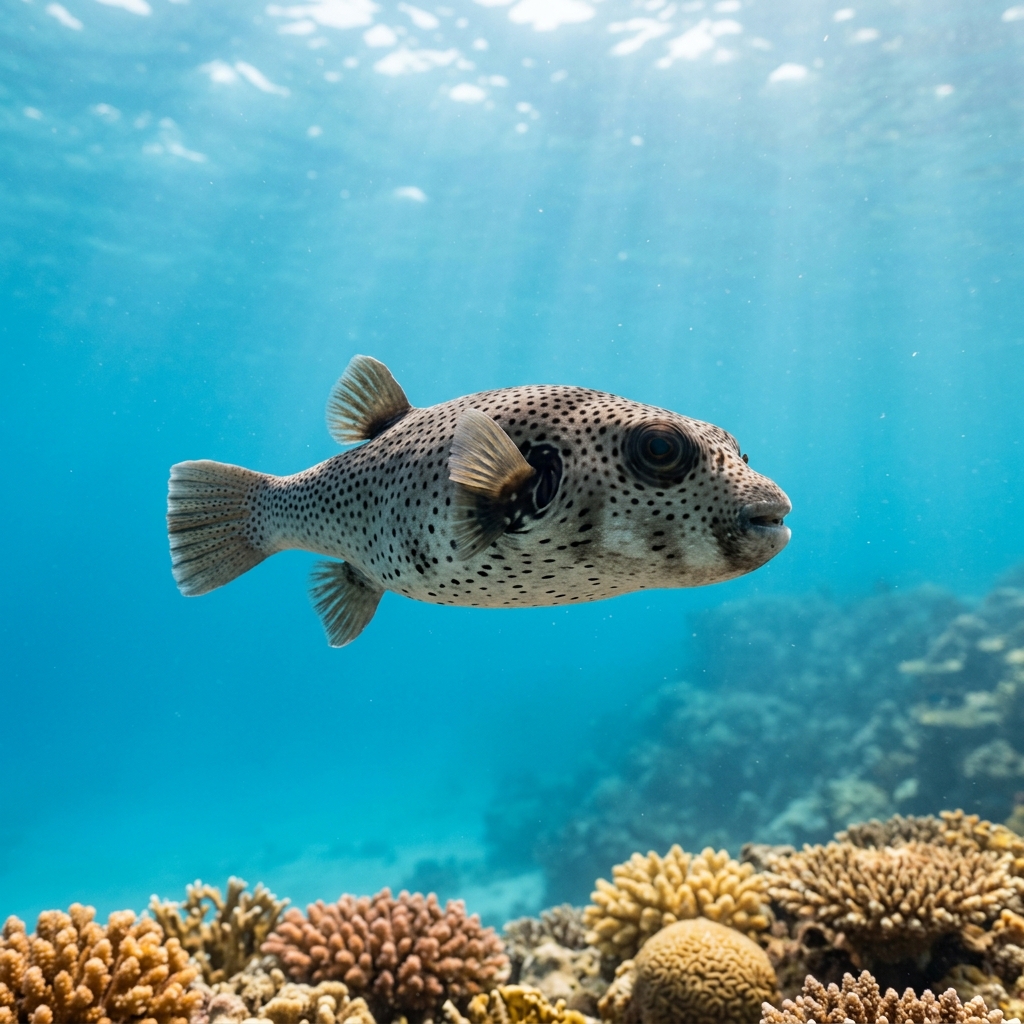
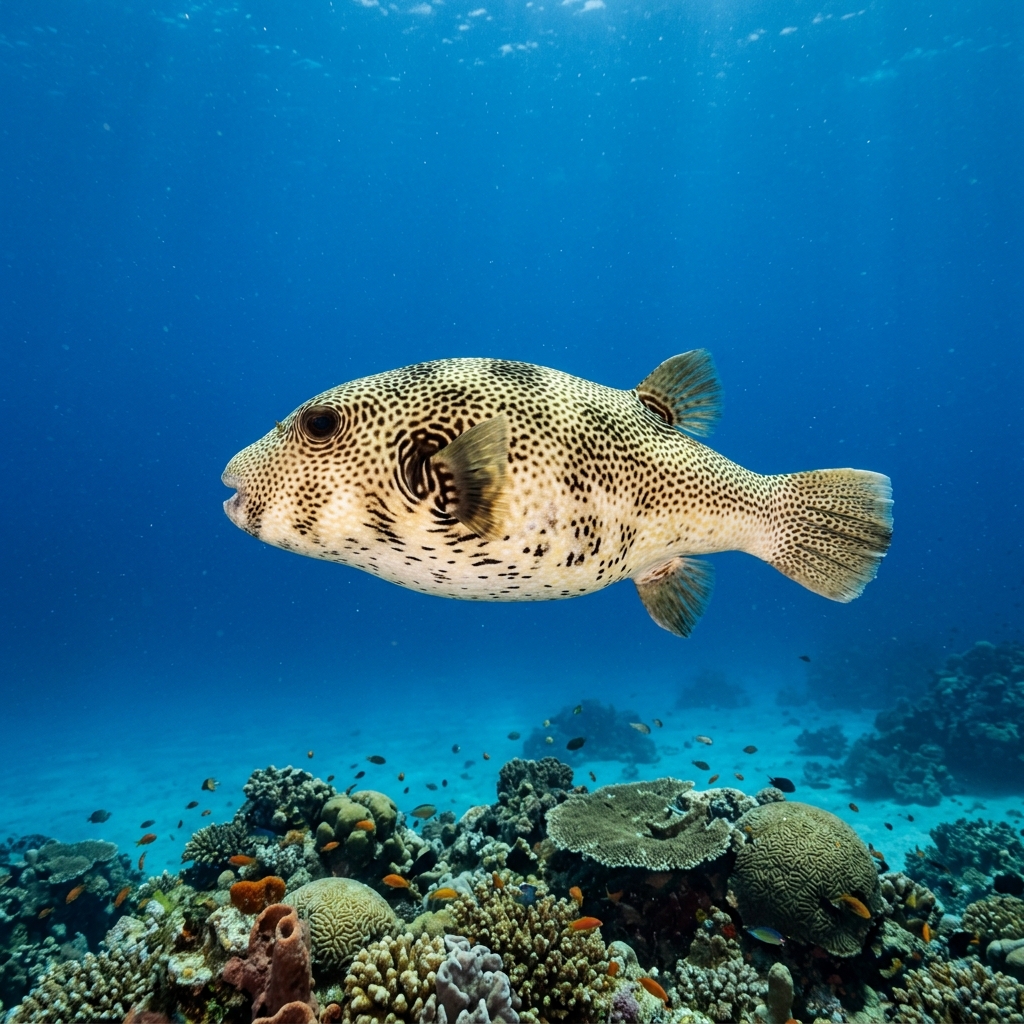
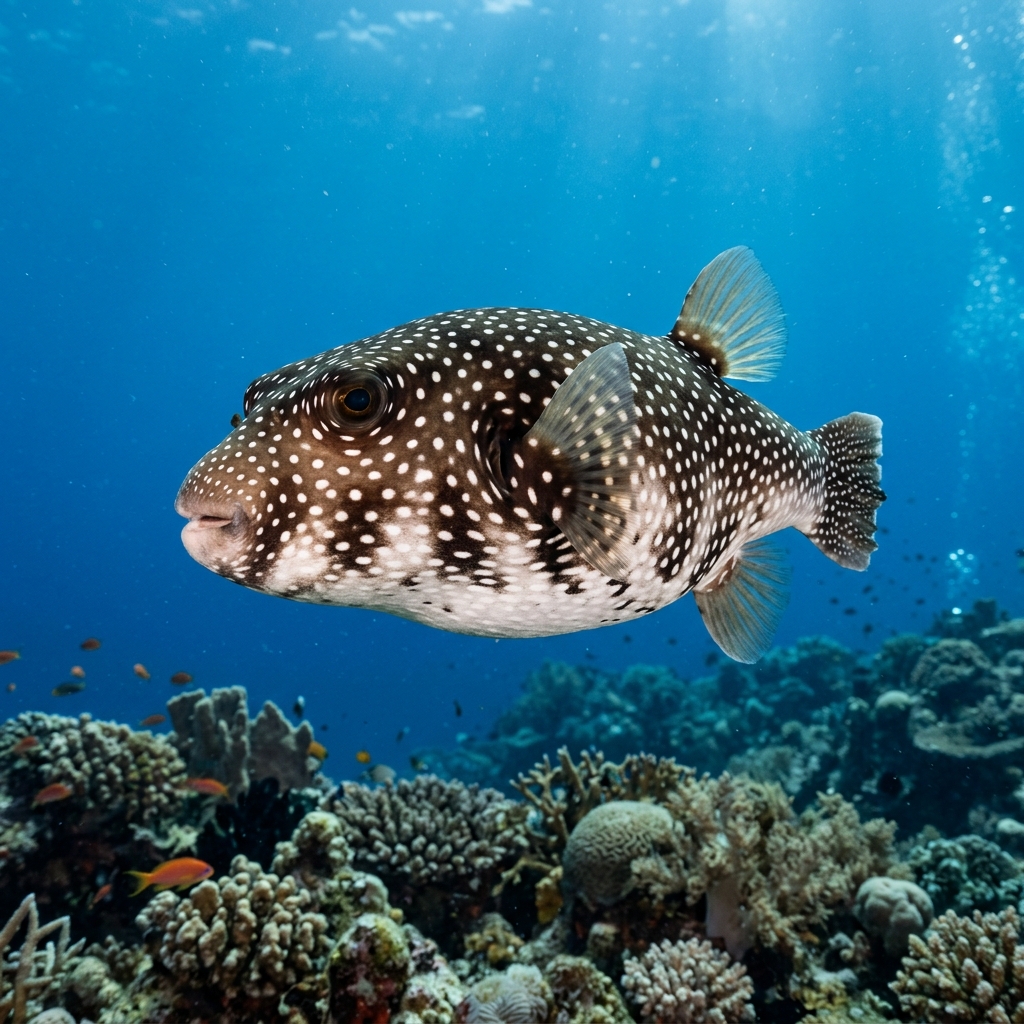
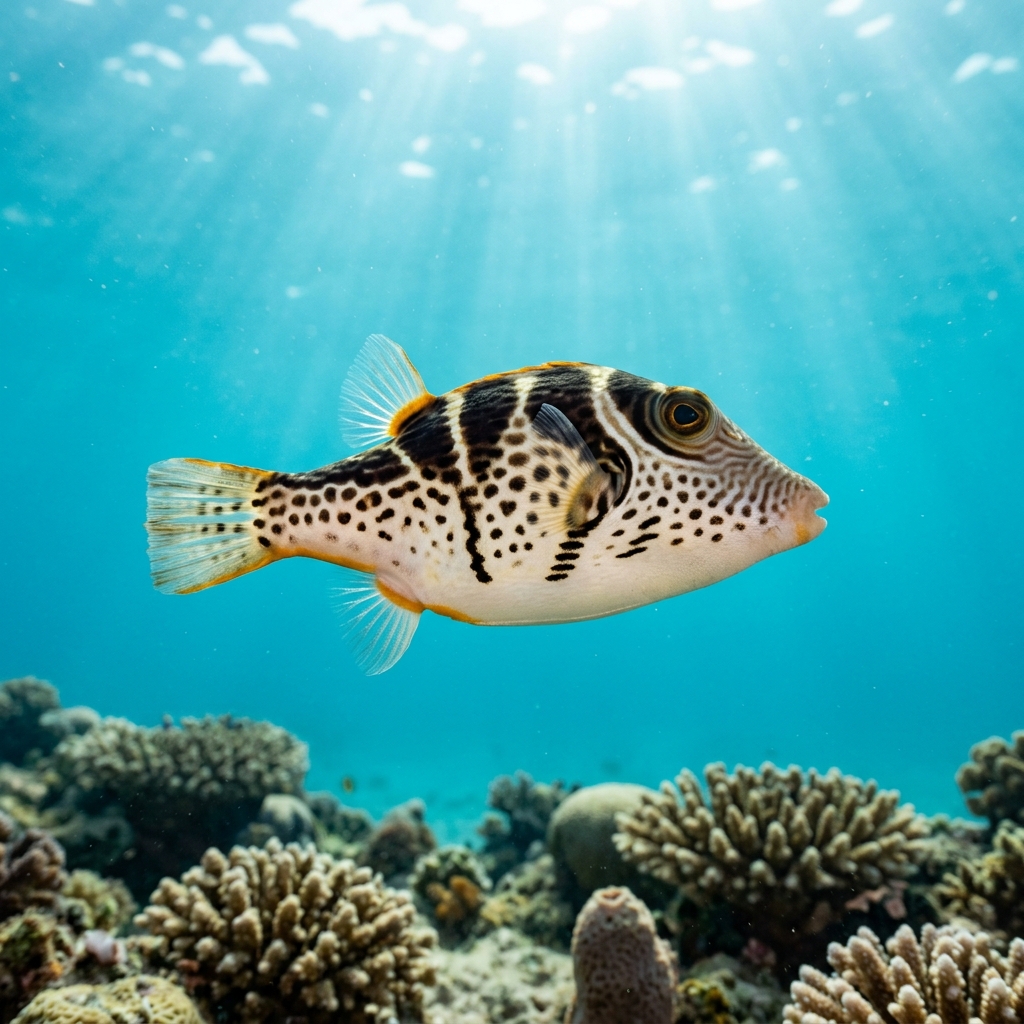
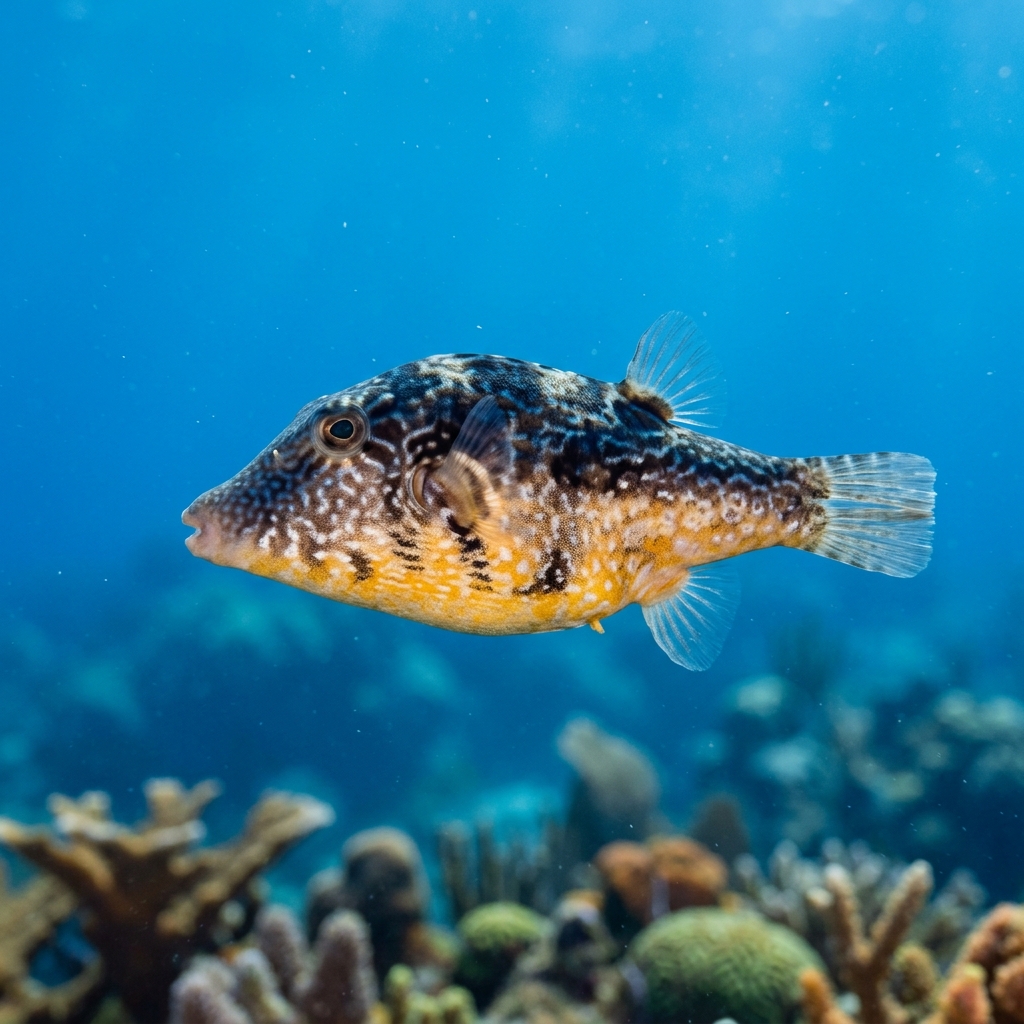
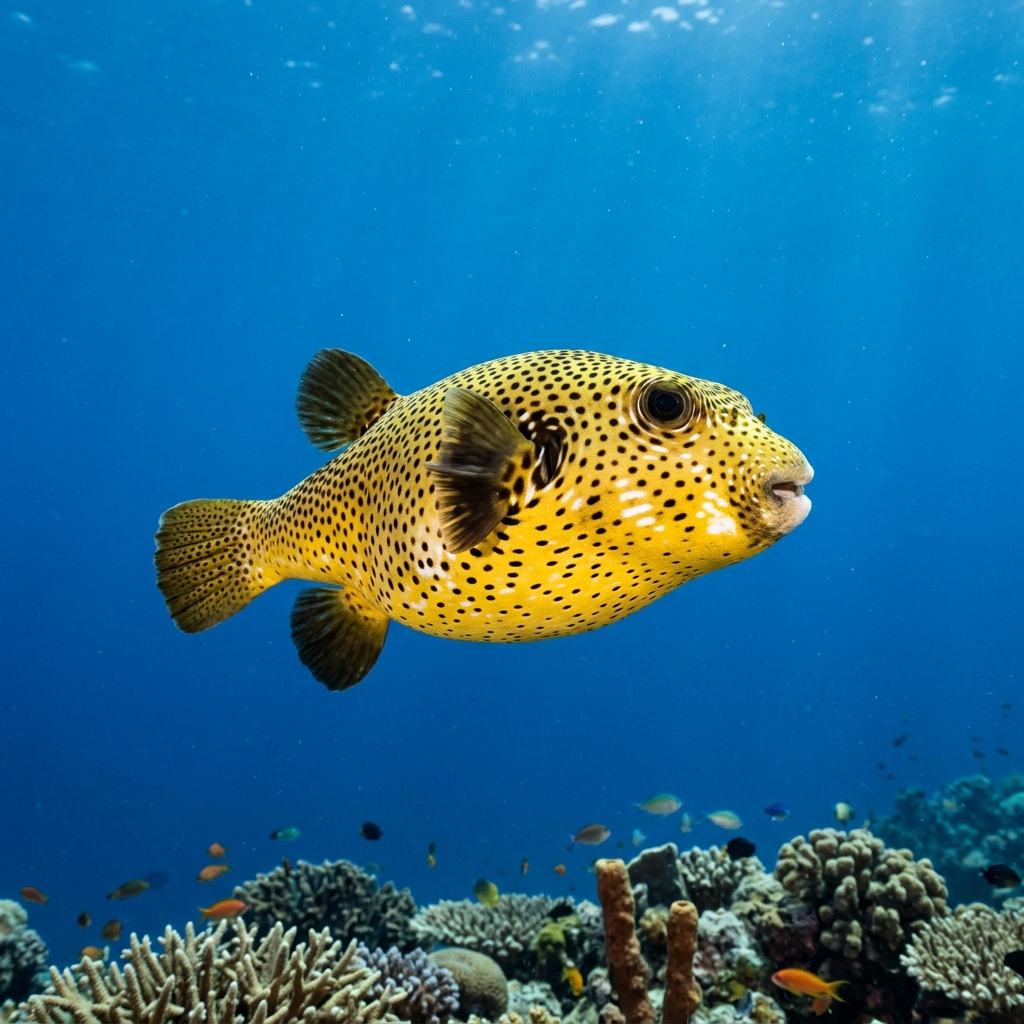
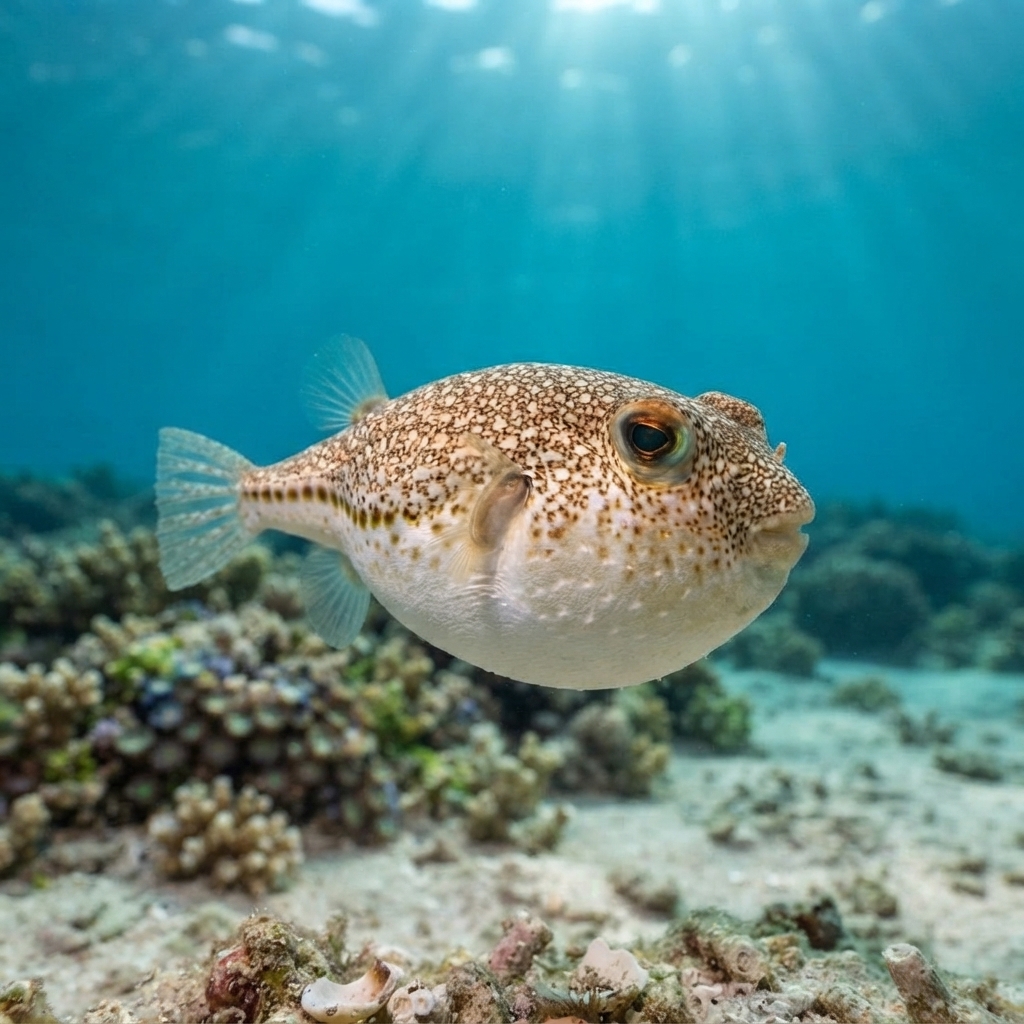
Small, blunt-nosed pufferfish, rarely more than 11 cm, with a sandy or grey-brown body scattered with small yellow spots and fine dark reticulations. The body is rounded and tapers to a small tail, with no obvious dorsal or anal fin height to speak of, giving it a stubby, low-slung look on the sand. It often lies still on sand or rubble rather than swimming in open water, which combined with its muted colouring makes it easy to swim straight past.
Divers most often find it sitting motionless on sand, rubble or seagrass margins rather than cruising the reef face, relying on its drab colouring to disappear into the substrate. It tends to hold still as divers approach and will only dart a short distance if pressed, rather than fleeing across open water. Look for it during the middle of the dive over flat sandy patches near rocky reef, where it blends in until it moves.
Like other members of its genus, males of related Torquigener species are known for building elaborate circular sand structures to attract mates, one of the more striking pieces of behaviour in the pufferfish family.
Sightings show no clear seasonal pattern, and with a comfortable range of roughly 21 to 29 C it turns up on Mediterranean reefs across most of the diving season rather than in one narrow window.
Reef neighbours a diver could mistake it for. Use the identification notes above to tell them apart.
This is a Mediterranean fish through and through, most commonly logged along Turkey's Turquoise Coast and around Antalya, with strong numbers also in Crete and the wider Dodecanese in Greece. Cyprus is another reliable spot, particularly Ayia Napa, Protaras and Paphos, with a single logged sighting from South Africa's Western Cape well outside the usual range.
Mapping where Yellowspotted Puffer is logged…
It is most reliably seen along Turkey's Turquoise Coast and around Antalya, on Crete and through the Dodecanese in Greece, and around Ayia Napa, Protaras and Paphos in Cyprus.
There is no strong seasonal pattern in sightings, and it tolerates water from about 21 to 29 C, so it is seen across the Mediterranean dive season rather than in one specific month.
They carry tetrodotoxin in their skin and organs, which is dangerous if handled or ingested, but they pose no threat to divers who simply observe from a short distance without touching them.
Look for a small, stubby pufferfish around 11 cm with a sandy or grey-brown body covered in small yellow spots, usually seen lying still on sand or rubble rather than swimming in open water.
They stay small, typically reaching around 11 cm in length, which combined with their camouflaged colouring makes them one of the easier reef fish to overlook.
Relatives in the same genus are famous for males constructing intricate circular patterns in the sand to attract females, one of the most elaborate courtship displays known in reef fish.
Site and sighting data is aggregated from diver logs, iNaturalist and GBIF. For taxonomy and conservation status:
Valentini Pufferfish
2,830 sites