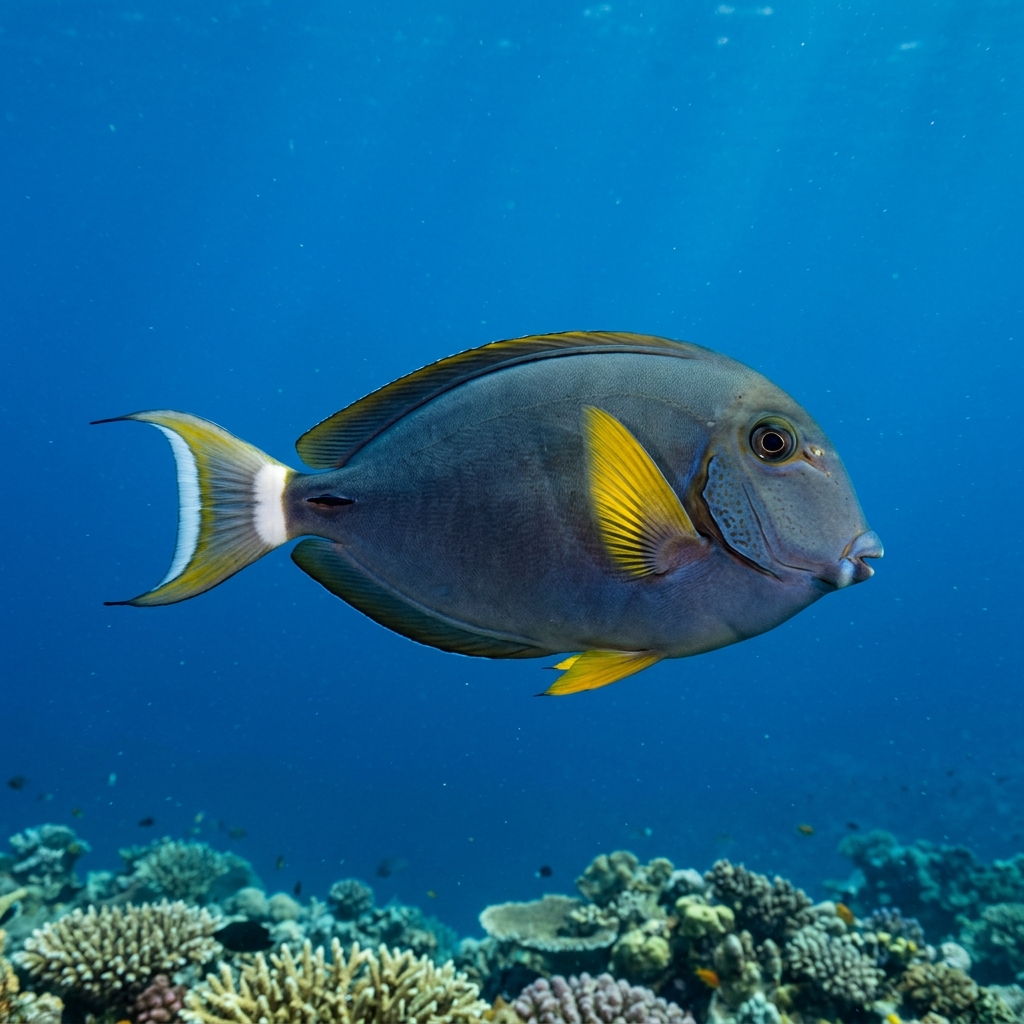
Acanthurus xanthopterus
Spot Yellowfin Surgeonfish in the Maldives and Philippines between October and June. ID tips, behaviour, and top dive sites inside.
Safety warning
Like all surgeonfish, this species carries a sharp, scalpel-like spine (the caudal spine, located at the base of the tail) that can inflict a painful laceration. The spine is a defence mechanism, not an attack, but a startled or cornered fish can slash with it reflexively. Avoid cornering individuals against the reef, keep hands away from the tail, and give extra space if one looks agitated or is behaving territorially during spawning.
If you're cut
Tail scalpelGeneral first-aid guidance, not a substitute for professional medical care. In an emergency, call your local emergency number.
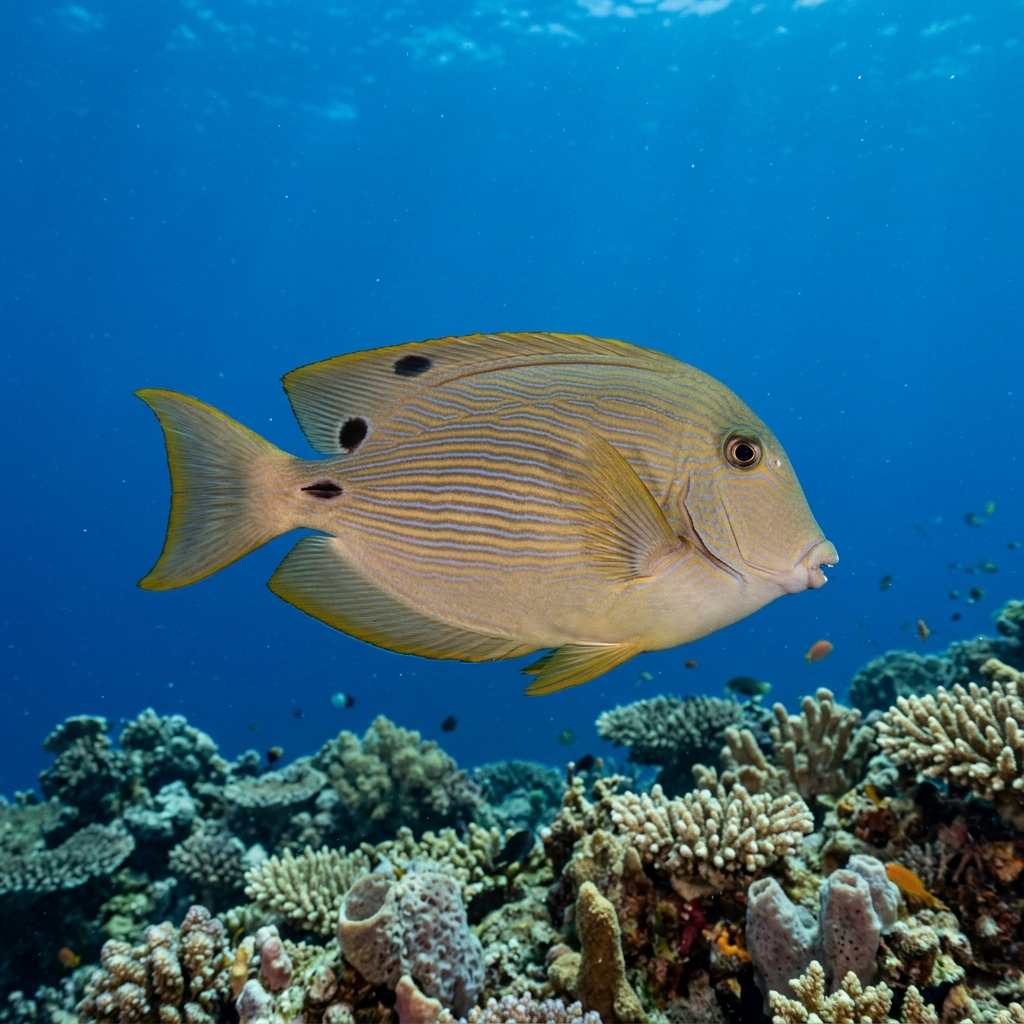
A large, oval-bodied surgeonfish reaching close to 50 cm, with a grey-brown to purplish body that can appear almost featureless at a glance. The key mark is the yellow wash along the base of the dorsal and anal fins, which gives it its name and stands out clearly underwater. Look for a pale blue stripe running along the base of those same fins and a yellow stripe on the pectoral fin. Juveniles tend to be paler and more uniformly coloured, lacking the yellow fin detail that makes adults identifiable.
You will most often find them grazing methodically over reef surfaces and sandy patches during daylight hours, working through algae and organic detritus with little concern for nearby divers. They do not approach divers out of curiosity, but they are calm and unhurried, so patient observers can get close without spooking them. Adults are typically solitary or in loose small groups; juveniles are more likely to be seen together, and during the spawning period males will occasionally display against rivals.
Unlike most surgeonfish, which stick closely to algae, Yellowfin Surgeonfish are omnivores that also consume zooplankton and organic material in the water column, giving them a wider depth range than most of their family, recorded all the way down to 100 m.
In Northern Hemisphere destinations such as the Maldives and Philippines, sightings concentrate between October and June. The Southern Hemisphere data points to June through August as the peak window for locations like Queensland, Australia.
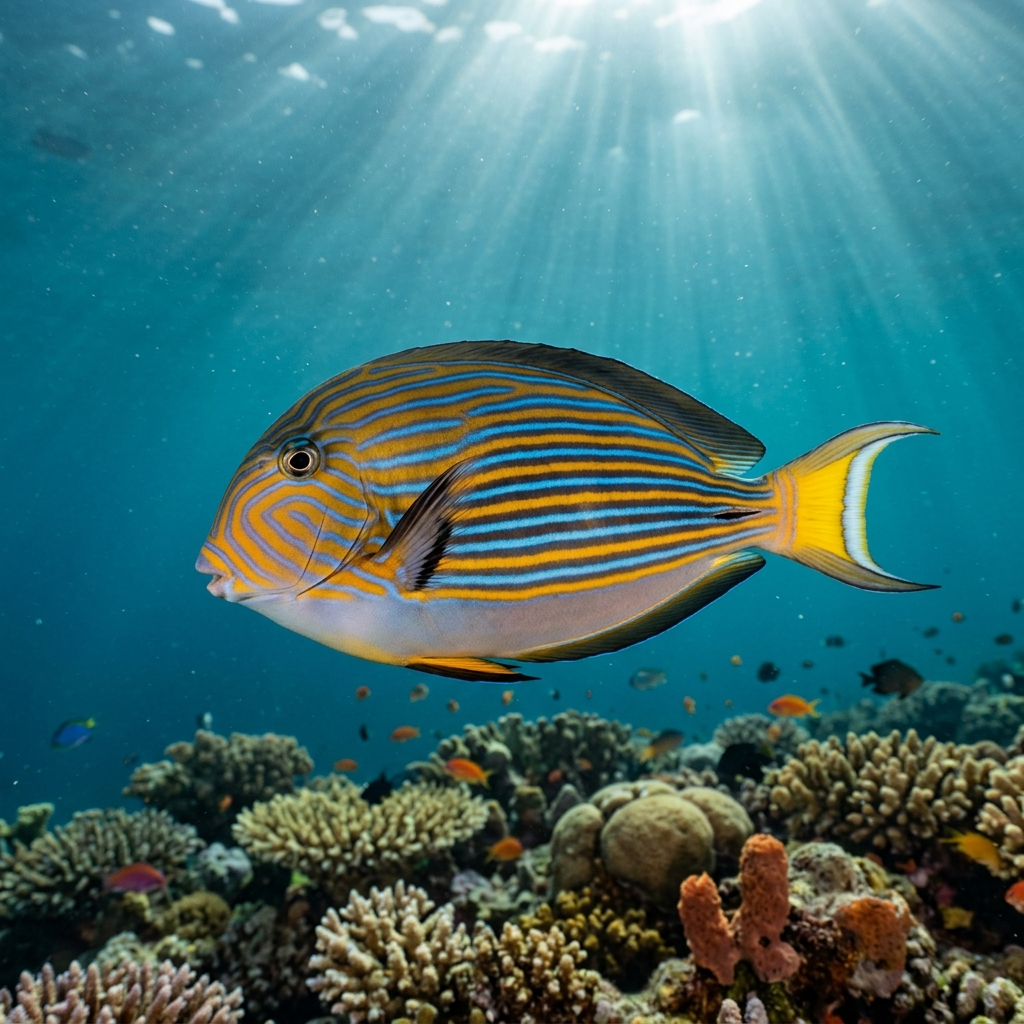
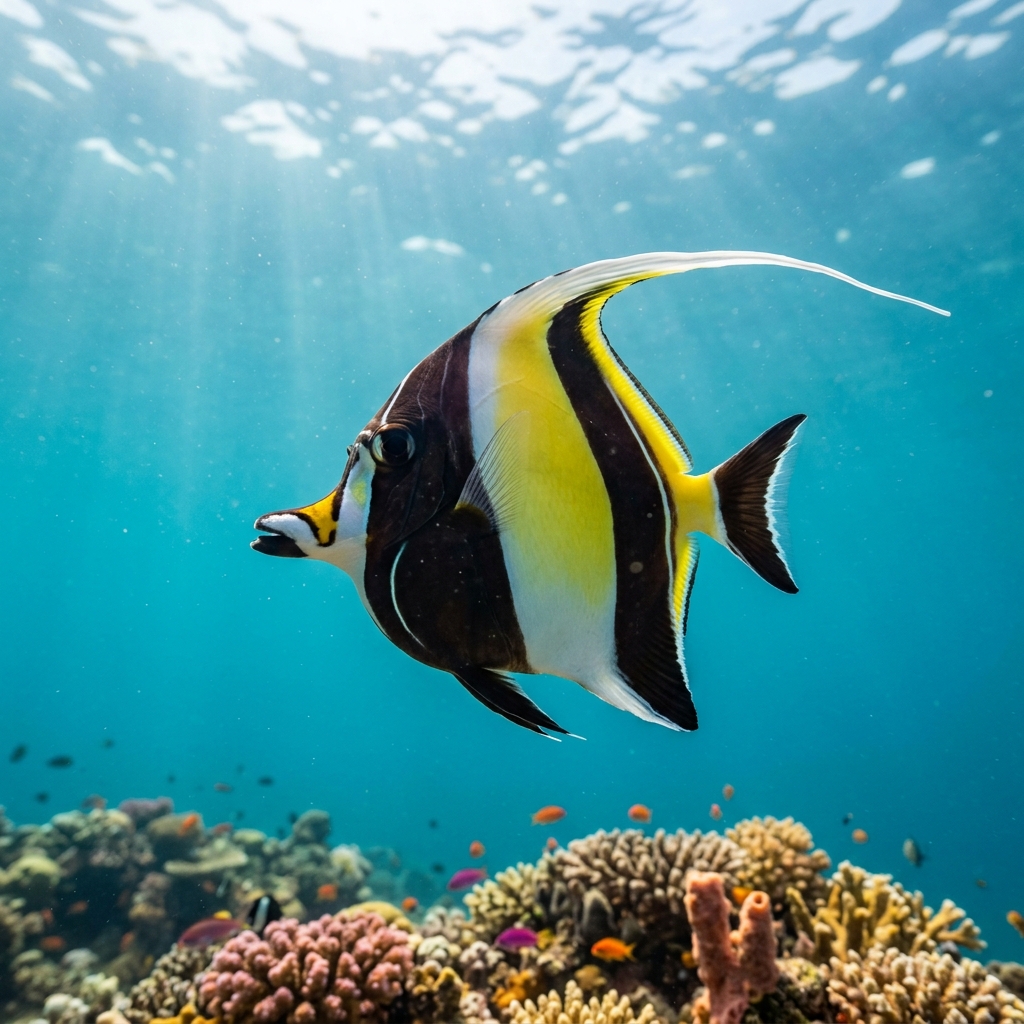
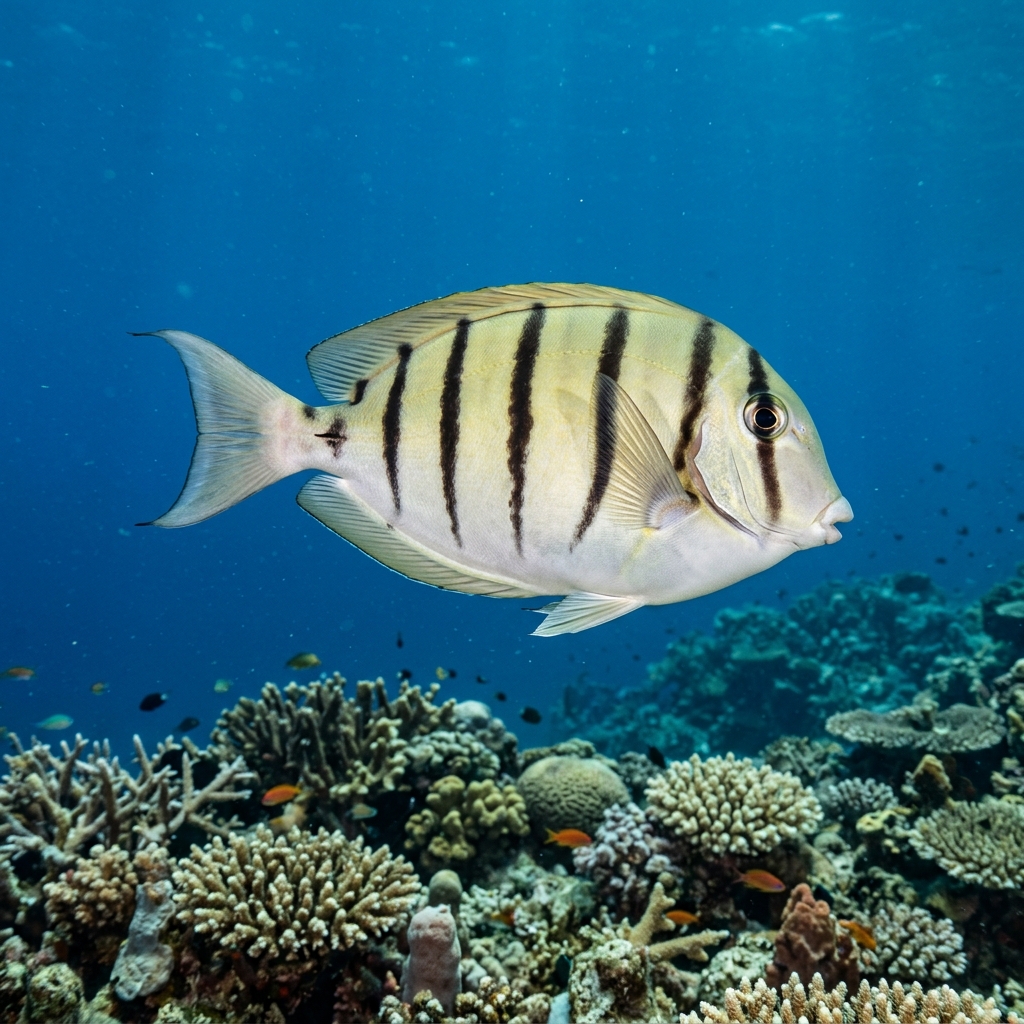
Reef neighbours a diver could mistake it for. Use the identification notes above to tell them apart.
Most commonly logged across the Indo-Pacific, with the Maldives accounting for the largest share of sightings, particularly around the Male, Ari, North and Central Atolls. The Philippines, especially Palawan and Apo Reef, and Queensland, Australia, are also strong locations. Indonesia and Mexico round out the reliable range, with Hawaii offering a solid Pacific option.
Mapping where Yellowfin Surgeonfish is logged…
The Maldives is the most reliable destination, with strong populations across the Male, Ari, and North Central Atolls. The Philippines (particularly Palawan and Apo Reef), Queensland in Australia, and Hawaii are also well-established sighting locations. The species has a broad Indo-Pacific and eastern Pacific range, with records from Indonesia, Thailand, Mexico, and Costa Rica as well.
In the Maldives, Philippines, and other Northern Hemisphere destinations, October through June is the peak window. For Queensland, Australia and Southern Hemisphere sites, June to August sees the most concentrated sightings. The species tolerates water temperatures from roughly 23 to 29 degrees Celsius, so it is present on warm reefs for much of the year.
Look for a large, oval surgeonfish with a grey-brown body and a clear yellow wash along the base of the dorsal and anal fins. A pale blue stripe runs alongside those yellow fin bases, and the pectoral fin also shows yellow. At nearly 50 cm, adults are notably large compared to most reef surgeonfish, which helps narrow the field quickly.
They are not aggressive, but they do carry a razor-sharp caudal spine at the base of the tail, common to all surgeonfish. This spine can cause a painful cut if the fish is cornered or startled. Keep a respectful distance from the tail end, avoid touching or trapping them against the reef, and you are very unlikely to have any trouble.
Adults typically reach around 49 cm, making them one of the larger surgeonfish on the reef. That size, combined with their deep oval body, gives them a noticeably substantial presence compared to smaller tangs grazing nearby.
They are omnivores, which is unusual among surgeonfish. Alongside the algae and detritus typical of the family, they also feed on zooplankton in the water column. This flexible diet partly explains their unusually wide depth range, from the shallows down to 100 m.
Site and sighting data is aggregated from diver logs, iNaturalist and GBIF. For taxonomy and conservation status:
Striped Surgeonfish
3,289 sites