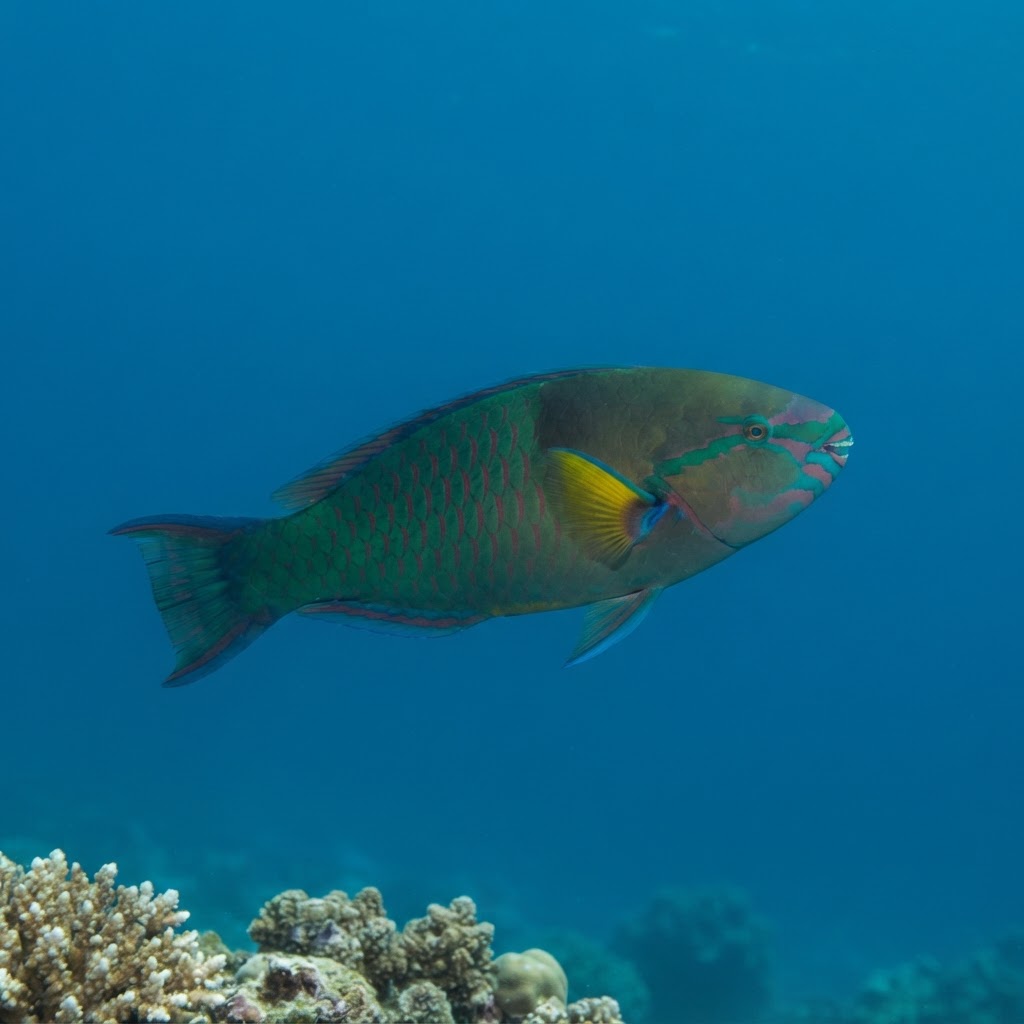
Scarus flavipectoralis
Uncommon reef find, most reliably logged around Sulawesi and the Visayas in 26-29C water, year-round.
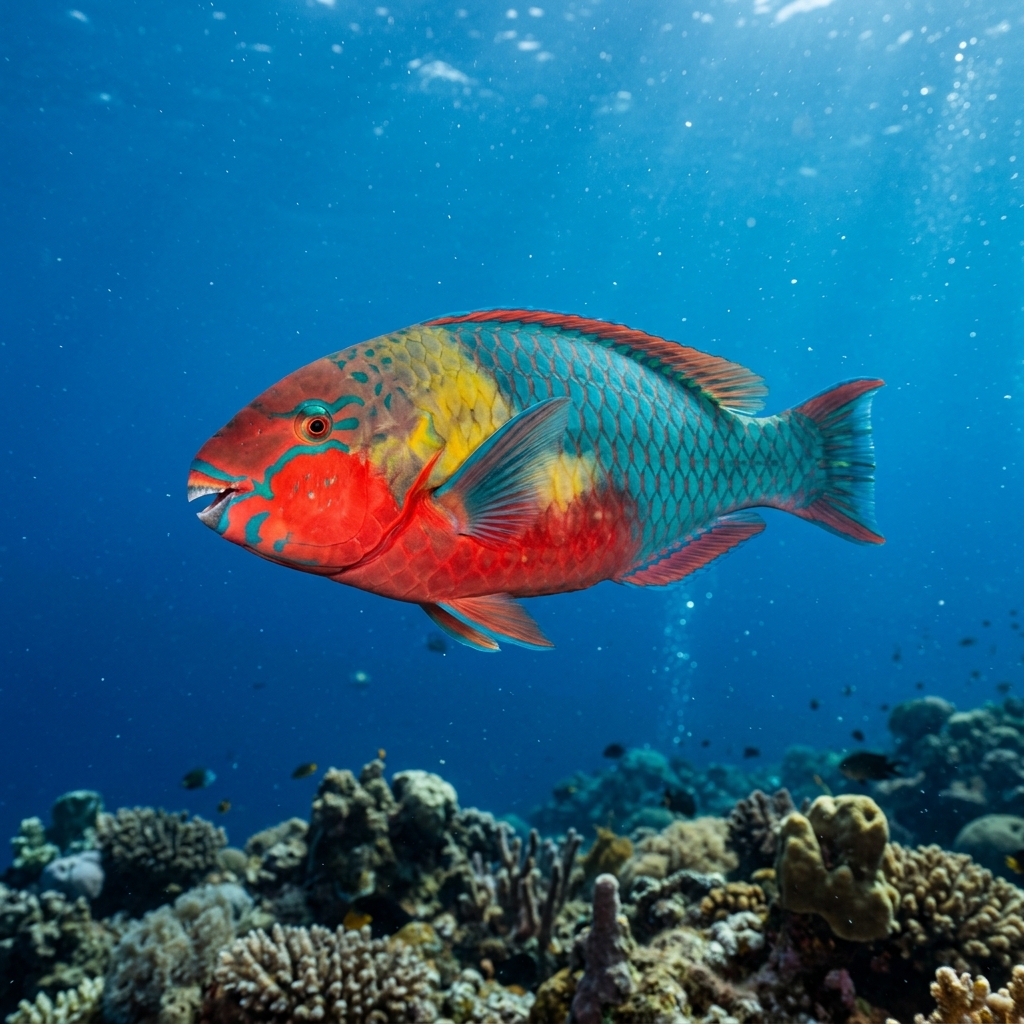
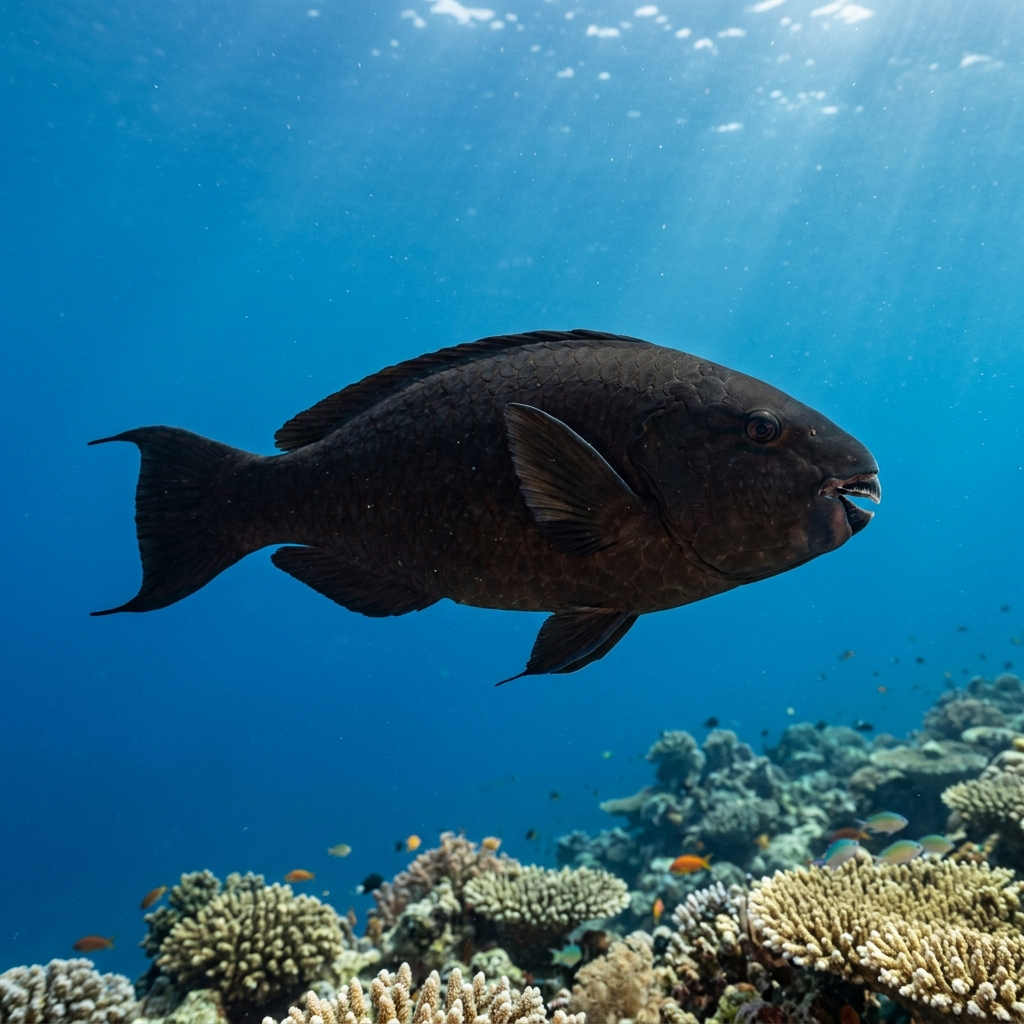
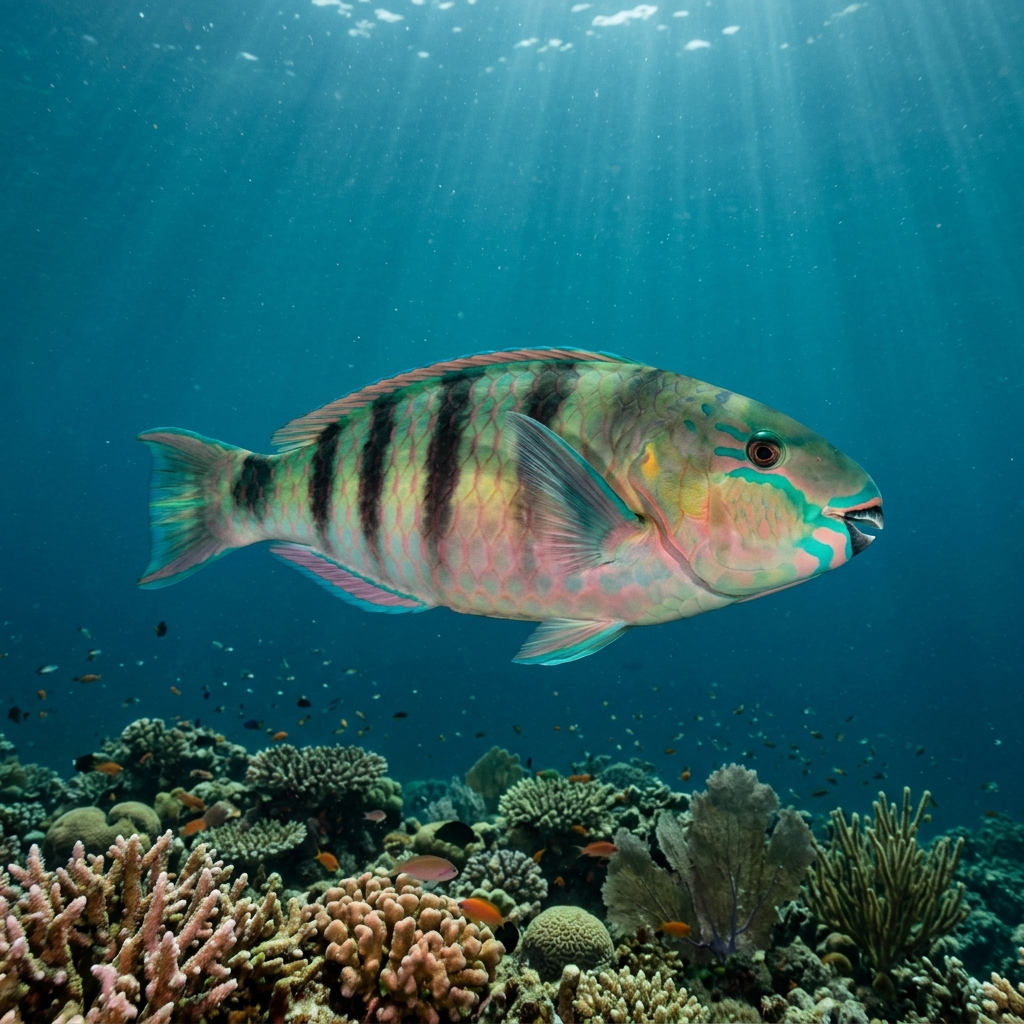
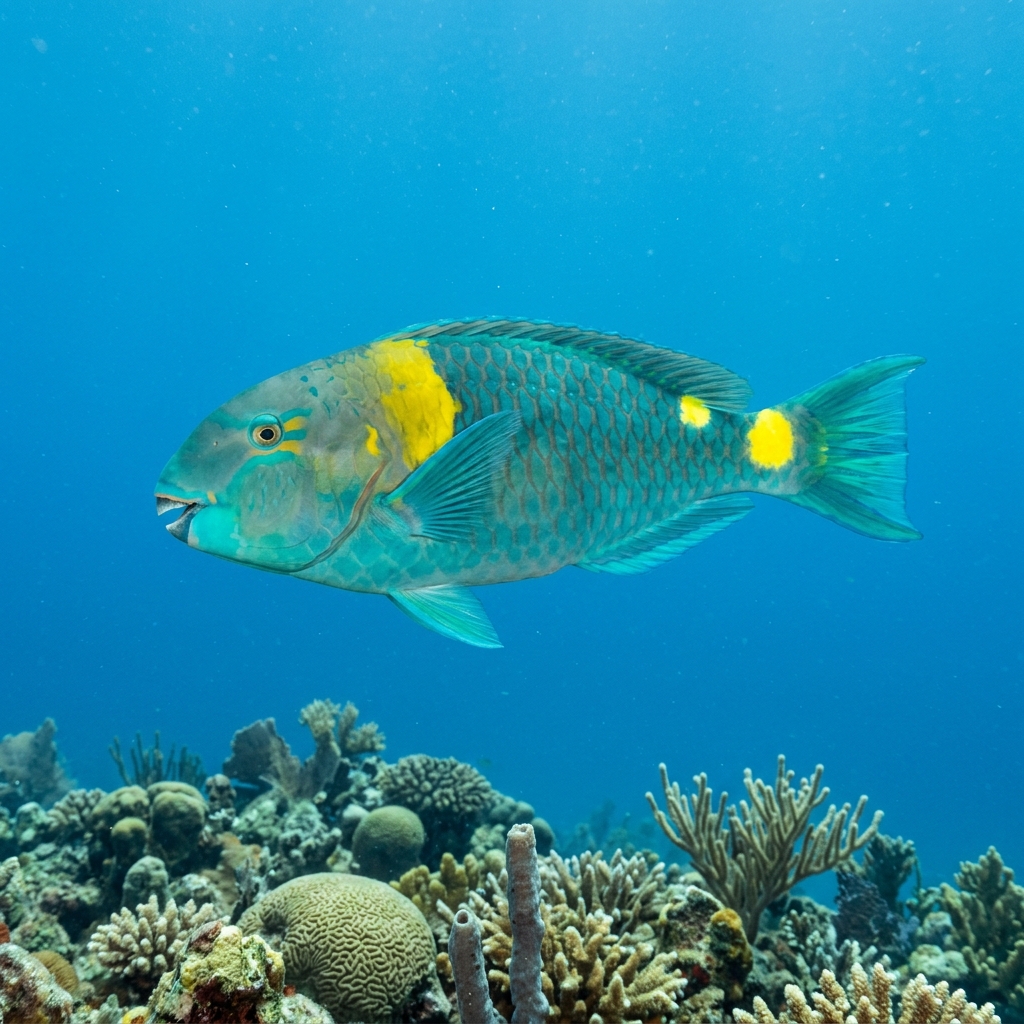
Grows to about 28 cm, with the thick-bodied, blunt-beaked shape typical of parrotfish and a greenish to bluish-grey body. The yellow wash across the pectoral fins is the detail to lock onto, especially when it flares them while cruising past coral heads. It moves in short bursts low over the reef rather than schooling in open water, which helps separate it from bigger, more conspicuous wrasses on the same reef.
Look for it working over coral and rubble patches, grazing algae off the reef surface with quick nips of its beak-like teeth. It tends to keep a low profile and drift off unhurriedly rather than dart at the approach of divers, which makes for calm, unrushed photo opportunities if you don't chase it. Most sightings come from routine daytime reef dives rather than any particular time slot.
Like other parrotfish, it grazes algae straight off dead coral and rock, and the sand-fine waste it excretes after digesting that material is a real, if small-scale, contributor to reef sediment.
No clear seasonal pattern shows up in the data, and with a comfortable range of roughly 26 to 29C it's a year-round resident on the reefs where it occurs. Turn up any month in Sulawesi, the Visayas, or Queensland and your odds are about the same.
Most reliably logged across Sulawesi in Indonesia and the Visayas and Luzon regions of the Philippines, with a solid secondary presence on the reefs of Queensland, Australia, and around Atauro Island in Timor-Leste. Raja Ampat and Sabah turn up occasional sightings too, but it's an uncommon fish almost everywhere it's found rather than a guaranteed tick on any single reef.
Mapping where Yellowfin Parrotfish is logged…
Best chances are on reefs in Sulawesi, Indonesia, and the Visayas and Luzon regions of the Philippines. Queensland, Australia, and Atauro Island in Timor-Leste also produce regular but uncommon sightings.
There's no strong season in the sighting data, and it sits comfortably in 26 to 29C water year-round, so any month on a healthy reef in its range works.
Look for a stocky, 28 cm parrotfish with a greenish-grey body and a yellow tinge across the pectoral fins, grazing low over coral and rubble with a blunt beak-like mouth.
They reach around 28 cm, a modest mid-sized parrotfish rather than one of the large reef-dominating species.
No, they pose no threat to divers. They're herbivorous grazers that will simply move off if you get too close.
It's logged as uncommon at most sites where it appears, so it's a real sighting worth noting rather than a fish you'll see on every dive.
Site and sighting data is aggregated from diver logs, iNaturalist and GBIF. For taxonomy and conservation status:
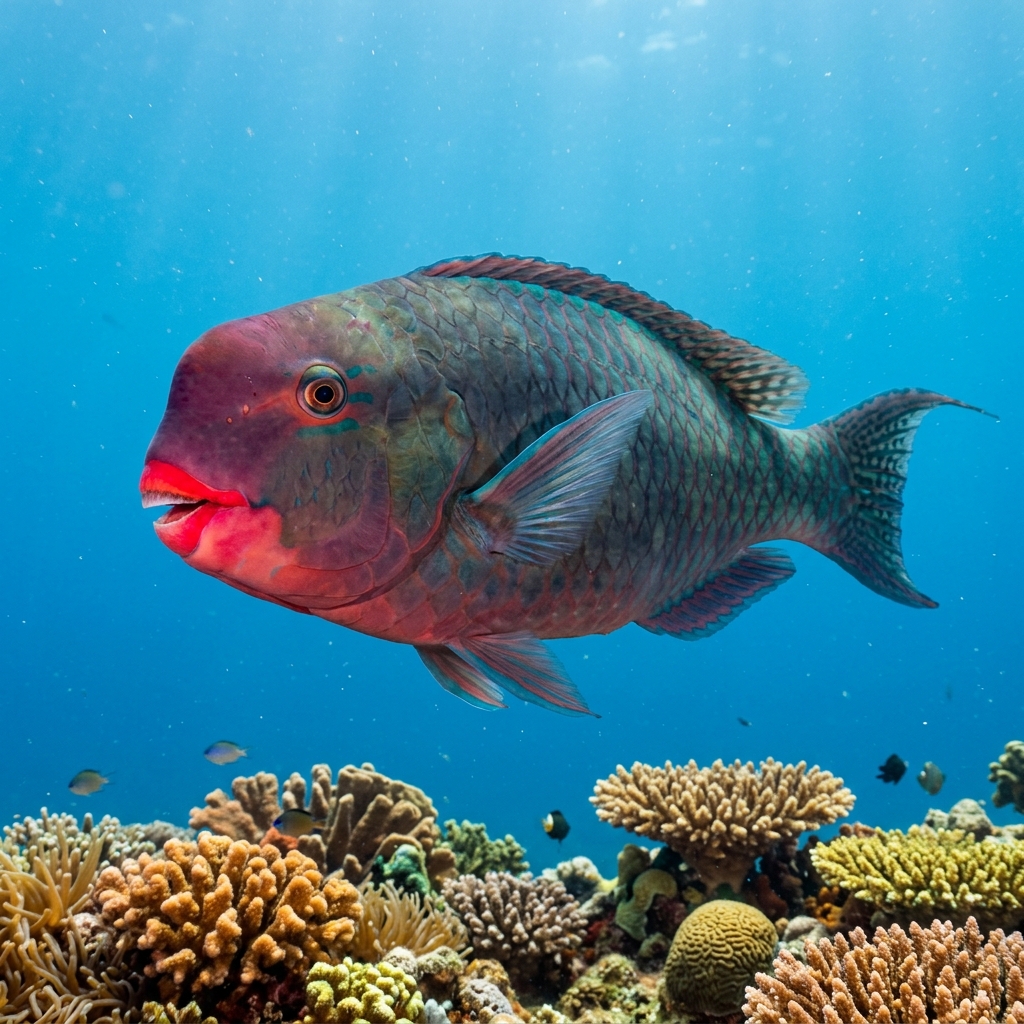
Redlip Parrotfish
2,789 sites