Paracheilinus flavianalis
A small, uncommon flasher wrasse best found on Sulawesi reefs and Dili, Timor-Leste in warm 26-29C water year-round.
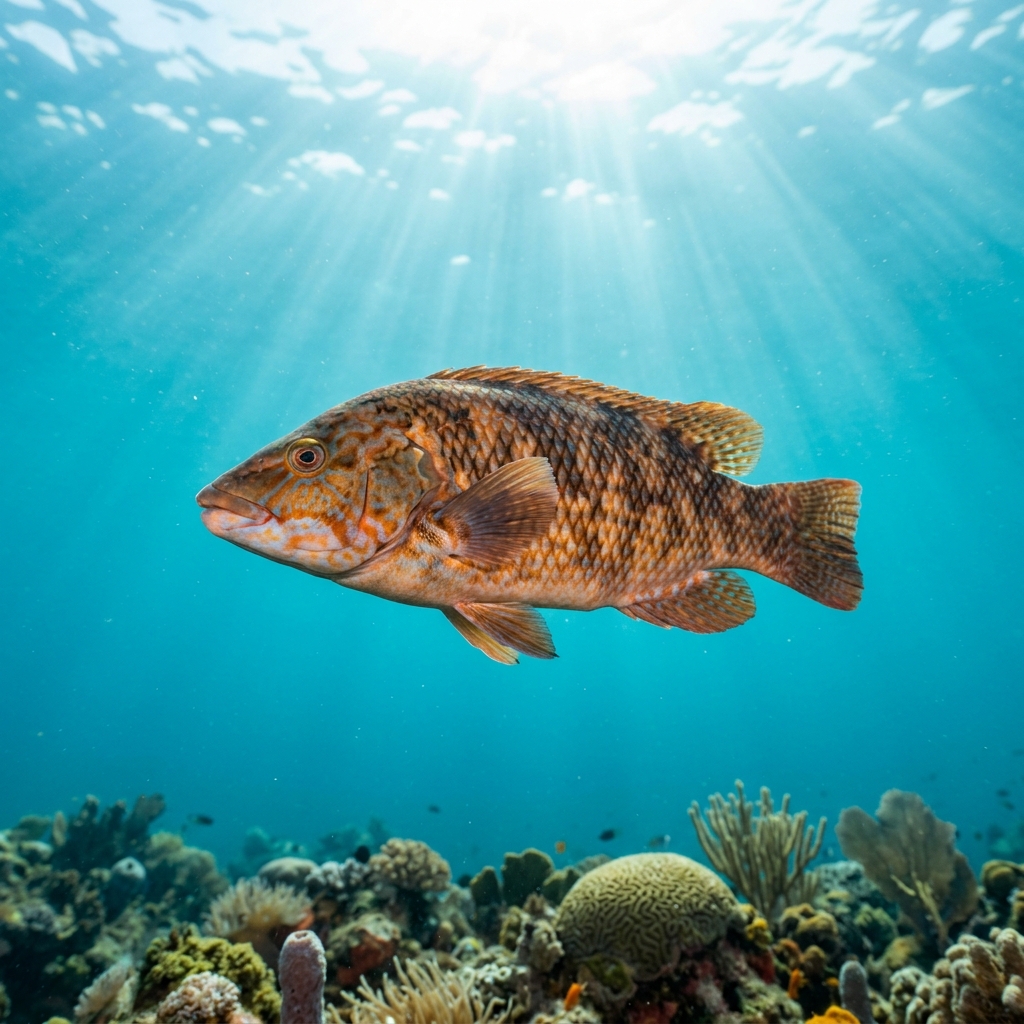
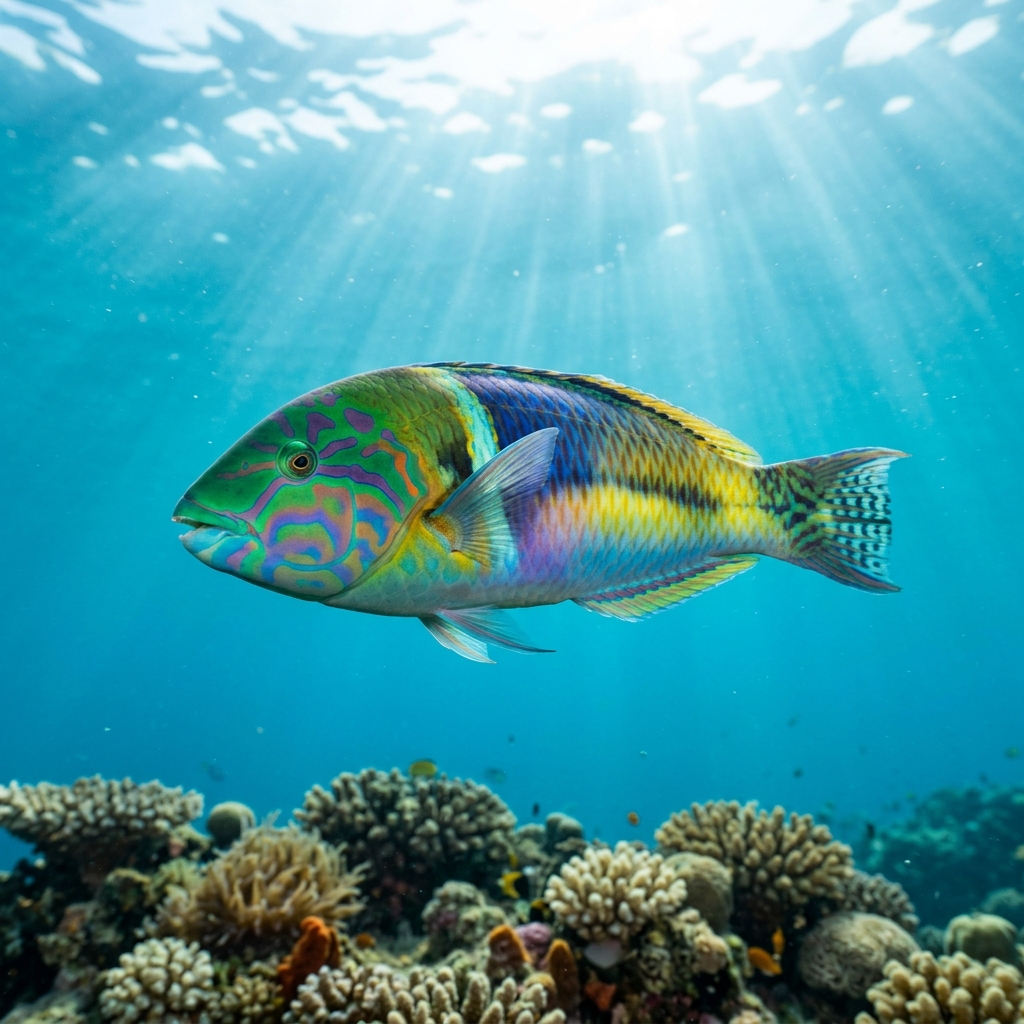
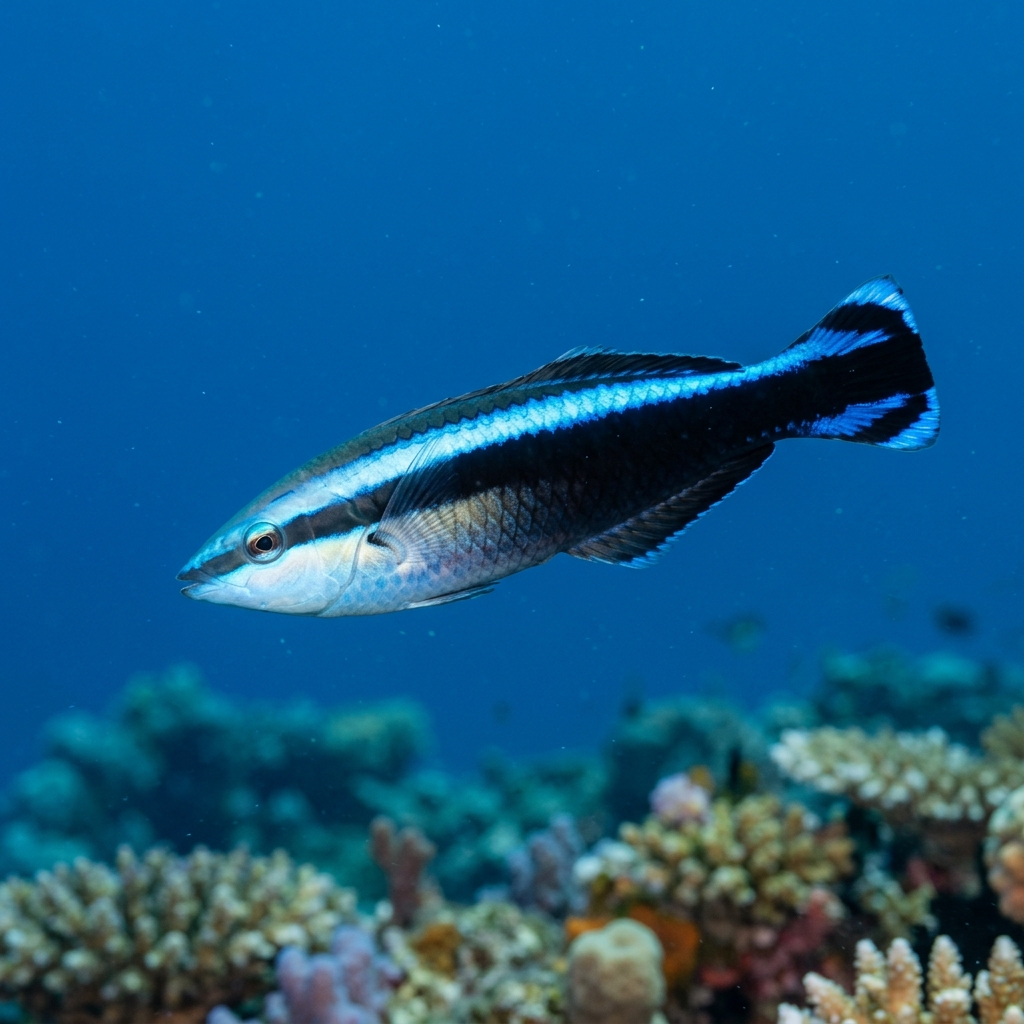
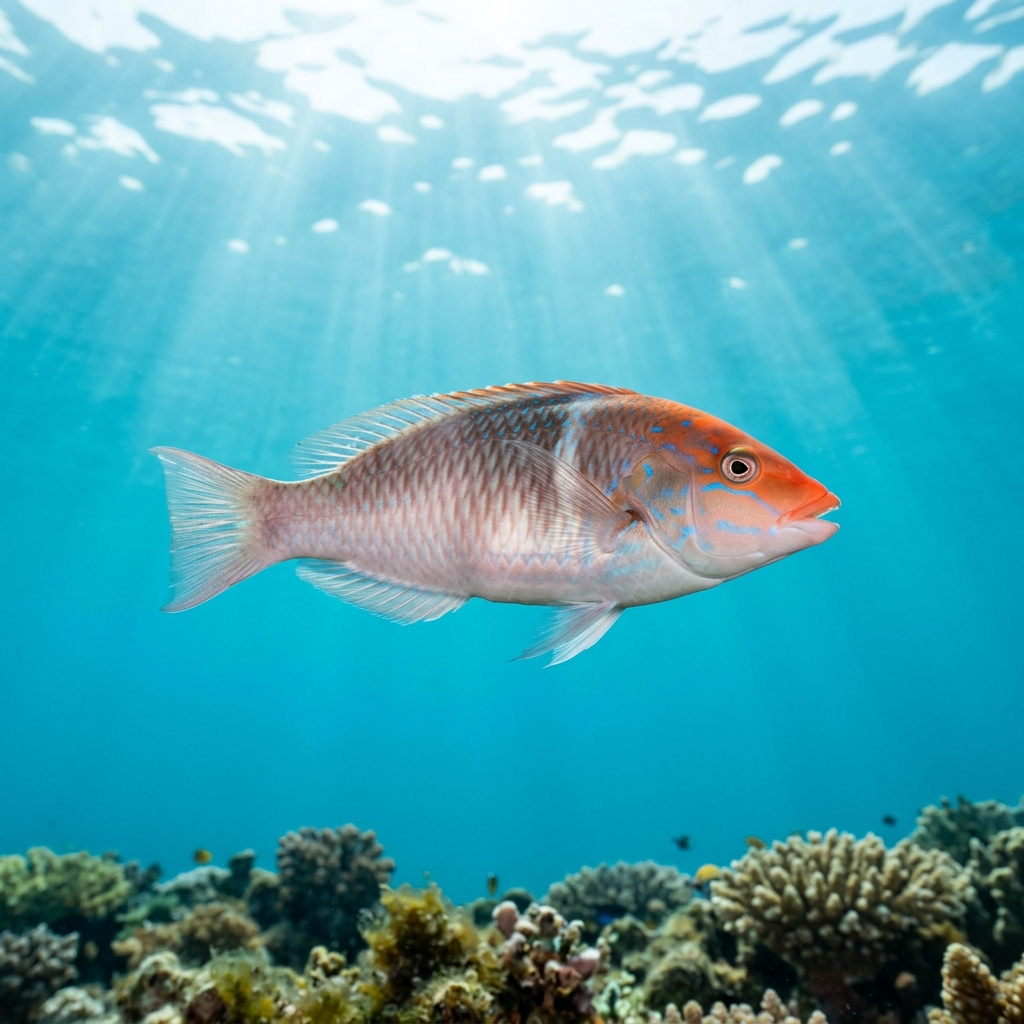
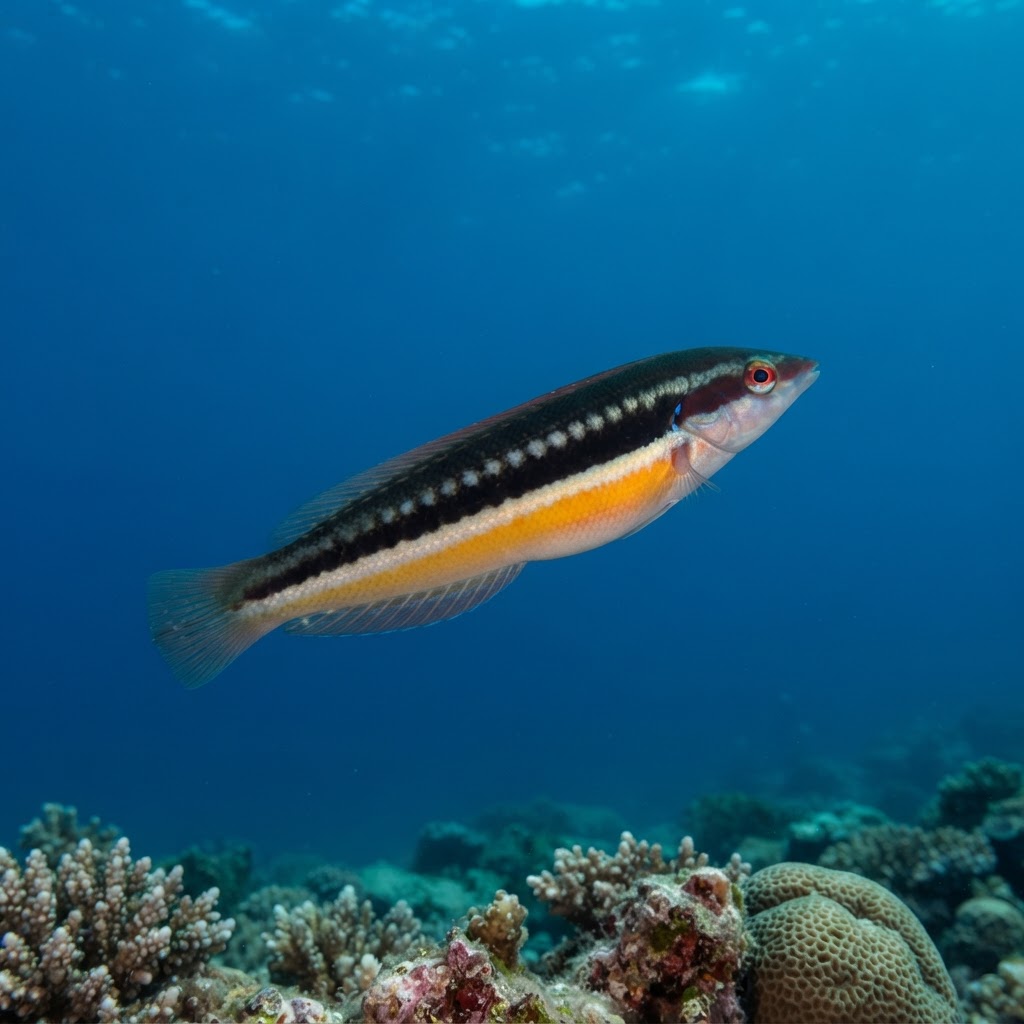
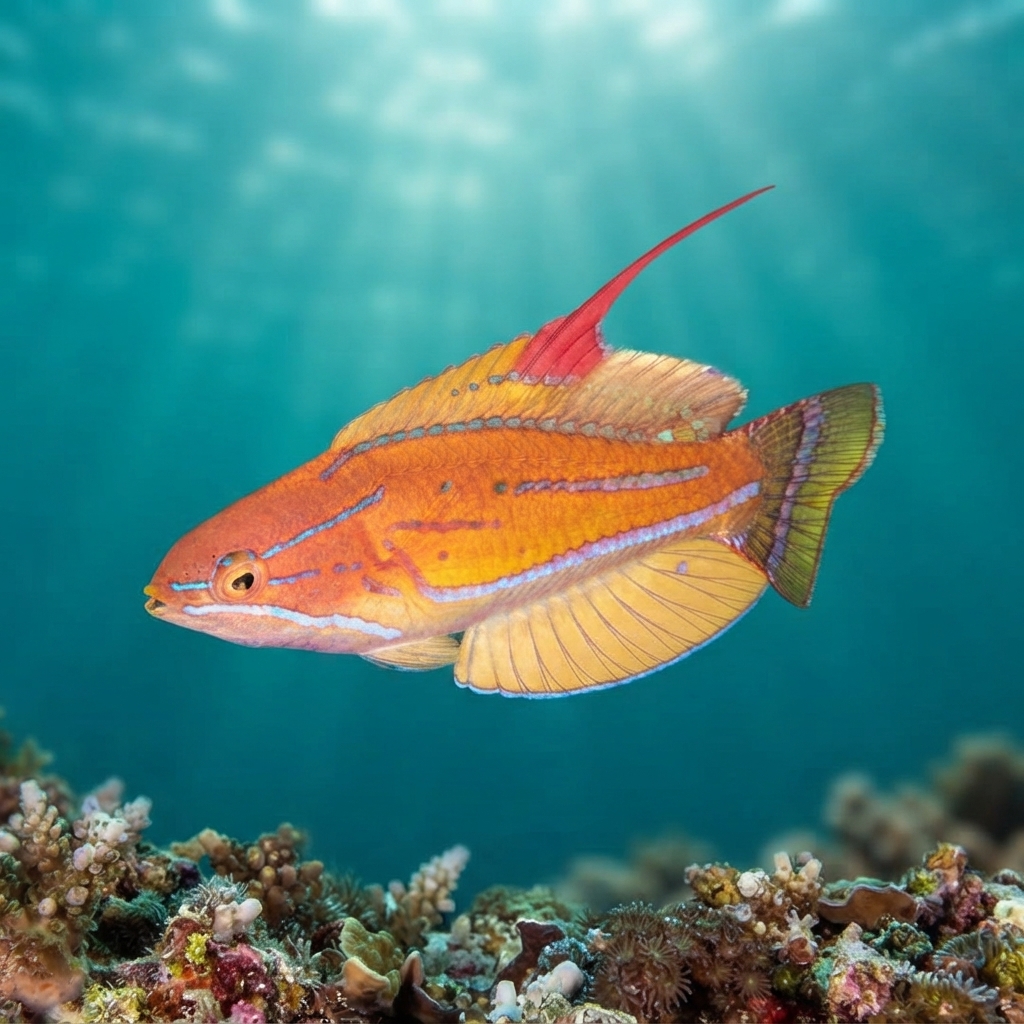
A tiny wrasse, barely 6 cm, so spotting one means slowing down and scanning just above the reef rubble rather than the open water. Look for a slender, torpedo-shaped body in reddish or pinkish tones with a yellow wash across the tail and anal fin, the mark that gives it its name. Males flash brighter colour and raise their dorsal fin when displaying, while females stay duller and are easy to overlook among the substrate.
Look for it low over rubble and mixed coral debris rather than out over open sand, often in small loose groups where a male will flick his dorsal fin up in short display bursts to females nearby. It is not shy exactly, but it is small and quick to duck into the substrate, so a slow approach and a bit of patience pays off more than any equipment.
Flasher wrasses like this one get their name from the males' habit of suddenly erecting their fins and flaring colour in rapid courtship displays, a burst of behaviour that is easy to miss if you are not watching closely at the right moment.
Sightings do not show a real seasonal pattern, and the species sits comfortably in the 26.4 to 28.6C range typical of these reefs year-round, so any month diving Sulawesi or Dili gives a fair shot at one.
This one is very much an Indonesia fish, most reliably found across Sulawesi, with a smaller but real presence around Dili in Timor-Leste and an occasional record in Bali. If you are working reef slopes and rubble patches in Sulawesi, this is the region to budget extra bottom time for a sighting.
Mapping where Yellowfin Flasher Wrasse is logged…
It is most reliably logged across Sulawesi in Indonesia, with a smaller population recorded around Dili in Timor-Leste and occasional sightings in Bali.
There is no strong season in the sighting data, and the species sits in a stable warm-water niche of roughly 26 to 29C, so it can turn up on Sulawesi and Dili reefs at any time of year.
Look for a slim wrasse around 6 cm with a reddish body and a yellow tint across the tail and anal fin. Males show brighter colour and raise their dorsal fin during short courtship flashes, while females look plainer.
They stay small, reaching only around 6 cm, so they are easy to swim past if you are not looking closely at the rubble and reef base.
Males perform rapid fin-raising, colour-flaring displays to court females, a burst of behaviour that lasts only seconds but is the species' signature trait.
Site and sighting data is aggregated from diver logs, iNaturalist and GBIF. For taxonomy and conservation status:
Bird Wrasses
3,632 sites