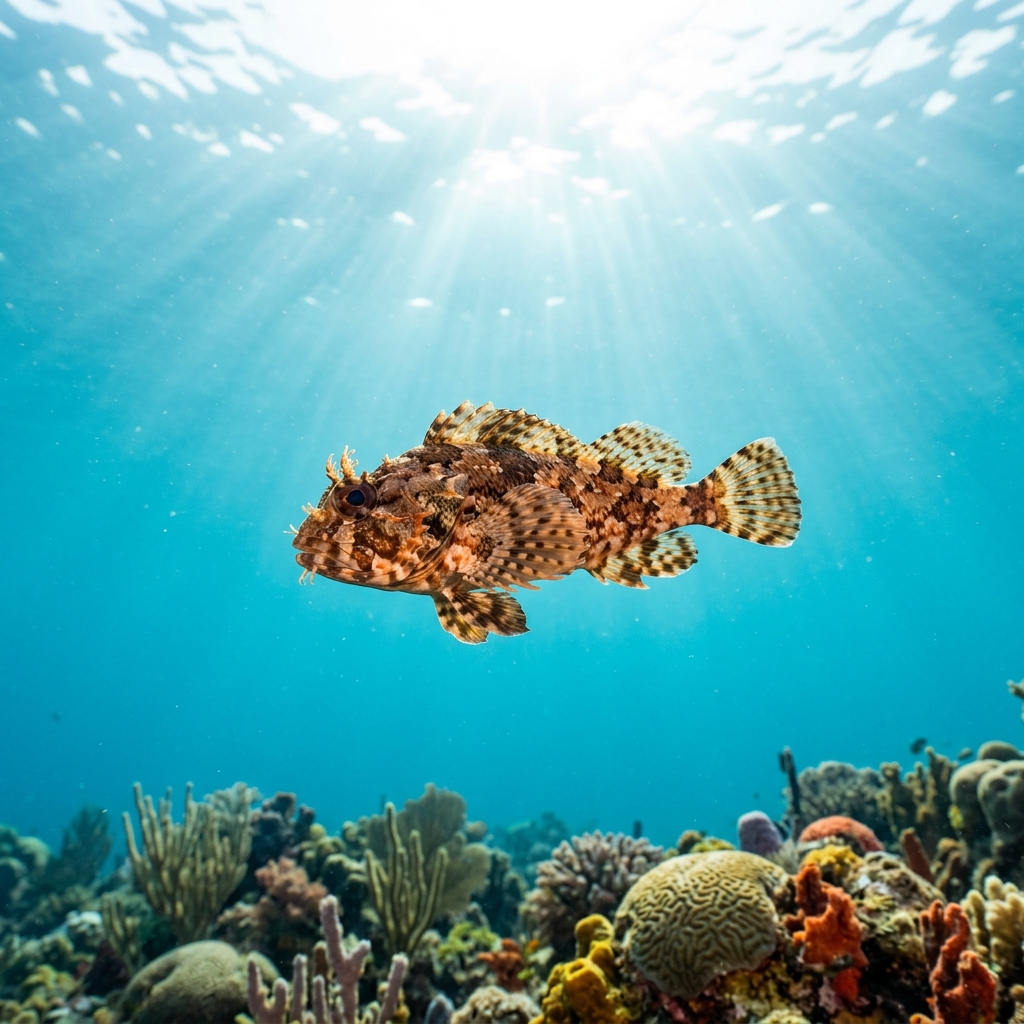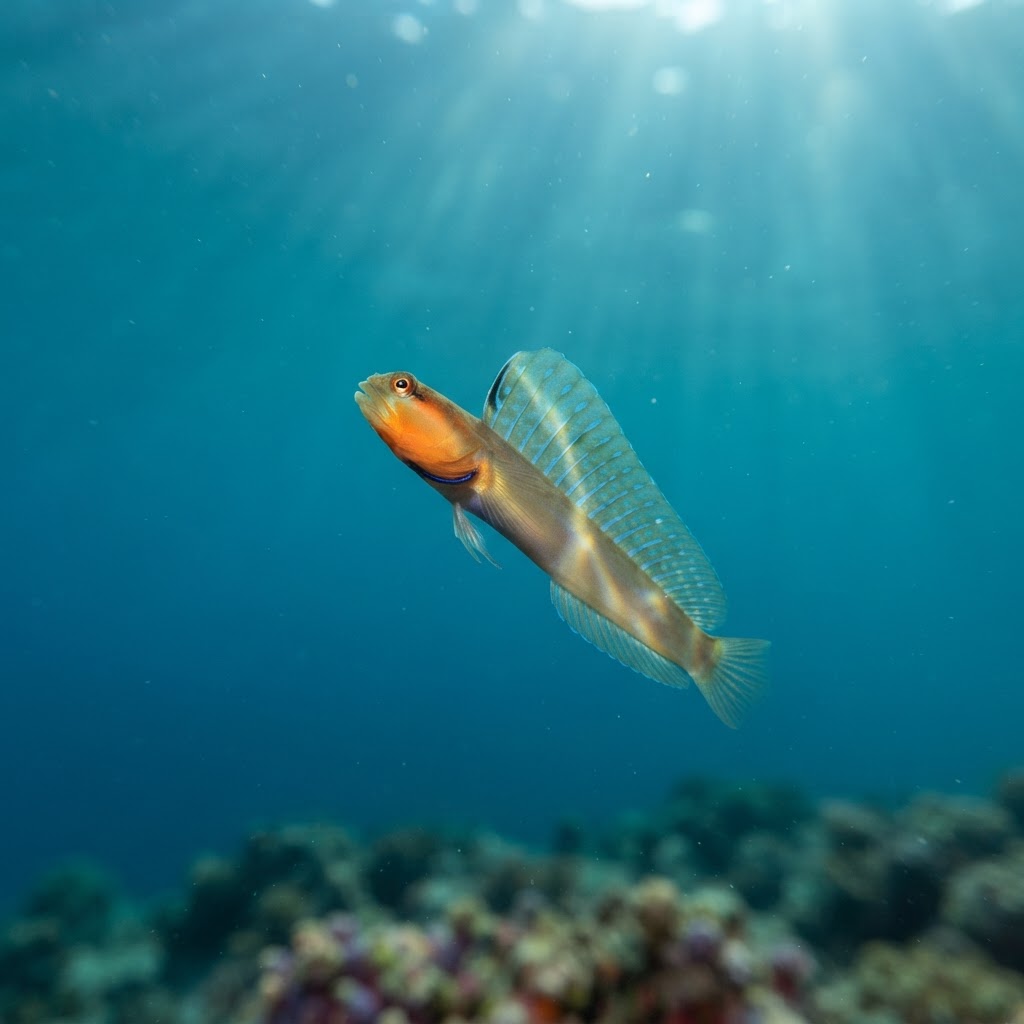
Chaenopsis limbaughi
Tiny burrow-dwelling blenny logged in Saba and Sint Eustatius, 26-28C reefs, spotted year-round if you know where to look in the sand.
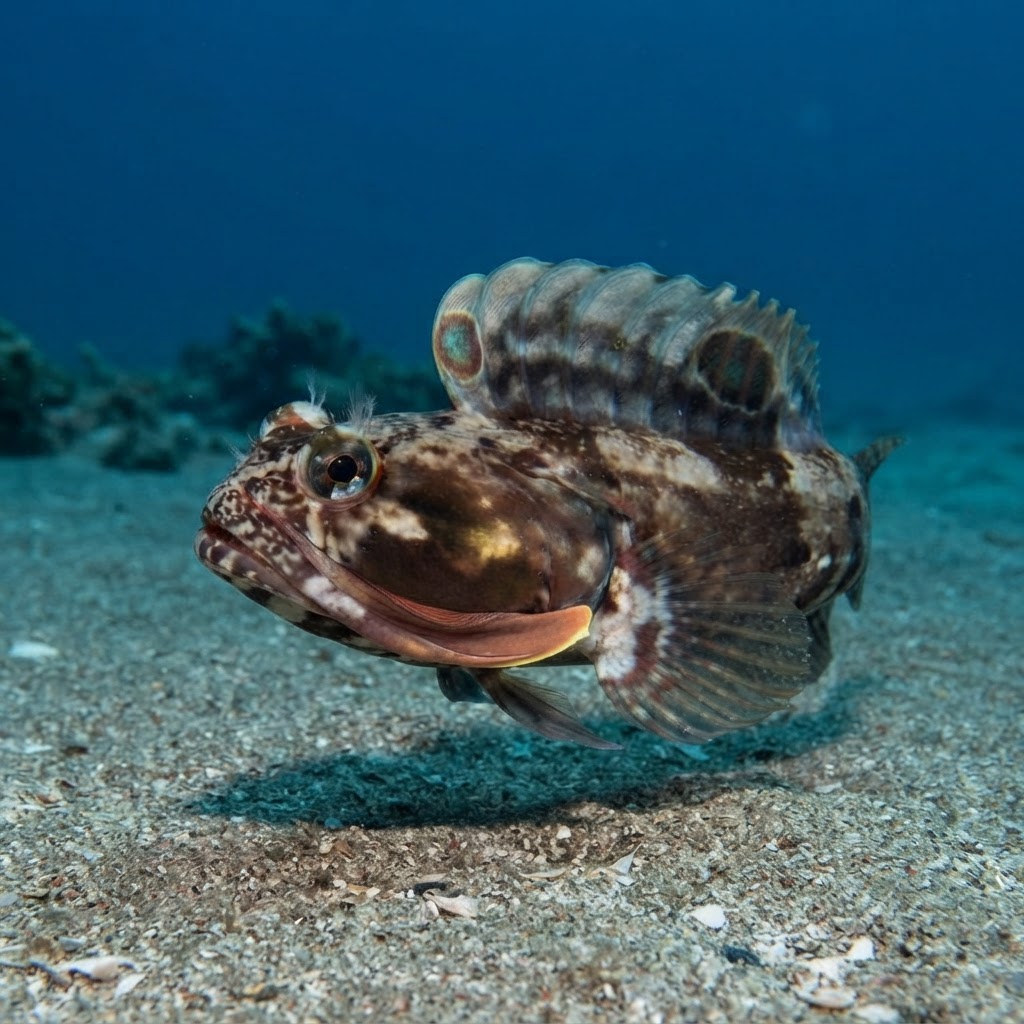
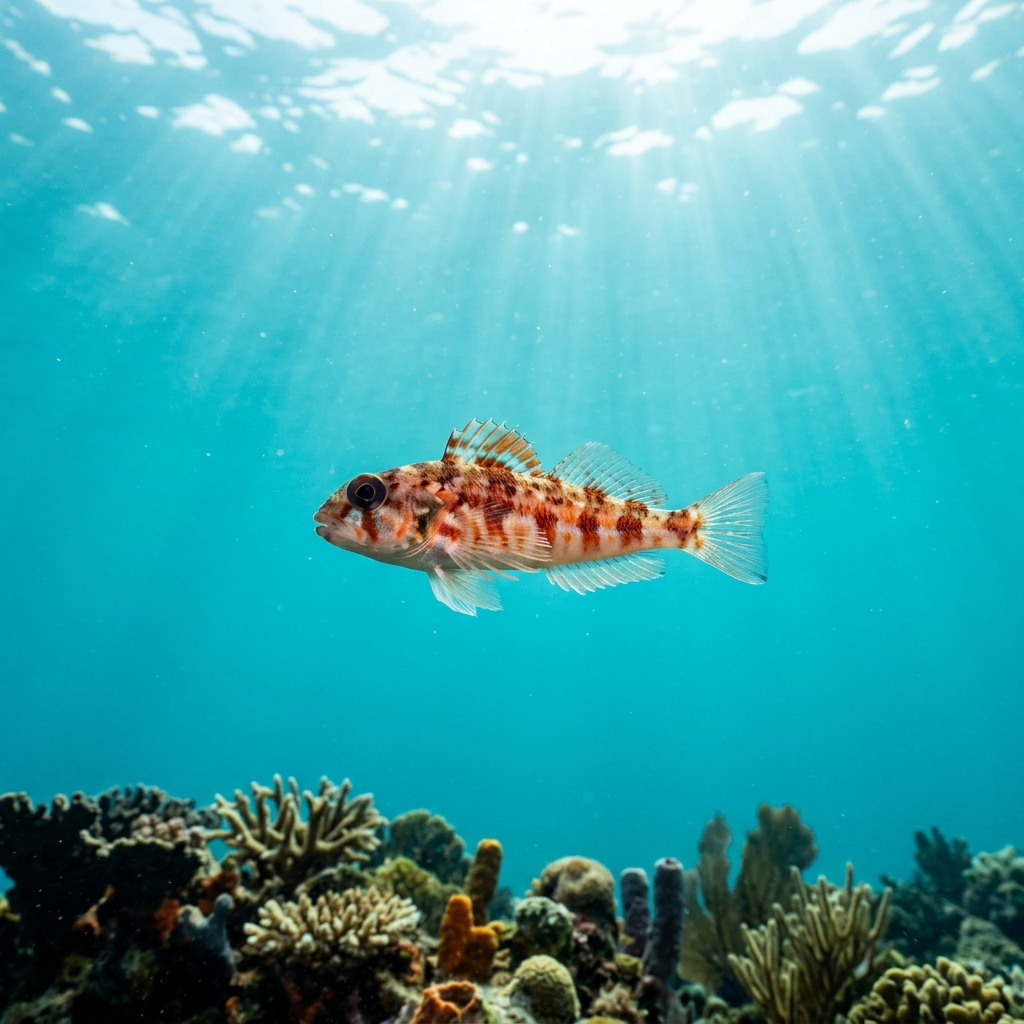
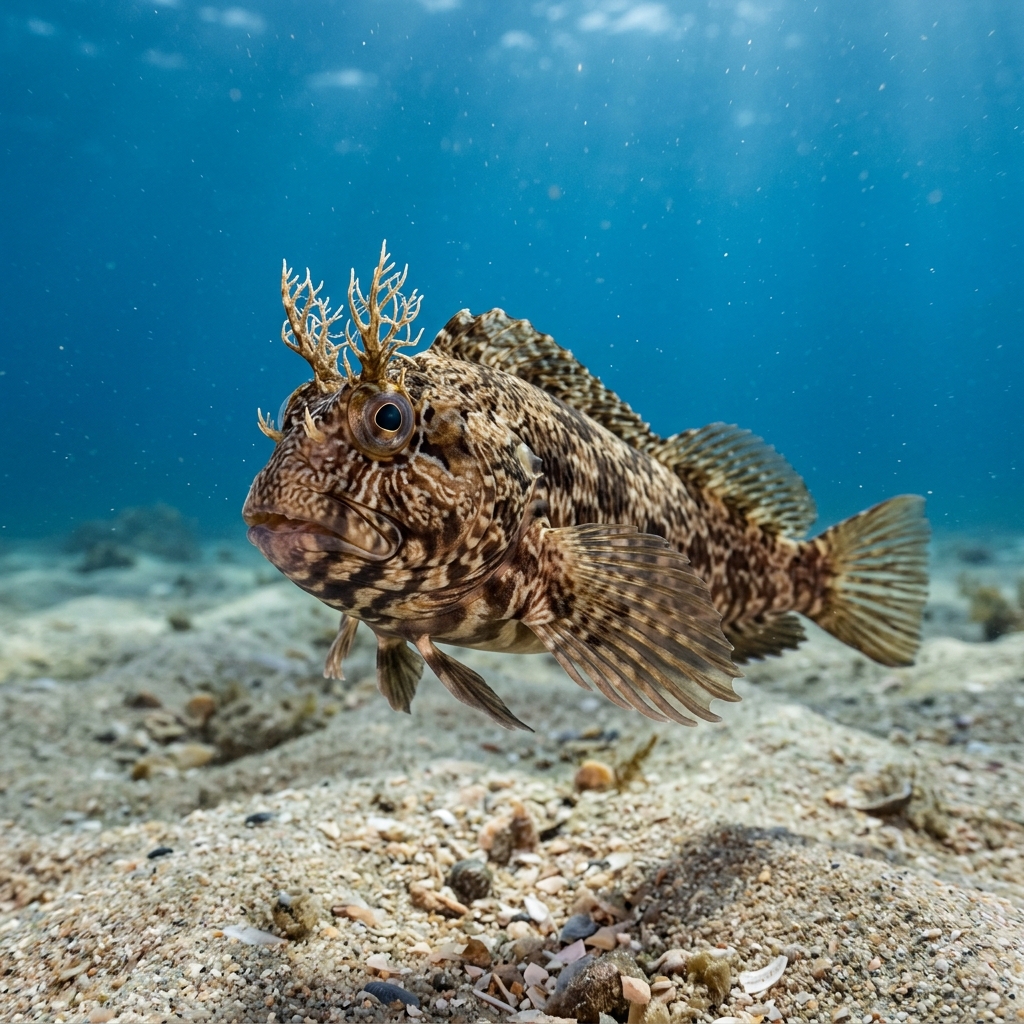
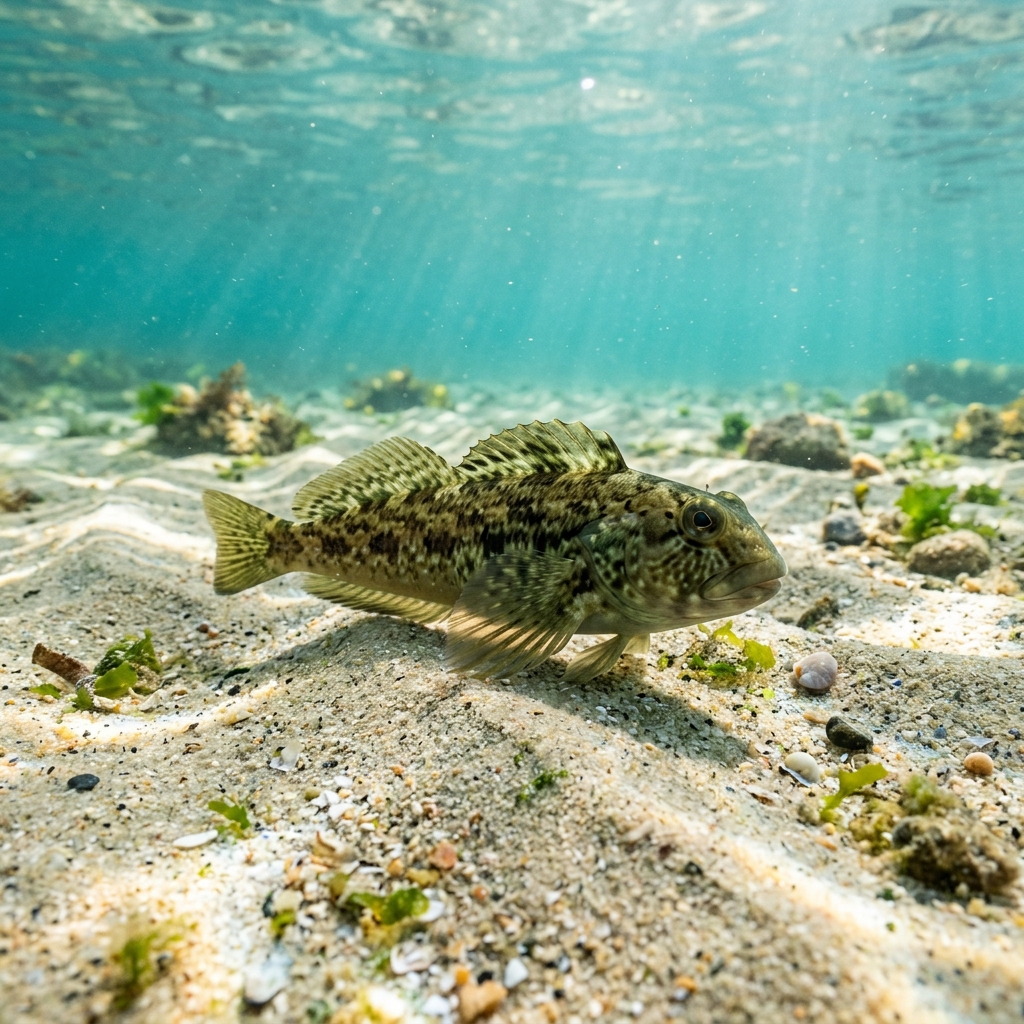
Slim, eel-like body only about 6 cm long, usually seen as just a head poking out of a worm-hole or old tube in sand or rubble. Look for a yellow face and pale, elongated body with faint barring, plus a spiny crest above the eye that gives the head a slightly angular profile. It rarely leaves its burrow, so the giveaway is the head-only silhouette rather than the full body.
Spends nearly all its time with just its head out of a burrow in sand, rubble, or an old worm tube, watching the water column for tiny passing prey. Divers who slow down and hover near sandy patches get the best looks, since it tends to duck back in in-out of its hole if you approach too fast or cast a shadow over it. Most sightings happen during the day on open sand or rubble bottom rather than on the reef structure itself.
It almost never fully leaves its burrow, so what looks like a fixed, motionless creature is actually watching and lunging out to snatch drifting plankton before disappearing back inside.
No clear seasonal pattern shows up in the data, and with a comfortable range of roughly 26.4 to 28.2 C year-round on these reefs, it's a fish you can look for in any month. Patience on the dive matters more than timing.
Reef neighbours a diver could mistake it for. Use the identification notes above to tell them apart.
Most reliably found in the southern Caribbean, with Sint Eustatius and Saba (including Tent Reef and The Pinnacles) standing out as strongholds, and a solid presence around Grand Cayman in the Cayman Islands. Smaller numbers turn up in the Bay Islands of Honduras and on Bonaire's Leeward Coast, so it's worth a slow, sand-scanning look on sandy patches and rubble flats across these areas.
Mapping where Yellowface Pikeblenny is logged…
Sint Eustatius and Saba, especially Tent Reef and The Pinnacles, are the strongest spots, with Grand Cayman in the Cayman Islands also a reliable option. Smaller numbers are logged in Honduras's Bay Islands and on Bonaire.
There's no strong season in the sightings data, and water temperatures on its reefs stay in a narrow 26 to 28C band year-round, so it can turn up on any dive at the right sites.
Look for just a small yellow-faced head poking out of a hole in sand or rubble, rather than a full fish swimming freely. The body is slim and eel-like when it does emerge, reaching only about 6 cm.
They reach around 6 cm in length, and since most of the body stays hidden in a burrow, divers usually only see the head end.
It lives almost permanently tucked into a burrow or abandoned worm tube, darting only its head out to snatch passing plankton before retreating, which makes spotting one a reward for slow, careful reef scanning.
Site and sighting data is aggregated from diver logs, iNaturalist and GBIF. For taxonomy and conservation status:
Rusty Blenny
2,605 sites