Neoclinus blanchardi
Small, big-mouthed and territorial, this fringehead hides in burrows off California, spotted year-round in waters as cool as 9.7 C.
Safety warning
It's marked as a diver hazard mainly because of that startling defensive lunge and bite if a hand strays too close to its burrow. Give it space, don't poke into holes or crevices you can't see into, and treat any fringehead sighting as a look-only encounter.
If you're bitten
BiteGeneral first-aid guidance, not a substitute for professional medical care. In an emergency, call your local emergency number.
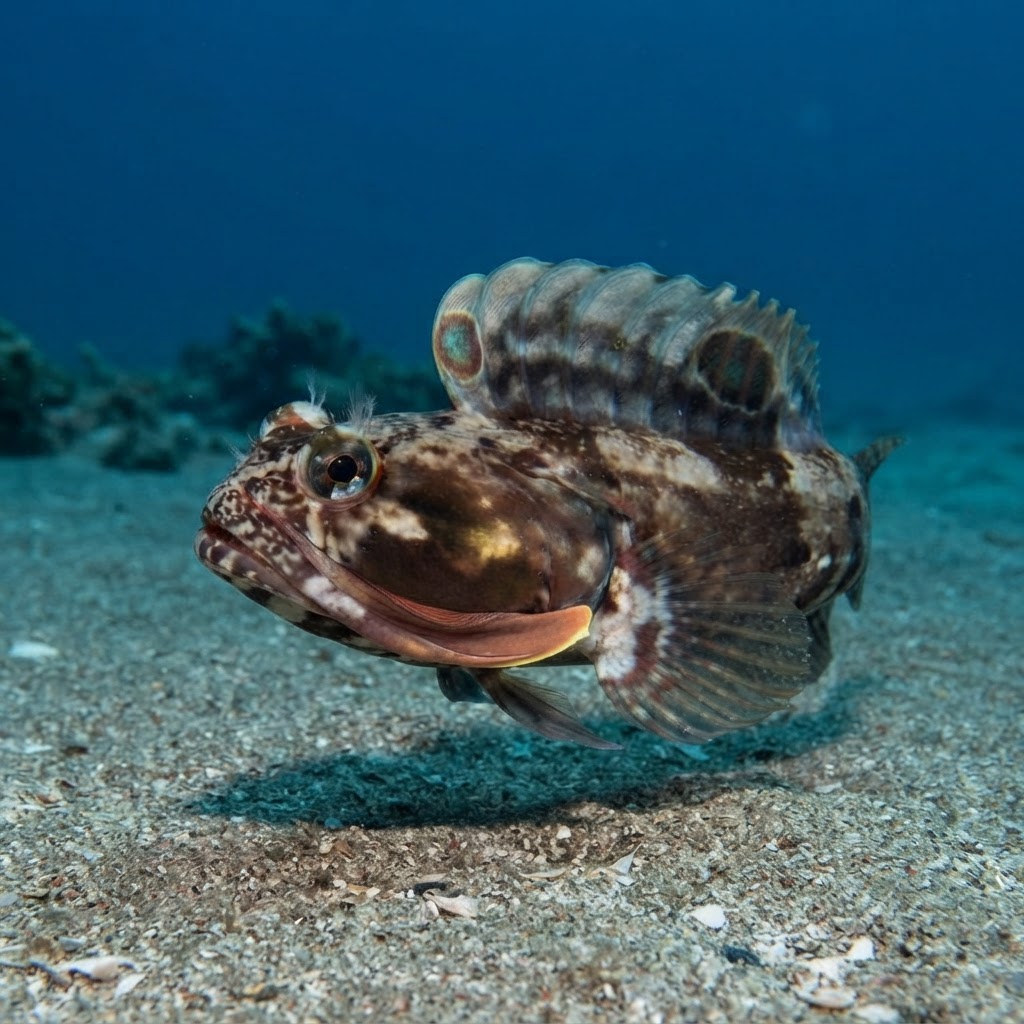
Look for a small, elongated fish barely 21 cm long peeking out of a burrow, tube, or empty shell rather than swimming in open water. Its body is mottled brown to grey with darker blotches, blending into rocky or sandy bottoms, and it has a blunt head with fringed cirri (small fleshy tufts) above the eyes. The giveaway is the mouth: when threatened it flares open an enormous, brightly lined jaw far too big for its body.
Expect to find it wedged into a burrow, discarded pipe, or empty shell with just its head showing, rather than out cruising the reef. It's territorial and will hold its ground as divers approach, and if provoked or if another fringehead intrudes, it snaps its jaws open in a dramatic gape-and-lunge display. Most sightings happen on the bottom over rock or sand rather than in the water column.
That oversized gape isn't just for show: males use it in real fights over burrows and mates, mouth-wrestling rivals jaw to jaw, and the fish with the bigger mouth usually wins.
Sightings don't show a clear seasonal pattern, so it's considered a year-round find. It's recorded across a wide temperature range from 9.7 to 19.0 C, meaning California's cooler months don't push it out of view.
Every logged sighting in this data comes from the United States, specifically California, making it a California speciality rather than a species you'll find on a wider world tour. Divers most reliably find it tucked into burrows and debris along the California coast, from shallow rocky reefs down to deeper sandy patches.
Mapping where Sarcastic Fringehead is logged…
It's essentially a California find, logged at sites along the California coast in the United States. Look for it tucked into rocky reefs or debris rather than out in open water.
There's no strong seasonal pattern, so it's a year-round sighting. It's been recorded across a wide range of water temperatures, from about 9.7 to 19.0 C, so cooler months don't seem to push it into hiding.
They can be, mostly through their startling defensive bite if you get too close to their burrow. Keep your hands out of holes and crevices and admire this one from a short distance.
Look for a small mottled brown fish poking out of a burrow or empty shell on the bottom, rarely swimming freely. The clearest ID sign is its huge, colourful mouth, which it flares wide open when threatened.
They typically reach around 21 cm in length, making them a small, easy-to-overlook find unless you know to check burrows and crevices.
Males fight over burrows and mates by locking and wrestling with their oversized jaws, a mouth-to-mouth contest where the bigger gape usually wins. It's one of the more dramatic small-fish territorial displays you can see in California waters.
Site and sighting data is aggregated from diver logs, iNaturalist and GBIF. For taxonomy and conservation status:
Yellowtail Clownfish
3,523 sites