Hypoplectrus aberrans
Spot this small yellow-bodied hamlet on reefs off Saint John, US Virgin Islands, and Grand Cayman in 27C water year-round.
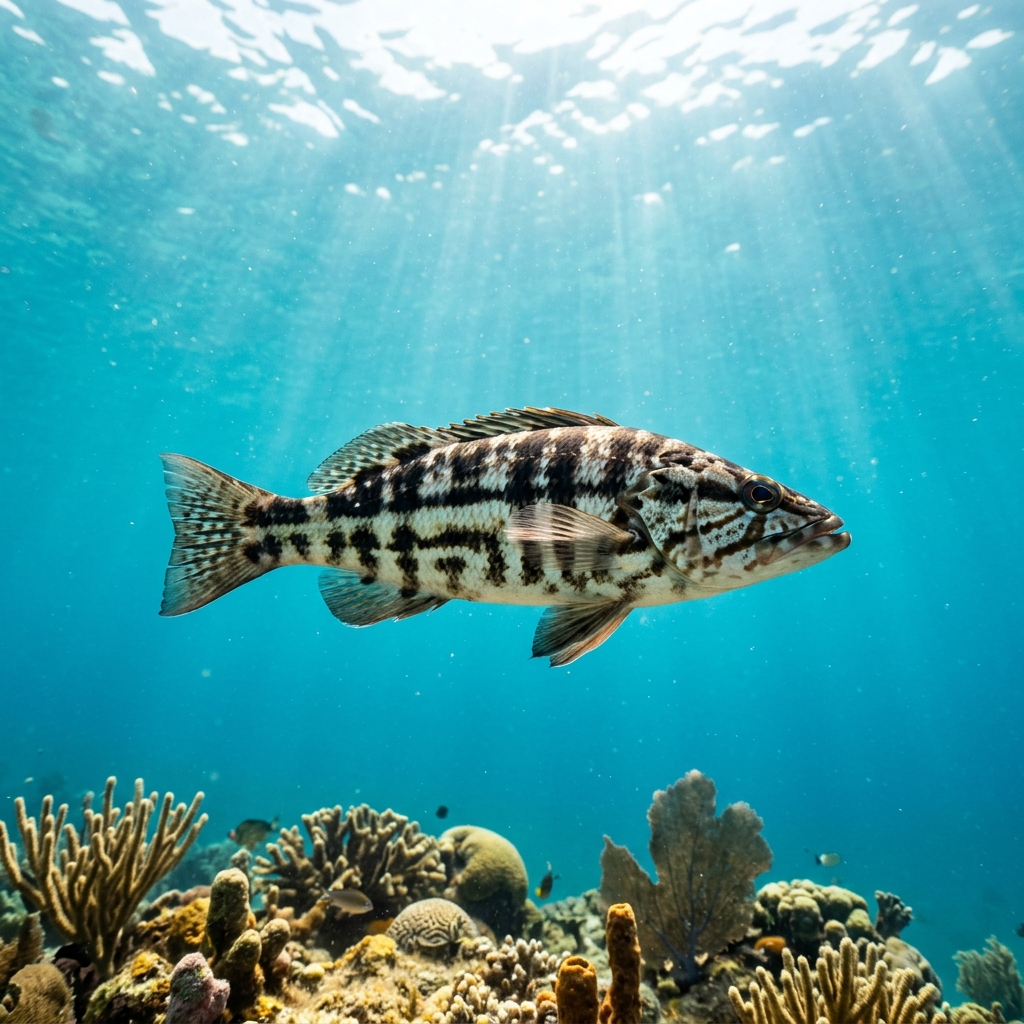
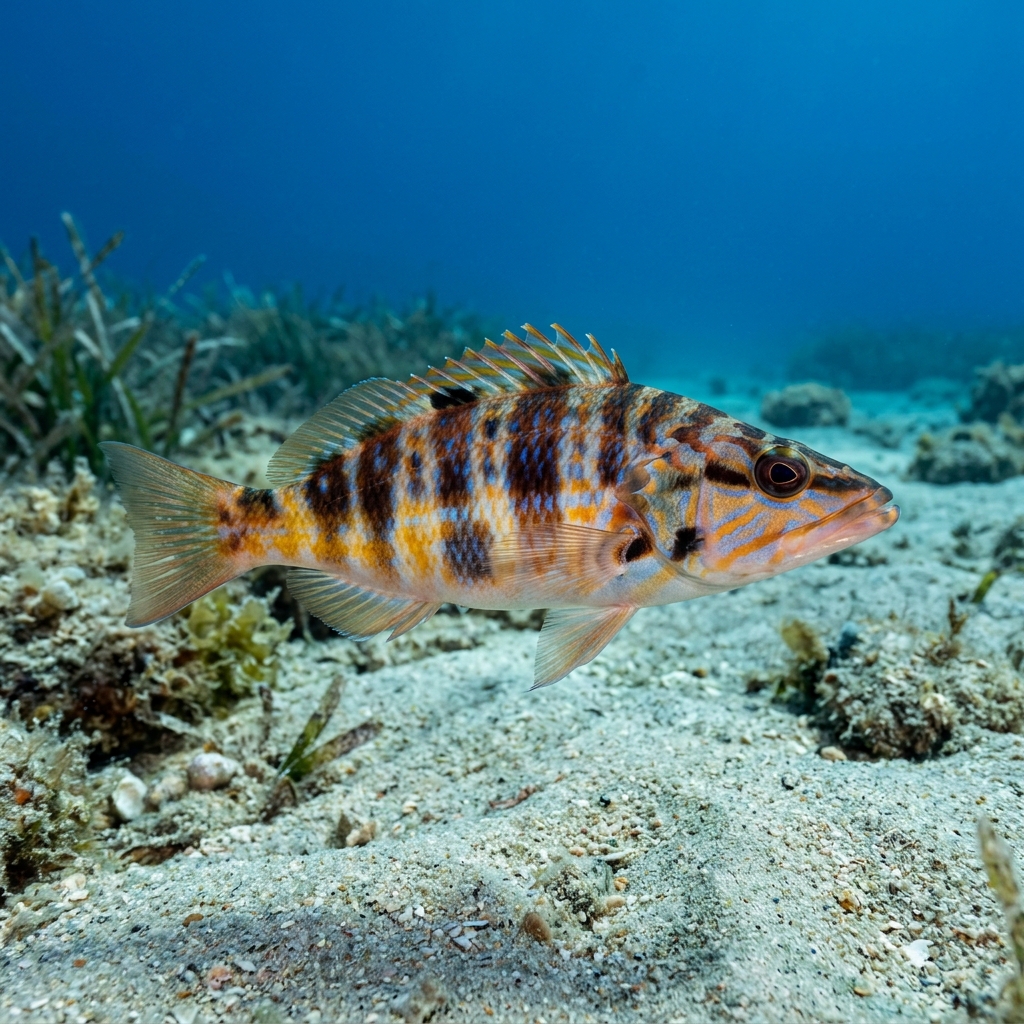
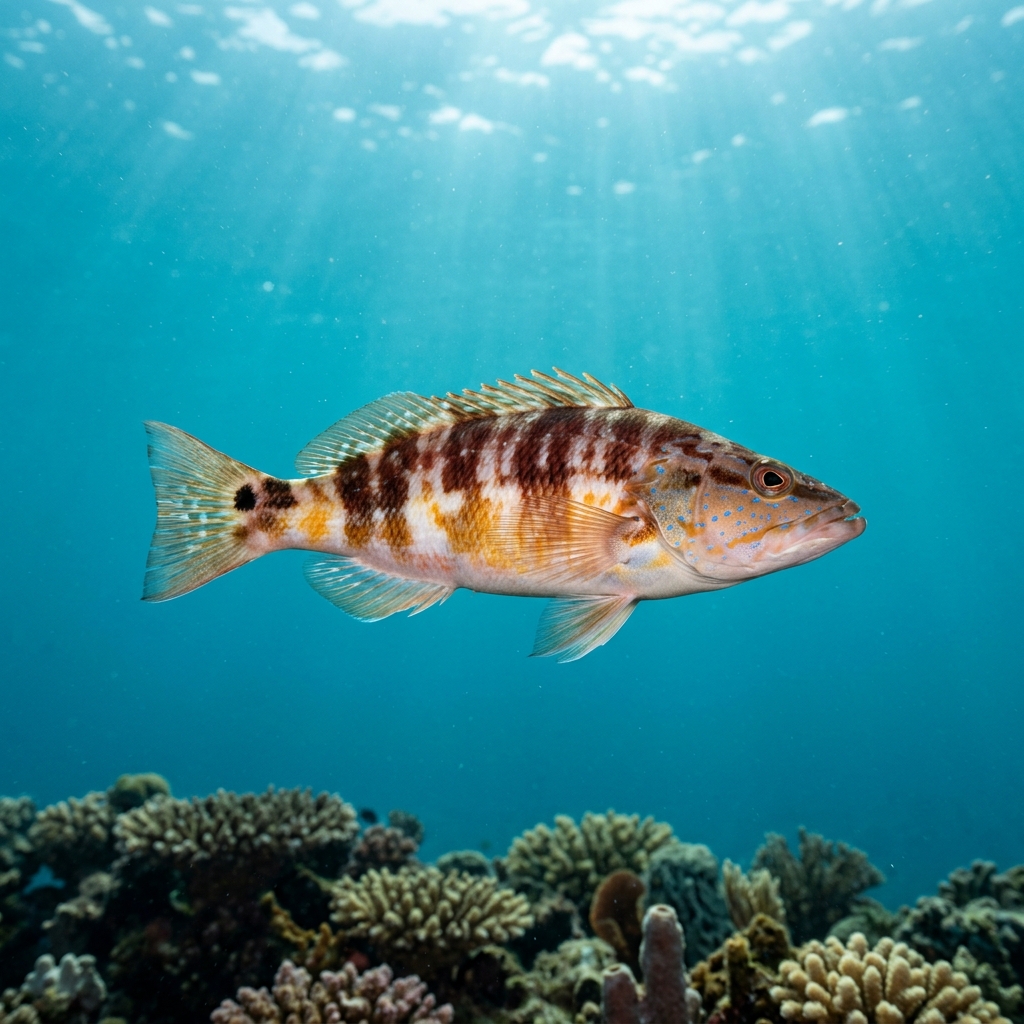
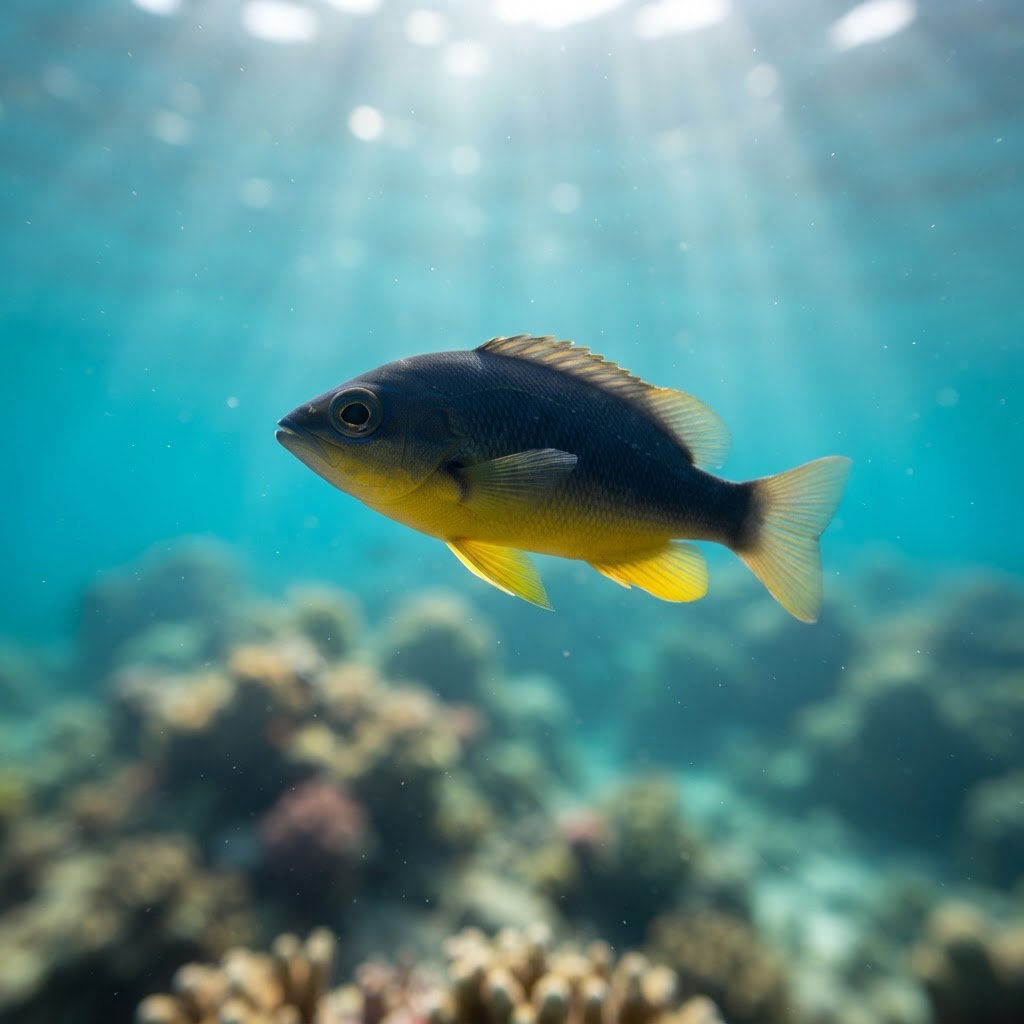
A small, chunky reef fish around 9 cm, built like a miniature grouper with a compact oval body and a single continuous dorsal fin. Colouring splits the body: a pale to dusky brownish upper half against a bright yellow belly and lower flank, the boundary often fairly sharp. It hovers rather than darts, usually alone or in a loose pair close to the reef structure.
Typically seen hovering near the reef, tucked close to coral heads, rubble, or ledges rather than out in open water. It tends to hold its ground or ease away slowly when divers approach rather than bolting, which gives a reasonable window for a good look if you spot one first. Like other hamlets it is usually solitary or in a loose pair, picking around the reef edge rather than schooling.
Hamlets are one of the few reef fish groups known to pair up and take turns releasing eggs and sperm during a single spawning session, swapping roles back and forth rather than each sticking to one sex role.
No clear seasonal pattern shows up in the sightings, and the 26.7 to 28.3C range it is logged in holds steady on these reefs most of the year, so any month is a fair bet. Treat it as a year-round possibility rather than a seasonal target.
Most reliably logged around Saint John in the US Virgin Islands, with a second cluster of sightings off Grand Cayman in the Cayman Islands. Both areas report it as an uncommon to rare find, so it rewards divers who slow down and check ledges and rubble patches rather than open water.
Mapping where Yellowbelly Hamlet is logged…
The strongest logged sightings come from Saint John in the US Virgin Islands and Grand Cayman in the Cayman Islands. It is an uncommon to rare find at both, so it is a bonus spot rather than a guaranteed one.
There is no detected seasonal pattern, and it is logged in water between roughly 26.7 and 28.3C, which holds year-round on these reefs. Any month you are diving Saint John or Grand Cayman is a reasonable time to look.
Look for a small, deep-bodied fish around 9 cm with a two-tone body: darker on top and bright yellow underneath, often with a fairly clean split between the two colours. It hovers near the reef rather than swimming in open water.
They stay small, topping out around 9 cm, so they are easy to miss against the reef unless you are looking closely at ledges and rubble.
Hamlets, including this species, are known to pair up during spawning and alternate which fish releases eggs and which releases sperm across a single session, rather than each individual fixing on one role.
Site and sighting data is aggregated from diver logs, iNaturalist and GBIF. For taxonomy and conservation status:
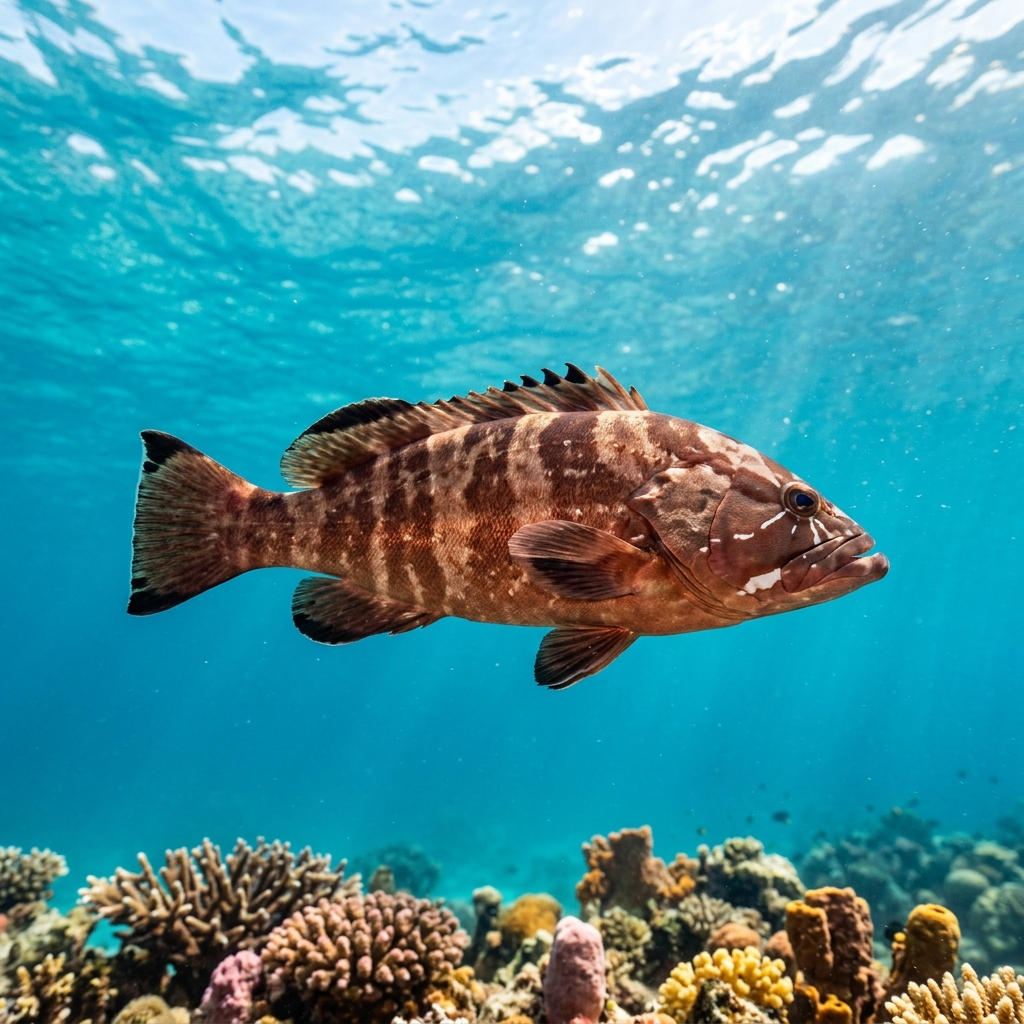
Blacktip Grouper
2,726 sites