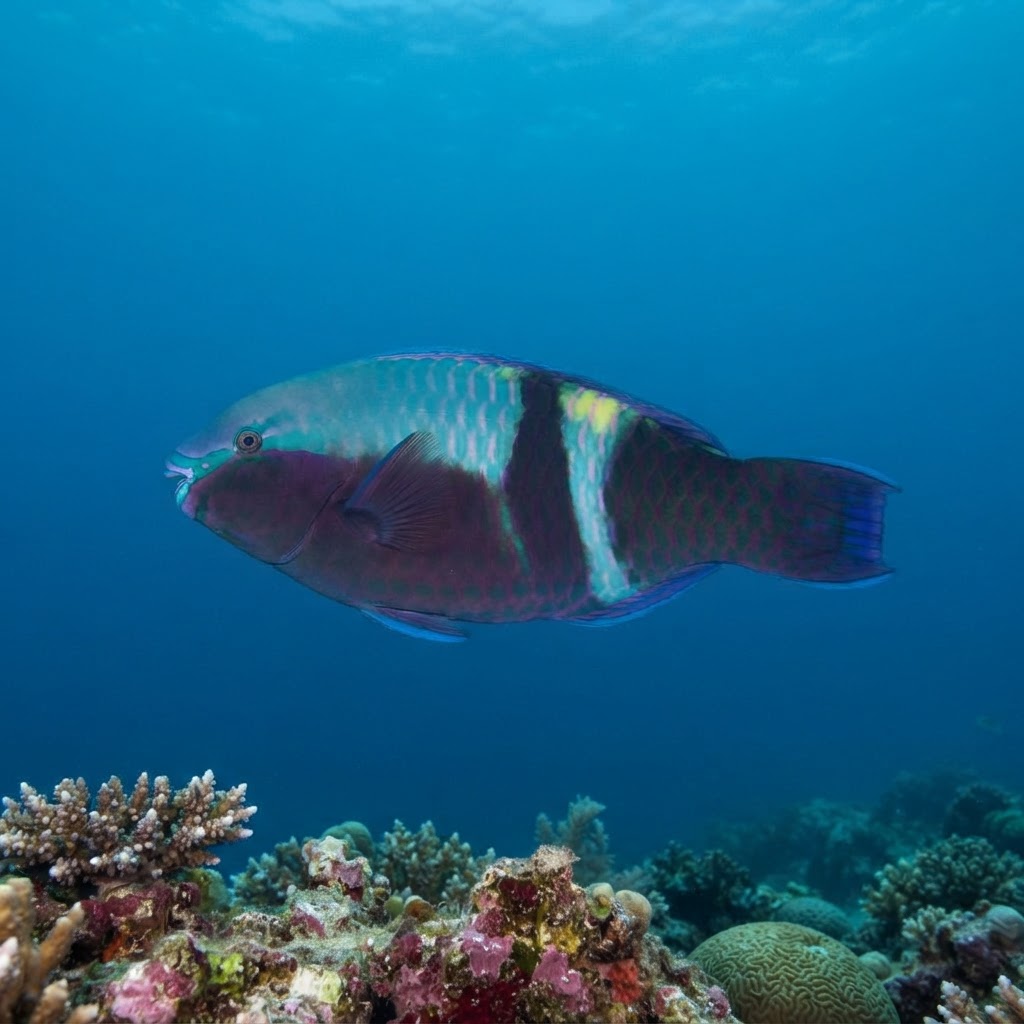
Scarus schlegeli
Uncommon but reliable on reefs from Okinawa to Rarotonga in 24.5-28.8°C water, year-round, no clear season.
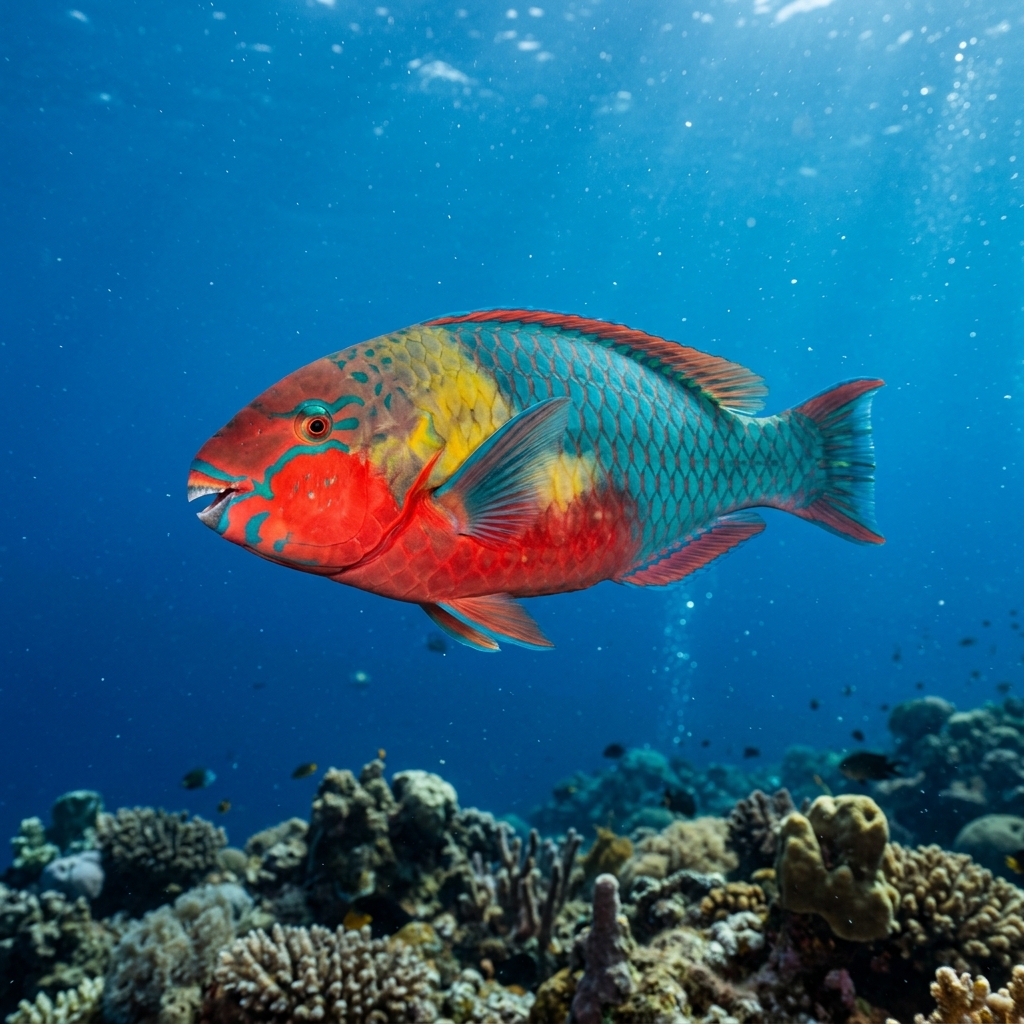
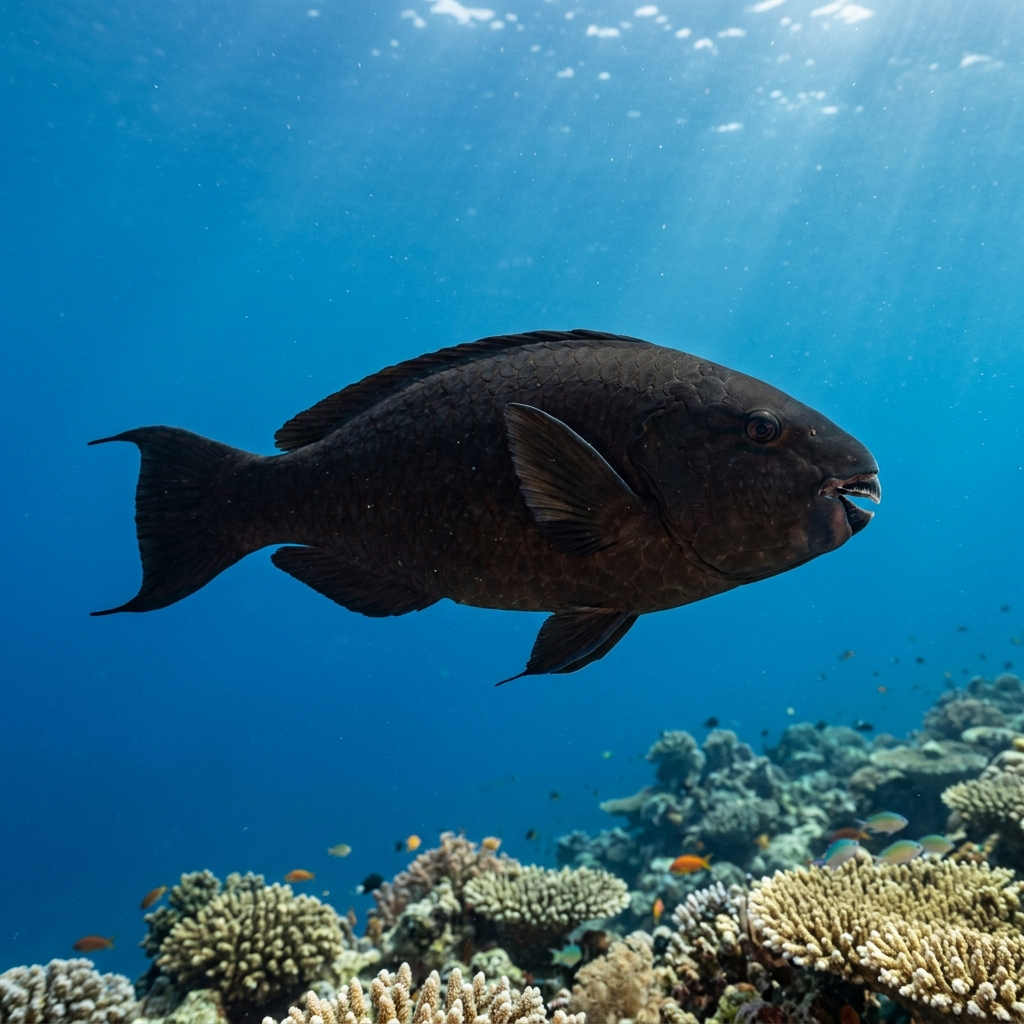
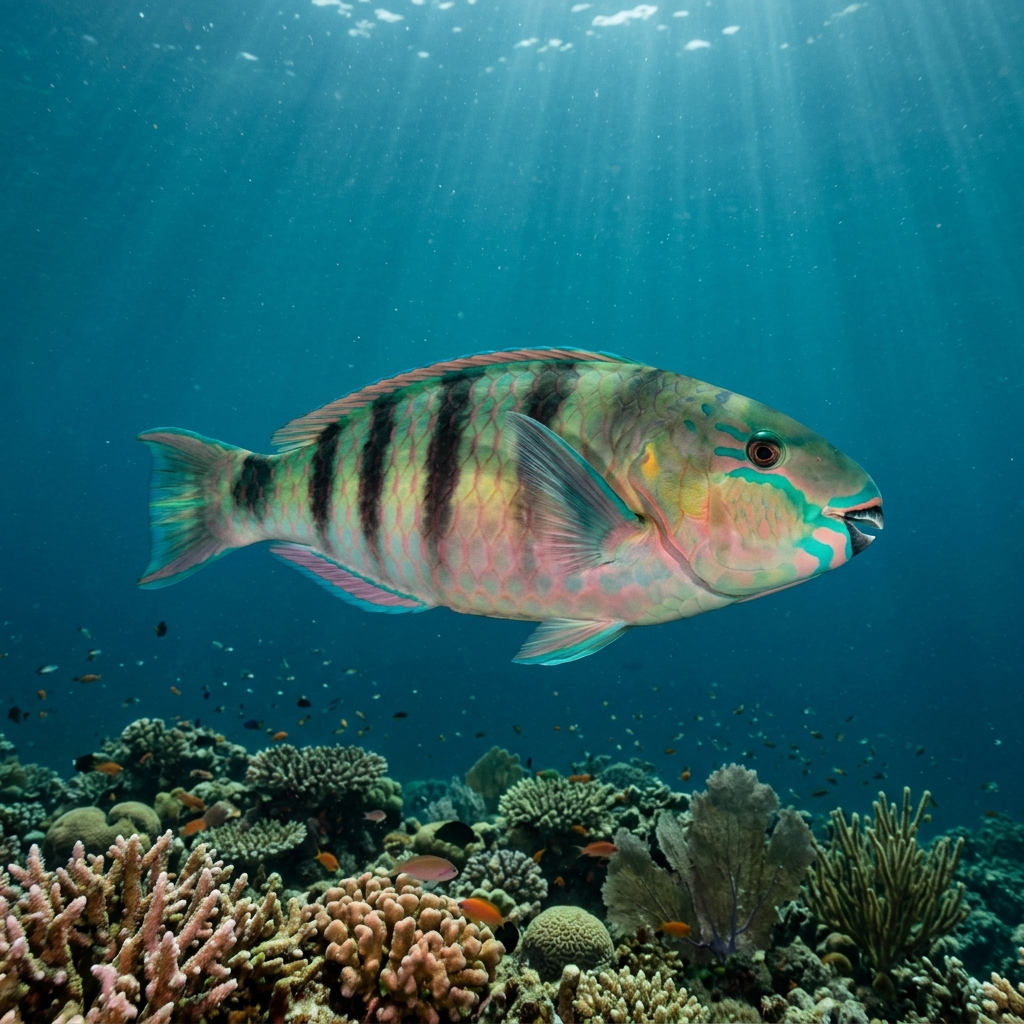
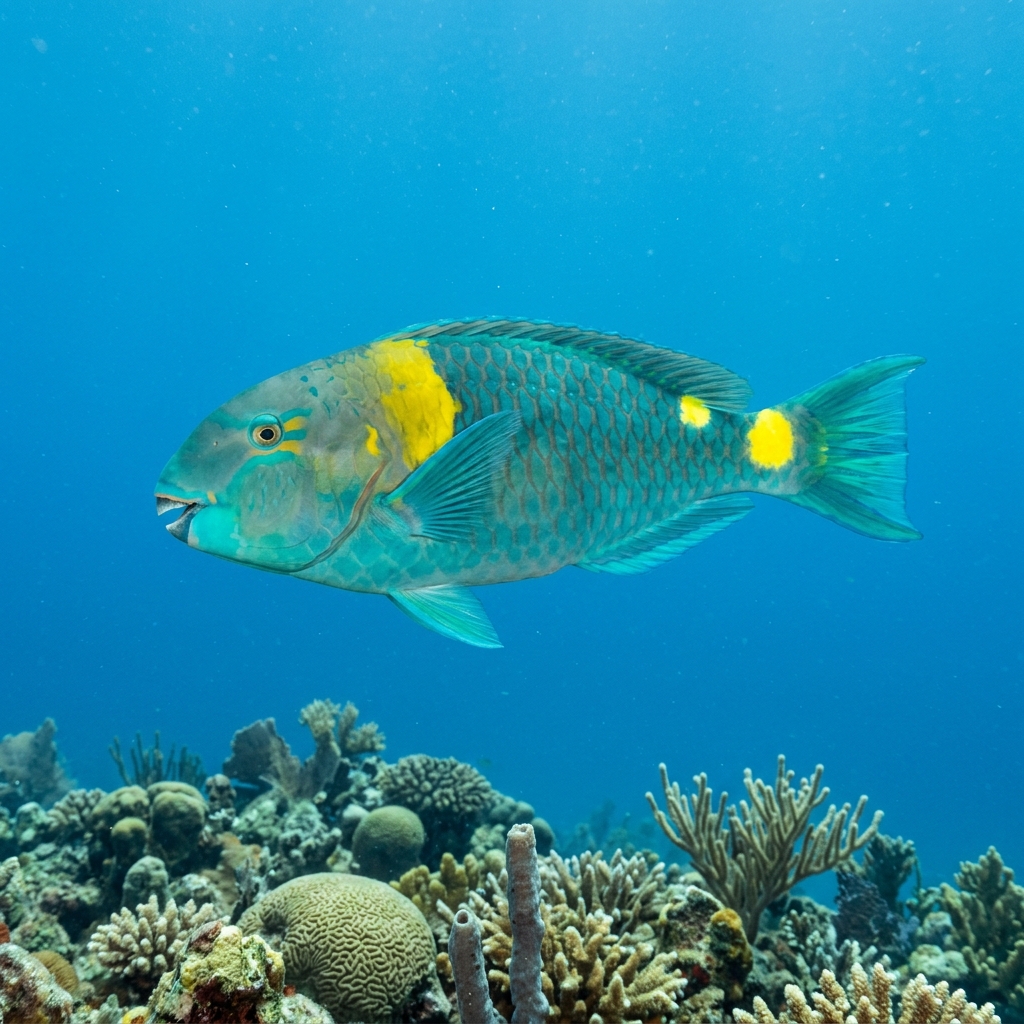
Look for a stocky, blunt-headed parrotfish around 28 cm with a blue-green body and a distinctive pale yellow saddle or band across the upper back, just behind the head. The fused, beak-like teeth are visible up close as it scrapes algae from the reef surface. Colour can shift between phases, but the yellow patch on an otherwise blue-green fish is the quickest cue at a glance.
Expect to find it cruising shallow to mid-depth reef flats and slopes during the day, grazing algae off rock and dead coral with steady bites from its beak-like mouth. It is not shy but keeps a working distance from divers, drifting off rather than fleeing outright if approached slowly. Most sightings are solitary or in loose small groups rather than large schools.
Like other parrotfish, it grinds up coral rock and algae as it feeds and excretes the leftover material as fine sand, making it one of the reef's steady sand producers over a lifetime of grazing.
No clear seasonal pattern shows up in the sightings, so treat it as a year-round fish on tropical and subtropical reefs. It sits comfortably in the 24.5 to 28.8°C range these reefs hold through most of the year, which is why divers log it in every month rather than a single peak season.
This is a reliable reef sighting across the Indo-Pacific, most consistently logged in Australia (especially Queensland) and Japan's Okinawa and Ryukyu Islands. It also turns up steadily in Fiji, particularly around Viti Levu and Taveuni, plus the Cook Islands around Rarotonga, French Polynesia's Tuamotu Islands, Taiwan's Green Island, Guam and New Caledonia.
Mapping where Yellowband Parrotfish is logged…
They are most reliably seen on reefs in Queensland, Australia, and around Okinawa and the Ryukyu Islands in Japan. Fiji (Viti Levu and Taveuni), the Cook Islands' Rarotonga, French Polynesia's Tuamotus, Taiwan's Green Island and Guam also produce steady sightings.
There is no strong seasonal pattern in the sightings, so any time of year works. They stay active in water between roughly 24.5 and 28.8°C, conditions that hold on most Indo-Pacific reefs year-round.
Look for a blue-green parrotfish around 28 cm long with a pale yellow band or saddle patch across its upper back, just behind the head. Its blunt, beak-like mouth and steady grazing motion over reef rock are also good tells.
They typically reach about 28 cm in length, a mid-sized reef parrotfish rather than one of the larger species.
No, they pose no danger to divers. They are grazing reef fish that move off calmly if you approach too closely rather than showing any defensive behaviour.
The fused teeth that give parrotfish their name let Yellowband Parrotfish scrape algae directly off rock and dead coral. The ground-up material passes through as fine sand, meaning the fish contributes directly to the sediment on the reefs it lives on.
Site and sighting data is aggregated from diver logs, iNaturalist and GBIF. For taxonomy and conservation status:
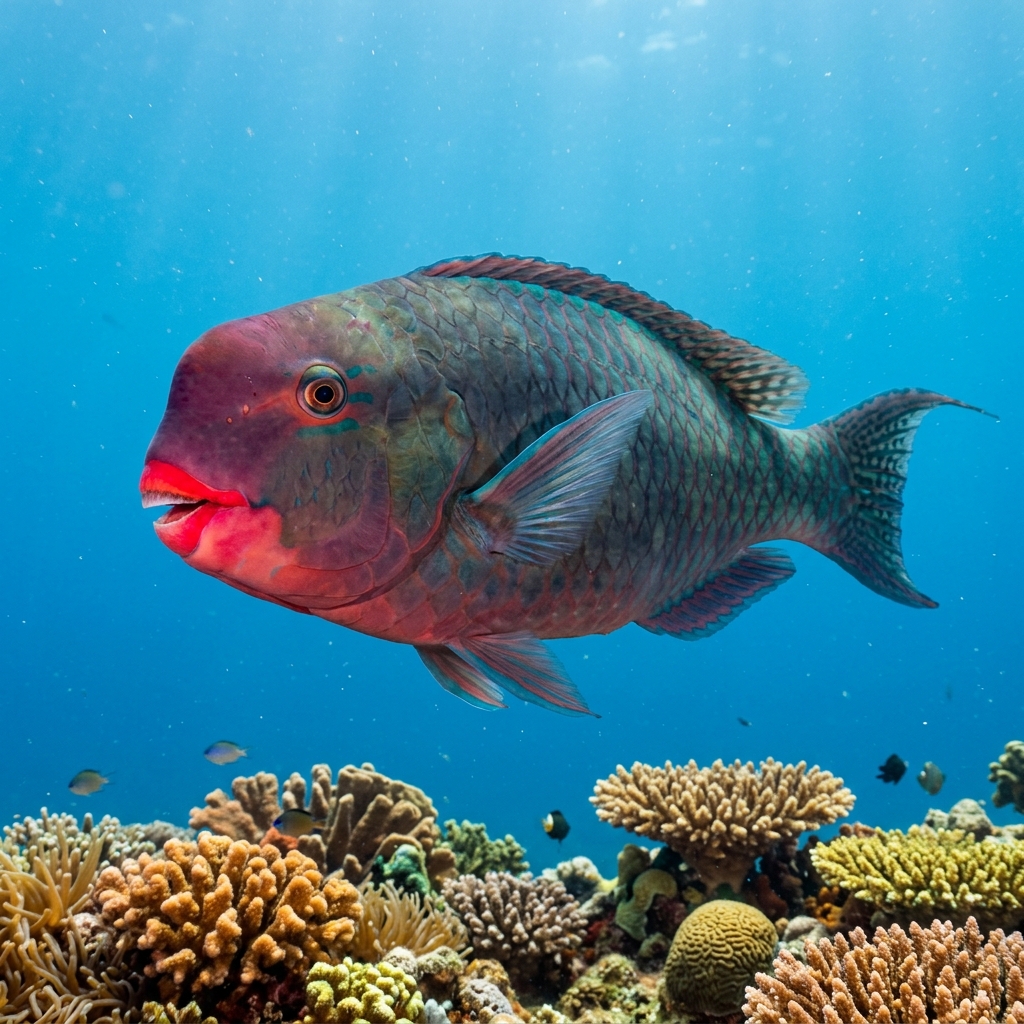
Redlip Parrotfish
2,789 sites