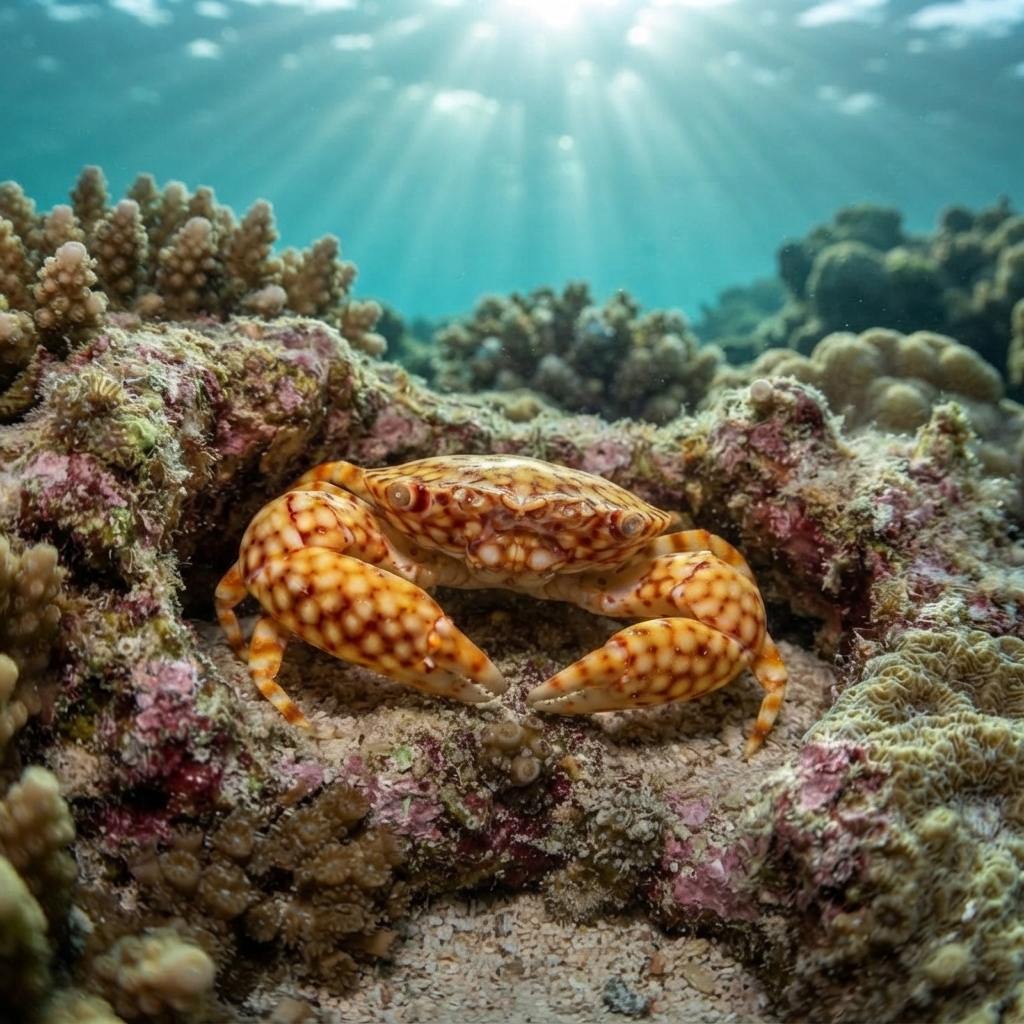
Trapezia flavopunctata
Look for this small coral-guarding crab tucked in Acropora branches in French Polynesia's Society Islands or Mauritius, year-round in warm reef water.
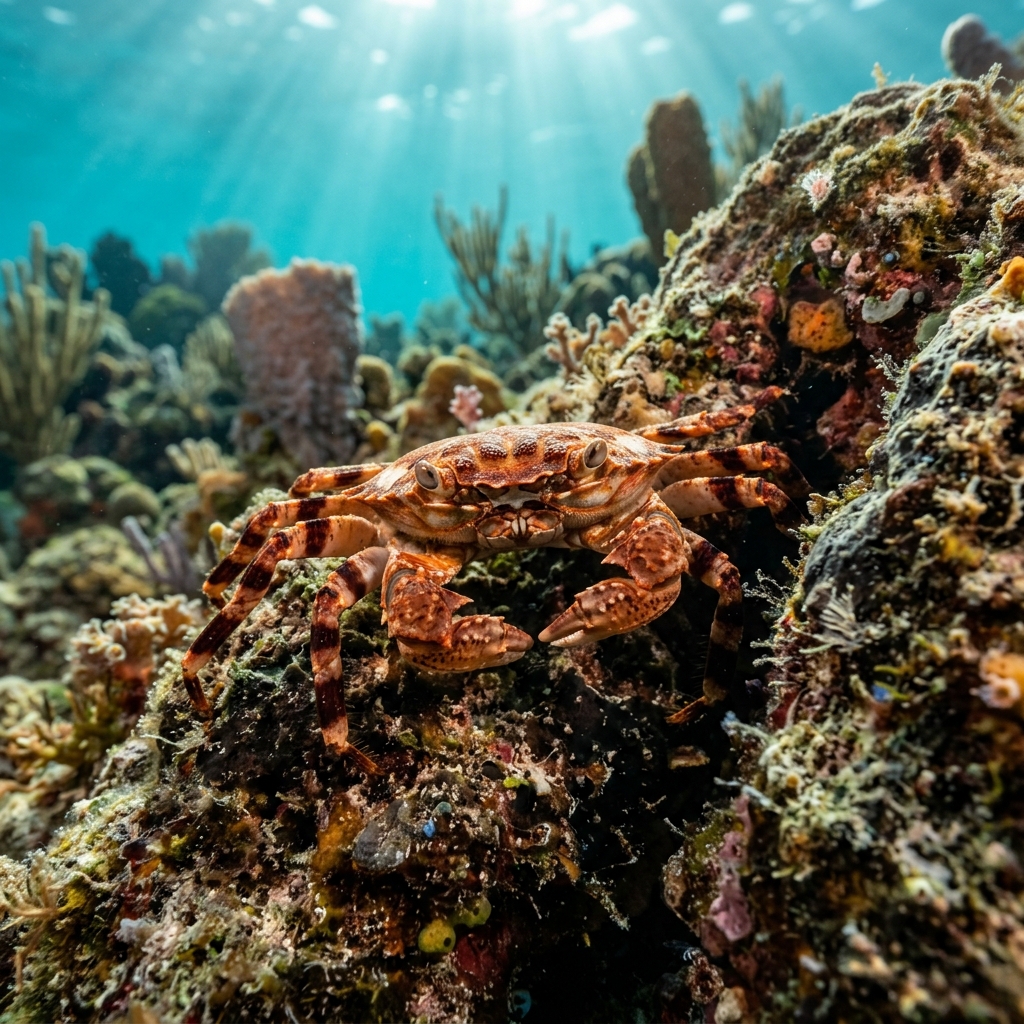
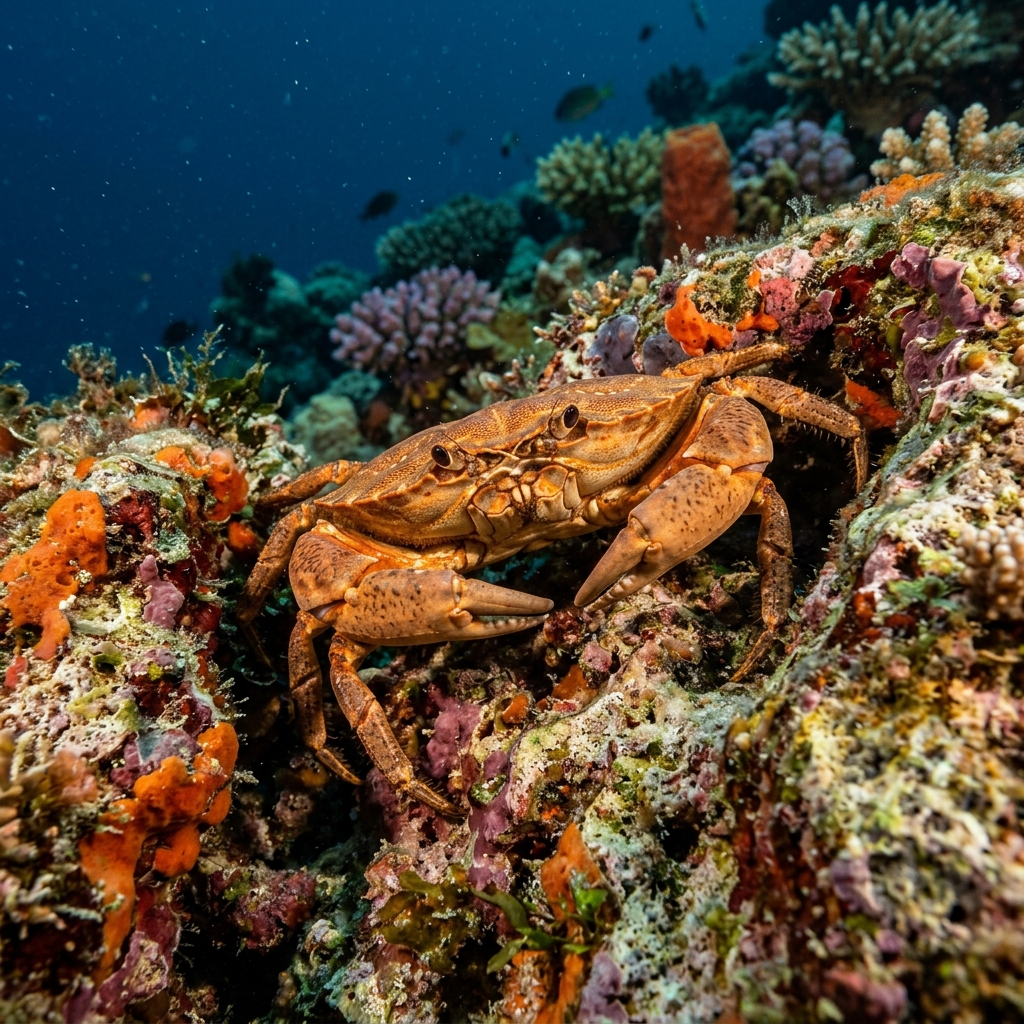
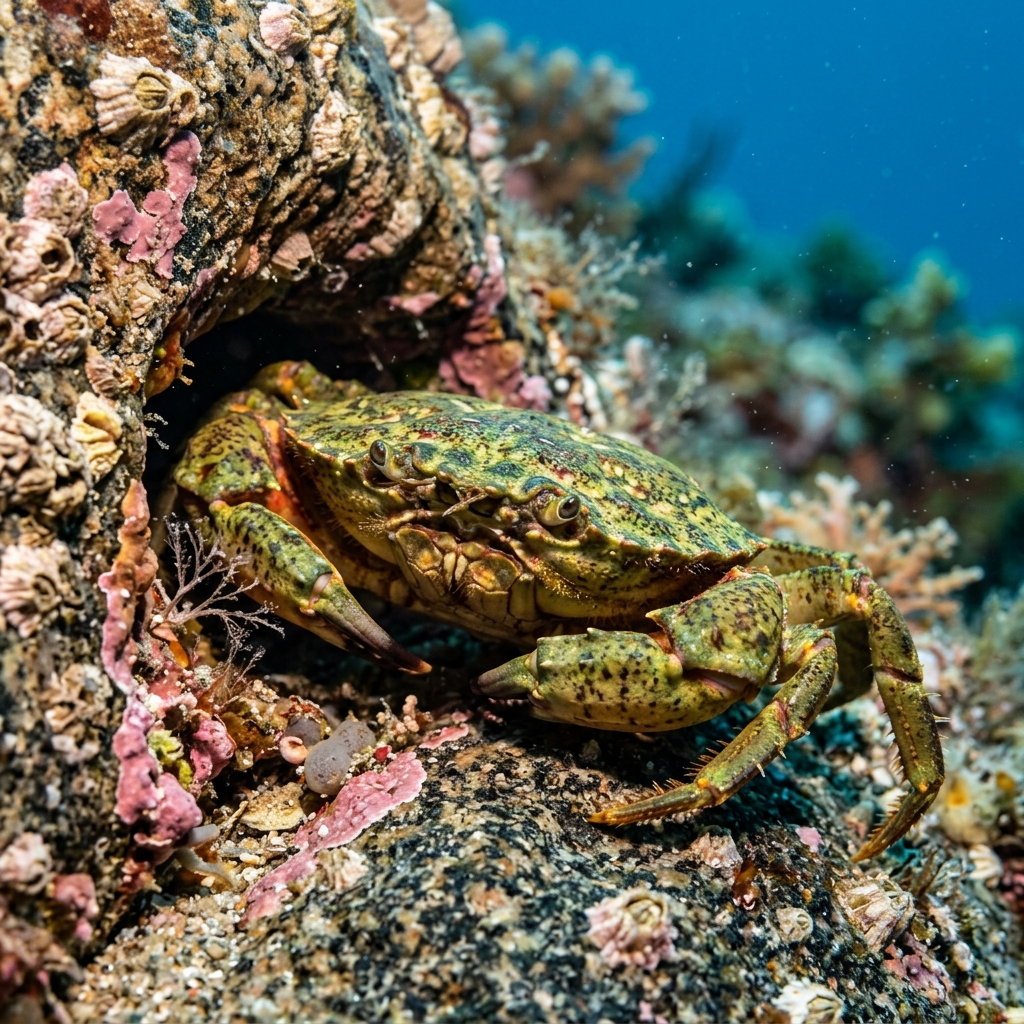
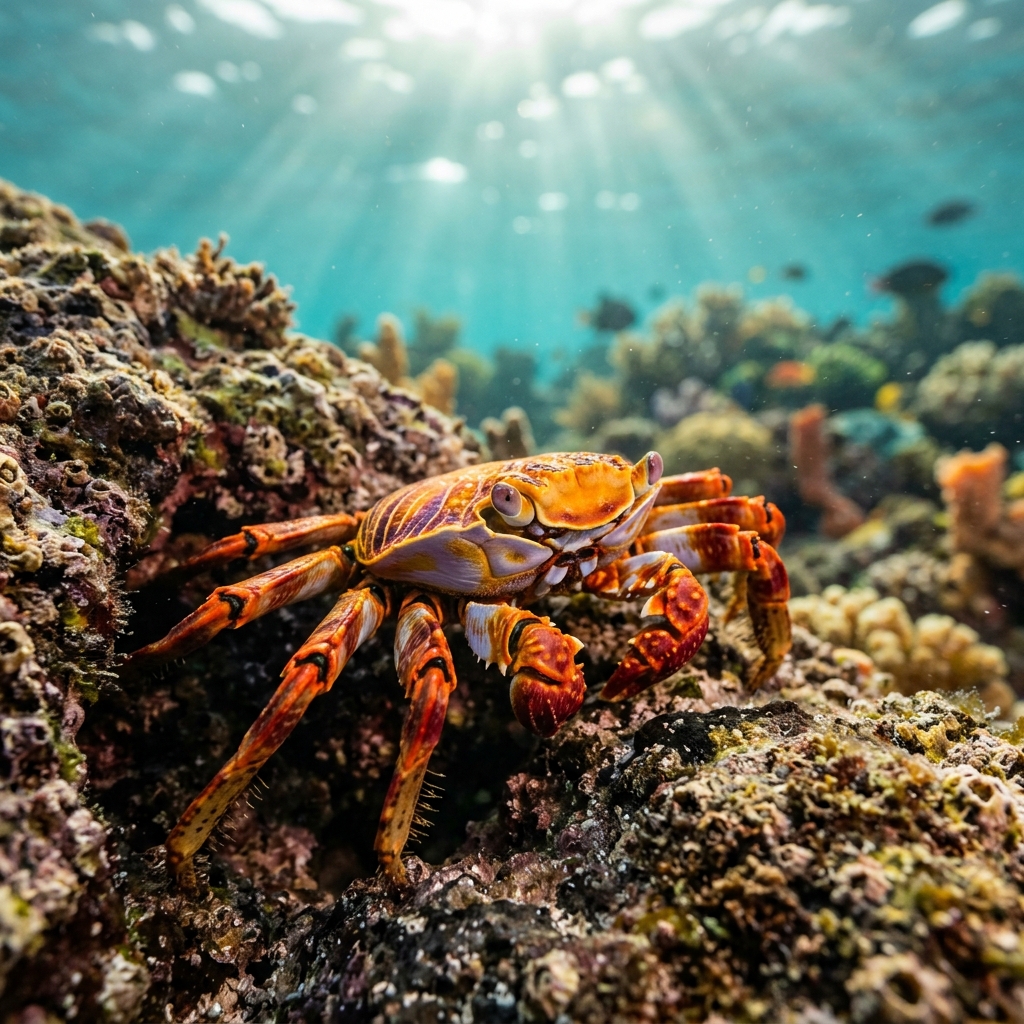
Small, flattened crab that wedges itself deep into the branches of its host coral rather than sitting out in the open. Body is pale to cream coloured with a scattering of yellow spots across the carapace, which is the feature most divers key on once they spot it. Legs are short and held close to the body, an adaptation for gripping tight coral branches rather than walking across open reef.
Spends almost all its time wedged inside the branches of its host coral, usually Acropora, rarely venturing onto open reef where a diver would spot it easily. It tends to hold still and rely on the coral's structure for cover rather than fleeing, so slow, close looking along branching coral heads is how divers actually find it. Most sightings come from divers who stop and scan coral colonies rather than swim past them.
Guard crabs in this genus live in a two-way relationship with their host coral, defending it against predators like crown-of-thorns starfish in exchange for shelter among the branches.
No clear seasonal pattern shows up in the sightings, and it sits comfortably in water from about 22 to 28 C, so it is a year-round find on the reefs where it lives.
Reef neighbours a diver could mistake it for. Use the identification notes above to tell them apart.
Most reliably logged in French Polynesia, especially around the Society Islands, and a strong option in Mauritius around Coin de Mire and Grand Baie. It also turns up in Hawaii in the United States and at Saint-Paul in Reunion, so it's worth a slow look at branching coral heads across the tropical Indo-Pacific and southwest Indian Ocean.
Mapping where Yellow-spotted Guard Crab is logged…
The most reliable spots are in French Polynesia's Society Islands and around Coin de Mire and Grand Baie in Mauritius. Hawaii and Saint-Paul in Reunion also produce regular sightings on branching coral reefs.
There's no strong season in the sightings data, and it lives in warm water year-round between roughly 22 and 28 C, so any time you're diving tropical reefs in its range works.
Look for a small, pale crab with scattered yellow spots wedged deep into branching coral, usually Acropora, rather than out in the open. It stays still and low among the branches, so slow scanning of coral heads is key to spotting it.
Exact size data isn't confirmed, but like other Trapezia guard crabs it's a small species, easily overlooked unless you're peering into coral branches at close range.
It lives in a defensive partnership with its host coral, sheltering among the branches while helping fend off coral predators such as crown-of-thorns starfish.
Site and sighting data is aggregated from diver logs, iNaturalist and GBIF. For taxonomy and conservation status:
European Green Crab
2,469 sites