Hemigrapsus oregonensis
Common in British Columbia's cold shallows, this small mottled crab turns up under rocks in water as cool as 7.8C, year-round.
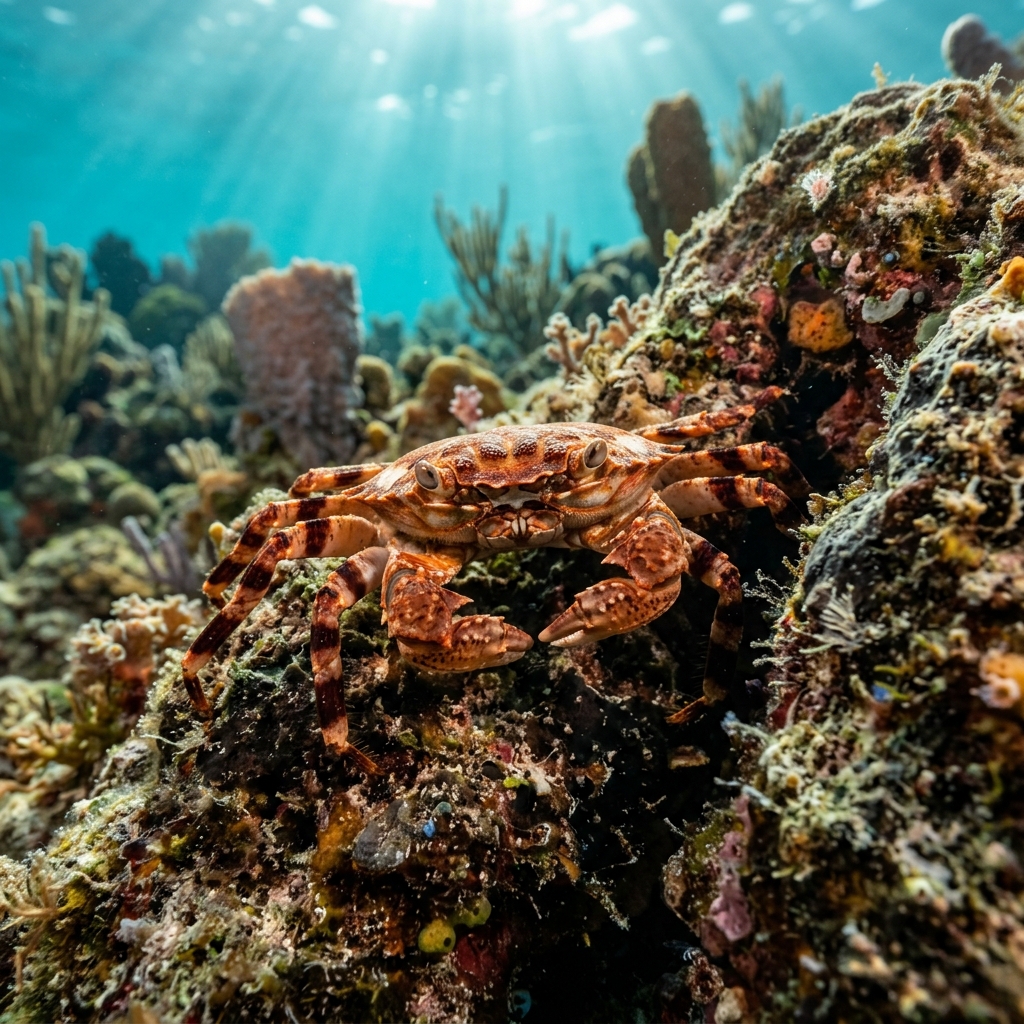
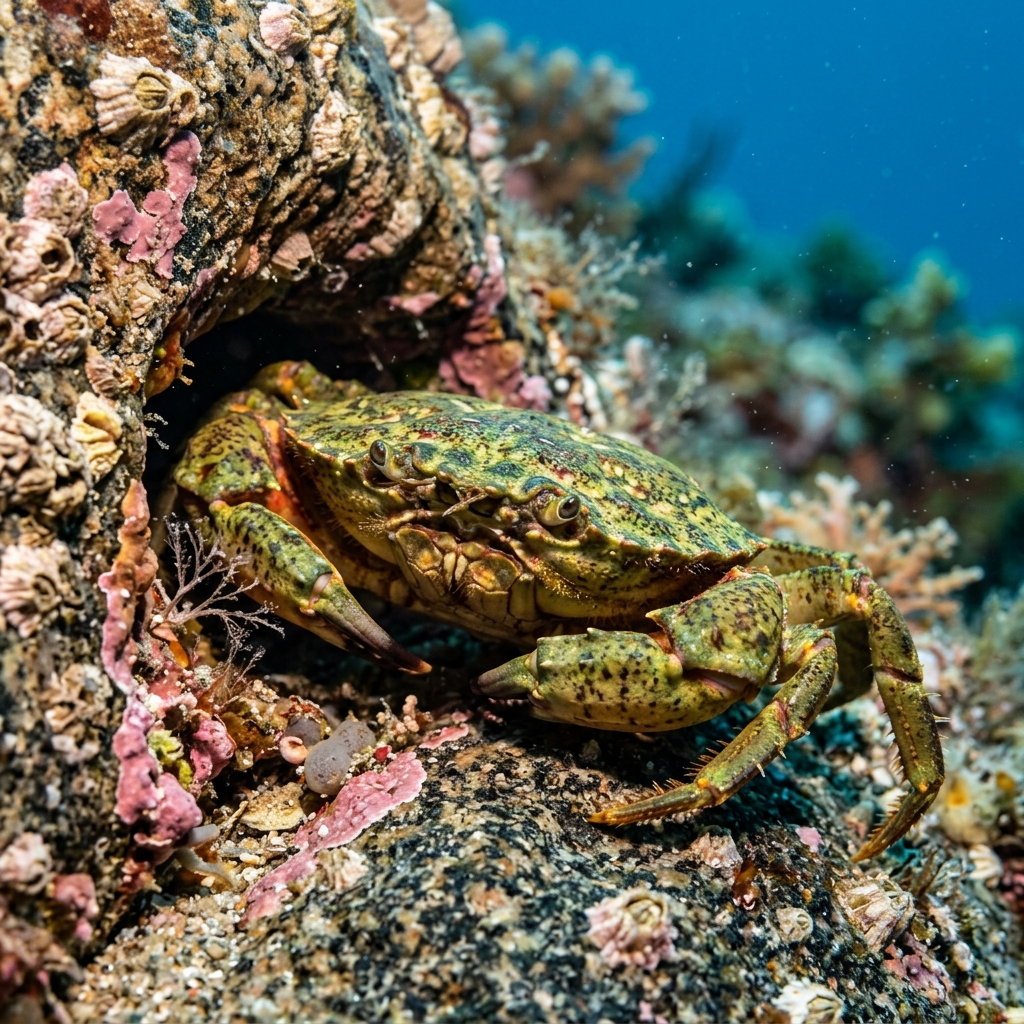
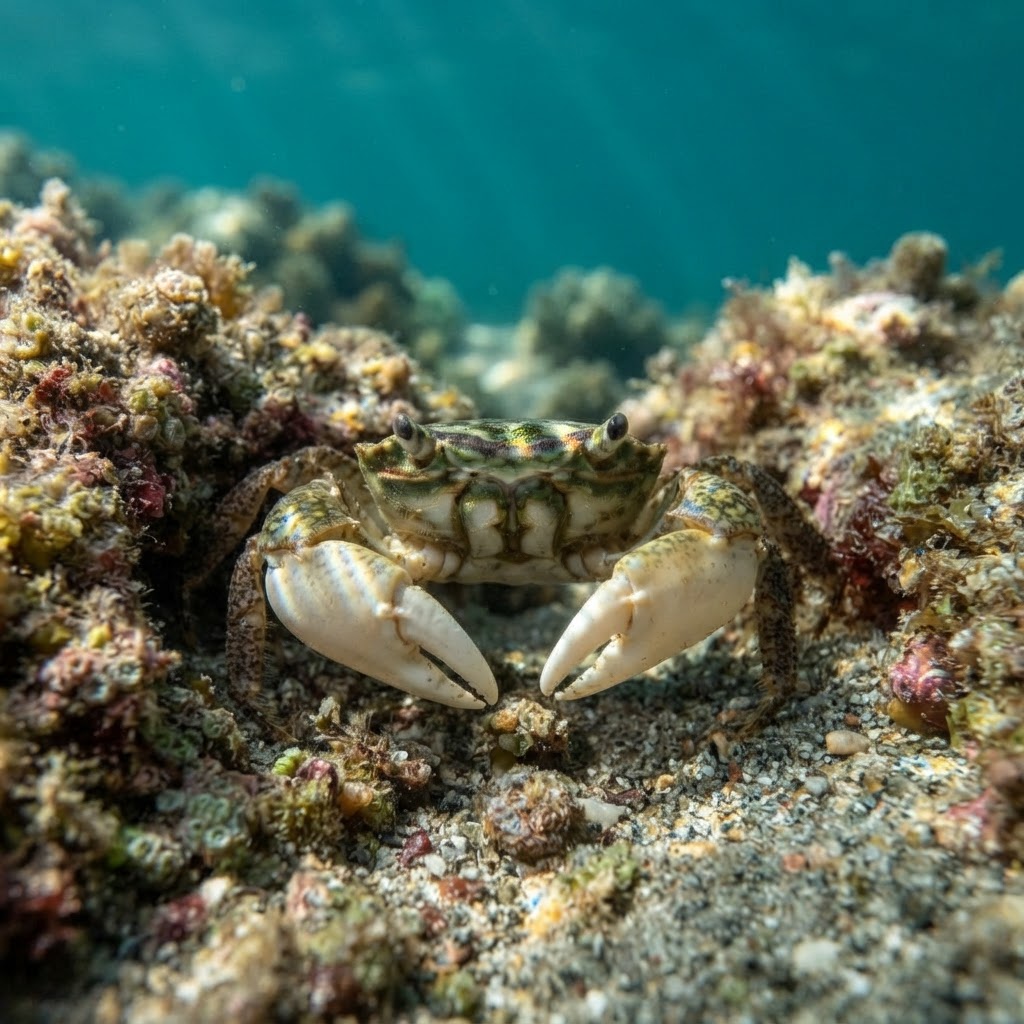
A small, squarish crab with a mottled olive-to-yellow carapace that blends in against rock and gravel, usually only a few centimetres across. Its claws are unequal in size and unspotted, which separates it from similar shore crabs, and its legs carry faint hairy fringes. You will almost always find it tucked under a rock or wedged into a crevice rather than swimming or walking in open water.
Look for it wedged under loose rocks or in gravel and shell debris on the seabed, where it stays put rather than darting off when a torch passes over. It is a bottom-dweller through and through, more often found by turning over cover than by spotting it out in the open. Divers most often log it as an uncommon to common find on shallow, rocky or cobble bottoms rather than sand or reef.
It tolerates a wide swing in salinity and temperature, which is why it turns up in estuaries and brackish shoreline pools as readily as in fully marine shallows.
Sightings show no real seasonal pattern, and with a comfort range of roughly 7.8 to 13.8C it stays active in cold Pacific Northwest water through the year, so any month works for a dive or shore snorkel.
Most consistently logged in British Columbia, Canada, with strong numbers also from the Pacific Northwest region of the United States. Smaller numbers turn up further north in Alaska and south in California, so it is really a cold-water Pacific coast species from Alaska down to California.
Mapping where Yellow Shore Crab is logged…
British Columbia in Canada is the strongest region for it, with the Pacific Northwest coast of the United States close behind. Smaller numbers are logged in Alaska and California.
There is no strong season in the sighting data, and it copes fine with cold water down to around 7.8C, so it is a year-round find on Pacific Northwest shores.
Look for a small, squarish crab with a mottled olive-yellow shell and unequal, unspotted claws, usually tucked under a rock rather than out in the open.
It stays small, typically only a few centimetres across the carapace, making it easy to miss unless you are actively turning over rocks.
No. It poses no threat to divers and will simply stay still or retreat further under cover if disturbed.
It handles a wide range of salinity and temperature, which lets it live in brackish estuary shallows as well as open rocky shoreline, a flexibility many marine crabs lack.
Site and sighting data is aggregated from diver logs, iNaturalist and GBIF. For taxonomy and conservation status:
European Green Crab
2,469 sites