Nerophis lumbriciformis
A thread-thin pipefish hiding in Brittany's kelp and Northern Ireland's rocky shores, best found by patient searching year-round.
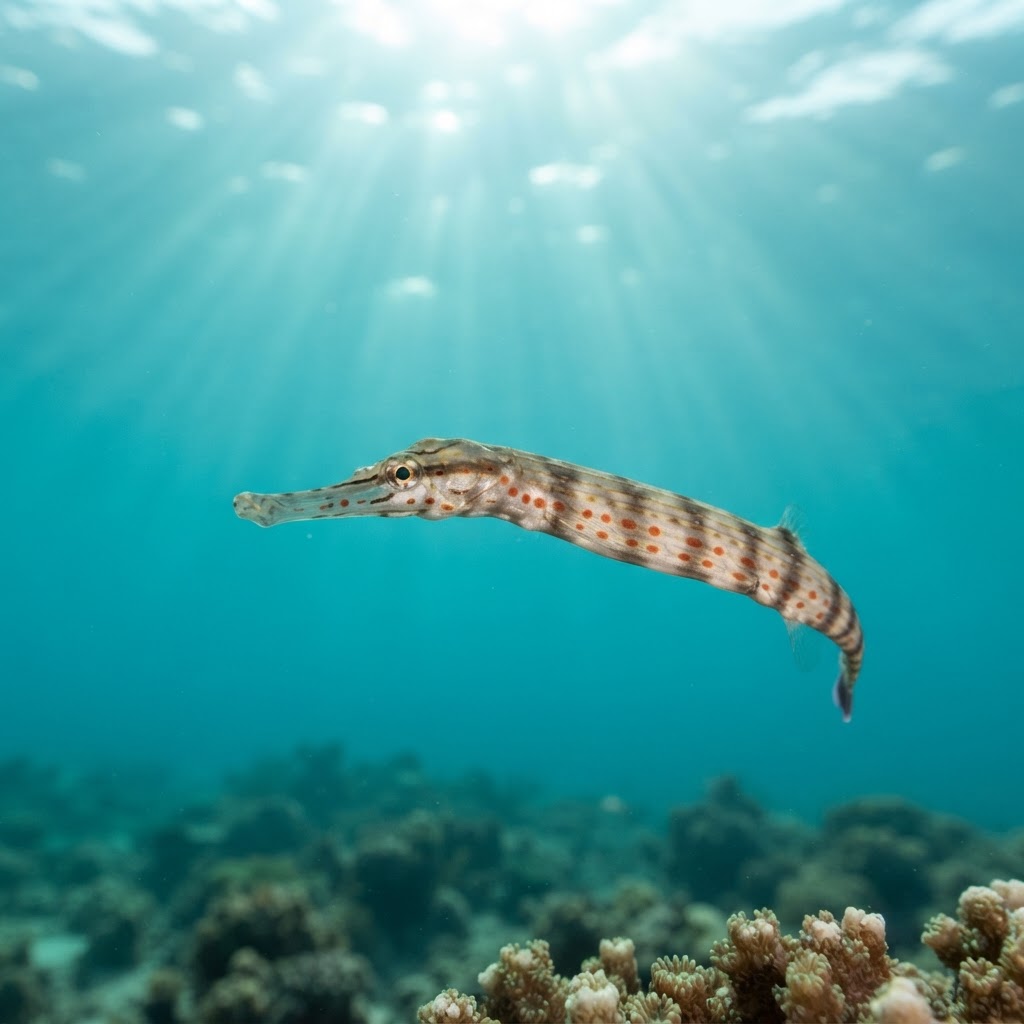
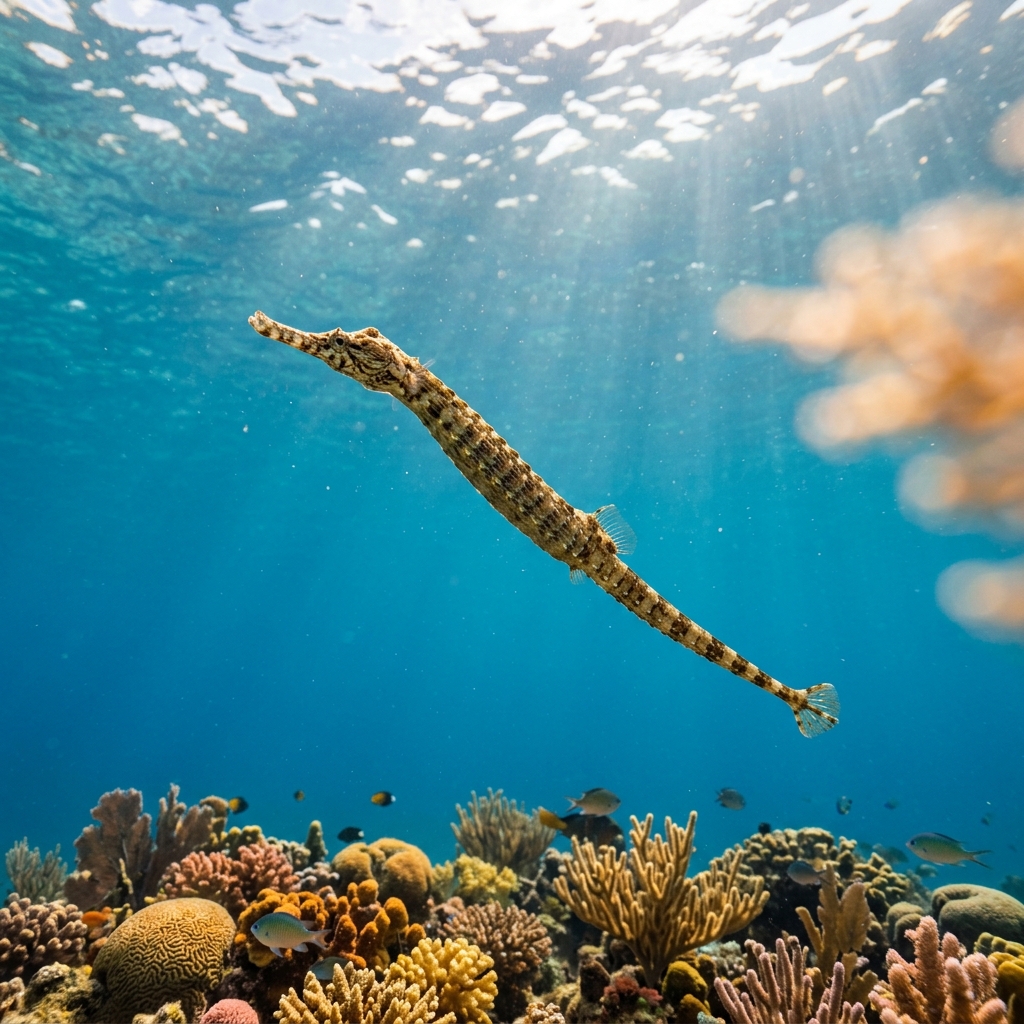
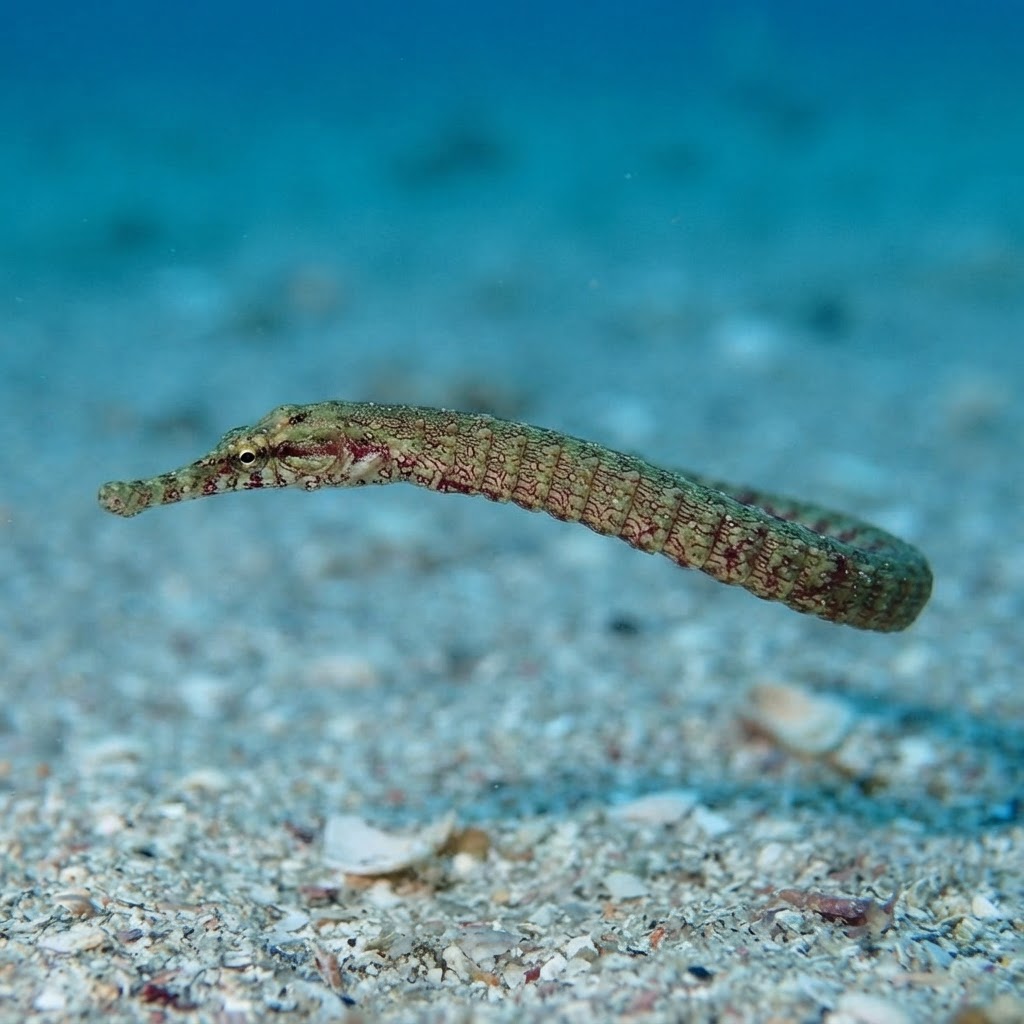
Look for a thread-thin, worm-like body barely 10 cm long, olive-brown to reddish and mottled to match seaweed and rock. It has no visible fins to speak of and moves with a slow, snake-like wriggle rather than swimming in open water. There is no tail fin, which along with the almost pipe-cleaner build is the biggest tell against anything else on the reef.
Divers usually find it tucked into seaweed or wedged among rocks in shallow water, holding still enough to pass as a strand of weed until you look twice. It is not a fish that swims out to greet you; most sightings come from divers deliberately combing kelp holdfasts and rocky crevices rather than spotting it mid-water. Because it relies on stillness and camouflage rather than fleeing, a slow approach and a careful eye through weed beds is the only real technique.
Like other pipefish, males carry the fertilised eggs, holding them stuck to the skin along the underside of the body rather than in a proper pouch, until they hatch.
Sightings show no clear seasonal peak, and with a comfort range of 9.4 to 16 C it is realistic to find year-round in the cooler Atlantic waters it favours.
Most reliably found in the United Kingdom and France, with Brittany the strongest single region, followed closely by England and Northern Ireland. Portugal's Costa Verde and Spain's Galicia also turn up steady sightings, making this a distinctly cool-water Atlantic species rather than a Mediterranean or tropical one.
Mapping where Worm Pipefish is logged…
It is most commonly logged in the UK and France, particularly Brittany, England, and Northern Ireland, with further sightings in Portugal's Costa Verde and Spain's Galicia. It is an Atlantic species tied to cool, rocky and weedy coastlines rather than warm reefs.
There is no strong season in the sighting data, so it is realistic to look for year-round in its cool-water range, which sits between about 9.4 and 16 C.
Look for a very thin, worm-like brown to reddish body around 10 cm long, tucked into seaweed or rocky crevices rather than swimming freely. It lacks an obvious tail fin and moves with a slow wriggle, which is usually the giveaway against a strand of weed.
They reach about 10 cm long, making them one of the smaller and slimmer members of the pipefish family.
Yes. Males carry fertilised eggs glued to the skin along their underside rather than in an enclosed pouch, a trait shared with several other pipefish species.
No. They are small, harmless carnivores that feed on tiny invertebrates and pose no risk to divers at all.
Site and sighting data is aggregated from diver logs, iNaturalist and GBIF. For taxonomy and conservation status:
Seahorse
1,346 sites