Bathygobius coalitus
A tiny, mottled goby that sits tight on rubble and reef rock in Hawaii, most reliably logged around the islands year-round in 24-29C water.
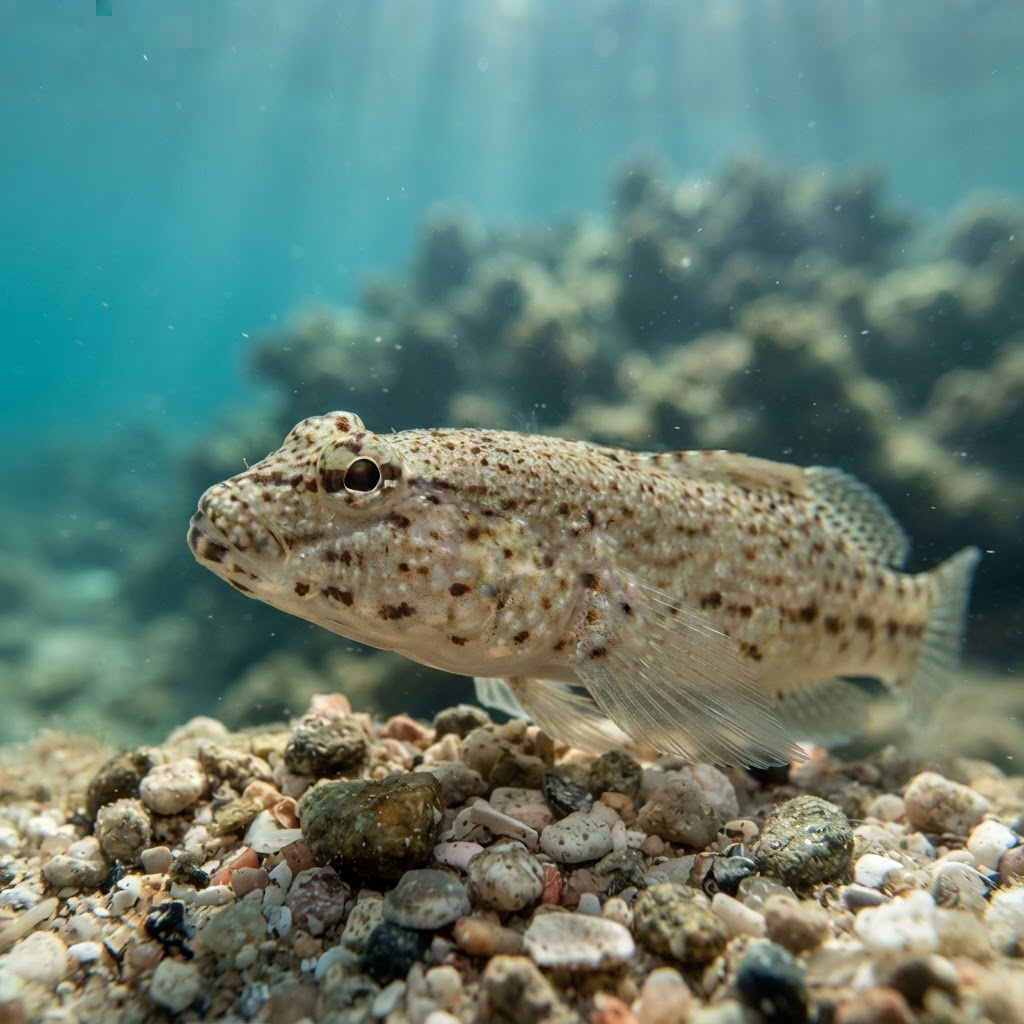
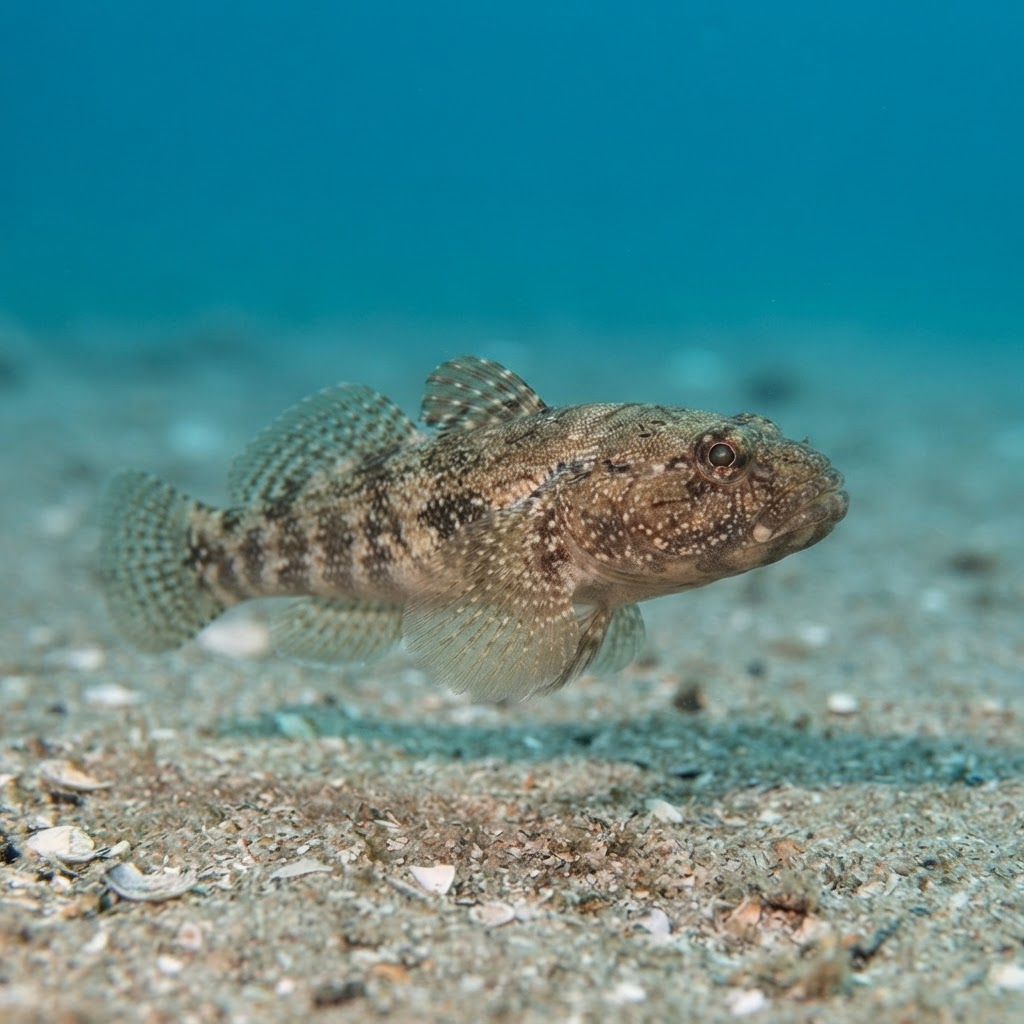
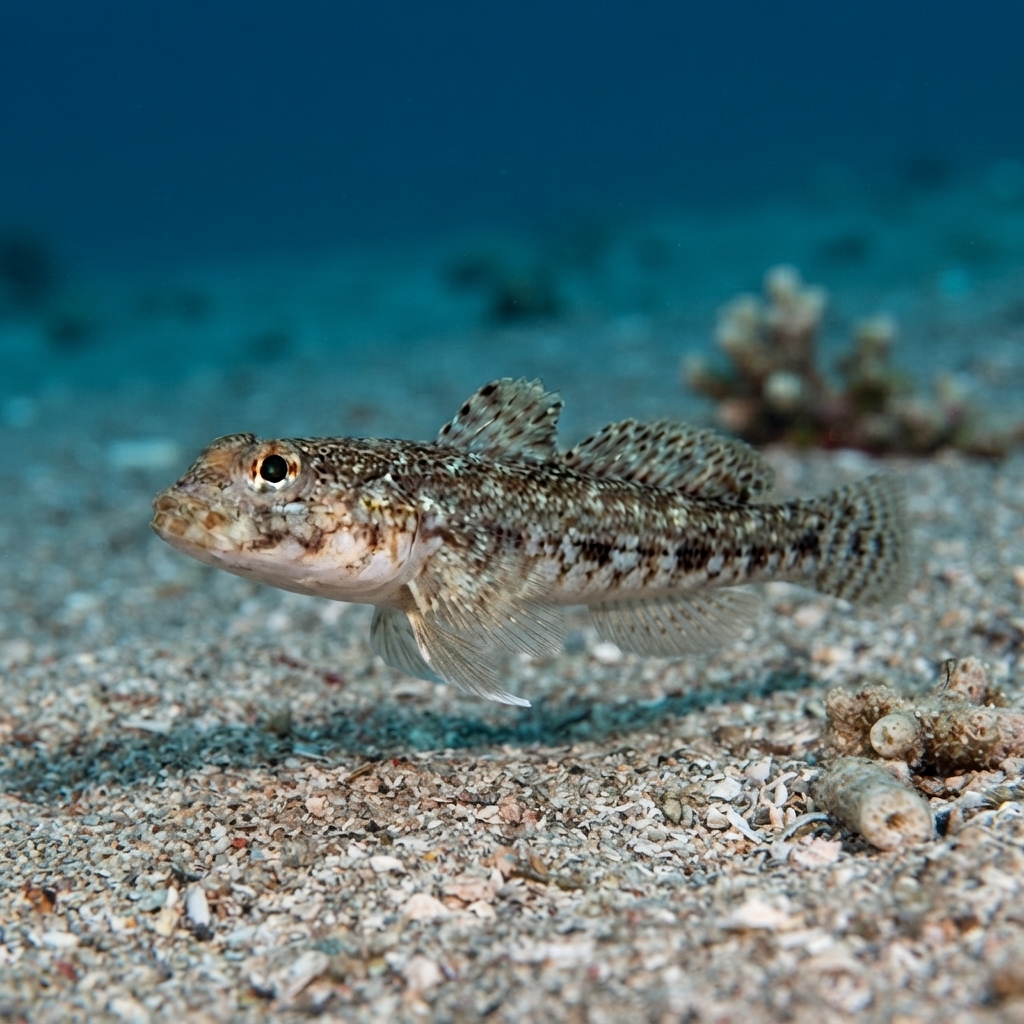
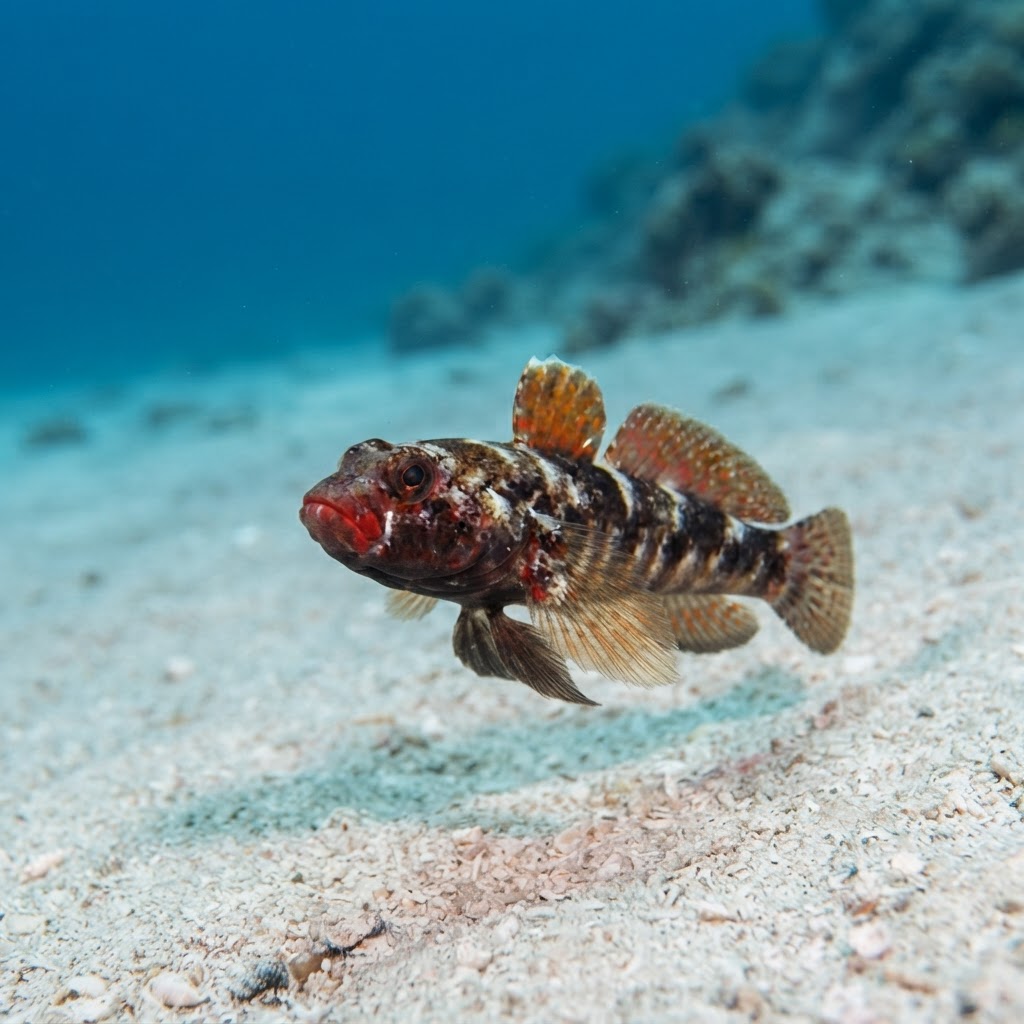
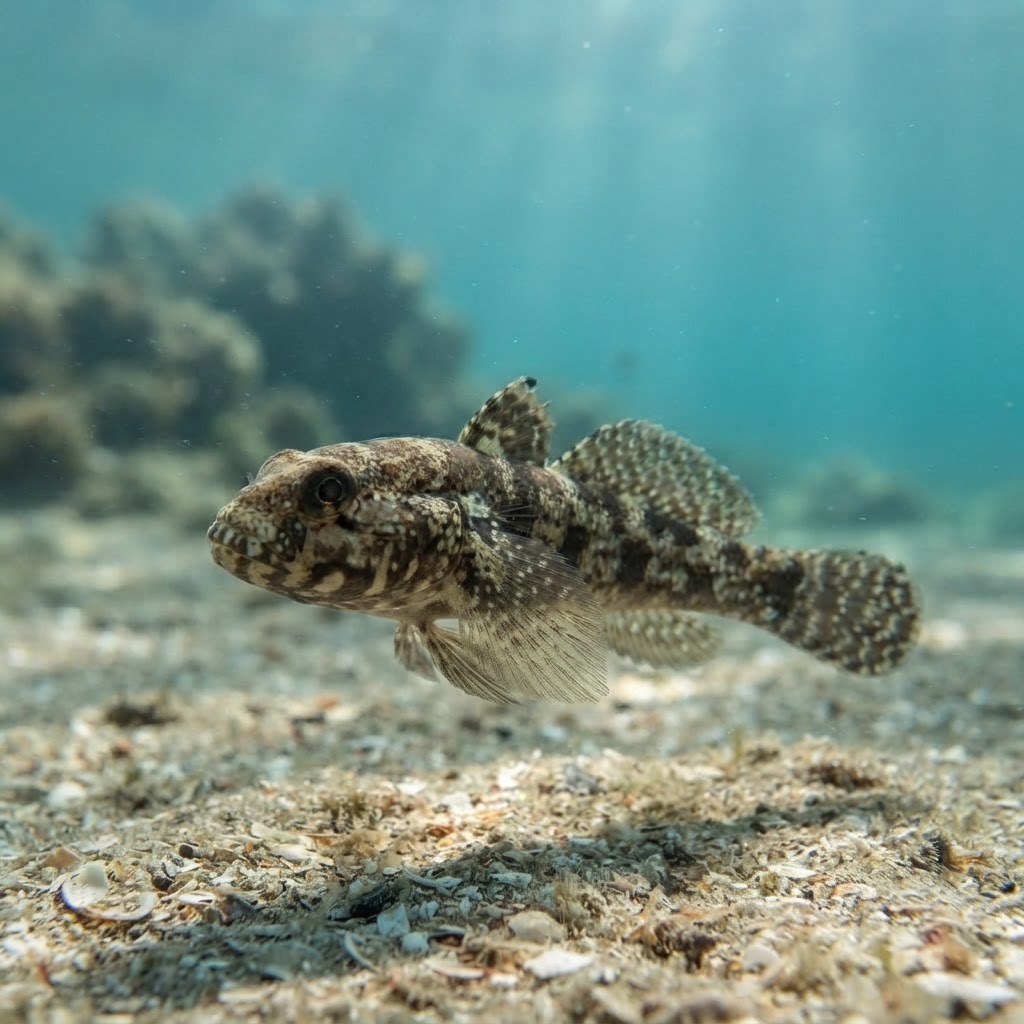
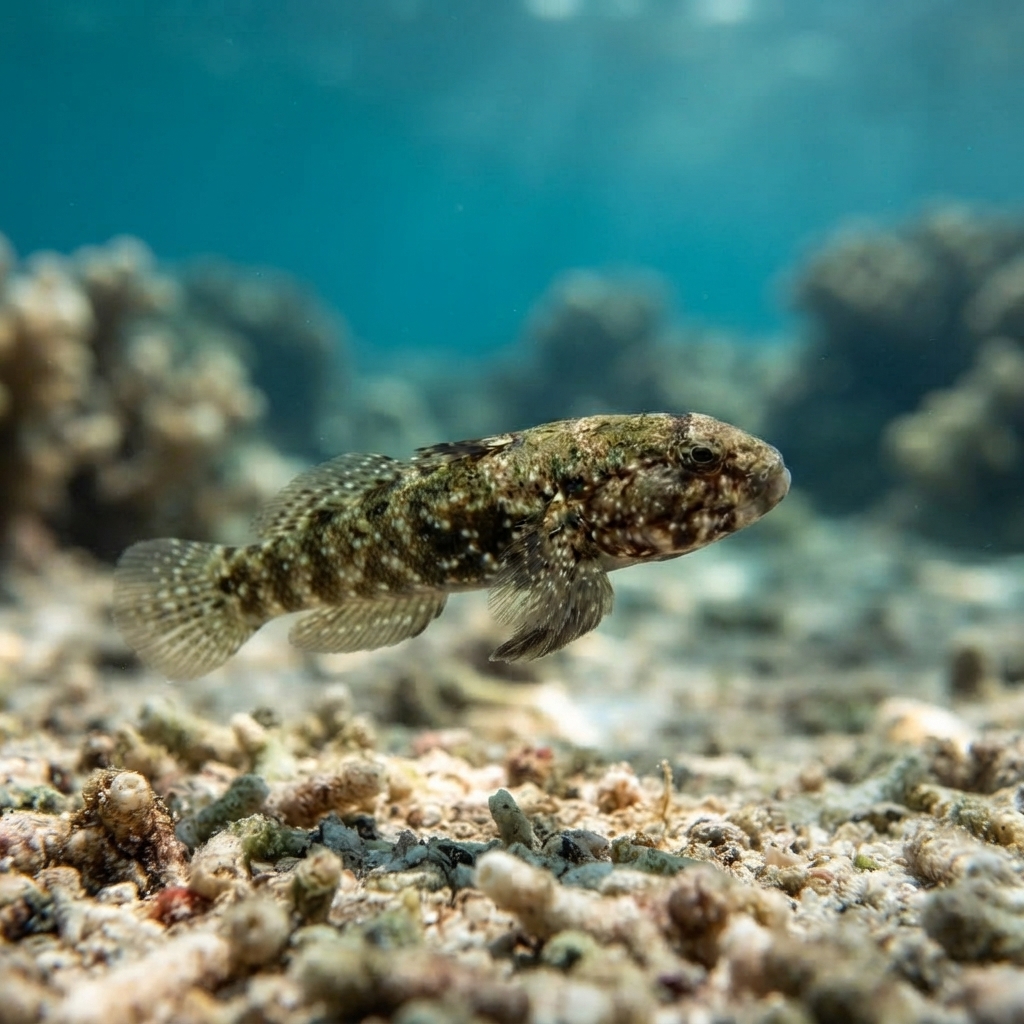
A stubby little fish, only about 7 cm long, that perches propped on its pelvic fins rather than swimming freely. Look for a mottled brown-and-tan body broken up by small pale spots, which gives it camouflage against rubble and encrusted rock rather than open coral. The head is blunt and slightly bulging-eyed, typical of a bottom-hugging goby, and it tends to freeze in place rather than dart off when you approach.
Spends its time parked on rubble, rock, or reef debris in very shallow water, usually inside 5 metres, propped up and watching the world go by rather than cruising the reef. It relies on staying still and blending in rather than fleeing, so slow, close looks with a torch or macro lens usually work better than a chase. Most sightings come from divers and snorkellers working the shallows rather than deeper reef faces.
Like other Bathygobius species, it lacks a swim bladder and has fused pelvic fins that form a small sucker-like disc, letting it grip onto rock and rubble in the surge zone instead of floating freely.
No clear season shows up in the sighting data, and its comfort range of roughly 24.6 to 29.3C matches tropical reef conditions year-round, so any month works. Divers in Hawaii log it consistently across the calendar rather than in a short window.
Overwhelmingly a Hawaii fish in the logged data, with sightings spread across numerous sites there, making it the most dependable place to look. Smaller numbers turn up around Mauritius, particularly Grand Baie and Trou aux Biches, so it is worth checking shallow rubble and rocky patches on both sides of the Indian and Pacific Ocean range.
Mapping where Whitespotted Frillgoby is logged…
Hawaii is by far the most reliable place, with sightings logged across many sites there. Smaller numbers also show up in Mauritius around Grand Baie and Trou aux Biches.
There is no strong seasonal pattern in the sightings, and its warm-water niche of about 24.6 to 29.3C is met year-round on tropical reefs, so it can turn up in any month.
Look for a small, mottled brown fish around 7 cm long propped on rubble or rock in shallow water, with light spotting breaking up its body outline. It sits still on the bottom rather than swimming in open water, which is a strong clue you are looking at a goby.
They stay small, topping out around 7 cm, so they are easy to overlook against a busy rubble or rocky bottom.
No, they pose no danger to divers. They are tiny, bottom-dwelling fish that rely on staying still and camouflaged rather than any defensive behaviour toward people.
Like other members of its genus, it has no swim bladder and instead uses fused pelvic fins as a small sucker disc, which lets it cling to rock and rubble even in shallow, surgy water.
Site and sighting data is aggregated from diver logs, iNaturalist and GBIF. For taxonomy and conservation status:
Slender Goby
806 sites