Cheilinus quinquecinctus
A reliable but uncommon find across South Sinai and Marsa Alam reefs, this barred wrasse turns up year-round in 23-29C water.
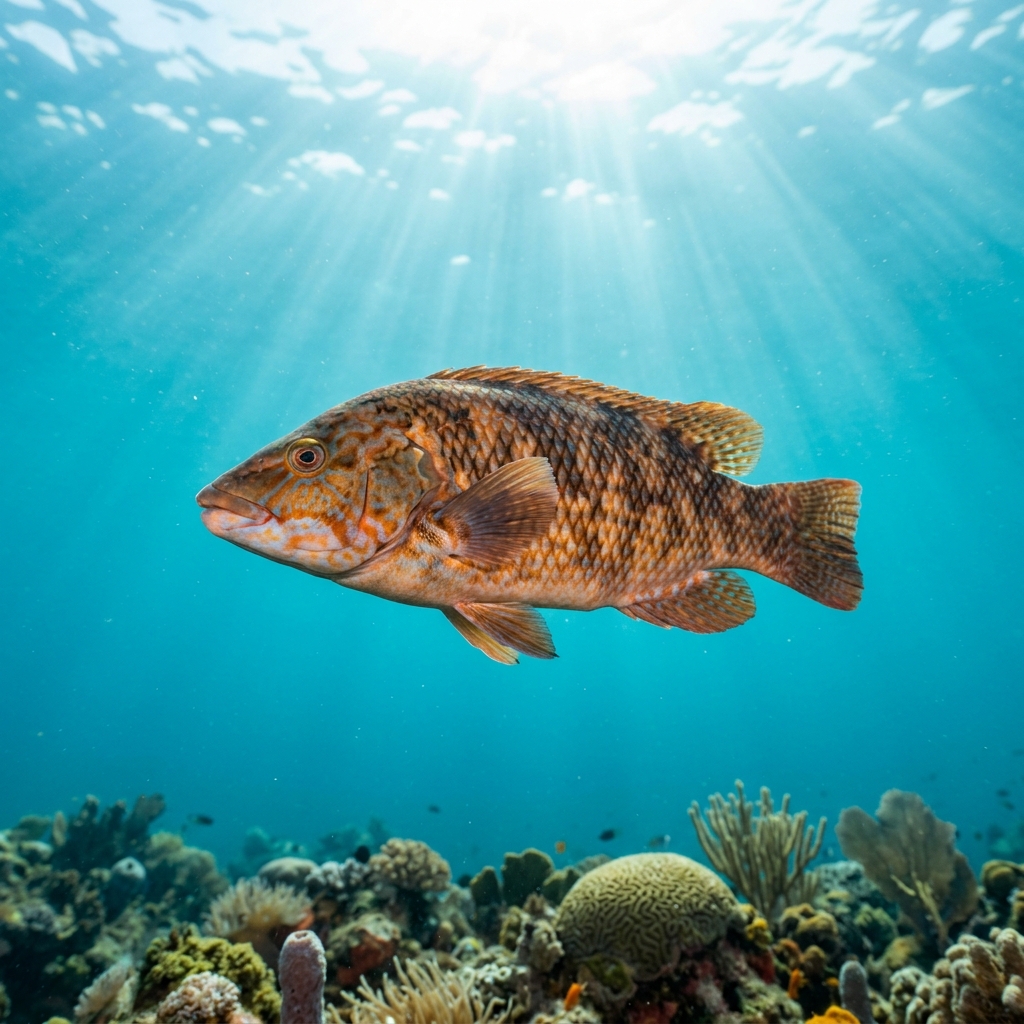
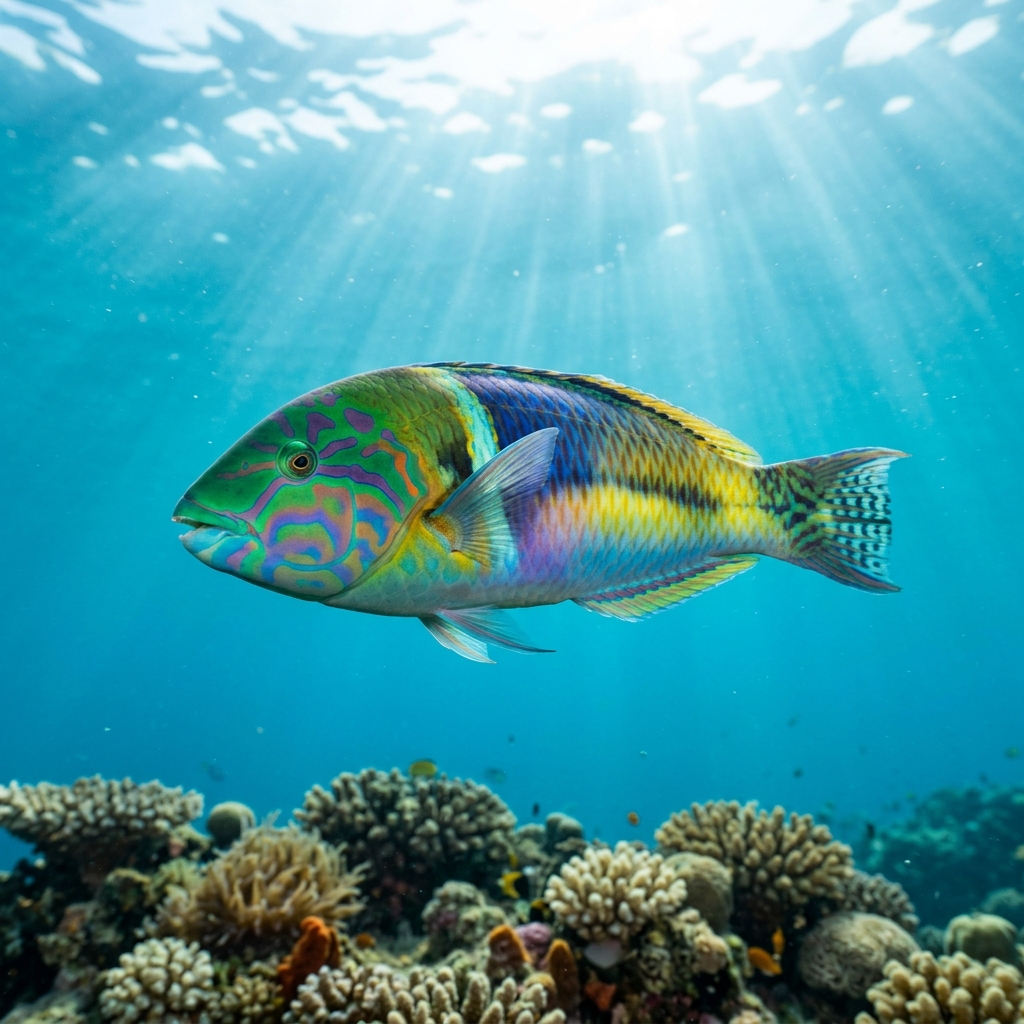
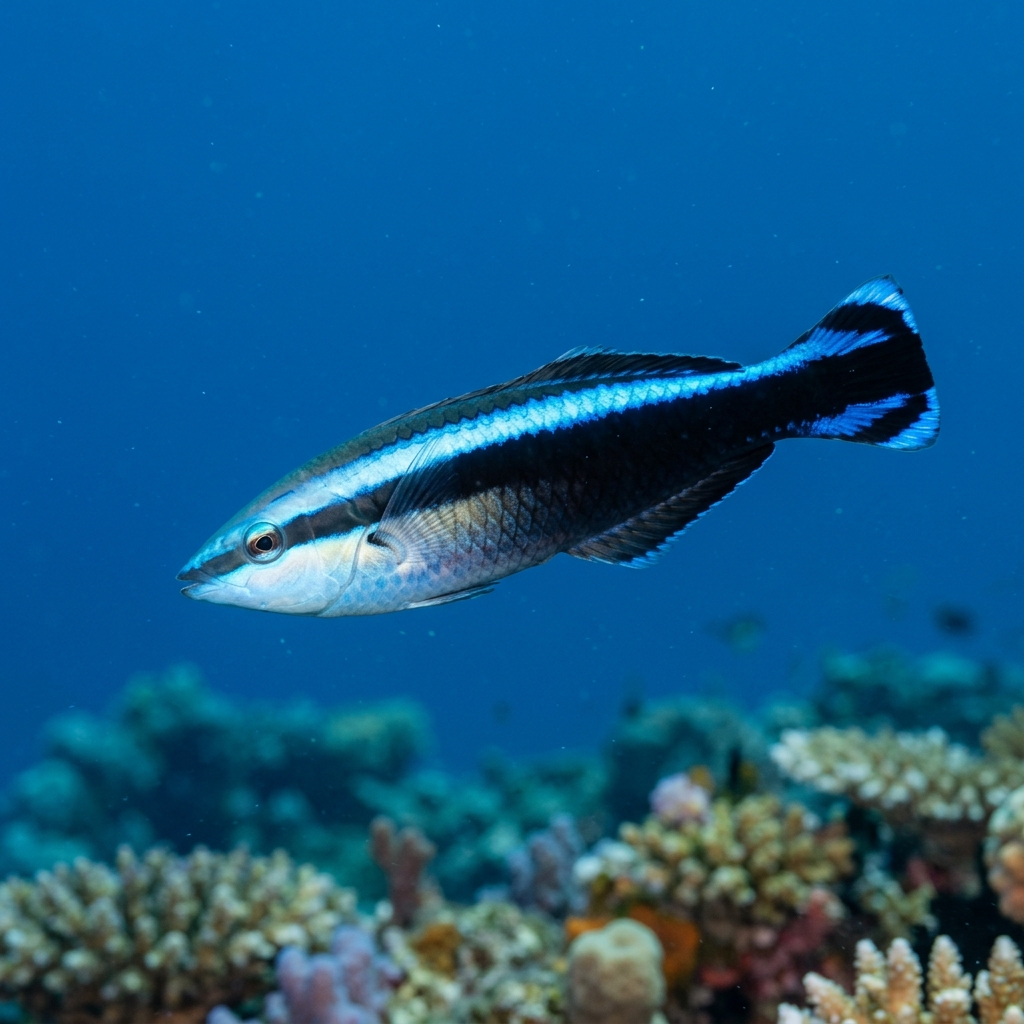
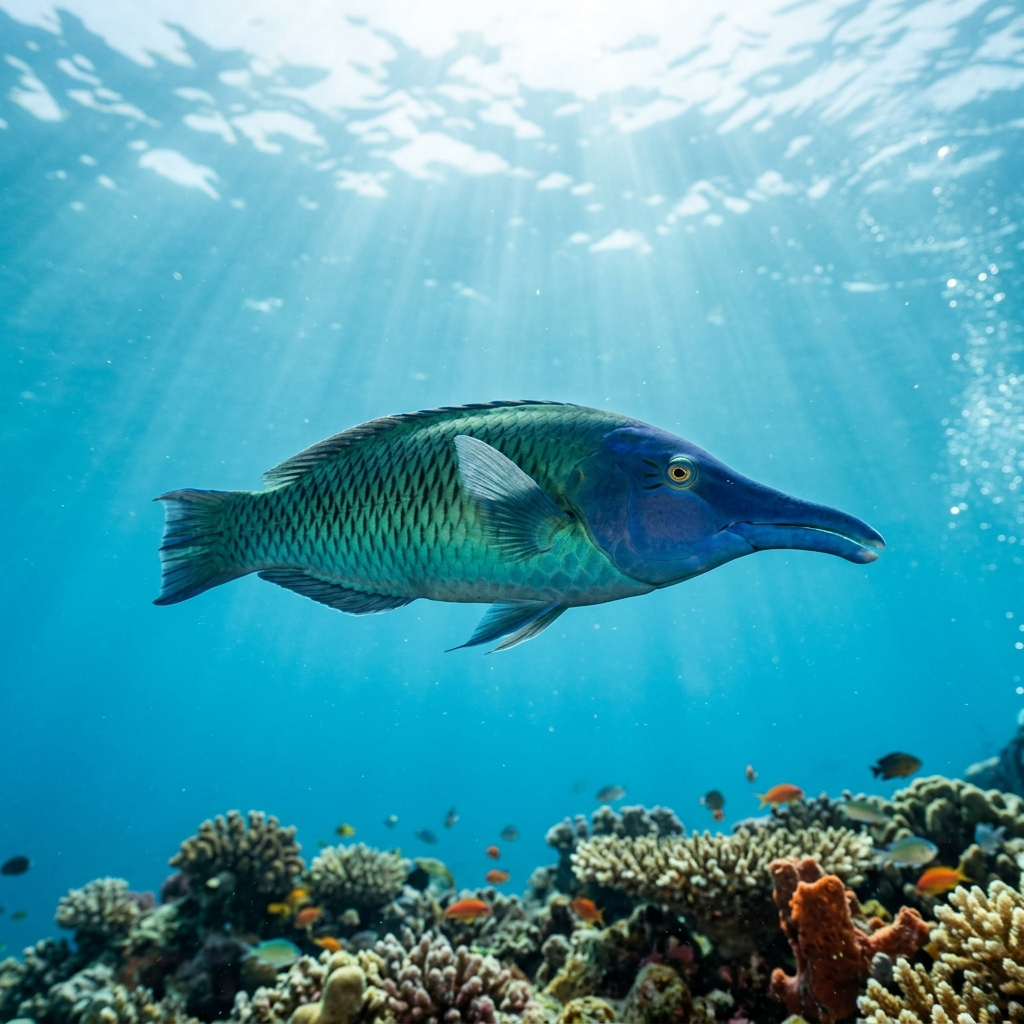
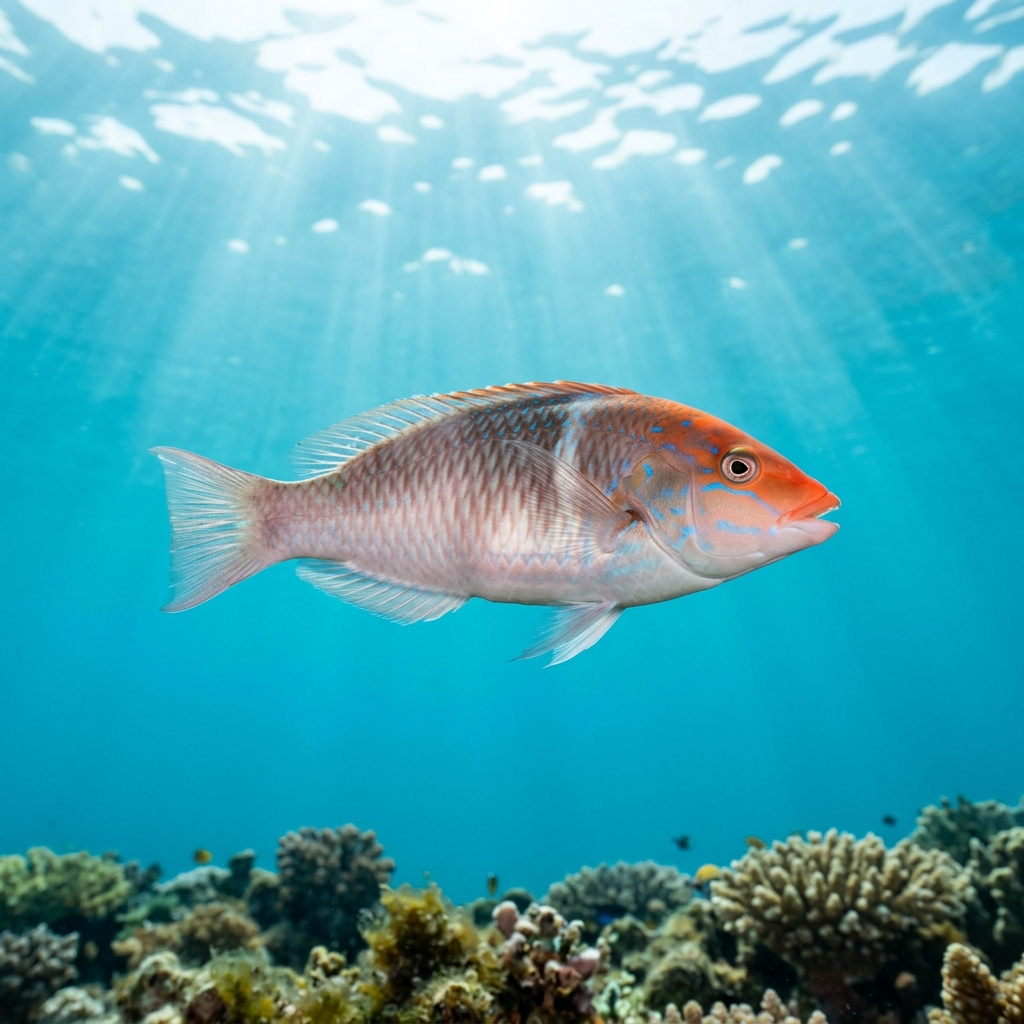
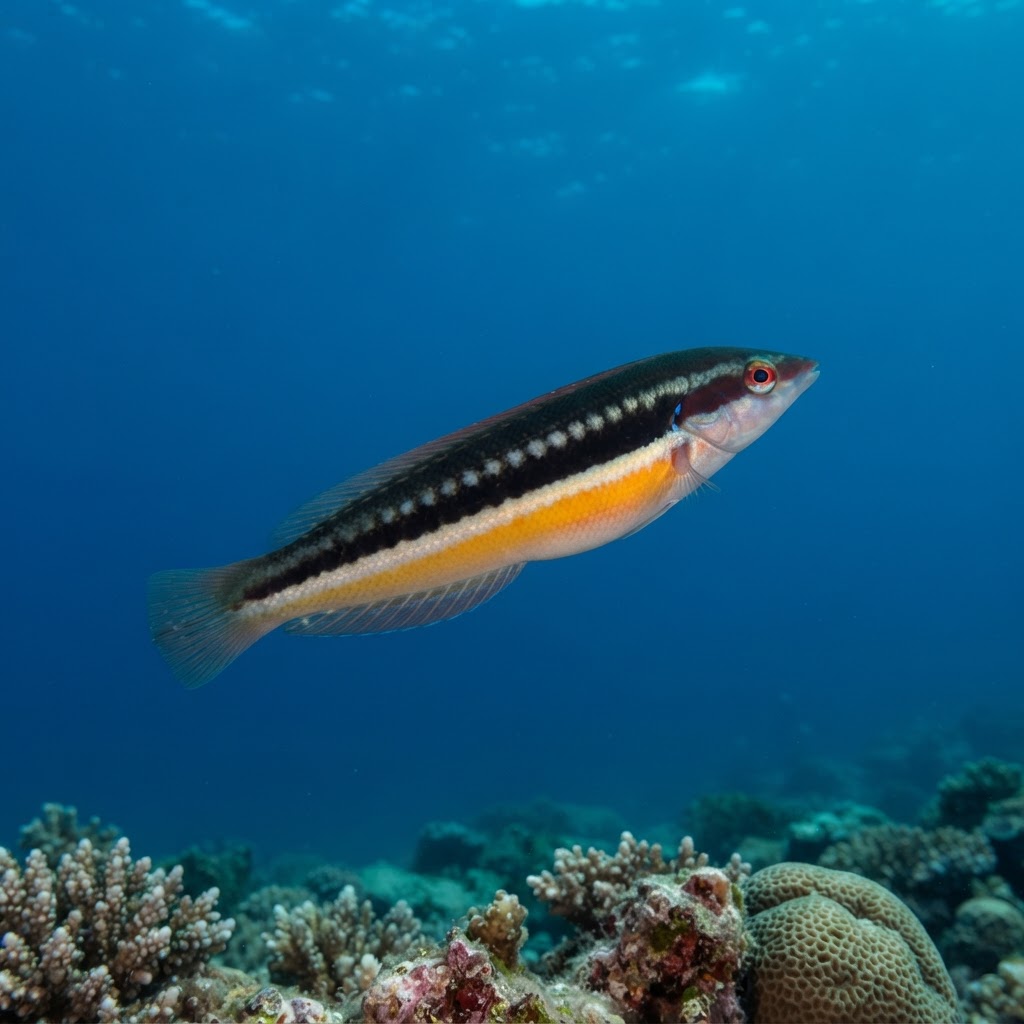
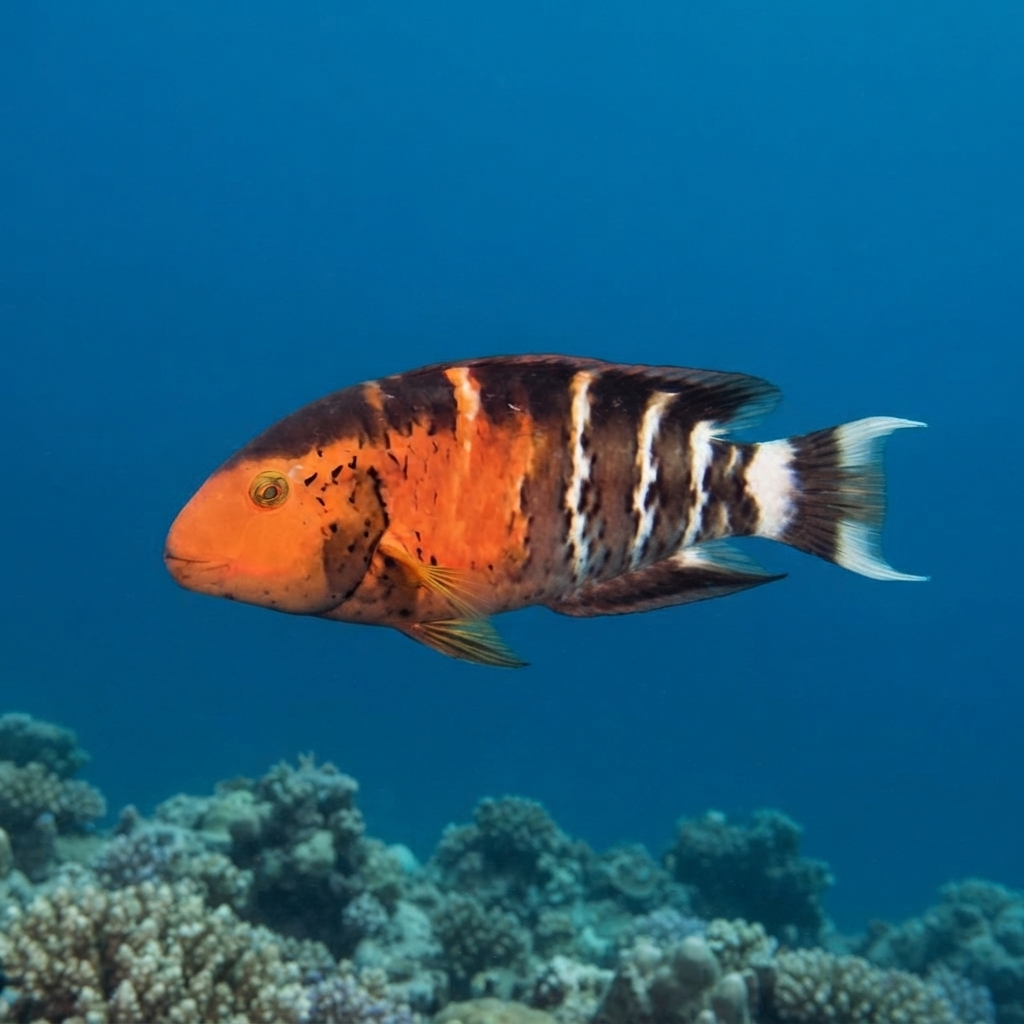
Grows to around 24 cm, with a stocky, torpedo-shaped body typical of the wrasse family and a set of pale, vertical bars crossing a greenish to grey-brown flank, which is where the common name comes from. The head is often a touch darker than the body, and the fins carry faint streaking rather than bold colour blocks. It swims with the short, choppy pectoral-fin strokes typical of mid-sized reef wrasses rather than a fast cruising gait.
Divers typically find it working close to reef structure, picking over rubble and crevices for small invertebrates rather than schooling in open water. It tends to be unbothered by divers at a normal distance, holding its ground near the reef rather than bolting, though it rarely lingers for a close look either. Most sightings come from mid-reef depths rather than the shallows or the deeper drop-offs.
Like many wrasses, it's a daytime forager that tucks into the reef or sand at night, so dawn and dusk dives are more likely to show it settling in or moving off than midday reef swims.
No clear seasonal pattern shows up in the sightings, and it sits comfortably in water from about 23 to 29C, so it's a year-round possibility on Red Sea reef dives rather than a species tied to a particular month.
Most consistently logged in Egypt, especially South Sinai, Marsa Alam & the Deep South, and the Red Sea Riviera, with a smaller but real presence along Saudi Arabia's Red Sea Coast. Across the sites where it turns up, it's usually logged as an uncommon sighting rather than a guaranteed one, so treat it as a nice bonus on a Red Sea reef dive rather than a target species.
Mapping where Whitebarred Wrasse is logged…
Egypt's Red Sea coast is the stronghold, with South Sinai, Marsa Alam & the Deep South, and the Red Sea Riviera all producing regular sightings. It also turns up along Saudi Arabia's Red Sea coast, though less frequently.
There's no strong seasonal pattern in the sightings, and it's comfortable across a 23 to 29C range, so it's a year-round possibility on Red Sea reef dives rather than something tied to a particular season.
Look for a stocky, mid-sized wrasse around 24 cm long with pale vertical bars crossing a greenish-grey body and a slightly darker head. It moves in short bursts close to the reef rather than cruising in open water.
They typically reach about 24 cm in length, putting them in the mid-size range for reef wrasses, noticeably smaller than the giant Napoleon Wrasse but easily large enough to spot from a few metres away.
No. They're not considered dangerous to divers and pose no known threat, they'll simply carry on foraging around the reef as you pass by.
At most sites where it's been logged, divers describe it as an uncommon sighting rather than a sure thing, though a smaller number of sites report it as common. It's a species worth watching for on Red Sea reef dives rather than one you can count on every dive.
Site and sighting data is aggregated from diver logs, iNaturalist and GBIF. For taxonomy and conservation status:
Bird Wrasse
3,632 sites